
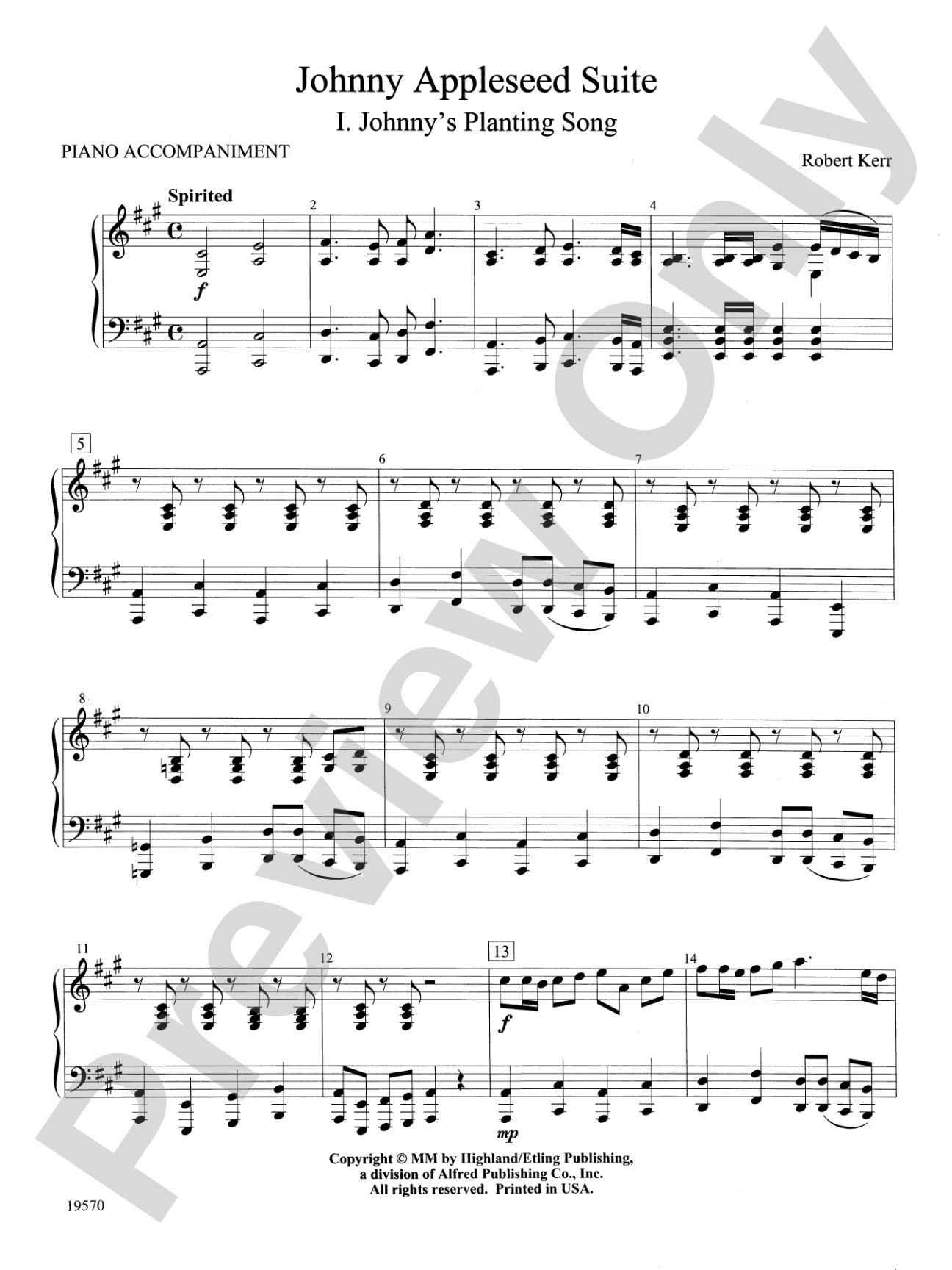
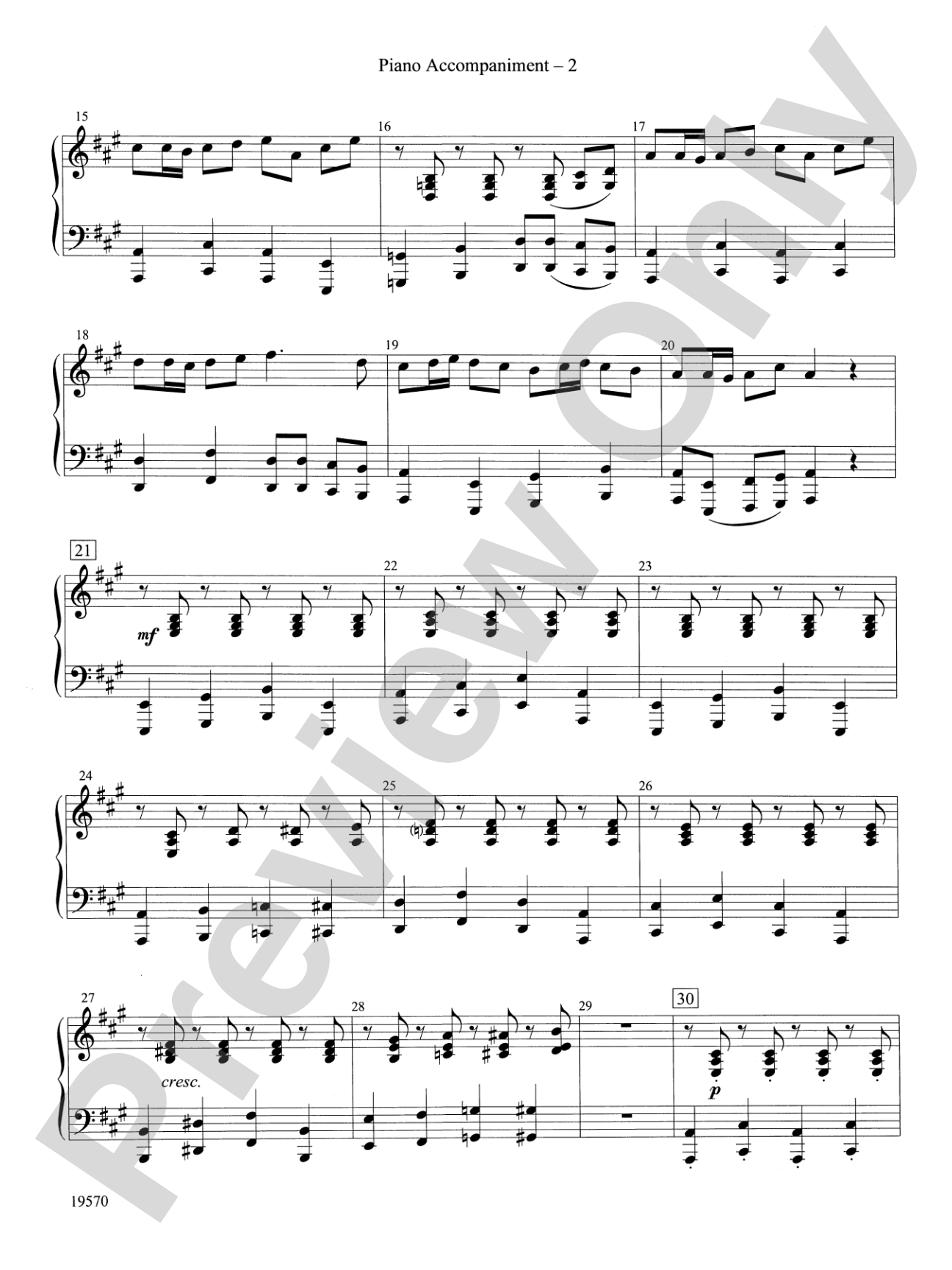

Johnny Appleseed Suite: Piano Accompaniment
I. Johnny's Planting Song, II. Johnny's Prayer, III. Johnny's Hoedown
By Robert Kerr
Grade: 3
Item: 00-PC-0000343_K
$5.99
Pickup currently not available
Description
Your students and audience will love these "tone pictures" Robert Kerr has created of the famous American folk legend. The wonderfully tuneful movements, entitled "Johnny's Planting Song," "Johnny's Prayer" and "Johnny's Hoedown," offer the student orchestra an incredibly wide variety of playing challenges and learning opportunities. Sure to be a favorite. This title is available in MakeMusic Cloud.


Don't just read it, hear it, play along with it, and watch your students grow with it. In MakeMusic Cloud, Johnny Appleseed Suite: Piano Accompaniment comes alive with professional accompaniment, adjustable tempo, and built-in practice tools that turn solo practice into real progress.
Open in the Player
Jump straight in and assign it today.
Start Your Free Trial
Open this title and explore the full library in minutes.
Sample Audio
1
Audio File
--:--
0:00
0:00
Sample Video
No sample videos found.
Additional Details
Series:
Highland/Etling String Orchestra
Publisher:
Alfred Music
Page Count:
132
SKU:
00-PC-0000343_K
More about this title
About the Composer: Robert Kerr
Robert Kerr has established himself as a composer and arranger with a gift for writing accessible, engaging music for student ensembles. His work frequently draws on American themes and folk traditions, bringing historical narratives to life through orchestration that challenges young musicians without overwhelming them. Kerr's compositions are staples in school string programs, valued for their musical substance and their ability to hold student interest across multiple rehearsals.
Why we love this
Kerr's three-movement approach gives you real programming flexibility: you can perform the suite complete or cherry-pick individual movements for different concerts throughout the year. The writing balances genuine melodic appeal with orchestral color that grows increasingly sophisticated across the movements, rewarding students who've built solid fundamentals while remaining solidly playable at Grade 3.
What to expect
The suite captures the spirit of American frontier life through melody and orchestral storytelling. Opening with the steady, purposeful character of planting work, moving into quieter introspection, and closing with rollicking barn-dance energy, the three movements paint a musical portrait of Johnny Appleseed's journey without relying on literal program notes.
Who it's for
String orchestra directors seeking Grade 3 repertoire that bridges student-level technique and concert-quality music. This suite works for school orchestras, all-city programs, and festival performances where you need a piece that's engaging enough to hold student commitment across multiple movements.
How to get the most out of it
- Establish a clear pulse in 'Johnny's Planting Song' by anchoring the viola and cello parts; young string players often drift when following rhythmic patterns rather than a conductor's beat.
- Shape 'Johnny's Prayer' with sustained tone work in the upper strings; this movement exposes vibrato control and legato technique, so plan rehearsal time for bow distribution and phrase breathing.
- Balance the rhythmic energy in 'Johnny's Hoedown' by keeping the lower strings tight and driving; the piece thrives on infectious forward motion, which young musicians sometimes lose if they focus too much on individual notes.
- Use the programmatic titles to help students understand character shifts between movements; asking them to imagine Johnny's work, spiritual reflection, and celebration gives context to the musical decisions you're asking them to make.
How to use it
Program all three movements together for a full concert statement, or slot individual movements into different concerts across the year. 'Johnny's Planting Song' and 'Johnny's Hoedown' work well on Americana or folk-themed programs, while 'Johnny's Prayer' pairs nicely with other lyrical string repertoire.
Skills your students will build
- Sustained legato playing and bow control in slower movements
- Rhythmic precision and ensemble unity in driving, rhythmic passages
- Dynamic contrast and character portrayal across contrasting sections
- Balancing independent voice parts while maintaining ensemble cohesion
- Intonation awareness in sustained chords and sustained melodic lines