John Williams Trilogy Sheet Music Preview

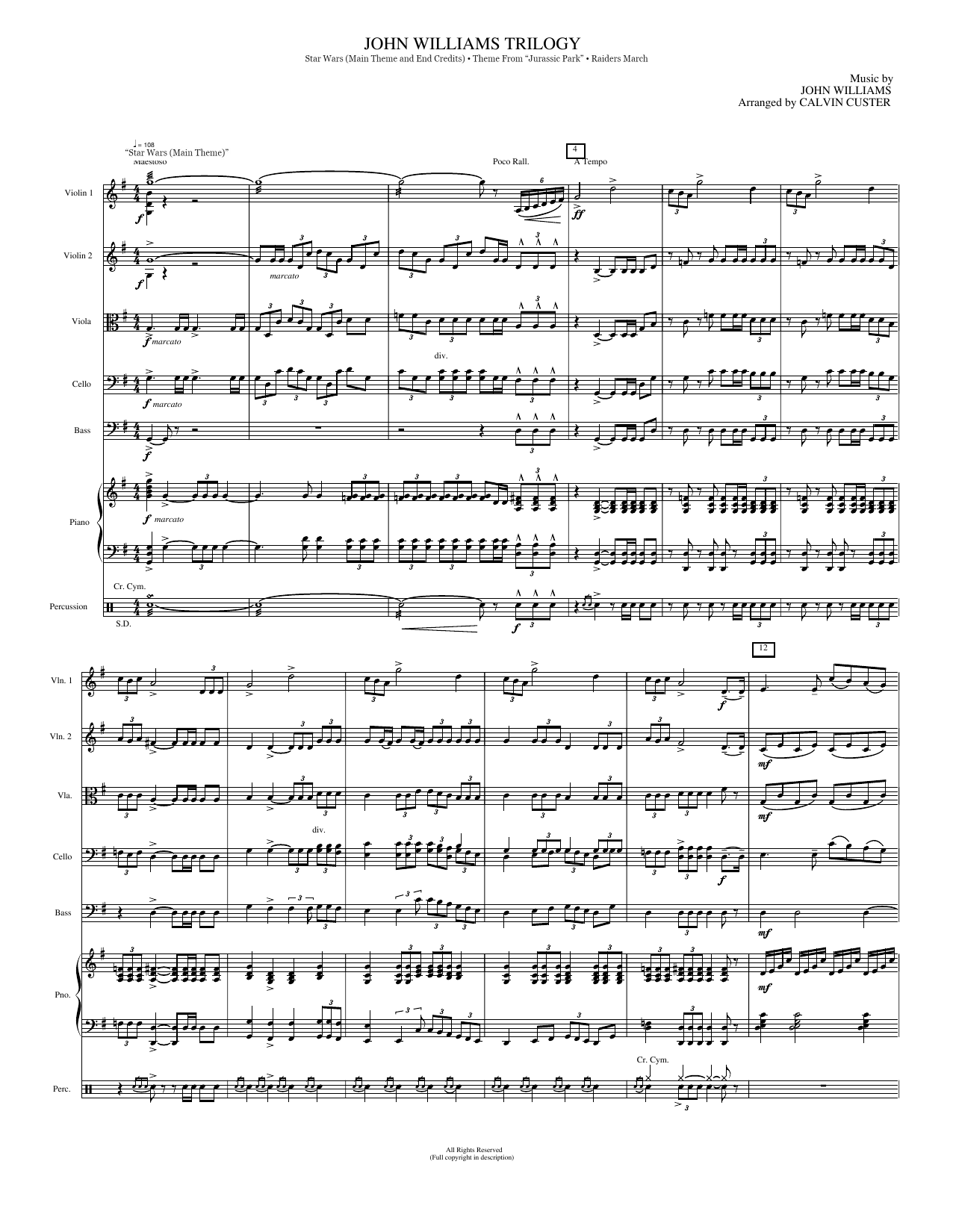
John Williams Trilogy: String Orchestra Conductor Score & Parts

By John Williams / Arranged by Calvin Custer

Grade: 3-4

Item: 35-PK00426372

Digital Download
$45.00

One moment…

Description
John Williams Trilogy

John Williams Trilogy: String Orchestra Conductor Score & Parts isn't in MakeMusic Cloud just yet...but it could be. Let us know you'd like to see it, and you'll help shape what comes next. In the meantime, start a free trial and dive into thousands of interactive titles your students can play along with today.

Sample Audio
No sample audio found.
Sample Video
Additional Details
Publisher: Hal Leonard
SKU: 35-PK00426372

More about this title

About the Composer: John Williams

John Williams stands as one of the most consequential film composers of the modern era, crafting iconic scores for decades of cinema that have shaped how audiences experience narrative. His mastery of orchestration, harmonic sophistication, and gift for memorable themes have made him essential listening in music education contexts, where his work demonstrates how classical compositional principles drive contemporary entertainment media.

Beyond the concert hall, Williams' influence on music education extends through countless arrangements and adaptations designed for student ensembles. His ability to craft music that engages both performers and listeners has made his scores a natural fit for schools seeking repertoire that connects students to professional-level orchestration and accessible, emotionally direct musical storytelling.

Why we love this

Arrangers Custer has distilled Williams' orchestral brilliance into three substantial works that sit comfortably at the Grade 3 to 4 level without sacrificing the dramatic impact that makes these films resonate. Your students will feel like they're performing real movie music, not simplified versions, which transforms rehearsal energy and engagement from the first read.

What to expect

These arrangements carry the sweep and emotional directness of their film origins, channeling cinematic drama into chamber orchestral texture. You'll find soaring themes, underlying tension in harmonic movement, and moments of quiet introspection balanced against full ensemble fortissimos, all within reach of a solid intermediate group.

Who it's for

String orchestra directors working at the intermediate level who want substantive, recognizable repertoire that sparks genuine excitement in rehearsal and concert hall. Student musicians gain exposure to professional orchestration and film scoring techniques while building technical skills on material they already know and love.

How to get the most out of it

  • Balance the melodic line across first and second violins carefully during the main themes; these soaring passages define each movement, and clarity matters more than volume.
  • Treat the cello and bass lines as the harmonic anchors they are, especially in slower sections where they establish the emotional foundation beneath the strings.
  • Pay attention to any sustained tremolo or pizzicato passages; rhythmic precision in these textures prevents the sound from becoming muddy as the orchestra grows in complexity.
  • Let the ensemble breathe at phrase endings rather than rushing into new material; Williams' phrasing benefits from generous space that gives the music room to land.

How to use it

Consider programming this trilogy as a standalone concert or as the centerpiece of a film music themed concert that might include other media arranged for strings. The Grade 3 to 4 span means you can distribute difficulty across the ensemble, using it as a vehicle to feature your strongest students while keeping lighter parts accessible for newer musicians.

Skills your students will build

  • Phrasing in lyrical, extended melodic lines
  • Balancing multiple simultaneous musical ideas across string sections
  • Reading idiomatic string textures (tremolo, pizzicato, divisi)
  • Responding to dramatic shifts in dynamic and harmonic tension
  • Sustaining tone quality across extended passages

You May Also Like