

John W. Schaum Popular Piano Pieces, A: The Red Book: Piano
Arranged by Wesley Schaum
Level: Late Elementary
Item: 00-PB-0000916
$8.99
Pickup currently not available
Related Items
John W. Schaum Popular Piano Pieces, A: The Red Book: Piano Book |
$8.99
|
View |
Description
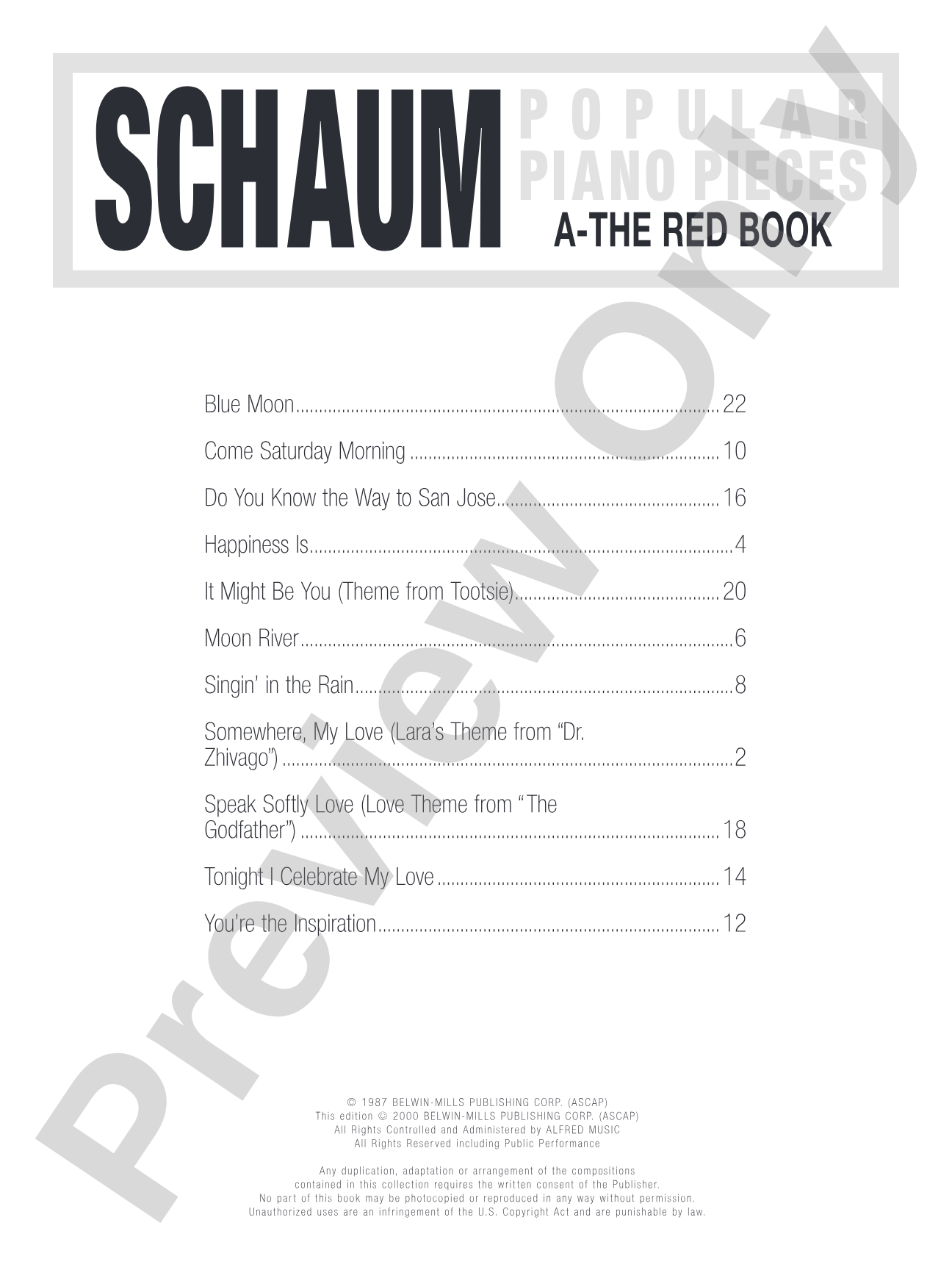
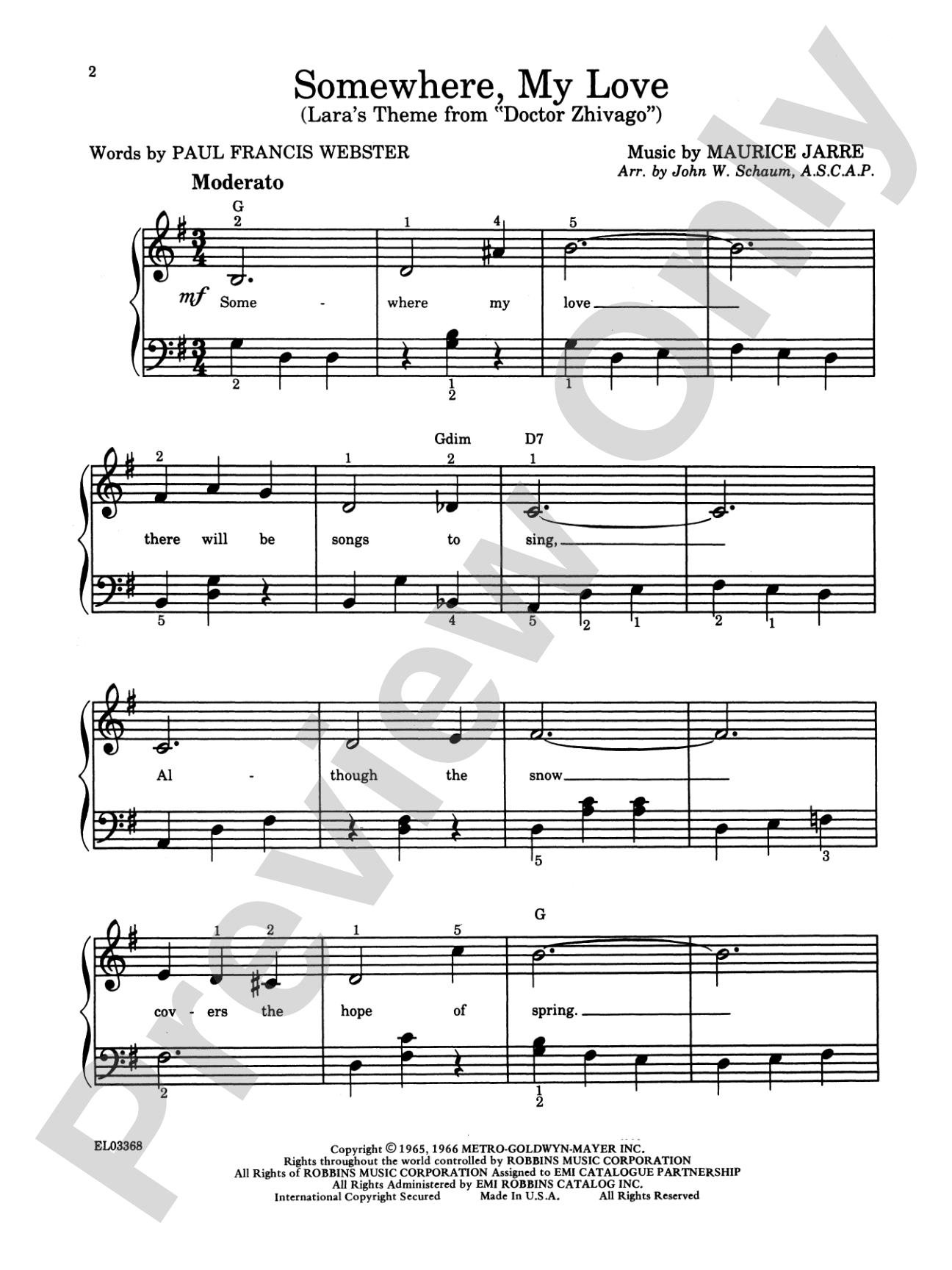
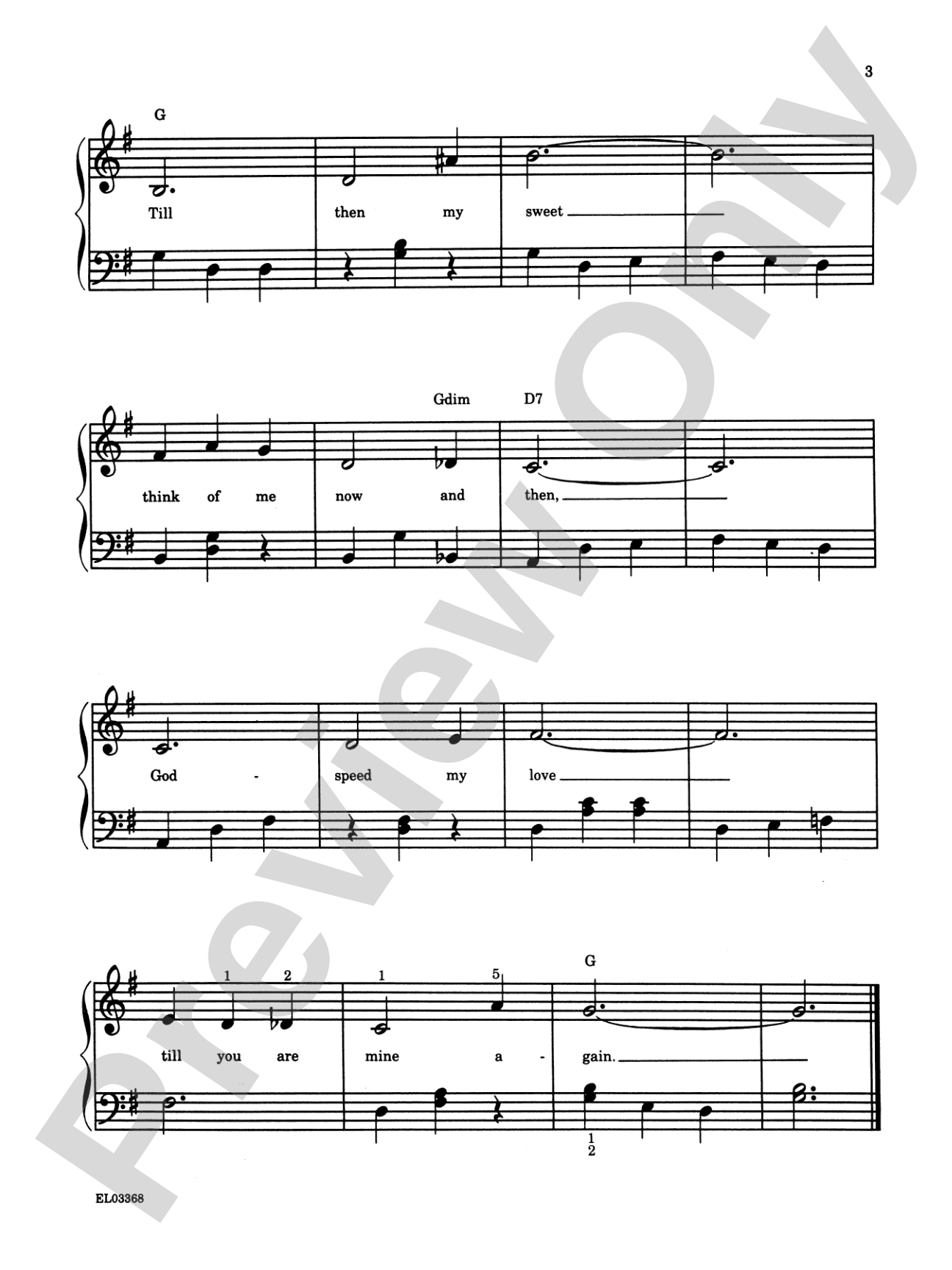
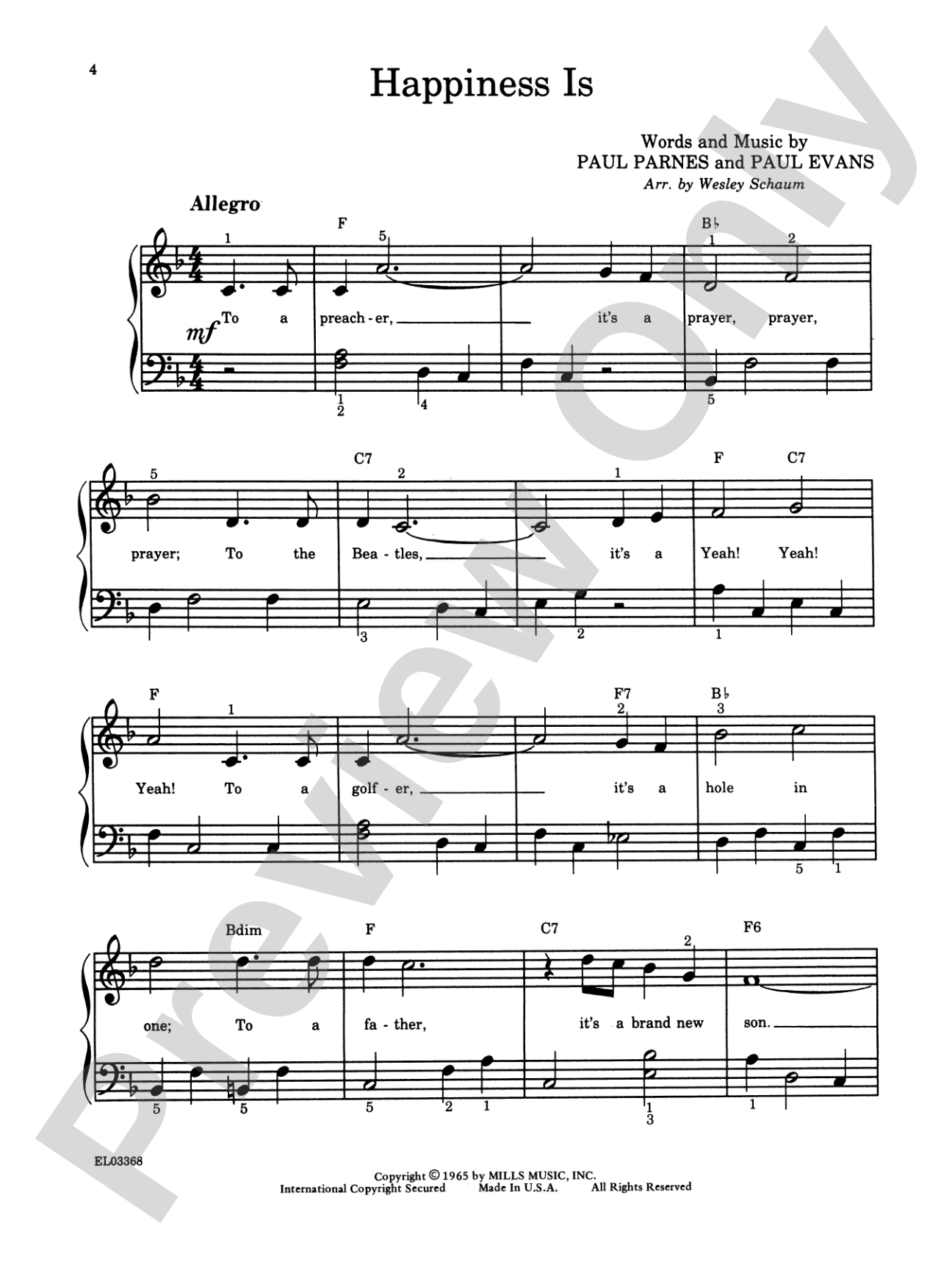
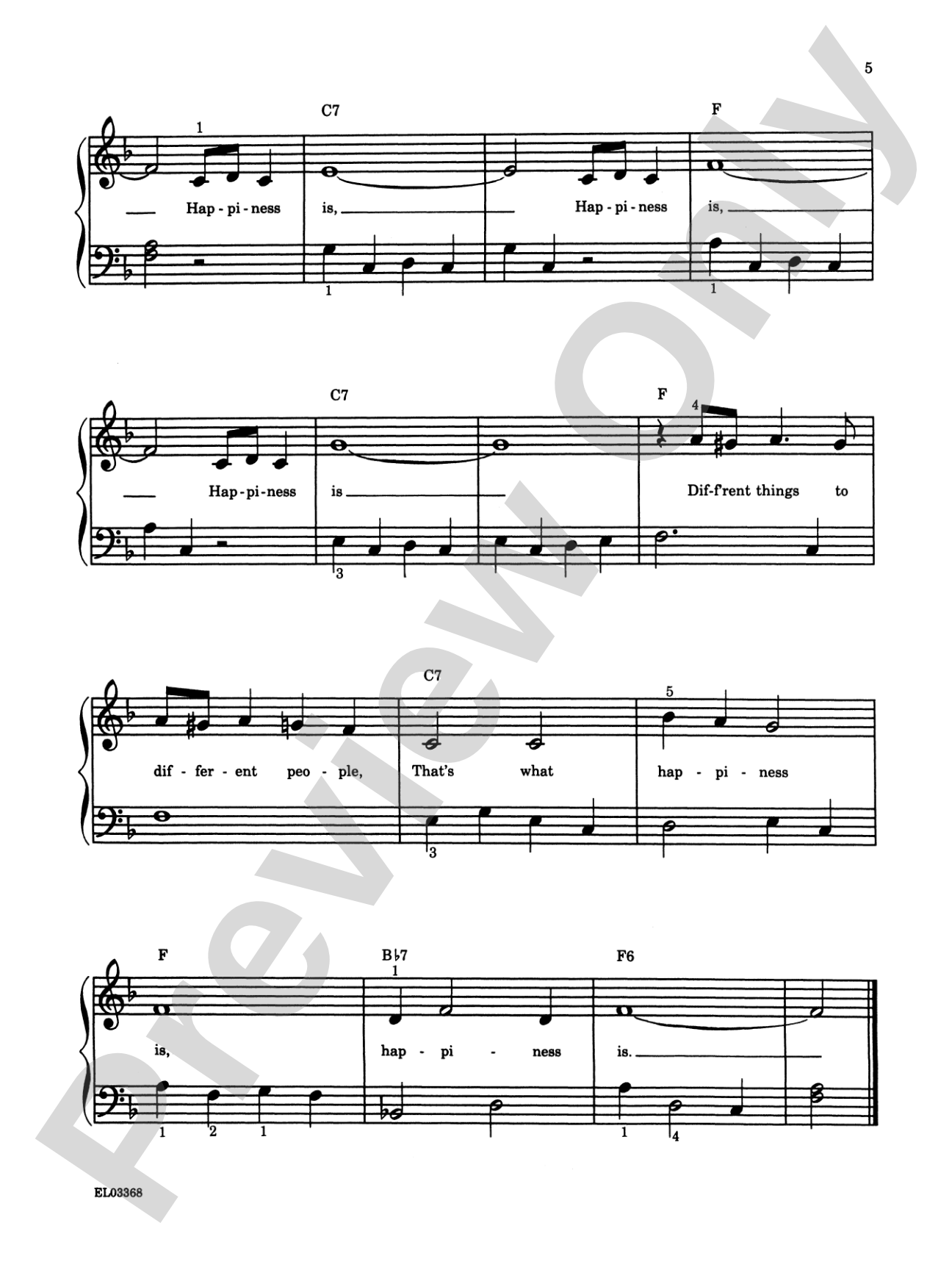
Titles: Blue Moon * Come Saturday Morning * Do You Know the Way to San Jose * Happiness Is * It Might Be You (Theme from Tootsie) * Moon River * Singin' in the Rain * Somewhere My Love (Lara's Theme from Dr. Zhivago) * Speak Softly Love (Love Theme from The Godfather) * Tonight I Celebrate My Love * You're the Inspiration. Correlates with Schaum Grade 1.


John W. Schaum Popular Piano Pieces, A: The Red Book: Piano isn't in MakeMusic Cloud just yet...but it could be. Let us know you'd like to see it, and you'll help shape what comes next. In the meantime, start a free trial and dive into thousands of interactive titles your students can play along with today.
Request This Title
Tell us you want it.
Start Your Free Trial
Explore everything that's ready to play right now.
Sample Audio
No sample audio found.
Sample Video
No sample videos found.
Additional Details
Series:
Popular Piano Pieces
Publisher:
Alfred Music
Page Count:
24
SKU:
00-PB-0000916
More about this title
About the Arranger: Wesley Schaum
Wesley Schaum built his reputation on understanding how young pianists learn. His Popular Piano Pieces series has introduced generations of students to repertoire that sounds mature and rewarding while remaining within their technical reach. Schaum's arrangement work demonstrates a gift for preserving the character of beloved melodies while crafting accompaniments that strengthen fundamental skills without overwhelming developing hands.
Why we love this
These arrangements bridge the gap between method book exercises and the music students actually want to play. Each piece sounds complete and satisfying at a late elementary level, giving young pianists immediate access to melodies from films, standards, and popular songs they recognize. The collection works as natural repertoire alongside Schaum Grade 1 instruction without feeling like supplemental busywork.
What to expect
Playing from this book feels like being let in on a secret: that movie themes, jazz standards, and popular songs are actually within reach at your level. The arrangements respect the integrity of each melody while keeping left-hand and right-hand demands manageable, so students can focus on phrasing and expression rather than wrestling with technique. Each piece delivers that satisfying moment when preparation meets musical payoff.
Who it's for
This book is built for late elementary piano students who have completed basic Schaum Grade 1 fundamentals and are ready for recognizable, engaging repertoire. Teachers using the Schaum method will find these arrangements correlate directly with that curriculum, offering motivating material that reinforces technique in a musical context. Students benefit from playing melodies they know and love, which sustains practice enthusiasm during the intermediate beginner stage.
How to get the most out of it
- Pay attention to pedal markings if included; they shape the tonal quality of arrangements like 'Moon River' and 'Speak Softly Love.' Experiment with partial pedal (half-pedaling) for cleaner passages.
- Balance melody and accompaniment by thinking of the right hand as singing. Let the left hand provide harmonic support without overshadowing the tune.
- Work through one piece fully before adding another to your lesson rotation. Mastering the fingering and musical shape of each arrangement builds confidence faster than sampling multiple pieces.
How to use it
Use these pieces in student recitals where young pianists can shine with material that sounds more sophisticated than their current technique level might suggest. They also serve as welcome relief in practice routines alongside method book pages, offering tangible evidence of progress and musical growth. Consider pairing individual arrangements with thematic units in lesson planning, such as film music month or jazz standards exploration.
Skills your students will build
- Hand independence between melody and accompaniment patterns
- Legato phrasing and shaping melodic lines
- Reading and executing simple pedal markings
- Consistent rhythm and steady tempo in popular song forms
- Dynamics and expression within late elementary technical limitations
- Sight-reading fluency across varied melodic contours