Jive at Five: Piano Accompaniment Sheet Music Preview

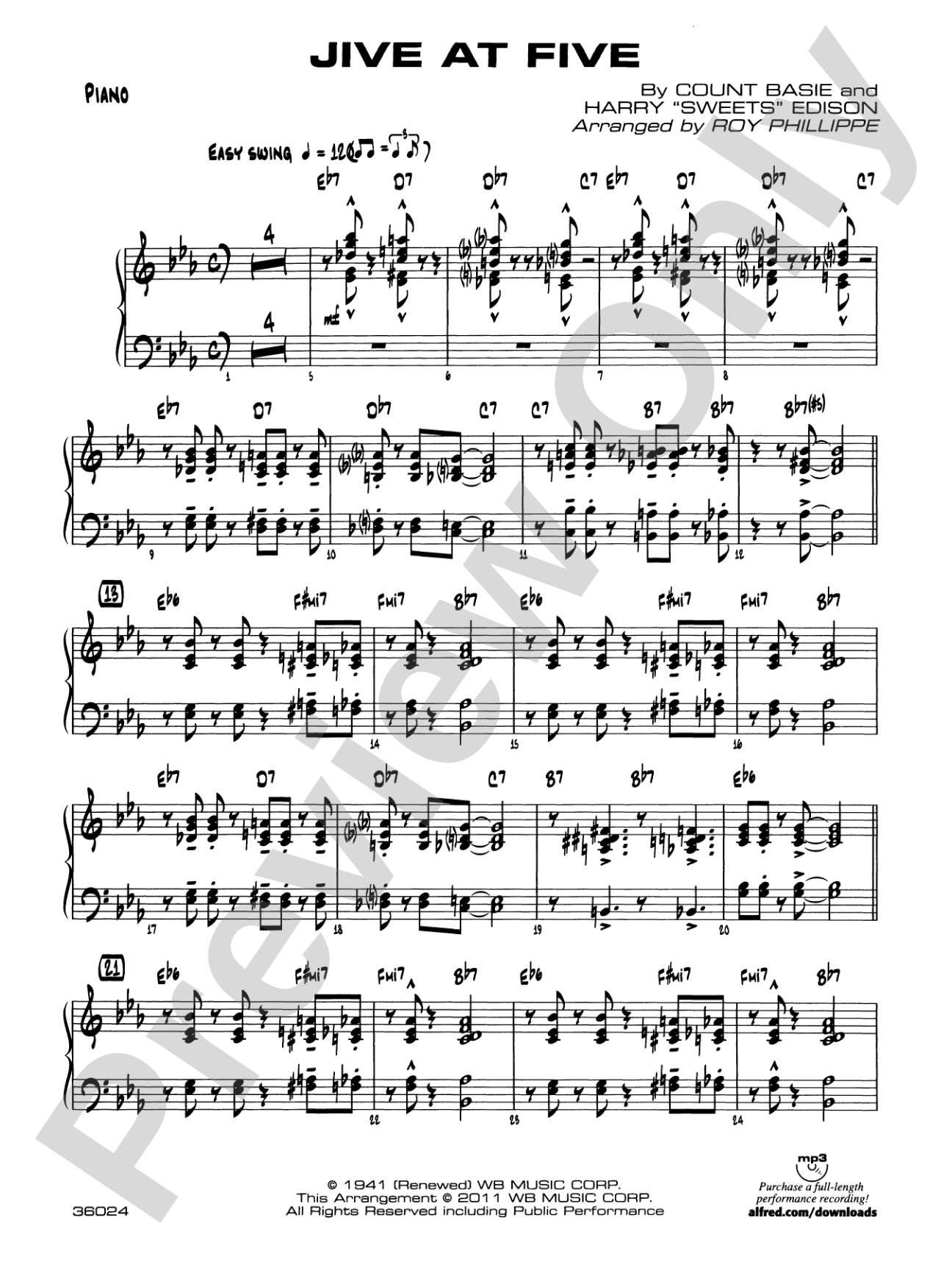
Jive at Five: Piano Accompaniment

By Count Basie and Harry "Sweets" Edison / arr. Roy Phillippe

Grade: 1 (Easy)

Item: 00-PC-0017189_K

Digital Download
$3.00
Description
When you hear it, you'll recognize this Count Basie composition! It has written solos for alto 1, trumpet 1, trombone 1, and a swingin' modulation from E-flat to F. The trumpet range is to the F-sharp on the top line. This wonderful jazz tune is played at 120 BPM. (3:15) This title is available in MakeMusic Cloud.

Don't just read it, hear it, play along with it, and watch your students grow with it. In MakeMusic Cloud, Jive at Five: Piano Accompaniment comes alive with professional accompaniment, adjustable tempo, and built-in practice tools that turn solo practice into real progress.

Sample Audio
0:00
0:00
Sample Video
Additional Details
Series: First Year Charts for Jazz Ensemble
Publisher: Alfred Music
Page Count: 72
SKU: 00-PC-0017189_K

More about this title

About the Composer: Count Basie

Count Basie (1904-1984) built the Count Basie Orchestra into one of the most influential swing ensembles in jazz history. His economic piano style and ability to shape a big band sound defined an era, and his compositions became standards that student ensembles still perform today. Basie's knack for writing memorable melodies with infectious rhythmic drive made his charts accessible to developing musicians without sacrificing the swagger that made his name legendary.

Why we love this

This chart delivers immediate gratification for early jazz ensemble students. The solos are written out but sit comfortably in reasonable ranges, the modulation from E-flat to F gives the band a real harmonic moment to land, and at Grade 1 difficulty, the ensemble writing itself doesn't overshadow the joy of playing a recognizable Basie tune at a proper swing tempo.

What to expect

Jive at Five swings with the casual confidence of a band that's been playing together for years. The written solos breathe naturally into the ensemble texture, and that modulation from E-flat to F feels like the tune lifting itself into a warmer light.

Who it's for

Jazz ensembles in their first or second year of playing together benefit most from this chart. The part-writing assumes developing jazz vocabulary and sight-reading skills without requiring advanced sectional independence.

How to get the most out of it

  • Lock the rhythm section (piano, bass, drums) into the 120 BPM groove before layering horns; Basie's sound rises from a solid rhythmic foundation, not from the front line alone.
  • Balance the written solos carefully so they sit comfortably within the ensemble. The alto and trumpet solos in particular should swing without needing to shout over the rhythm section.
  • Approach the modulation into F by slightly lifting the energy in the final bars of E-flat; the key change will land with more impact if the band feels the momentum building toward it.
  • Keep articulations crisp and light in the ensemble passages. This is swing, not funk, so tonguing should be sharp but not heavy.

How to use it

This works wonderfully as a festival or contest entry for developing ensembles, or as a concert opener that establishes the band's jazz credentials while keeping the energy high and the material accessible to your audience.

Skills your students will build

  • Reading and executing swing articulation and phrasing
  • Playing with section blend in a big band voicing
  • Interpreting written jazz solos with appropriate dynamics and feel
  • Responding to a modulation and maintaining ensemble cohesion through a key change

You May Also Like