
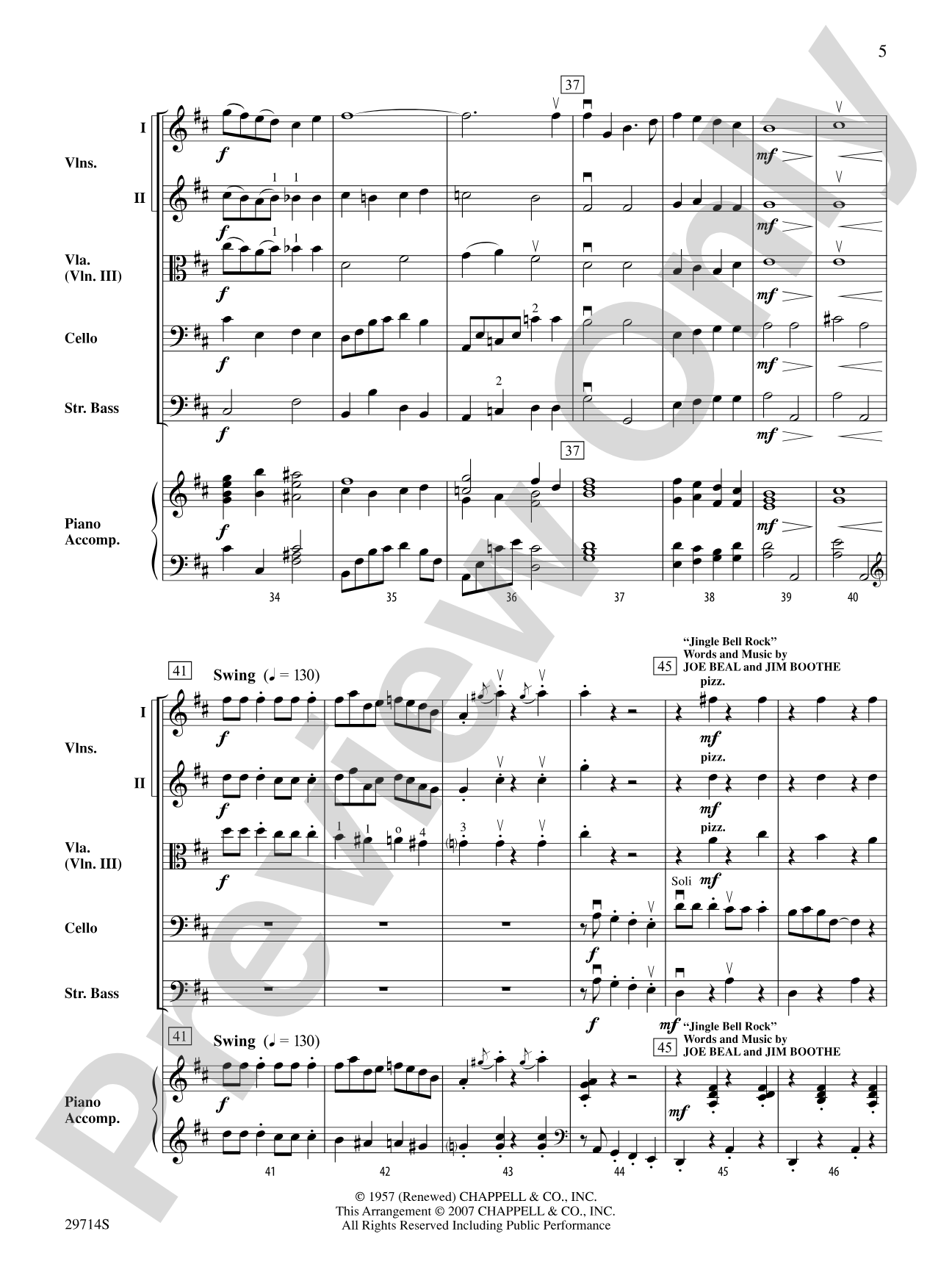
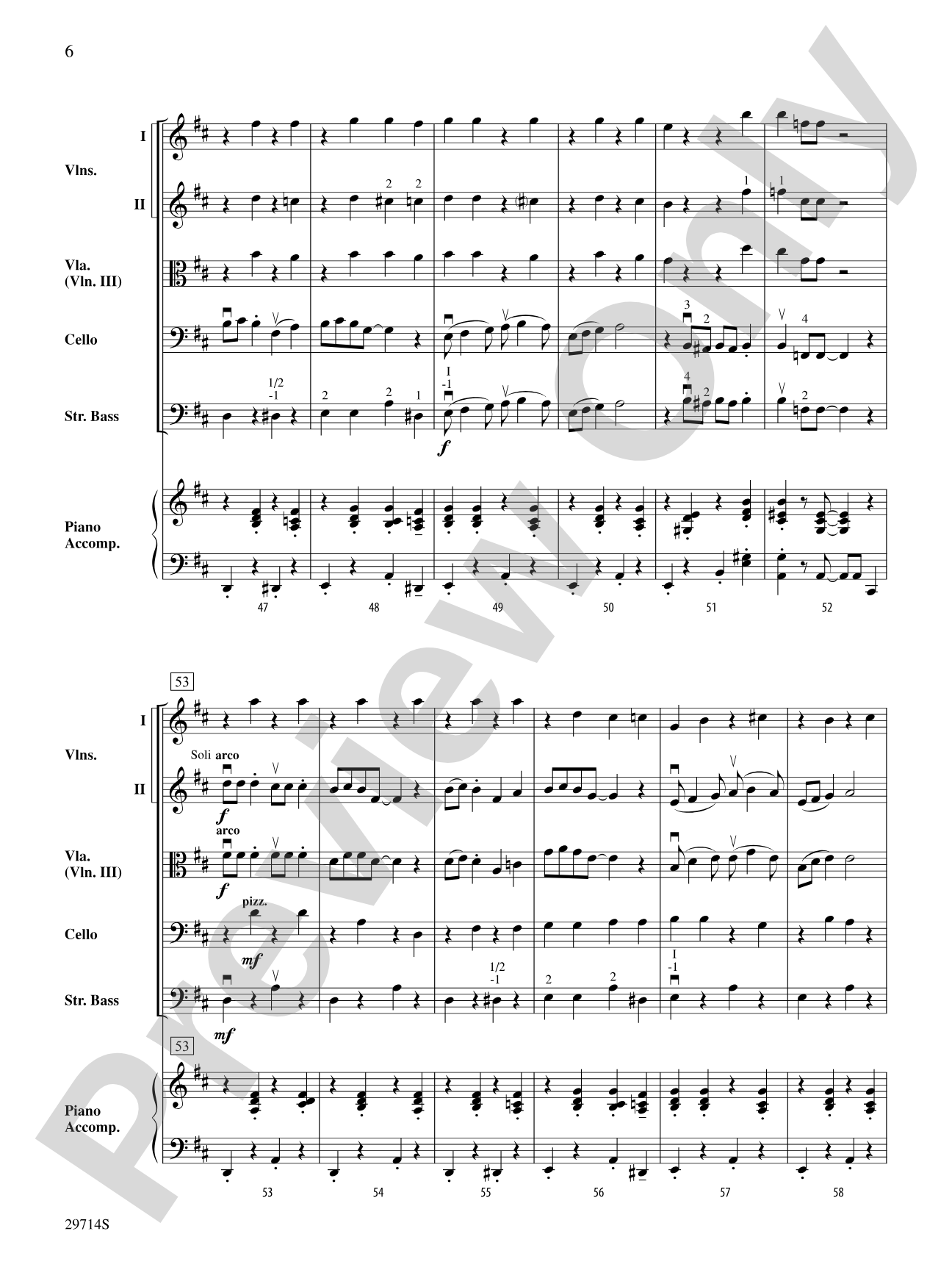
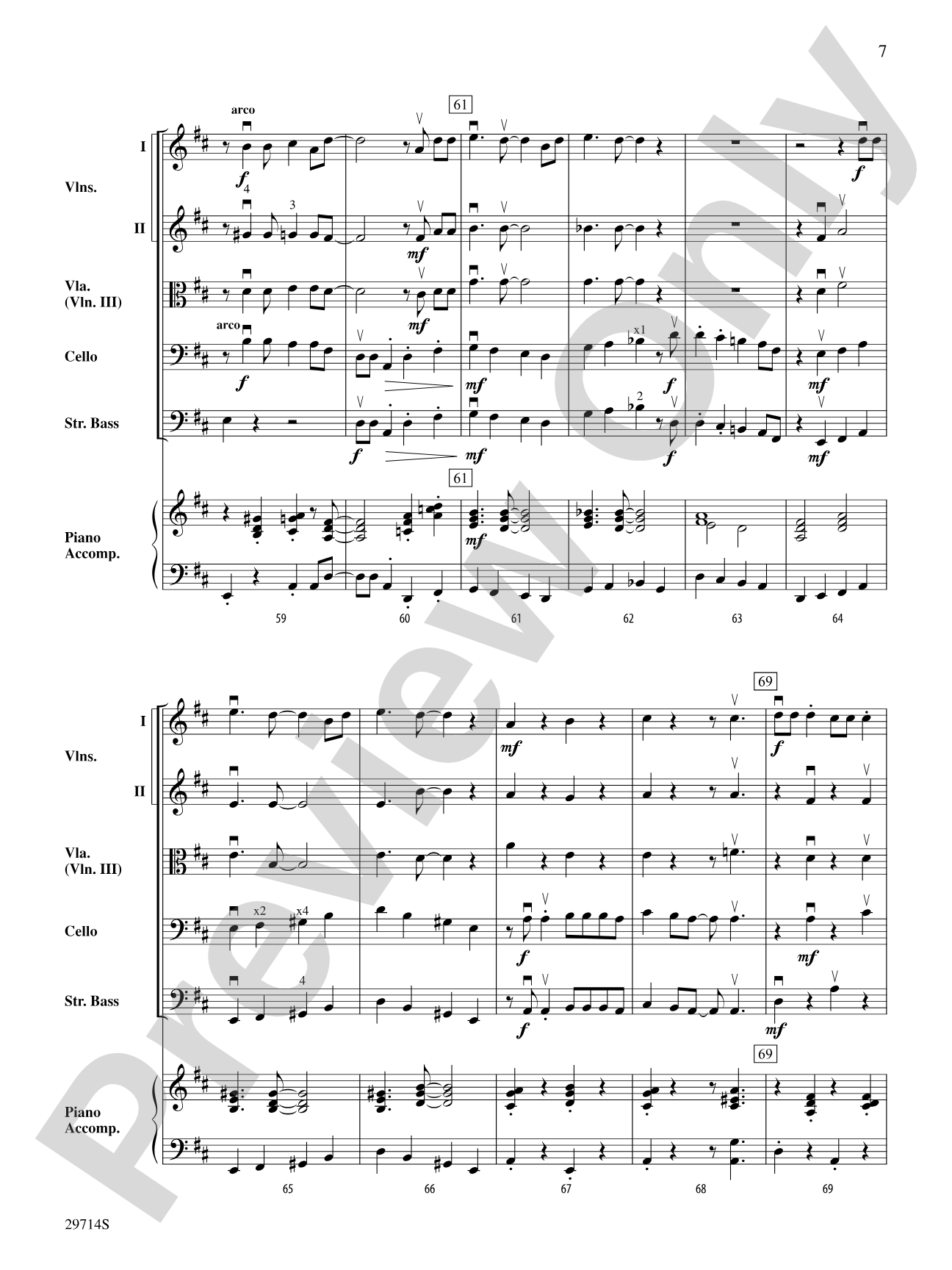
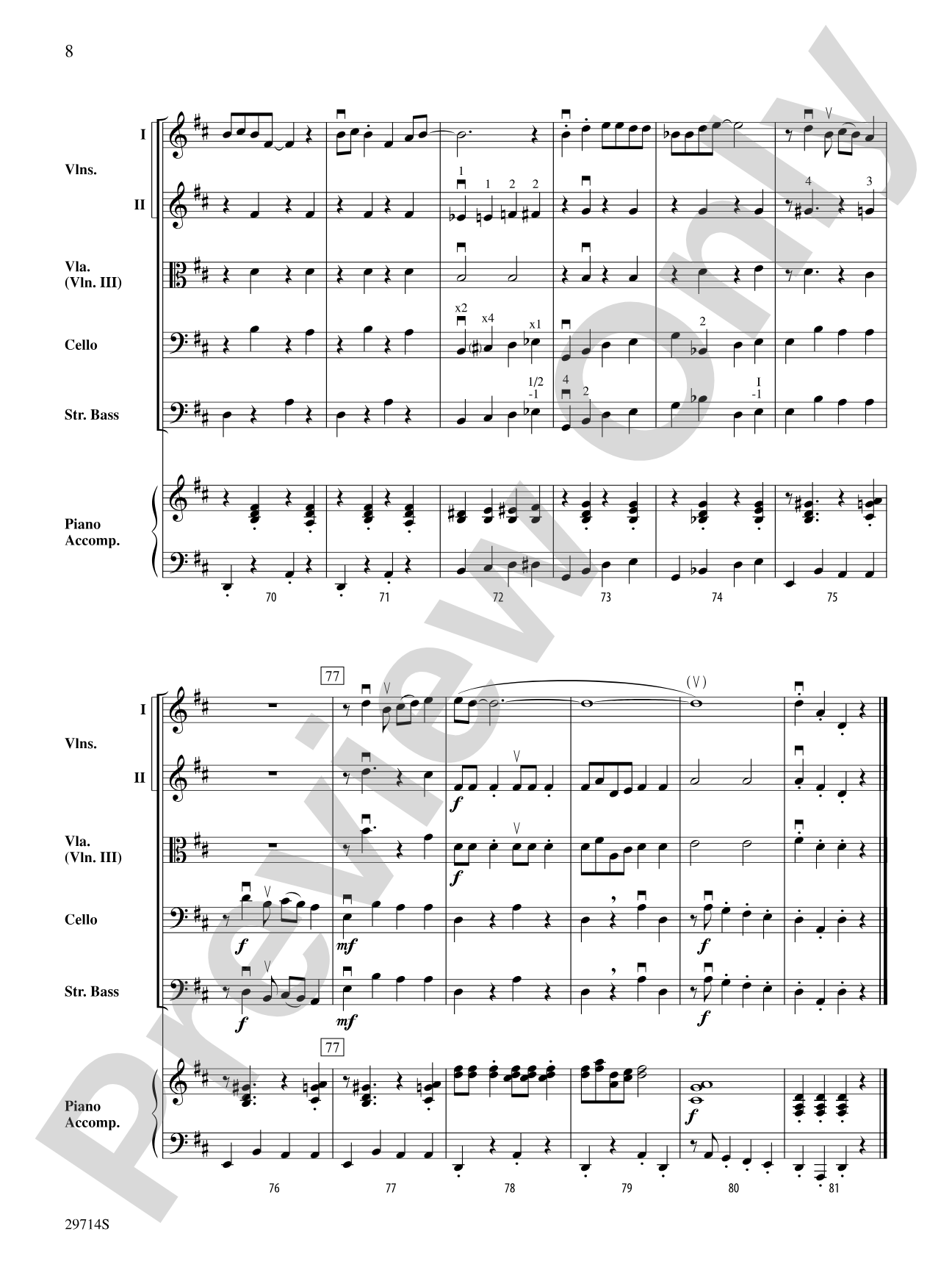

Jingle Rock: String Orchestra Conductor Score & Parts
Arr. Bob Phillips
Grade: 2.5
Item: 00-PK-0005460

$46.00
Pickup currently not available
Buy Extra Parts (Digital PDF Download)
| Product | Price | Quantity |
|---|---|---|
| Jingle Rock: Score | $8.00 | |
| Jingle Rock: 1st Violin | $7.99 | |
| Jingle Rock: 2nd Violin | $7.99 | |
| Jingle Rock: 3rd Violin (Viola [TC]) | $7.99 | |
| Jingle Rock: Viola | $7.99 | |
| Jingle Rock: Cello | $7.99 | |
| Jingle Rock: String Bass | $7.99 | |
| Jingle Rock: Piano Accompaniment | $7.99 |
Parts Added to Cart!
Description
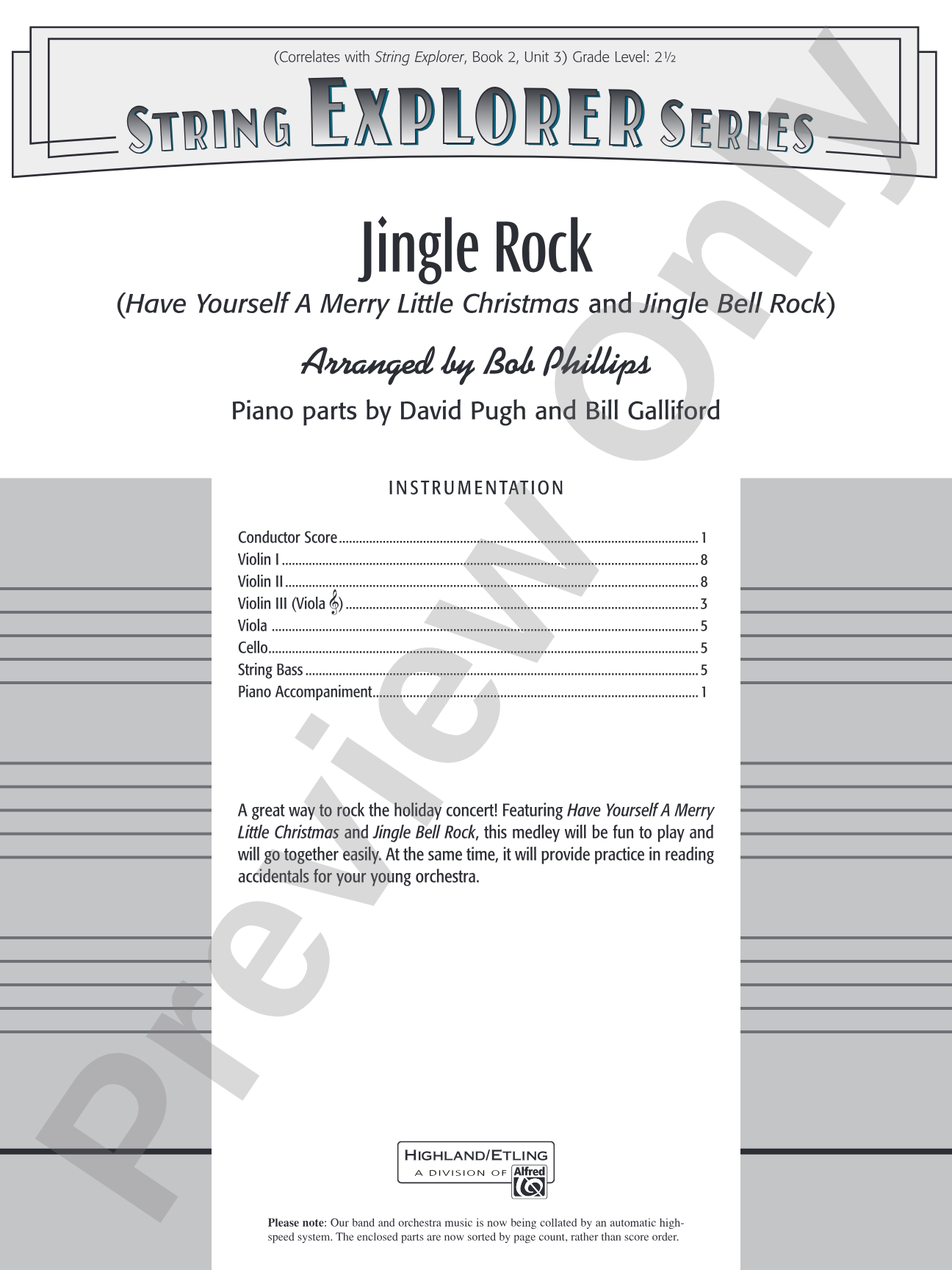
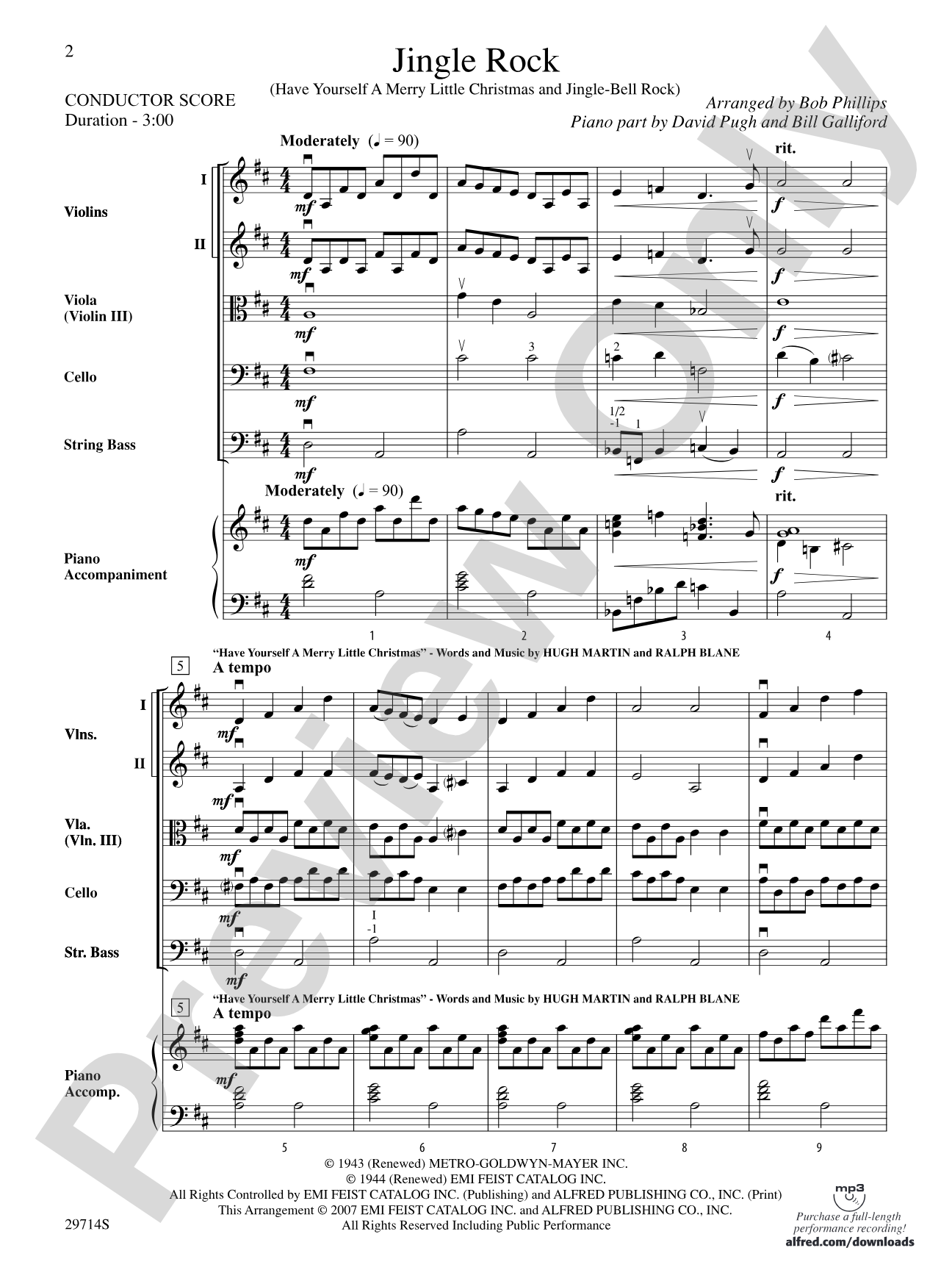
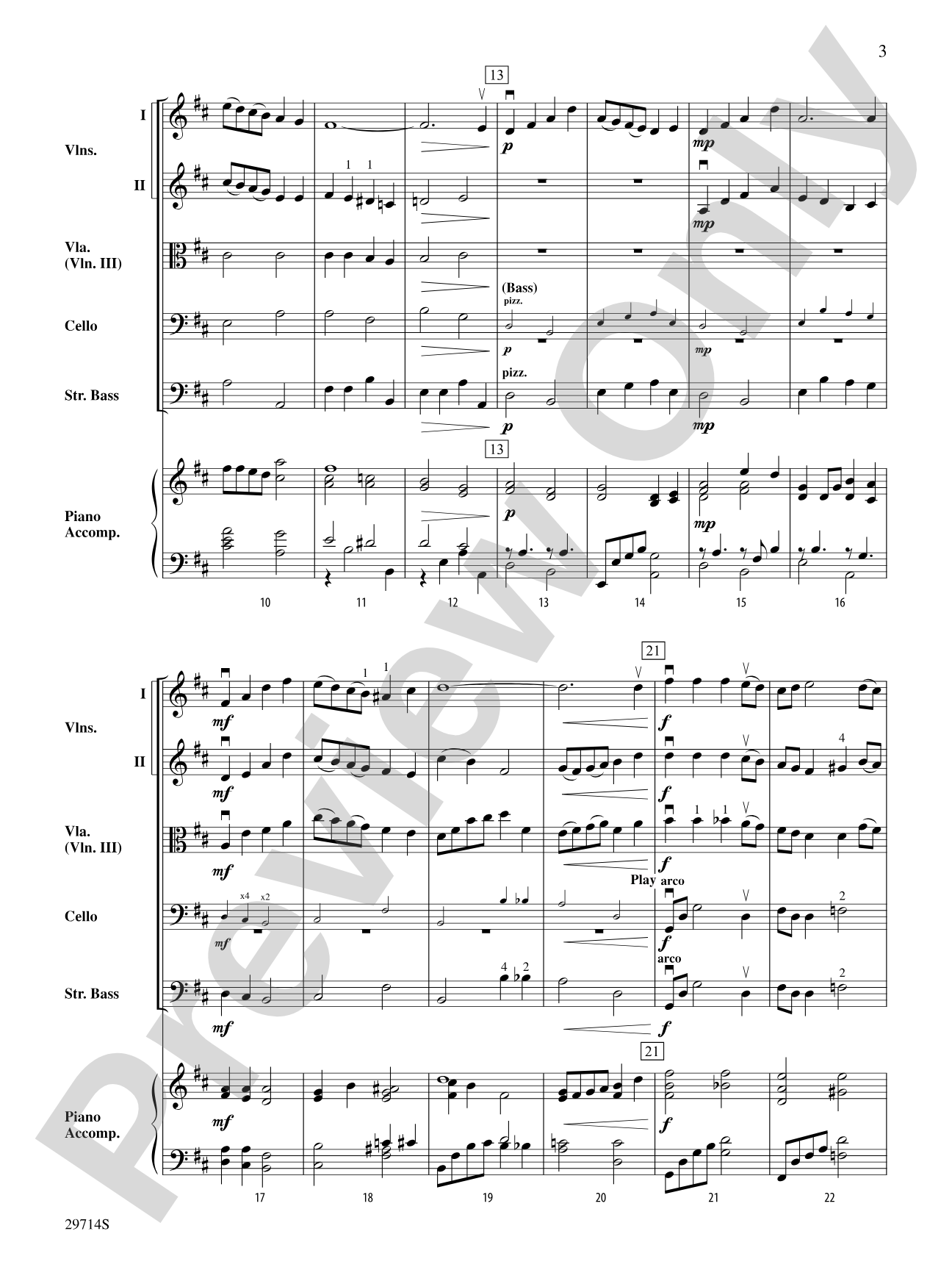
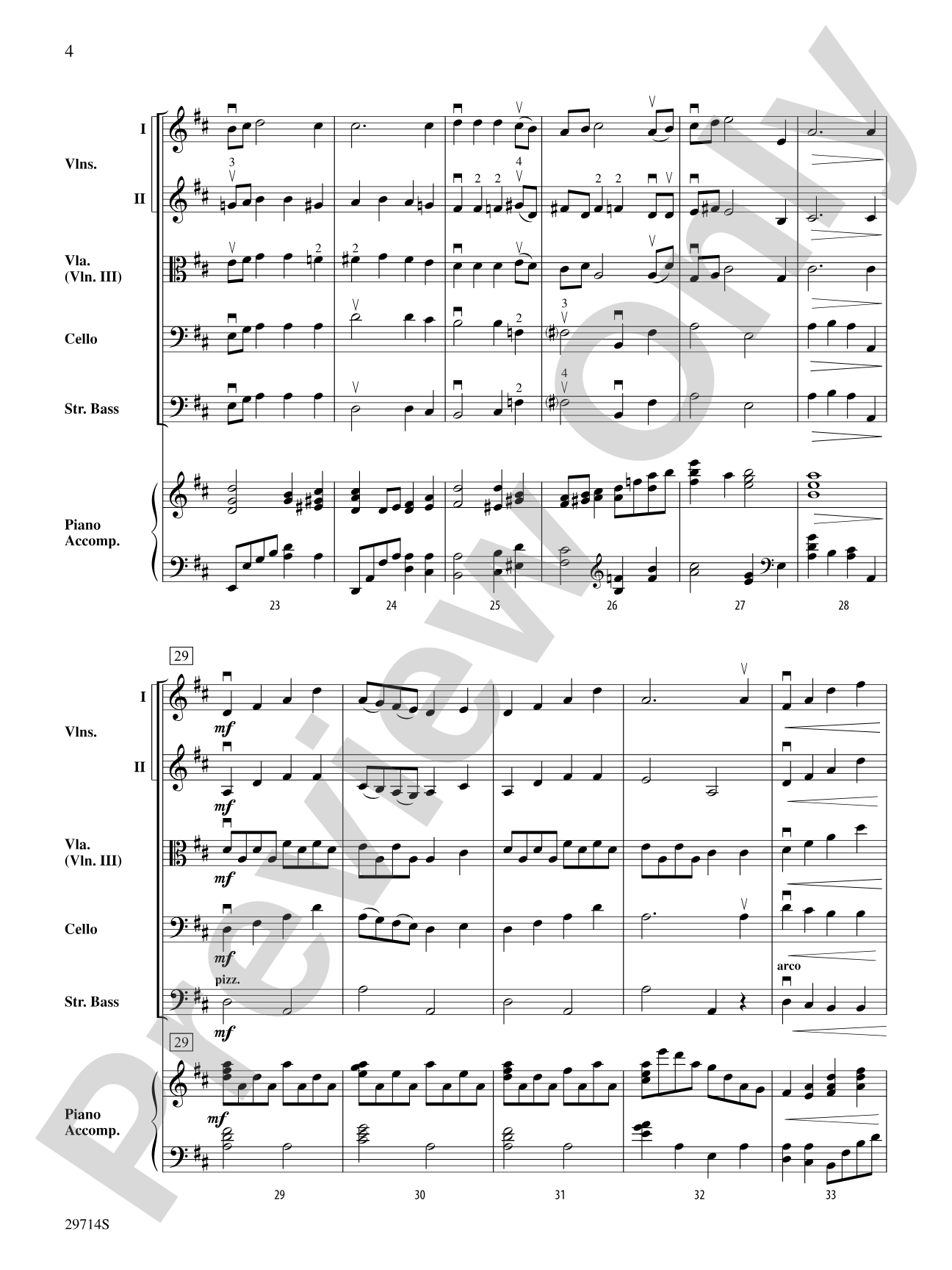
A great way to rock the holiday concert! Featuring "Have Yourself a Merry Little Christmas" and "Jingle Bell Rock," this medley will be fun to play and will go together easily. At the same time, it will provide practice in reading accidentals for your young orchestra. (3:00)
Correlates with String Explorer, Book 2, Unit 3.


Correlates with String Explorer, Book 2, Unit 3.
Don't just read it, hear it, play along with it, and watch your students grow with it. In MakeMusic Cloud, Jingle Rock: String Orchestra Conductor Score & Parts comes alive with professional accompaniment, adjustable tempo, and built-in practice tools that turn solo practice into real progress.
Open in the Player
Jump straight in and assign it today.
Start Your Free Trial
Open this title and explore the full library in minutes.
Sample Audio
1
Audio File
--:--
0:00
0:00
Sample Video
No sample videos found.
Additional Details
Series:
Highland/Etling String Explorer
Publisher:
Alfred Music
Page Count:
140
SKU:
00-PK-0005460
More about this title
About the Arranger: Bob Phillips

Bob Phillips has shaped string education for decades through his prolific output of pedagogical works and innovative approaches to ensemble playing. Since 1953, he has published over 200 compositions and arrangements for orchestras and bands, along with 25+ instructional series including Sound Innovations and the groundbreaking eclectic style collections (Fiddlers Philharmonic, Jazz Philharmonic, Rock Philharmonic, and others). His work is rooted in real classroom experience: he spent 27 years building the Saline, Michigan string program into a national model serving over 700 students, and founded the Saline Fiddlers Philharmonic, an internationally recognized folk ensemble that has performed at the White House and the Midwest Clinic.
Phillips's influence extends through conducting positions at major youth orchestras and all-state programs across the country, as well as his instructional video series String Clinics to Go. His compositions have earned ASCAP awards and appear regularly on professional concert stages. He brings both the conductor's and pedagogue's perspective to every arrangement, ensuring that music is playable, musically satisfying, and educationally purposeful.
Why we love this
Phillips knows exactly how to balance accessibility with genuine musicality at the Grade 2.5 level. This medley doesn't just work logistically; it gives young string players a reason to care about accidentals by embedding them in recognizable holiday melodies they actually want to play. The rock treatment energizes what could be a predictable holiday slot.
What to expect
The opening has warmth and sincerity that young players respect; then the rock arrangement kicks in with attitude and drive. Students feel the shift from lyrical to rhythmic without losing musical integrity. Three minutes of genuine fun that doesn't talk down to the ensemble.
Who it's for
Young string orchestras in their second or third year of study who are ready to tackle a full score with multiple key areas and chromatic movement. This works especially well for ensembles using String Explorer Book 2, where the reading skills align with the medley's demands. Holiday concerts need energy and polish at this level; this delivers both.
How to get the most out of it
- Establish the groove first. Have your rhythm section lock in the rock feel before bringing the full ensemble in; the accidentals will fall into place once the pulse is secure.
- Use the key signature changes as a teaching moment. Phillips places accidentals deliberately throughout both melodies, so point out where they occur in rehearsal rather than hoping students find them during playback.
- Balance the melody line carefully between first and second violins. The arrangement divides the main themes; make sure both sections understand they're carrying equal weight.
- Keep the energy consistent from "Have Yourself a Merry Little Christmas" through the transition into "Jingle Bell Rock." The shift in character should feel like a gear change, not a stumble.
How to use it
Program this as your second or third piece on a winter concert, after something more formal. The three-minute runtime works perfectly as a bridge to a longer finale or as a standalone crowd-pleaser that resets audience energy. It works equally well in a holiday concert or as winter concert variety programming.
Skills your students will build
- Reading accidentals across multiple key areas (F major and G major)
- Executing clean key signature changes mid-piece
- Playing rock rhythm patterns with precision and swing feel
- Balancing melody and accompaniment lines in different voice ranges
- Maintaining ensemble pulse through textural shifts