Jingle Jive: Bassoon Sheet Music Preview

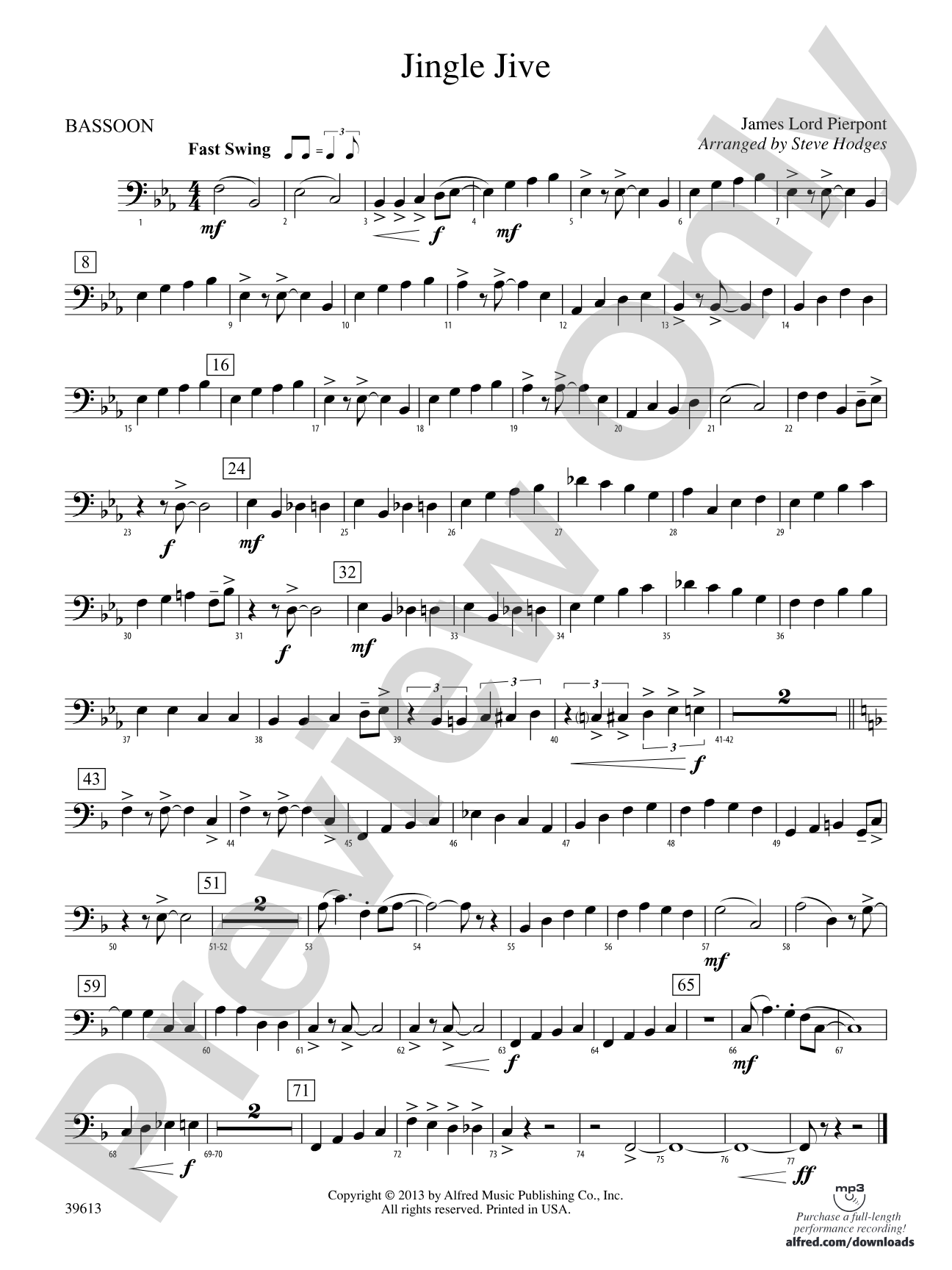
Jingle Jive: Bassoon

By James Lord Pierpont / arr. Steve Hodges

Grade: 2 (Medium Easy)

Item: 00-PC-0015888_B1

Digital Download
$3.00
Description
This clever arrangement of "Jingle Bells" invites all sections of the band to have some fun. With jazzy variations of the melody, call-and-response interplay, and a dynamic "big band" ending, this chart will provide a perfect upbeat finale to a holiday concert! (1:55)

Don't just read it, hear it, play along with it, and watch your students grow with it. In MakeMusic Cloud, Jingle Jive: Bassoon comes alive with professional accompaniment, adjustable tempo, and built-in practice tools that turn solo practice into real progress.

Sample Audio
0:00
0:00
Sample Video
Additional Details
Series: Challenger Band Series
Publisher: Alfred Music
Page Count: 128
SKU: 00-PC-0015888_B1

More about this title

About the Composer: James Lord Pierpont

James Lord Pierpont (1822-1893) composed one of America's most enduring holiday songs. "Jingle Bells" first appeared in 1857 as "One Horse Open Sleigh" and became a fixture of Christmas celebrations worldwide. Though Pierpont wrote other compositions, this single work secured his place in musical history and continues to inspire arrangements for every conceivable ensemble.

For band directors, Pierpont's melody offers an ideal vehicle for teaching musicianship across generations. The tune's clarity and buoyancy make it instantly recognizable, yet it remains flexible enough to accommodate jazz harmony, dynamic orchestration, and creative reharmonization. Band students encounter "Jingle Bells" as both a cultural touchstone and a musical laboratory.

Why we love this

Steve Hodges captures the infectious energy of "Jingle Bells" while keeping the arrangement accessible to Grade 2 players. The jazzy variations and call-and-response writing energize every section without creating independence problems that slow down young ensembles, and that big band ending gives your students a genuine moment to shine on stage.

What to expect

The piece gallops forward with the warmth of a familiar tune, then pivots into clever jazz reharmonies that surprise without confusing. Call-and-response trading reminds you of a band having a conversation, and that big band closer wraps everything in celebratory brass punch and rhythmic precision.

Who it's for

Grade 2 concert bands seeking a holiday finale that genuinely engages every chair. Directors who want students to feel the swing of jazz phrasing without needing sophisticated jazz backgrounds will find this arrangement reaches that sweet spot. Holiday concerts benefit from a closer with lift and humor rather than another reverent arrangement.

How to get the most out of it

  • Balance the call-and-response exchanges by having players mark which sections respond when; this prevents the rhythm section from overdriving while the melody trades back and forth.
  • Treat the jazzy variations as character changes rather than tempo shifts. Light articulation on the syncopated figures keeps the bounce authentic without rushing.
  • Build dynamic shape into the final big band section by bringing dynamics from mezzo-forte into a fuller finish. The students hear their own power when the whole band locks together on those last chords.
  • Record a run-through at performance tempo early in rehearsals so students can hear how the whole arrangement sits together. This reference point keeps section rehearsals from getting bogged down.

How to use it

Close your winter concert with this piece after a program of more traditional selections. The shift to jazz color and playful energy lifts the audience mood and sends people home smiling. Consider pairing it with a slower carol earlier in the concert so the contrast feels intentional rather than tonal whiplash.

Skills your students will build

  • Swing eighth-note articulation and feel
  • Call-and-response ensemble coordination
  • Syncopated rhythmic accuracy in jazz contexts
  • Dynamic contrast between solo and tutti sections
  • Balanced blending in reharmonized chord progressions

You May Also Like