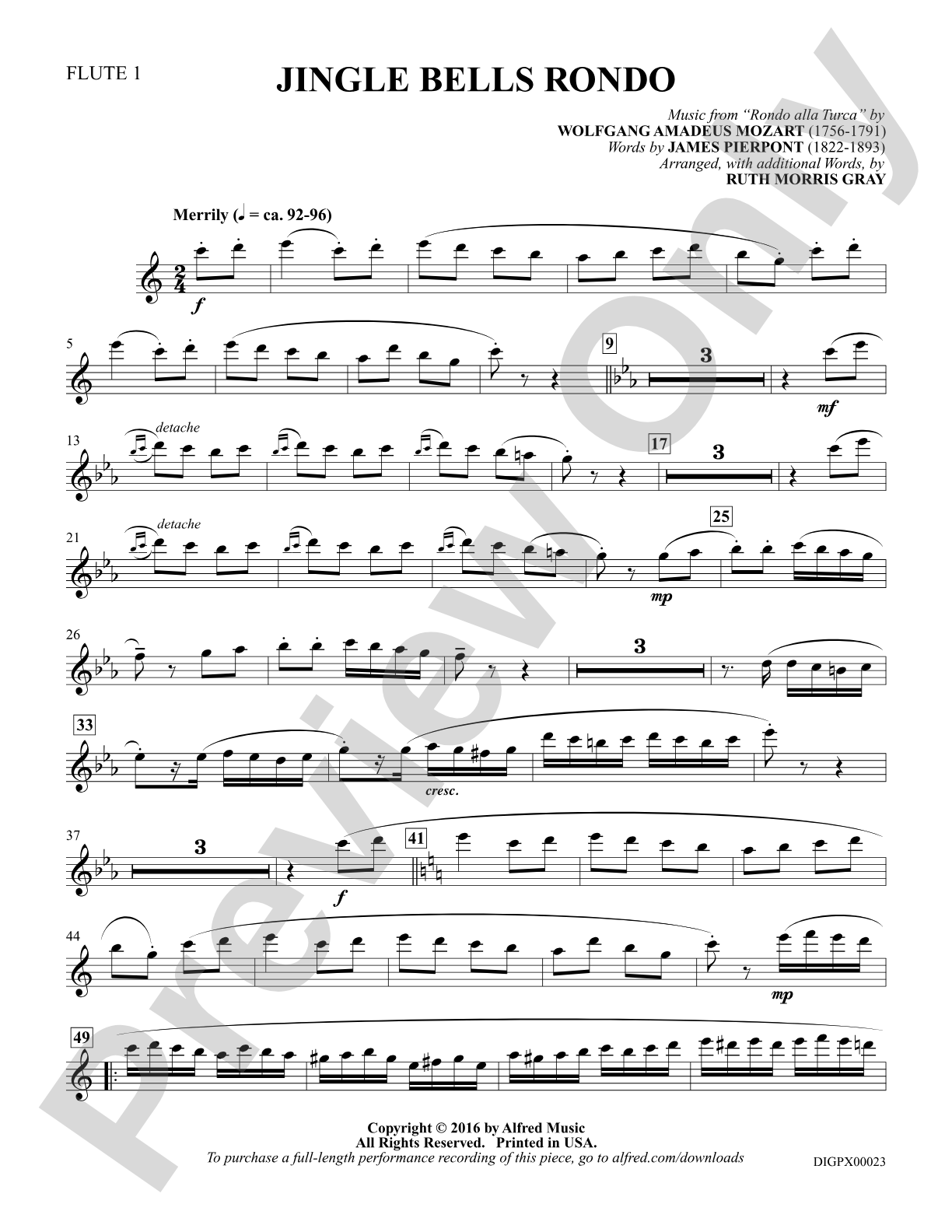
Jingle Bells Rondo: Flute 1 Sheet Music Preview

Jingle Bells Rondo: Flute 1: Choral SoundPax

Music from "Rondo alla Turca"

Words by James Pierpont, music by Wolfgang Amadeus Mozart / arr., with additional words, by Ruth Morris Gray

Item: 00-PC-0017551_F1

Digital Download
$5.00
Description
Mozart's "Rondo alla Turca" is the basis for this innovative twist on "Jingle Bells!" Your audience will love catching the rapid text as the familiar and sequential melody is volleyed through the choir. Pierpont's rarely-heard third verse is a hoot. "Oh, what fun it is!"

Don't just read it, hear it, play along with it, and watch your students grow with it. In MakeMusic Cloud, Jingle Bells Rondo: Flute 1: Choral SoundPax comes alive with professional accompaniment, adjustable tempo, and built-in practice tools that turn solo practice into real progress.

Sample Audio
0:00
0:00
Sample Video
Additional Details
Series: Alfred Choral Designs
Publisher: Alfred Music
Page Count: 92
SKU: 00-PC-0017551_F1
Instrumentation: SoundPax

More about this title

About the Composer: Wolfgang Amadeus Mozart

Wolfgang Amadeus Mozart (1756-1791) composed over 600 works across every major genre, establishing himself as one of history's most prolific and influential musicians before his death at 35. His instrumental rondos, including the famous "Rondo alla Turca" from Piano Sonata No. 11, showcase his gift for memorable melody, structural clarity, and rhythmic vitality. These qualities make his music exceptionally singable and adaptable for choral arrangements that maintain both sophistication and accessibility.

Why we love this

Ruth Morris Gray's arrangement captures the playful speed and precision of Mozart's "Rondo alla Turca" while keeping the text legible and the spirit of "Jingle Bells" alive. Audiences recognize the source material immediately, but the rapid delivery and clever text placement create genuine surprise and delight. Including Pierpont's overlooked third verse adds substance and humor that lifts this beyond a novelty arrangement into something singers actually enjoy performing.

What to expect

It's exuberant and crystalline, with text bouncing between voices like a musical conversation. The rapid-fire delivery creates excitement and momentum, while Mozart's elegant melodic contour keeps the whole thing sophisticated and satisfying to sing.

Who it's for

This arrangement works beautifully for mixed choirs and chamber ensembles seeking a showstopper with genuine musicality. Both community choirs and school choral programs will find the piece accessible yet engaging, with enough musical substance to satisfy singers who appreciate Mozart alongside the holiday context.

How to get the most out of it

  • Isolate the text exchanges in rehearsal before layering in the full harmonic texture. Practice rapid articulation and clarity without sacrificing Mozart's elegant phrasing.
  • Shape the sequential melody so that each voice part's moment of the main tune registers clearly in performance. This requires careful balance and awareness of who is carrying the tune at any given moment.
  • Lean into the Rondo's characteristic rhythmic momentum. Maintain forward energy without rushing, particularly through the rapid passages where text clarity matters most.
  • Use the recorded accompaniment to lock ensemble precision during the fastest sections. This allows singers to trust the tempo and focus entirely on word clarity and blend.

How to use it

Program this as a warm, unexpected addition to a winter concert, particularly in the second half where audiences have settled in and are ready for something clever. It pairs well alongside more traditional carols and classical choral works, offering the perfect moment of humor and surprise without feeling out of place on a concert of varied holiday fare.

Skills your students will build

  • Rapid text articulation and clarity in ensemble setting
  • Tracking melody and harmony as the main tune transfers between voice parts
  • Balancing Mozart's classical phrasing with contemporary performance energy
  • Reading and performing rhythmically complex sequential passages
  • Listening and ensemble awareness across quick textural changes

You May Also Like