
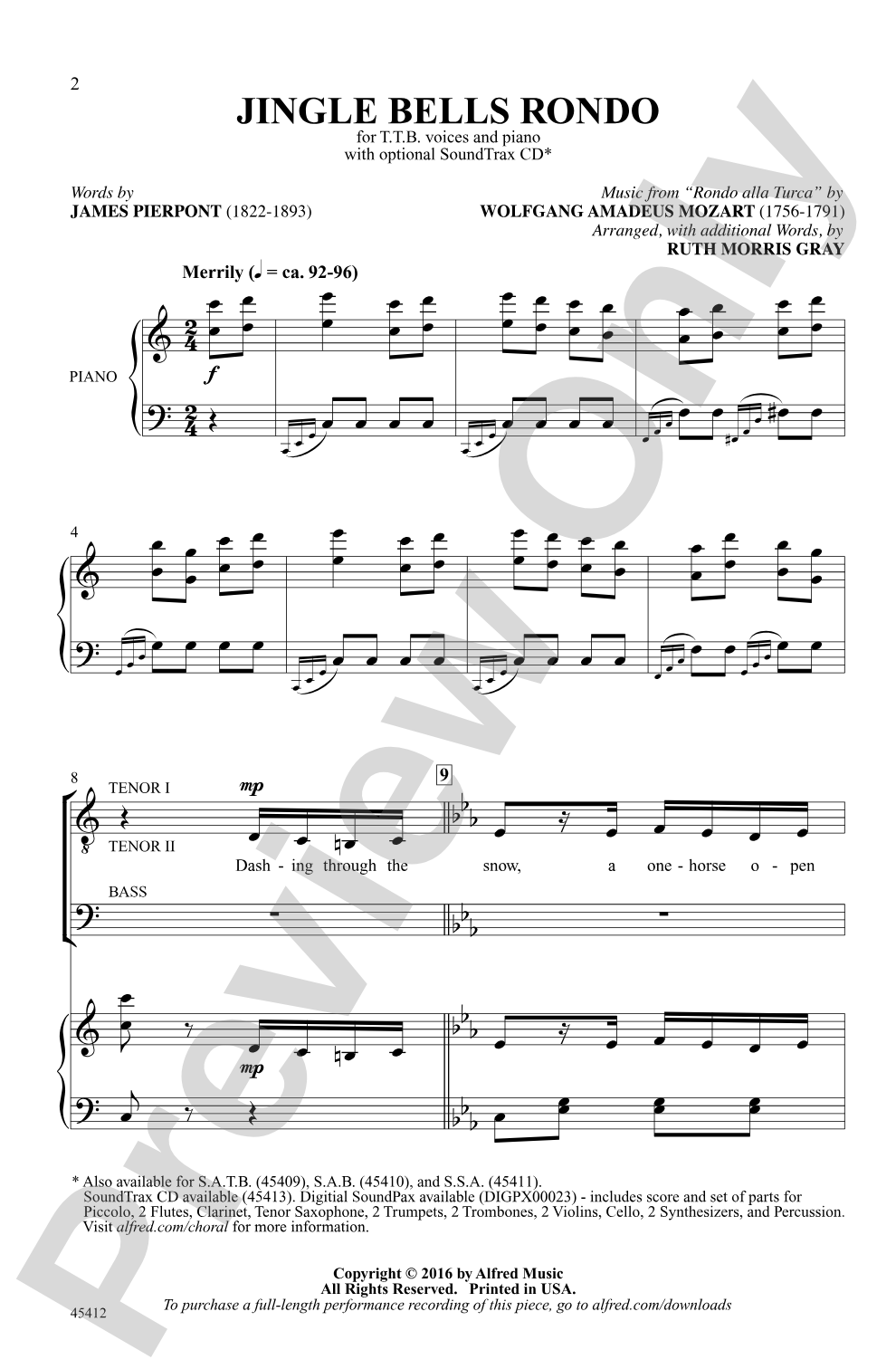
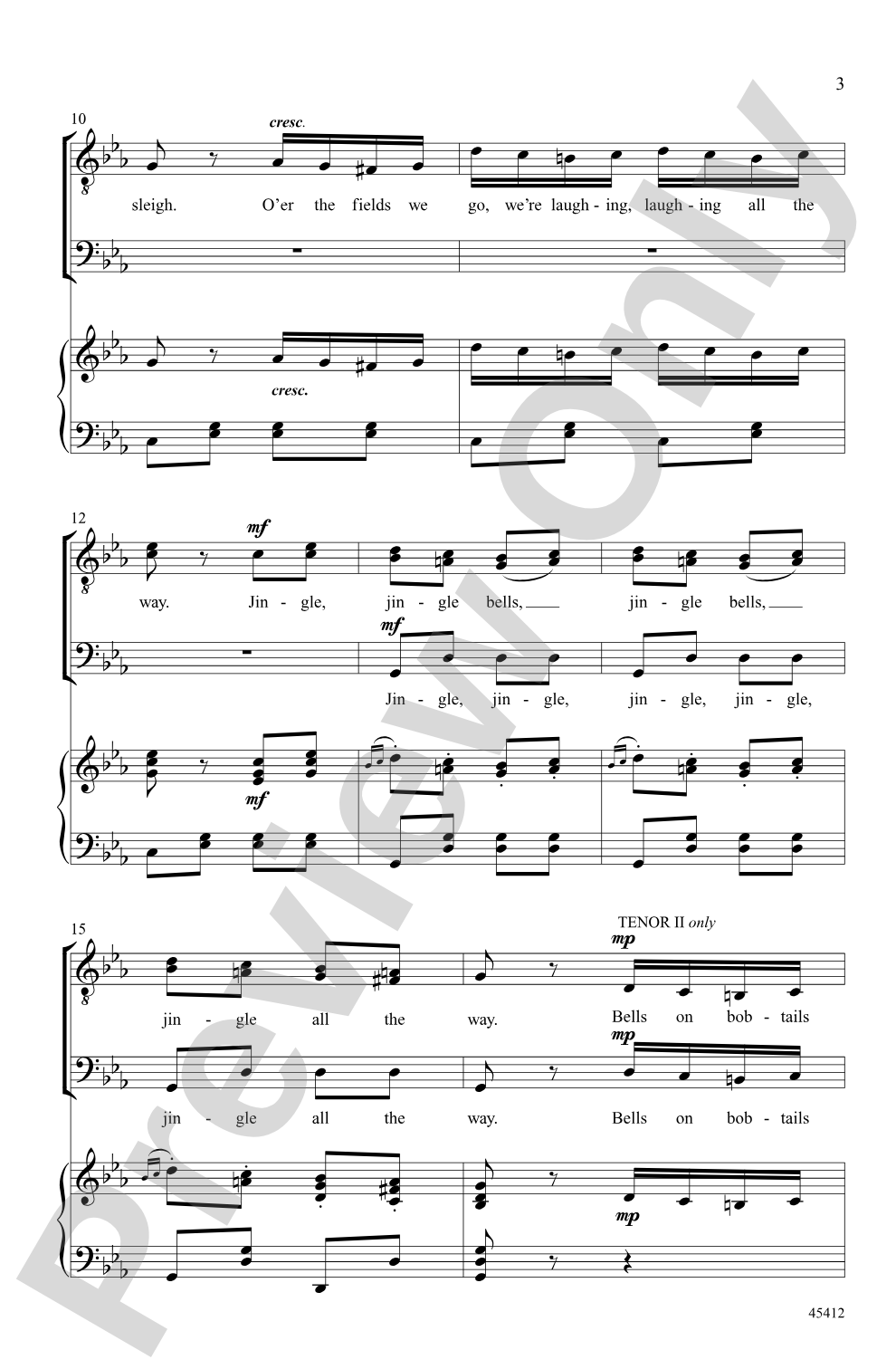
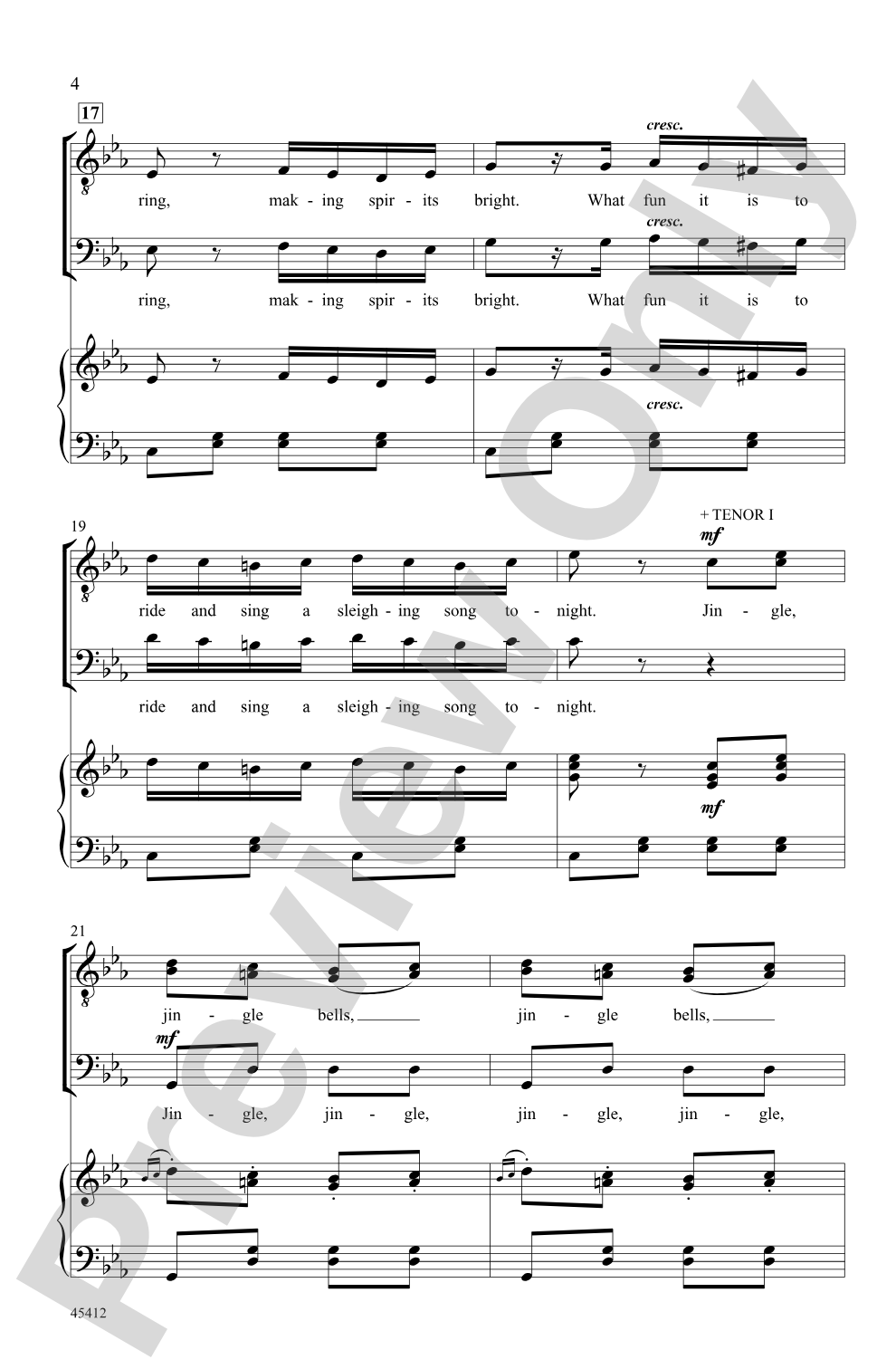
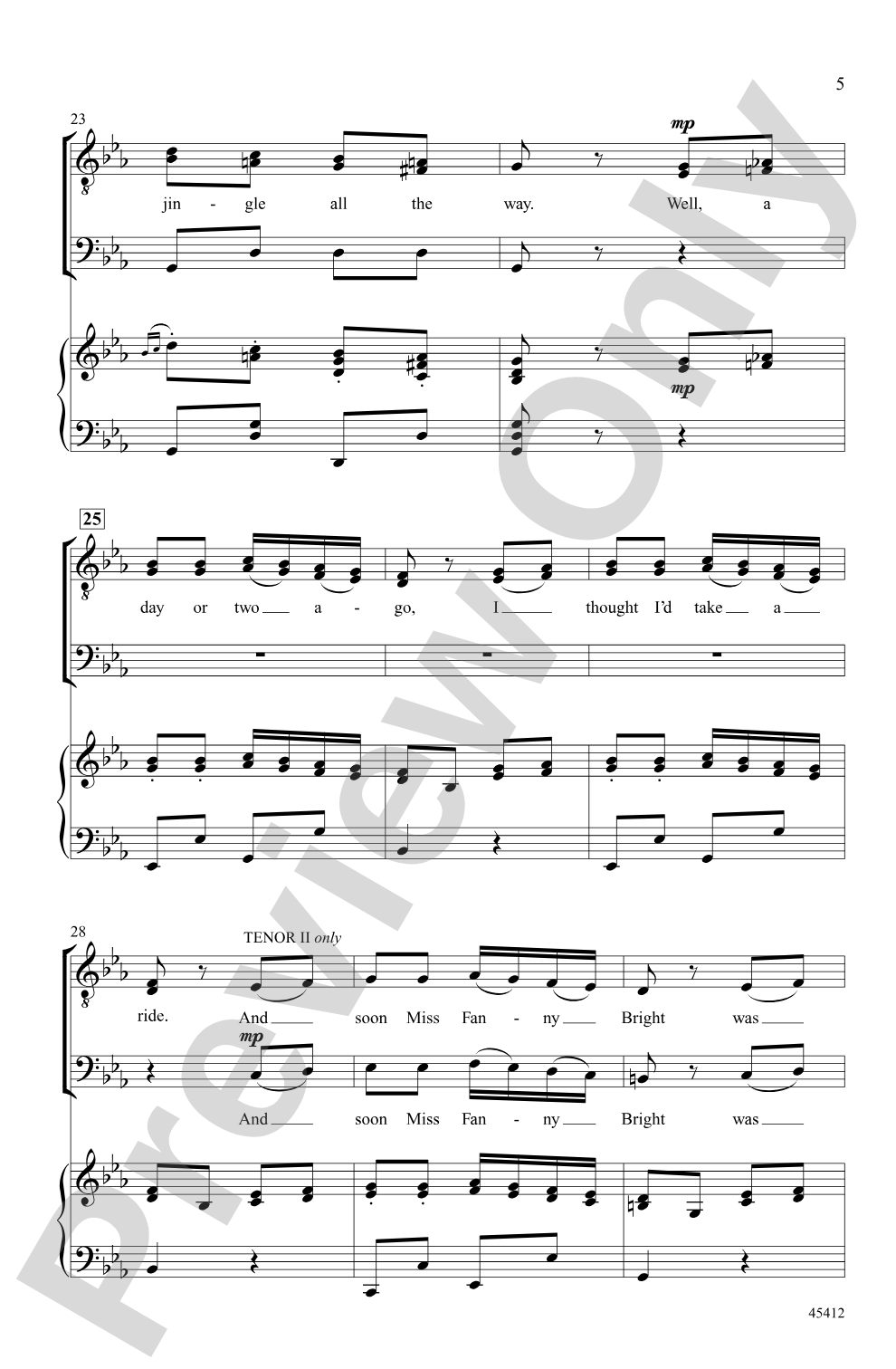

Jingle Bells Rondo: TTB Choral Octavo
Music from "Rondo alla Turca"
Words by James Pierpont, music by Wolfgang Amadeus Mozart / arr., with additional words, by Ruth Morris Gray
Item: 00-PO-0003657
$2.15
Minimum order quantity: 20 copies
Pickup currently not available
Related Items
Jingle Bells Rondo: SoundTrax Digital Audio Download |
$27.99
|
View | |
Jingle Bells Rondo: SATB Choral Octavo |
$2.15
|
View | |
Jingle Bells Rondo: SAB Choral Octavo |
$2.15
|
View | |
Jingle Bells Rondo: SSA Choral Octavo |
$2.15
|
View | |
Jingle Bells Rondo: Choral SoundPax |
$60.00
|
View | |
Jingle Bells Rondo: SATB Choral Octavo |
$2.15
|
View | |
Jingle Bells Rondo: SAB Choral Octavo |
$2.15
|
View | |
Jingle Bells Rondo: SSA Choral Octavo |
$2.15
|
View | |
Jingle Bells Rondo: TTB Choral Octavo |
$2.15
|
View | |
Jingle Bells Rondo: Choral Octavo SoundTrax CD |
$27.99
|
View | |
Jingle Bells Rondo: Choral SoundPax |
$60.00
|
View |
Description
Mozart's "Rondo alla Turca" is the basis for this innovative twist on "Jingle Bells!" Your audience will love catching the rapid text as the familiar and sequential melody is volleyed through the choir. Pierpont's rarely-heard third verse is a hoot. "Oh, what fun it is!"


Jingle Bells Rondo: TTB Choral Octavo isn't in MakeMusic Cloud just yet...but it could be. Let us know you'd like to see it, and you'll help shape what comes next. In the meantime, start a free trial and dive into thousands of interactive titles your students can play along with today.
Request This Title
Tell us you want it.
Start Your Free Trial
Explore everything that's ready to play right now.
Sample Audio
1
Audio File
--:--
0:00
0:00
Sample Video
No sample videos found.
Additional Details
Series:
Alfred Choral Designs
Publisher:
Alfred Music
Page Count:
20
SKU:
00-PO-0003657
More about this title
About the Composer: Wolfgang Amadeus Mozart
Wolfgang Amadeus Mozart (1756-1791) composed with extraordinary fluency across every major genre of his time. His instrumental works, particularly his piano concertos and chamber music, showcase the clarity and elegance that made him a bridge between the Classical and Romantic eras. The "Rondo alla Turca" from his Piano Sonata No. 8 in A Major remains one of his most recognizable keyboard pieces, celebrated for its infectious rhythmic drive and exotic harmonic color.
Mozart's music continues to anchor music education because it demands precision, musicality, and ensemble discipline all at once. Teachers return to his work repeatedly because students learn something new with each exposure.
Why we love this
Ruth Morris Gray's arrangement captures the playful energy of both the Rondo and Pierpont's original text, creating a piece that feels spontaneous and joyful rather than clever-for-clever's-sake. The rapid text exchange among the three voices gives singers something genuinely fun to execute, and your audience gets the delight of recognizing Mozart while hearing a holiday favorite. This works equally well as a contest selection or a concert closer that leaves audiences smiling.
What to expect
Playful and propulsive, like a musical conversation that keeps looping back on itself. The Rondo's driving rhythm creates forward momentum while the witty text exchanges make singers feel like they're telling a joke together rather than performing a formal arrangement.
Who it's for
TTB choirs looking for a winter program piece that bridges sophistication and fun. This arrangement works for advanced high school choirs, college groups, and community ensembles that want to program Mozart without sacrificing holiday spirit or audience engagement.
How to get the most out of it
- Anchor the rhythmic precision by having the TB section lock the foundational Rondo pattern early in rehearsal, then layer in the TTB variations once that groove is solid.
- Treat the text exchange like a game of musical ping-pong: each section should feel alert and responsive, not labored. Lightness in the rhythm will help the rapid text sit clearly.
- Shape phrases in two-bar units rather than four to match the quick conversational exchanges and keep the momentum forward.
- Balance tuning carefully in the section that layers all voices together; the close intervals in the Rondo harmony can reveal intonation issues fast. Lock it slowly first.
How to use it
Use this as a second-half opener in a winter concert, especially after a contrasting slower piece. It refreshes audience energy and bridges the gap between concert repertoire and holiday tradition in a way that feels intentional rather than obligatory.
Skills your students will build
- Rapid text delivery and diction clarity within a fast-moving harmonic context
- Call-and-response singing across three distinct voice parts
- Rhythmic precision and subdivision in a syncopated accompaniment pattern
- Harmonic listening in close intervals characteristic of Classical keyboard writing
- Stylistic awareness of Classical form adapted to contemporary choral arranging