Jingle Bells: 2nd Percussion Sheet Music Preview

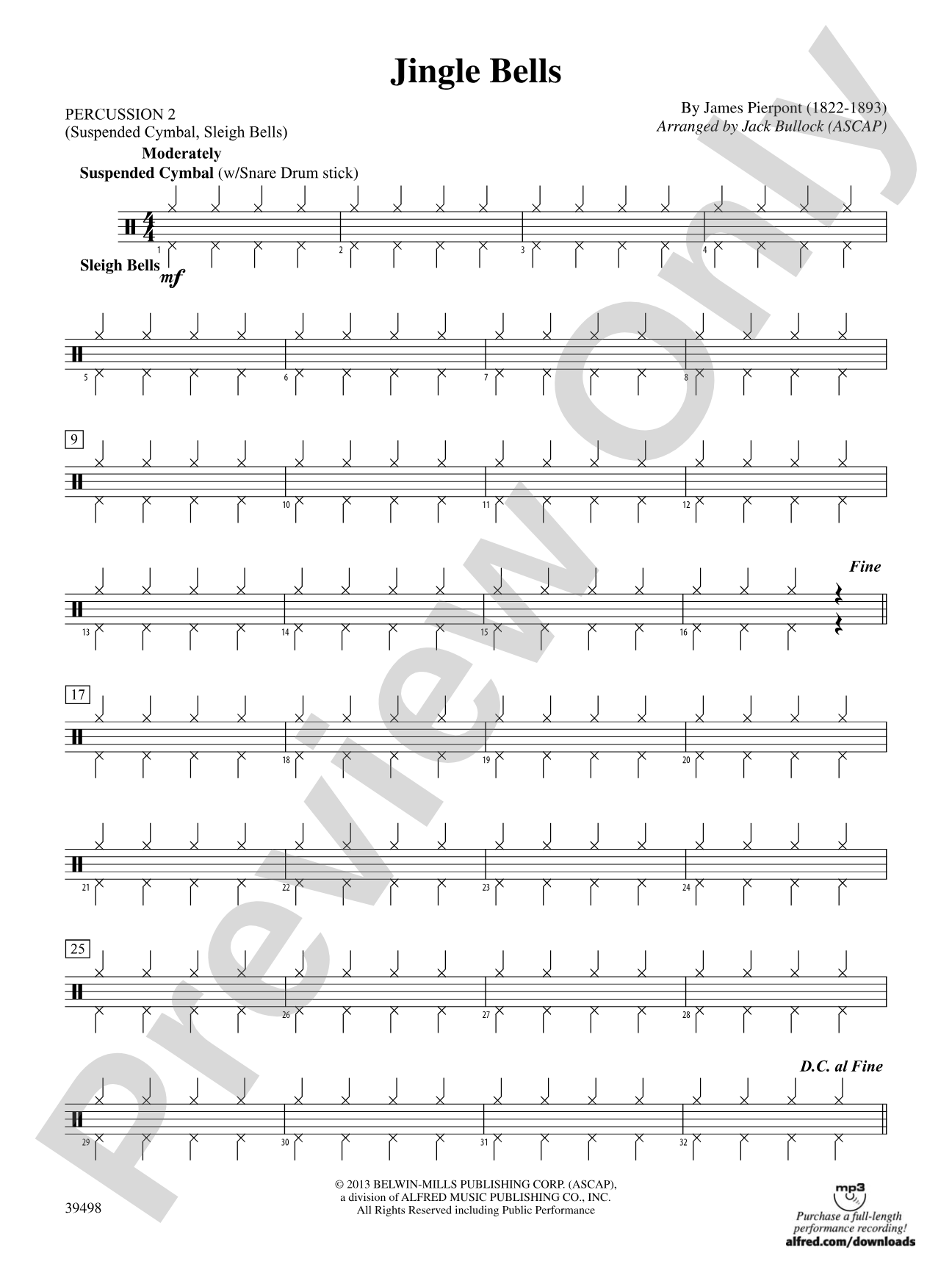
Jingle Bells: 2nd Percussion

By James Pierpont / arr. Jack Bullock

Grade: 0.5 (Very Easy)

Item: 00-PC-0015816_PC2

Digital Download
$3.00
Description
The most recognizable melody at holiday time is presented in this arrangement for very young performers and older listeners. You won't find a more approachable arrangement anywhere with the opportunity to abbreviate to the chorus. It has it all and James Pierpont would be proud! (1:45)

Don't just read it, hear it, play along with it, and watch your students grow with it. In MakeMusic Cloud, Jingle Bells: 2nd Percussion comes alive with professional accompaniment, adjustable tempo, and built-in practice tools that turn solo practice into real progress.

Sample Audio
0:00
0:00
Sample Video
Additional Details
Series: Belwin Very Beginning Band
Publisher: Alfred Music
Page Count: 130
SKU: 00-PC-0015816_PC2

More about this title

About the Composer: James Pierpont

James Pierpont (1822-1893) composed "Jingle Bells" in 1857, originally titled "One Horse Open Sleigh." The song became one of the most enduring melodies in American popular music, instantly recognizable across generations and cultures. Pierpont's gift for writing memorable, singable tunes that lodge themselves in listeners' minds makes his work invaluable for music education, especially at the earliest levels where exposure to quality melody shapes musical taste.

Why we love this

Jack Bullock's arrangement strips away all complications while keeping the melody front and center, making this perfect for bands taking their first steps into concert repertoire. The option to abbreviate to the chorus means you can shape the performance to your group's readiness without sacrificing musical integrity. Directors will appreciate that very young performers get to play a piece their audiences genuinely want to hear, creating immediate success and audience connection.

What to expect

Bright, joyful, and immediately familiar. The arrangement preserves the tune's infectious charm while keeping the harmonic and rhythmic language straightforward enough that young players can focus on playing together rather than deciphering notation. There's something genuinely fun about hearing one of America's most beloved melodies come to life in a concert hall.

Who it's for

Beginning concert band students, particularly those in Grade 0.5 level ensembles or mixed-ability groups needing accessible holiday repertoire. This works equally well for elementary school bands, middle school programs starting their first semester, or any ensemble wanting a no-risk entrance into seasonal programming.

How to get the most out of it

  • Nail the rhythmic confidence of the chorus before adding the verse; the repetitive rhythm pattern is your students' best tool for locking in together.
  • Balance your melody players carefully so the tune sings over the accompaniment rather than disappearing into it.
  • Consider using the abbreviated format (chorus only) for your first run-through in rehearsal to build momentum and confidence quickly.
  • Keep the tempo steady and moderate; resist the urge to rush, which young players often do with familiar material.

How to use it

Program this as your entry point into holiday concerts, where audience goodwill and recognition work to your advantage. Pair it with one or two other seasonal pieces at a slightly higher level to show growth across your program. The abbreviation option lets you use it early in the school year as a full piece while you're still building fundamentals, then return to it for a winter concert with greater polish.

Skills your students will build

  • Playing in unison and simple harmony
  • Maintaining steady tempo in a full ensemble
  • Reading basic articulation and dynamic markings
  • Balancing melody and accompaniment parts
  • Playing with rhythmic precision in straightforward meters

You May Also Like