
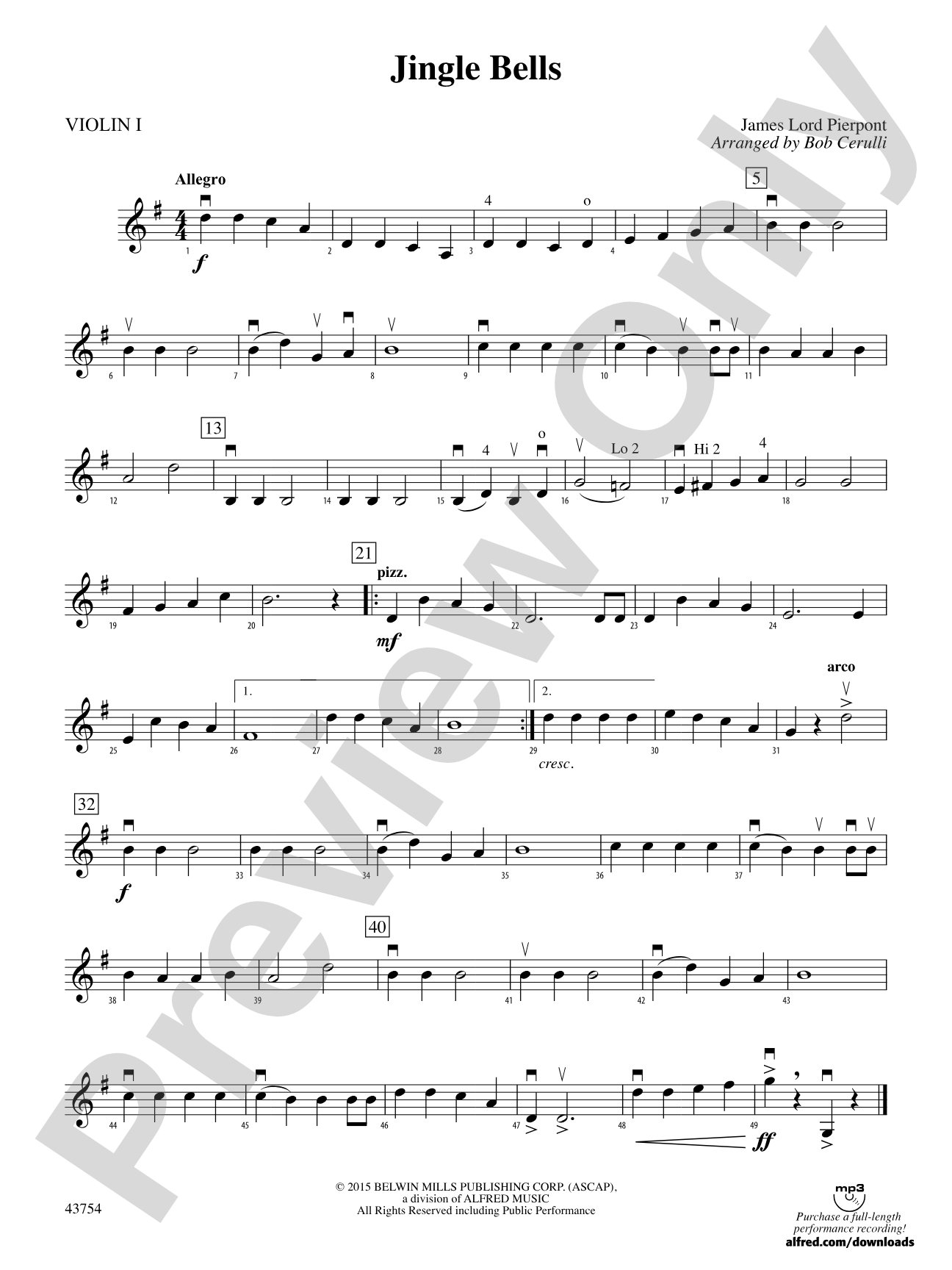

Jingle Bells: 1st Violin
By James Lord Pierpont / arr. Bob Cerulli
Grade: 1.5
Item: 00-PC-0016859_VN1
$7.99
Pickup currently not available
Description
The perfect level for very young players, this arrangement is designed to sound great at almost any tempo. Enjoy! (2:00)


Don't just read it, hear it, play along with it, and watch your students grow with it. In MakeMusic Cloud, Jingle Bells: 1st Violin comes alive with professional accompaniment, adjustable tempo, and built-in practice tools that turn solo practice into real progress.
Open in the Player
Jump straight in and assign it today.
Start Your Free Trial
Open this title and explore the full library in minutes.
Sample Audio
1
Audio File
--:--
0:00
0:00
Sample Video
Additional Details
Series:
Orchestra Expressions
Publisher:
Alfred Music
Page Count:
72
SKU:
00-PC-0016859_VN1
Instrumentation:
strings w/ vln 3, pno acc, drumset
More about this title
About the Composer: James Lord Pierpont
James Lord Pierpont (1822-1893) was an American composer and musician who created one of the most enduring melodies in Western music. Though his career spanned various musical roles and compositions, "Jingle Bells" (originally titled "One Horse Open Sleigh") became his defining legacy when it was published in 1857. The song's immediate popularity and universal appeal have made it a staple of holiday music education for generations of young musicians.
Pierpont's gift was his ability to craft simple, singable, and memorable melodies that connect with audiences of all ages. His work demonstrates how economical musical ideas, when well-crafted, transcend time and become part of our cultural fabric. For music educators, his compositions serve as excellent teaching tools precisely because their accessibility does not diminish their musical integrity.
Why we love this
Bob Cerulli's arrangement respects what makes this melody special: it remains instantly recognizable while giving young string players a genuine orchestral experience. The flexibility at "almost any tempo" is a tremendous gift to conductors working with developing ensembles, eliminating the pressure to hit a specific metronome marking and allowing you to lead from where your group actually sits musically.
What to expect
Crisp winter air, jingling bells, and the simple joy of motion across snow. The arrangement maintains the bright energy and infectious rhythmic momentum of the original while staying well within the technical reach of young players. You'll hear genuine orchestral color and forward-moving music that feels celebratory without being chaotic.
Who it's for
String orchestras at the beginning of their journey with players who are still developing fundamental skills like consistent tone production, basic shifting (if applicable), and rhythmic precision. This arrangement works equally well for a full orchestra or a smaller ensemble, making it accessible whether you're conducting a school strings program or a community youth orchestra.
How to get the most out of it
- Shape the melody with gentle dynamic curves rather than playing it straight; even at Grade 1.5, young players respond to the shape of a phrase and will sound more musical when invited to shape it with you.
- Use the optional violin 3 and piano accompaniment strategically: feature them fully in early rehearsals to establish harmonic context, then gradually let the string lines carry more independence as confidence grows.
- Let the tempo breathe with the ensemble's technical comfort; a slightly slower tempo that feels secure will always sound better than a faster one where players are scrambling.
- Balance the drumset part lightly so it enhances festive character without overwhelming the string texture; this is a snow-centered carol, not a sleigh race.
How to use it
Program this for a mid-winter concert as a crowd-pleasing opener that sets a festive tone while showcasing your young ensemble's growing ensemble skills. Its familiar melody and short duration (2:00) make it an ideal pairing with other holiday selections or winter-themed works that demand more technical sophistication; it anchors a program while allowing you to program more ambitious pieces around it.
Skills your students will build
- Playing unified rhythmic patterns across multiple string lines
- Maintaining consistent tone at varied dynamic levels
- Responding to conductor tempo adjustments mid-piece
- Balancing melody and accompaniment within an ensemble texture
- Reading simple string parts with occasional shifts or extensions