
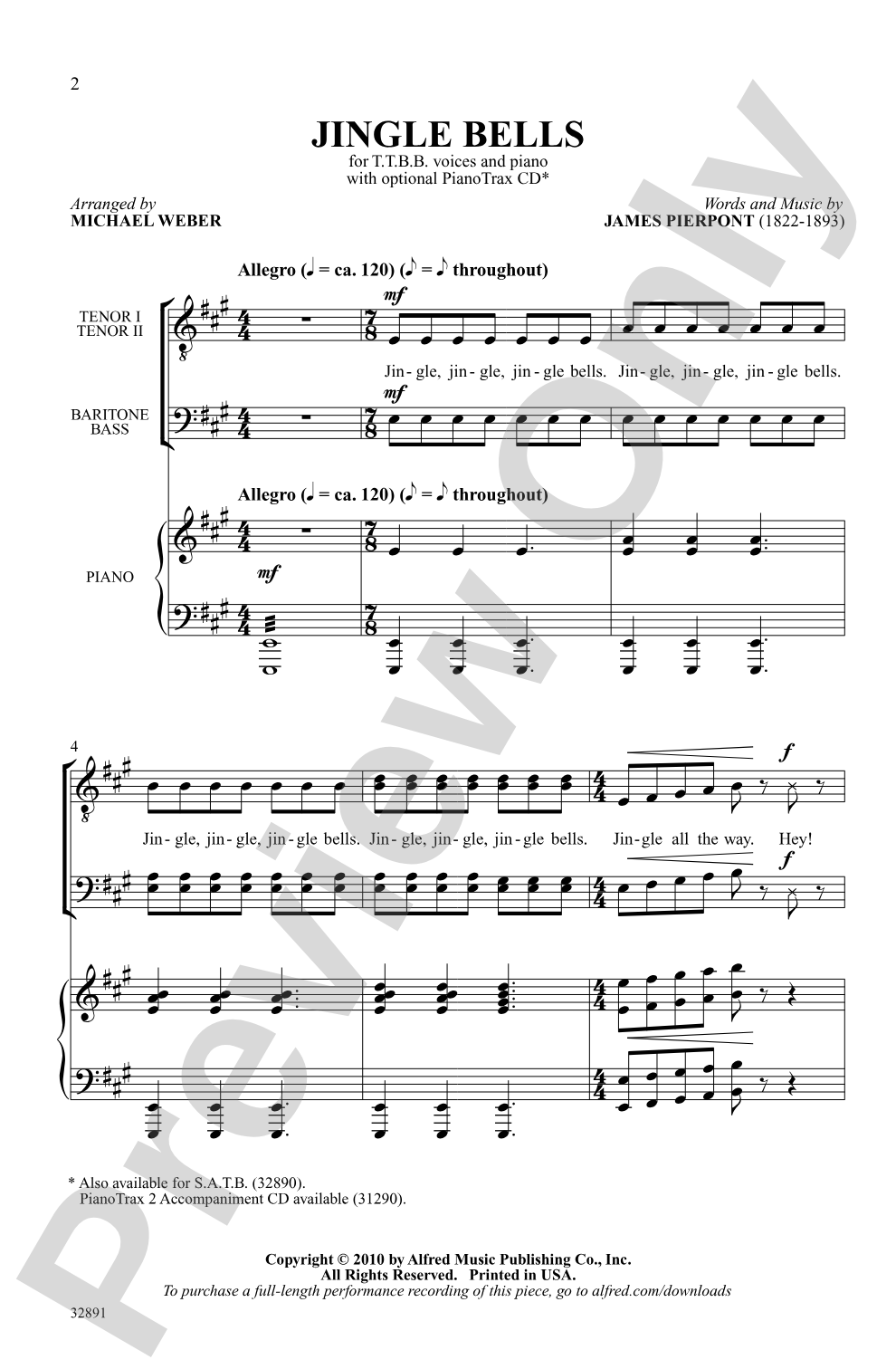
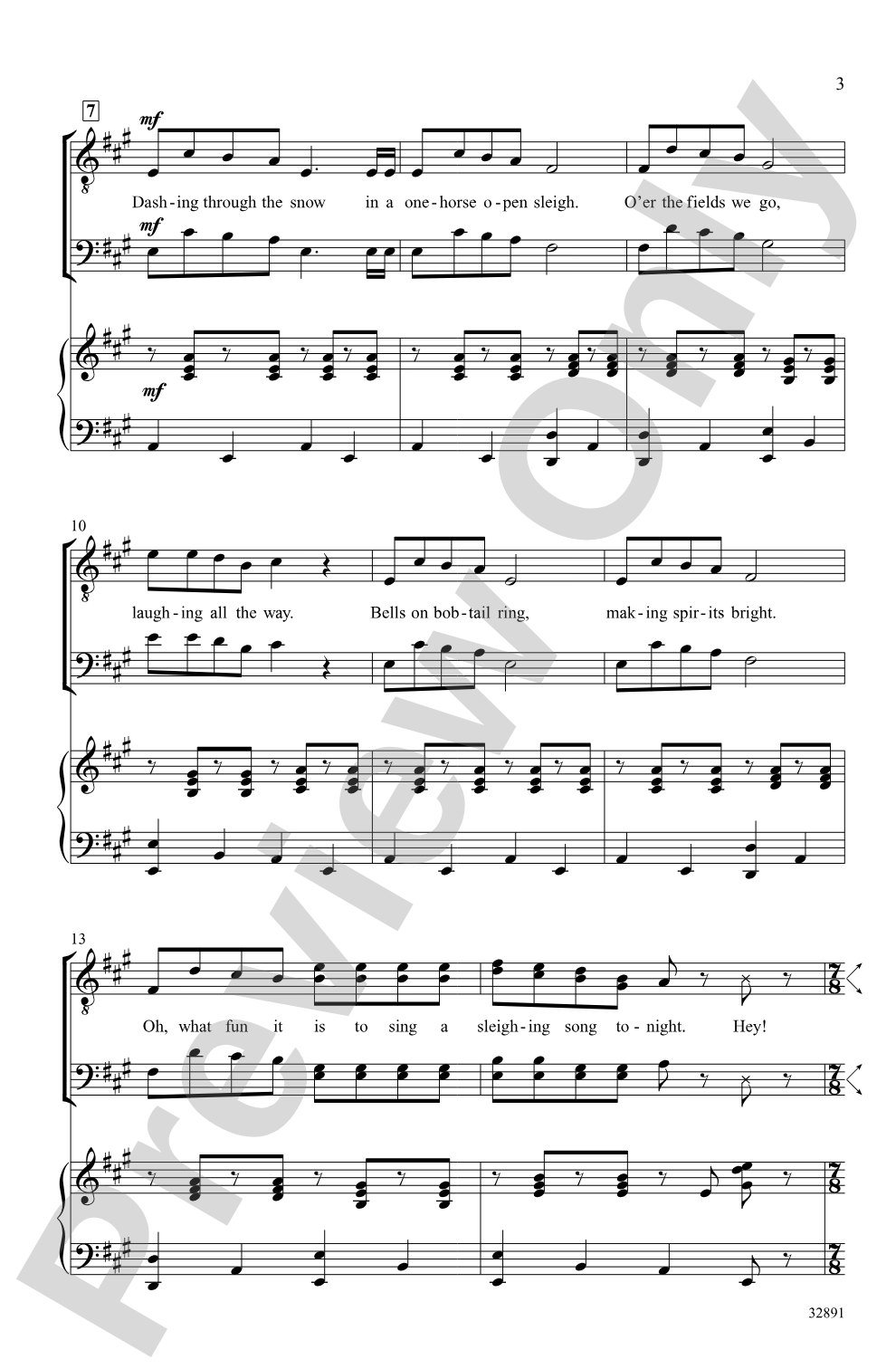
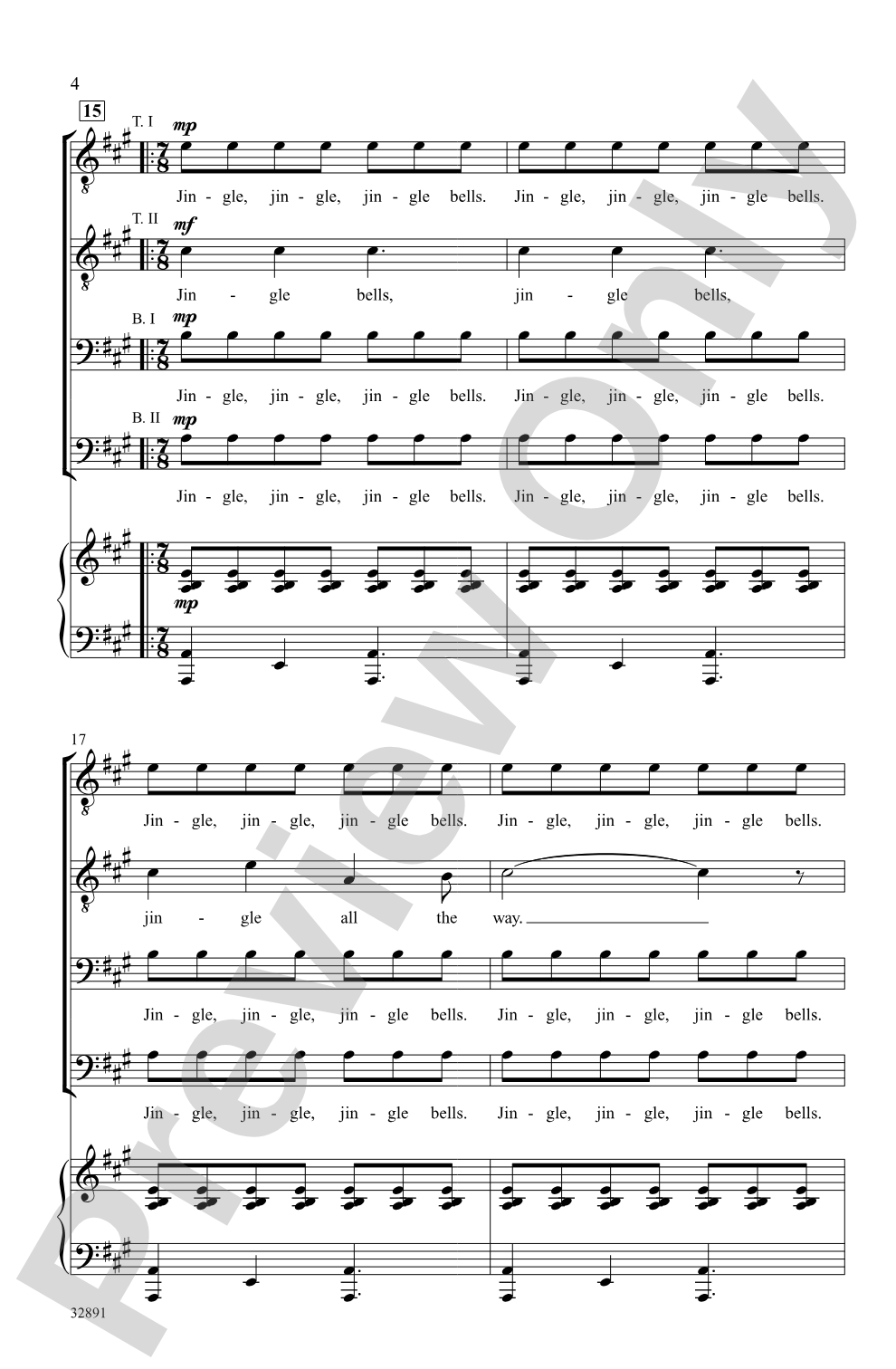
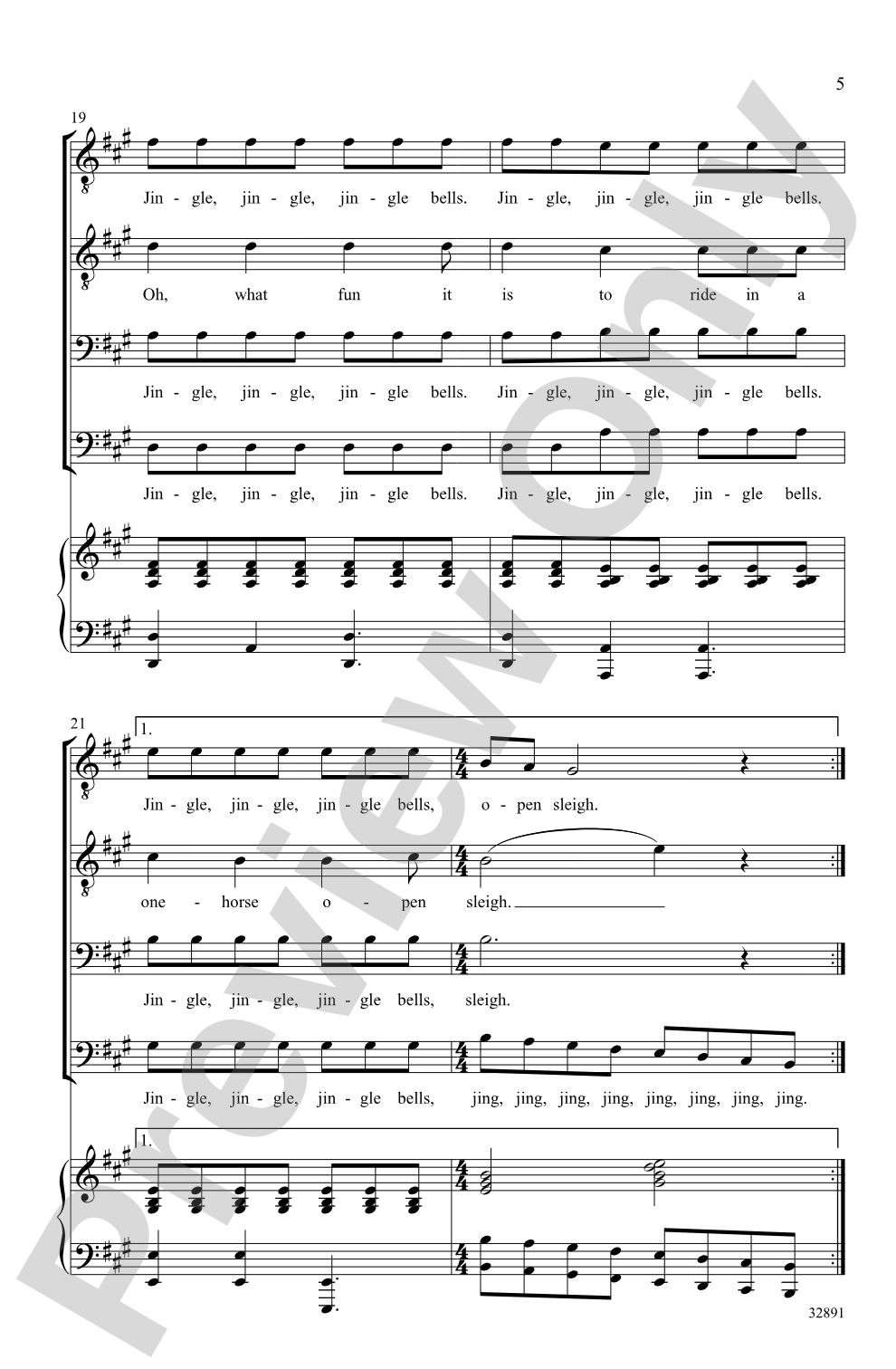

Jingle Bells: TTBB Choral Octavo
Words and music by James Pierpont / arr. Michael Weber
Item: 00-PO-0008010
$2.50
Minimum order quantity: 20 copies
Pickup currently not available
Description
A theme and variations arrangement of the popular wintertime song. Mixed and changing meters, frequent modulations, and an exuberant piano accompaniment provide an exciting journey as "o'er the fields we go!" Accompaniment featured on PianoTrax 2 CD 00-31290.


Jingle Bells: TTBB Choral Octavo isn't in MakeMusic Cloud just yet...but it could be. Let us know you'd like to see it, and you'll help shape what comes next. In the meantime, start a free trial and dive into thousands of interactive titles your students can play along with today.
Request This Title
Tell us you want it.
Start Your Free Trial
Explore everything that's ready to play right now.
Sample Audio
1
Audio File
--:--
0:00
0:00
Sample Video
No sample videos found.
Additional Details
Series:
Alfred Choral Designs
Publisher:
Alfred Music
Page Count:
20
SKU:
00-PO-0008010
More about this title
About the Composer: James Pierpont
James Pierpont (1822–1893) was an American composer and songwriter whose work bridged popular song and classical tradition. Though trained in music, he achieved lasting fame primarily through his gift for memorable melodies that captured the spirit of mid-19th-century American life. His most enduring contribution to music education comes from a single composition: "Jingle Bells," originally titled "One Horse Open Sleigh," which he published in 1857.
Pierpont's legacy in the classroom rests on this one immortal tune. For music educators, "Jingle Bells" offers a rare opportunity to arrange a melody so universally recognized that students engage with it immediately, yet so musically rich that it rewards sophisticated harmonic and rhythmic treatment. The piece demonstrates how a simple, singable melody can become a vehicle for exploring advanced compositional techniques.
Why we love this
Michael Weber's arrangement transforms a familiar song into a genuine musical experience without losing its infectious charm. The shifting meters and key changes keep singers engaged across the 20 pages, demanding real attention to detail while the accessible melody ensures that students never feel lost. This strikes the balance that makes winter programming rewarding: it's substantial enough to respect your singers' abilities, yet grounded in material they already love.
What to expect
A sleigh ride that keeps changing direction. The arrangement starts warm and familiar, then launches into variations that shift the harmonic ground beneath you, keeping everyone alert. There is genuine exuberance in the rhythmic vitality and key changes; this is not a quiet, reverent treatment but rather a celebration that builds momentum through its reharmonization and metric playfulness.
Who it's for
TTBB choirs with singers who read accidentals and metric changes comfortably. This works especially well for ensembles that want a winter concert piece with substance, or groups looking to balance serious repertoire with recognizable material that audiences embrace immediately.
How to get the most out of it
- Mark the metric shifts (3/4 to 4/4 and beyond) with clear verbal cues during rehearsal before attempting performance tempo. Students need to internalize the pattern of change, not just read it on the page.
- Establish the modulations as intentional musical events, not mistakes. Each key change should feel like a new variation entering, which aligns with the theme-and-variations structure.
- Balance the upper voices against the piano accompaniment during the faster passages. The written arrangement expects both elements to sparkle; neither should disappear.
- Take the exuberance seriously. This arrangement invites unbridled energy; reserve some rehearsal time to find the joy in the writing rather than just nailing the technical details.
How to use it
Pair this with more introspective winter repertoire to create dynamic contrast in a December concert. It works beautifully as a second-act opener, providing a jolt of energy after slower pieces, or as the finale if you want audiences leaving with the infectious energy of a theme-and-variations treatment they recognize. The 20-page length means it commands attention without demanding an entire concert.
Skills your students will build
- Reading and navigating frequent modulations across the piece
- Maintaining pitch and text clarity in mixed and changing meters
- Balancing TTBB voicing in complex harmonic progressions
- Responding to stylistic variation while maintaining a cohesive musical line
- Performing with rhythmic precision in an accompaniment-dependent arrangement