
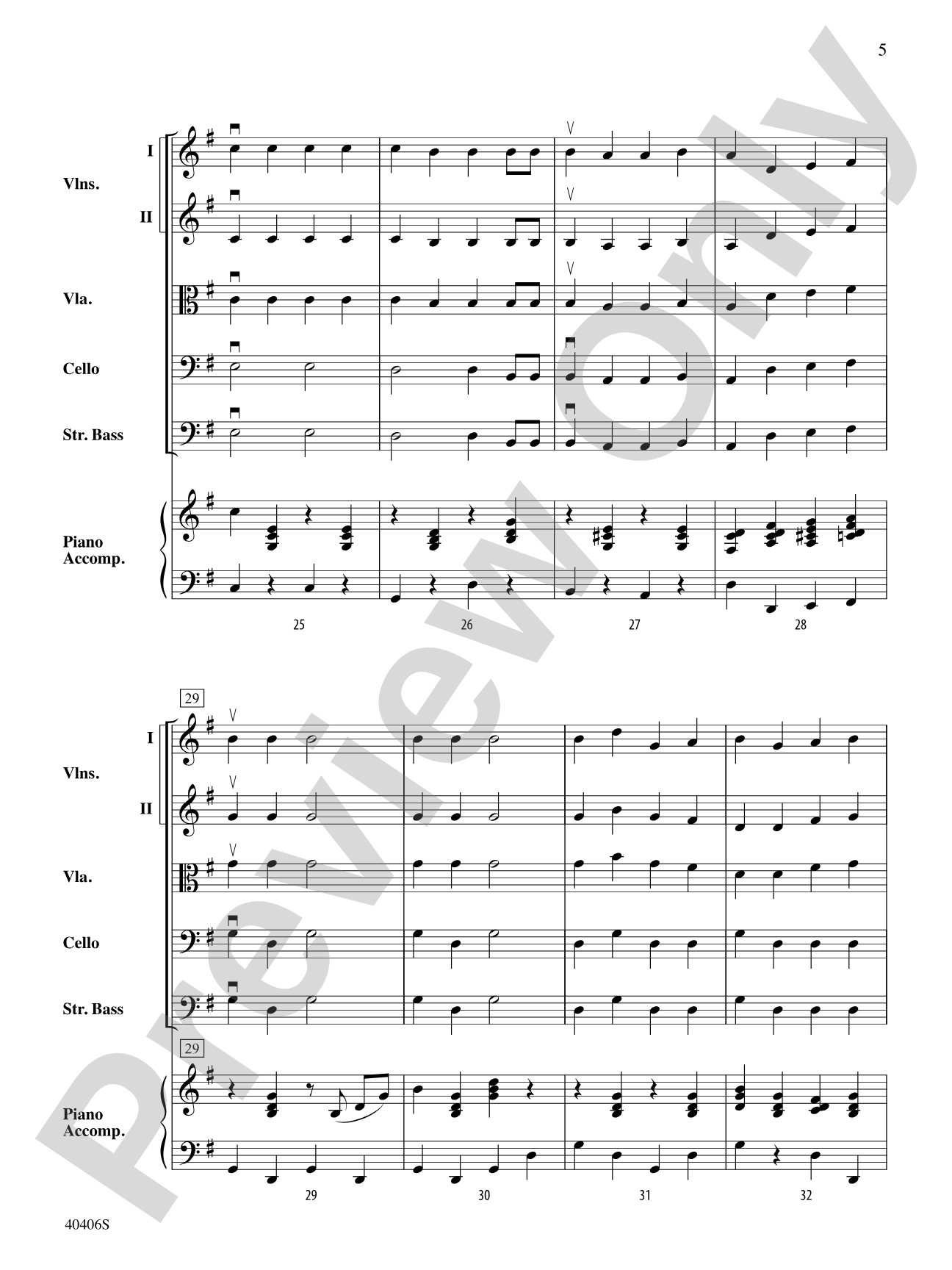
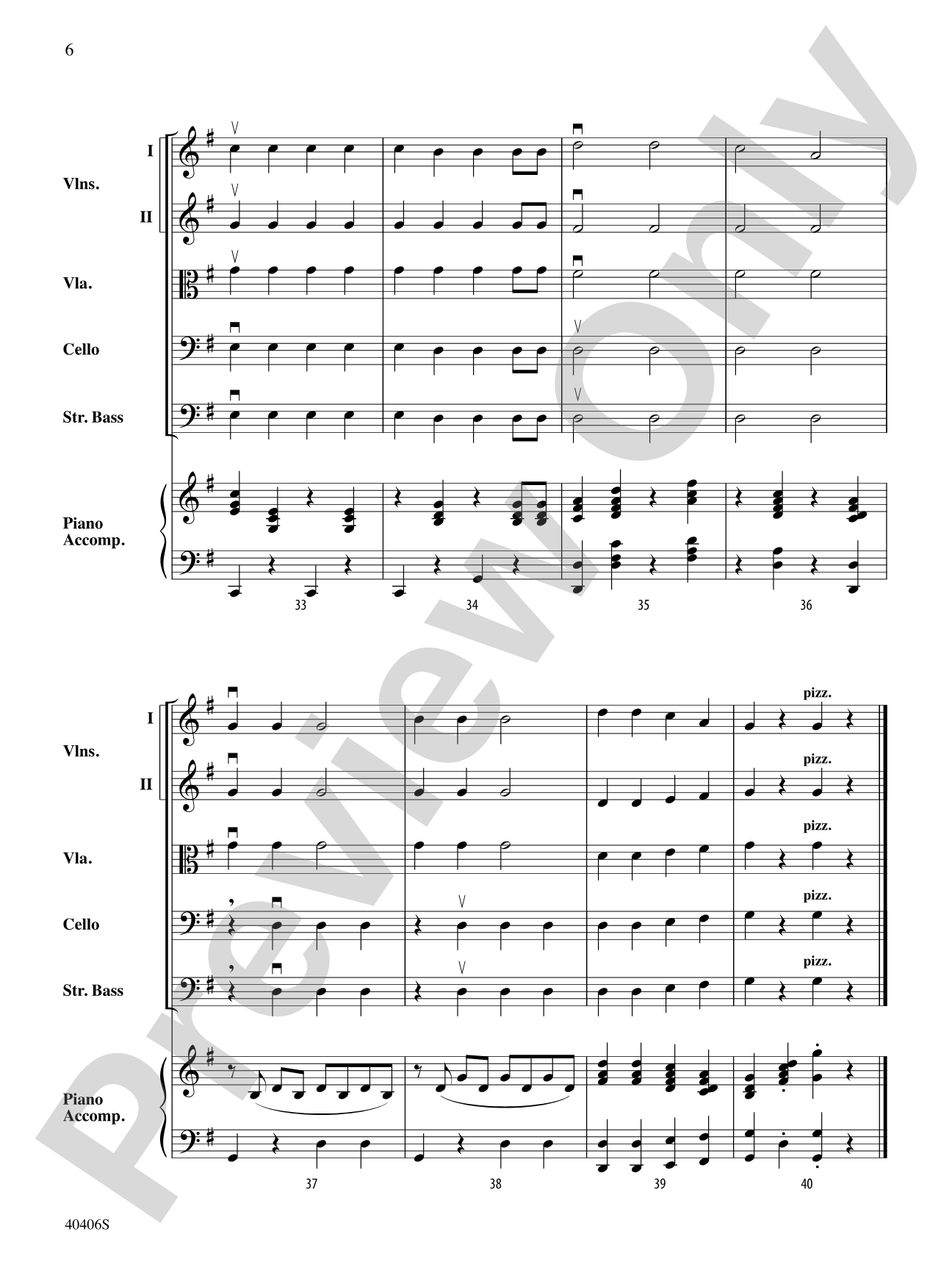



Jingle Bells: String Orchestra Conductor Score & Parts
Traditional / arr. Jack Bullock
Grade: 1
Item: 00-PK-0005689

$45.00
Pickup currently not available
Buy Extra Parts (Digital PDF Download)
| Product | Price | Quantity |
|---|---|---|
| Jingle Bells: Score | $6.00 | |
| Jingle Bells: 1st Violin | $5.99 | |
| Jingle Bells: 2nd Violin | $5.99 | |
| Jingle Bells: Viola | $5.99 | |
| Jingle Bells: Cello | $5.99 | |
| Jingle Bells: String Bass | $5.99 | |
| Jingle Bells: Piano Accompaniment | $5.99 |
Parts Added to Cart!
Description
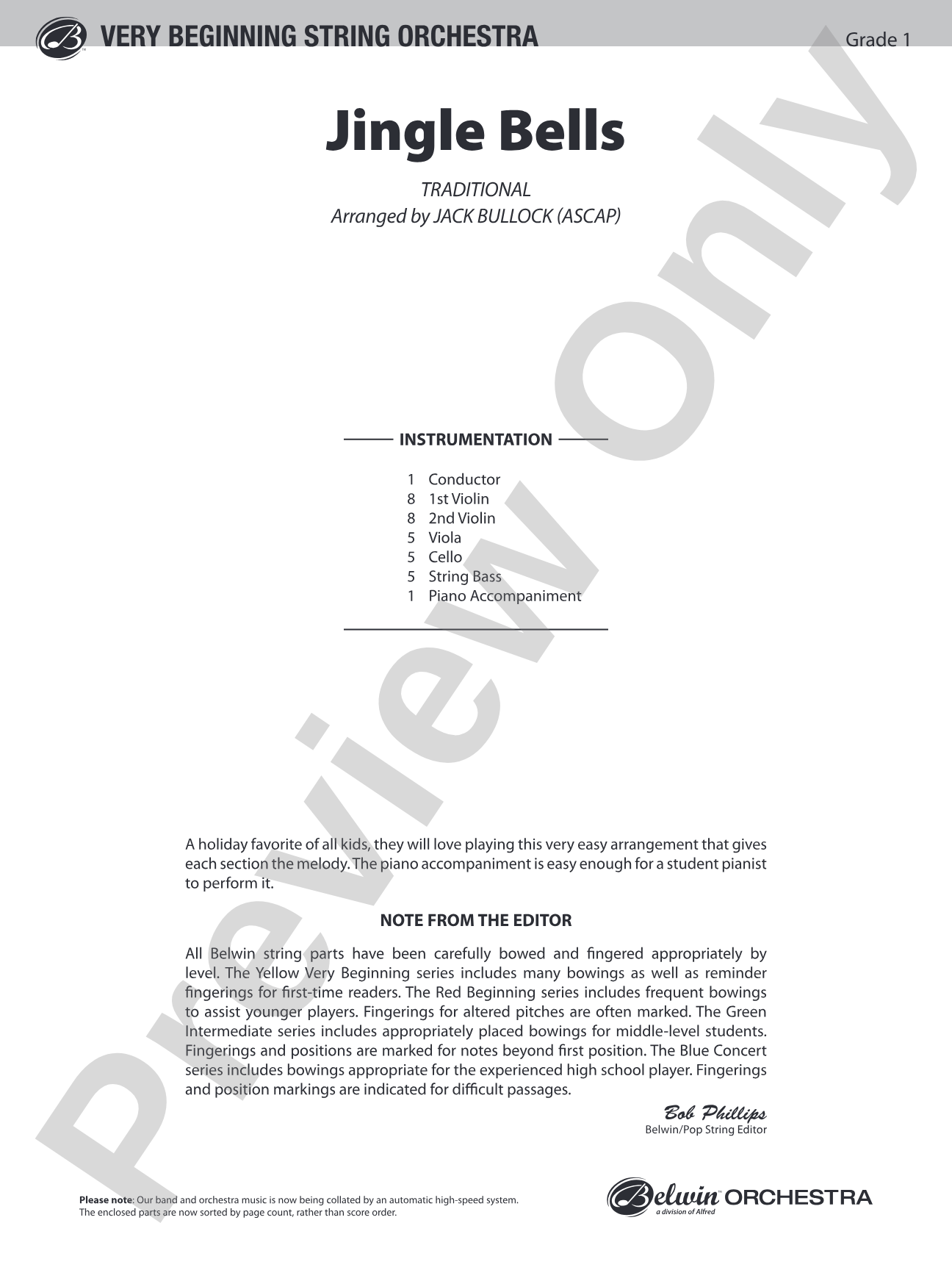
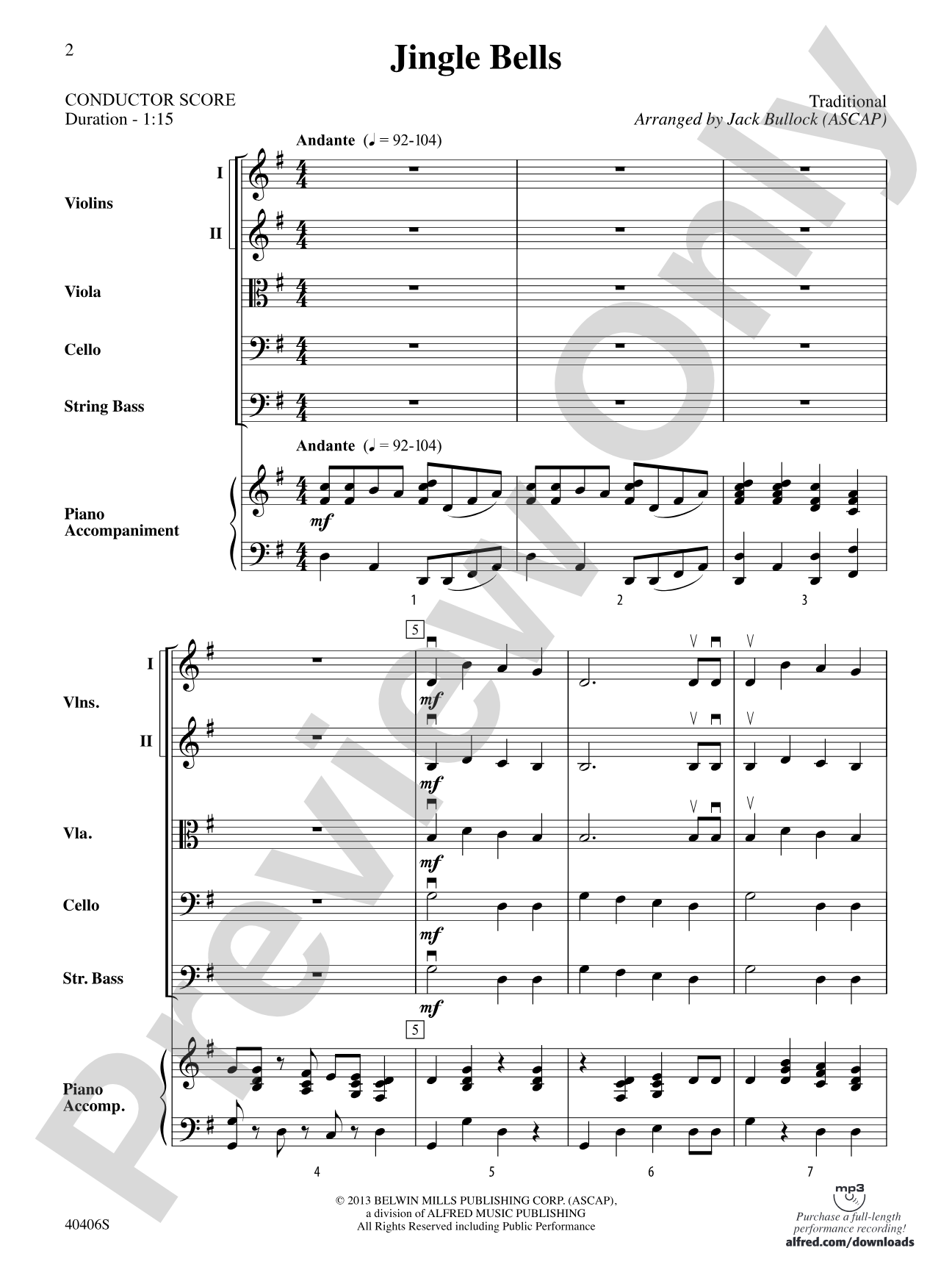
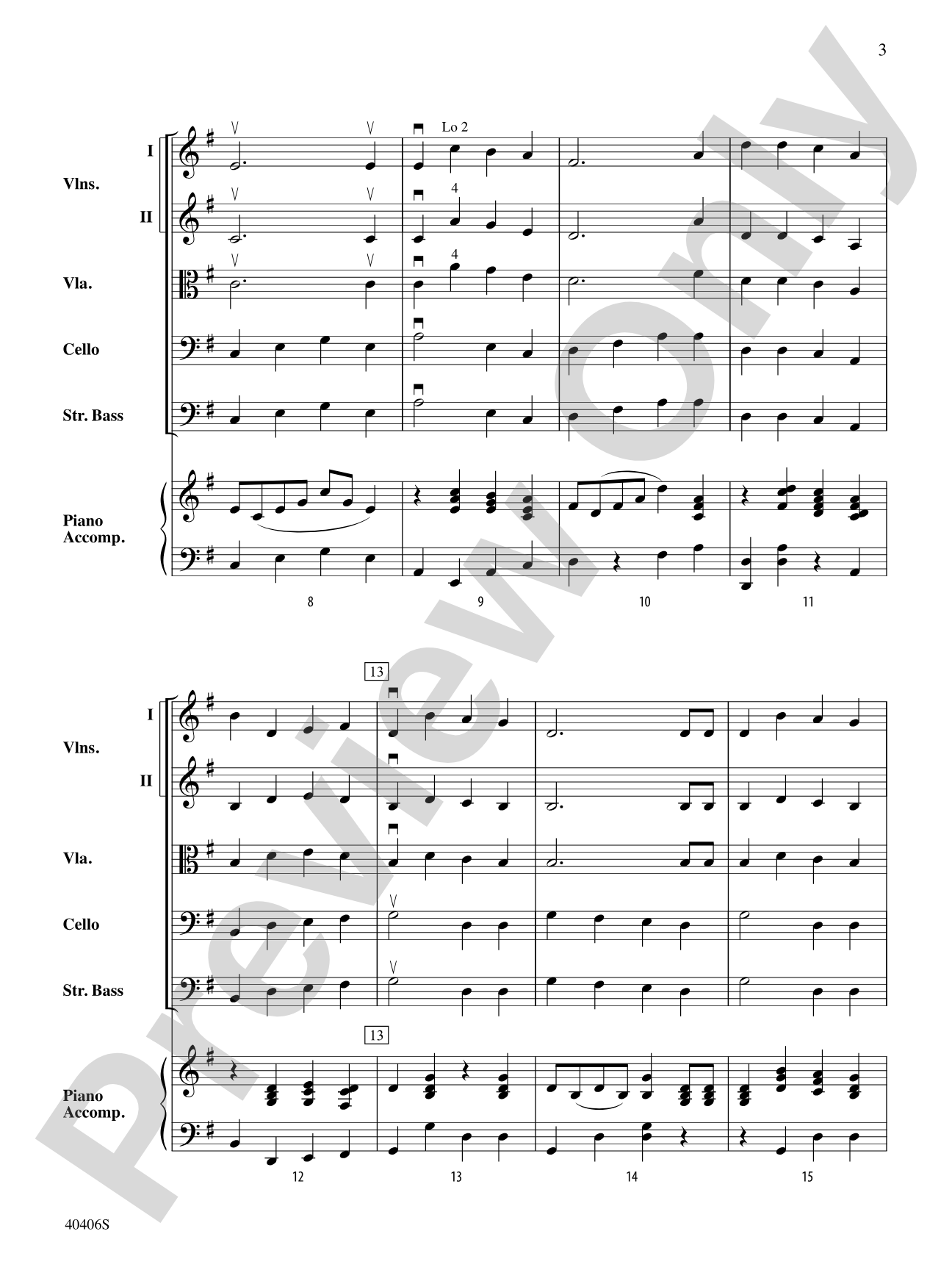
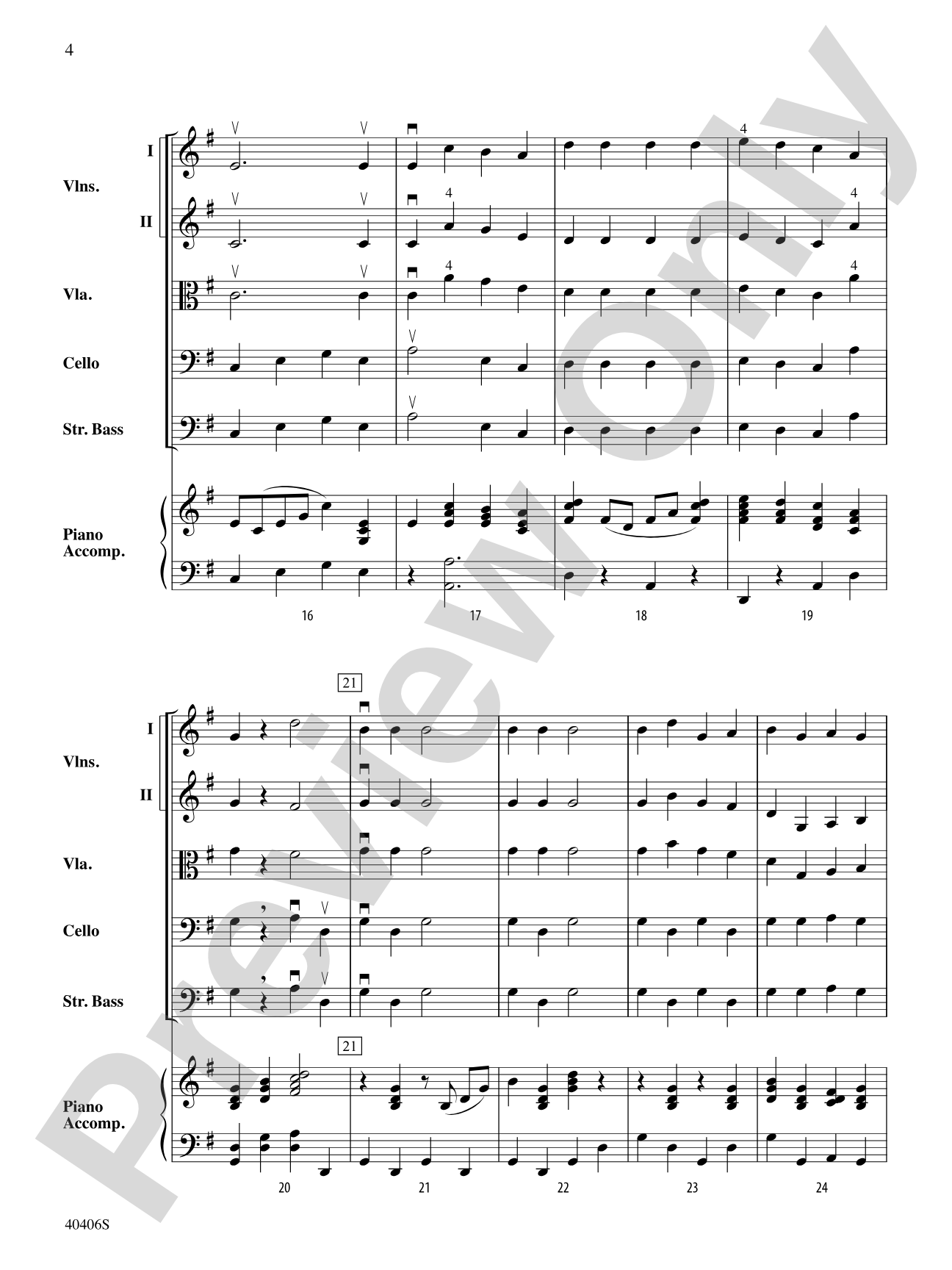
A holiday favorite of all kids, they will love playing this very easy arrangement that gives each section the melody. The piano accompaniment is easy enough for a student pianist to perform it.


Don't just read it, hear it, play along with it, and watch your students grow with it. In MakeMusic Cloud, Jingle Bells: String Orchestra Conductor Score & Parts comes alive with professional accompaniment, adjustable tempo, and built-in practice tools that turn solo practice into real progress.
Open in the Player
Jump straight in and assign it today.
Start Your Free Trial
Open this title and explore the full library in minutes.
Sample Audio
1
Audio File
--:--
0:00
0:00
Sample Video
No sample videos found.
Additional Details
Series:
Belwin Very Beginning String Orchestra
Publisher:
Alfred Music
Page Count:
66
SKU:
00-PK-0005689
More about this title
About the Arranger: Jack Bullock

Jack Bullock brings three decades of professional experience across performance, composition, and education to his arrangement work. A classically trained trumpeter who performed with the Miami Philharmonic Orchestra and Miami Opera Company, he holds degrees in Music Education through the doctoral level and has composed and arranged over 600 works for concert band, orchestra, jazz ensemble, and marching band.
Bullock taught instrumental music in K-12 classrooms for 20 years and served as assistant band director at Ithaca College's School of Music, where he also chaired the Music Education Department. His pedagogical approach shapes every arrangement he creates, including the Belwin 21st Century Band Method and contributions to Alfred Music's Music Expressions curriculum. He has conducted clinics across North America and England and holds ASCAP membership since 1980.
Why we love this
Bullock's arrangement ensures every section gets a moment with the melody, which keeps young players engaged and builds confidence across the entire orchestra. The piano part sits at student level, making this a genuine ensemble piece rather than an accompaniment-dependent arrangement, and the Grade 1 difficulty opens "Jingle Bells" to orchestras that might otherwise lack the maturity for string holiday programming.
What to expect
Bright and straightforward, this arrangement captures the simple joy of a tune every child recognizes. The easy-to-play accompaniment and rotated melody line create a sense of playfulness rather than technical struggle, giving the orchestra room to enjoy the music instead of fighting the notes.
Who it's for
Beginning string orchestras in grades 3-5 benefit most from this arrangement, particularly programs introducing students to ensemble playing. Holiday concerts that include non-traditional and secular music find solid programming here, and classroom string teachers working with emerging quartets or quintet configurations can deploy it successfully.
How to get the most out of it
- Balance the sections carefully as the melody rotates. Bring out whichever part carries the tune while keeping inner voices transparent but present.
- Coordinate closely with your student pianist during rehearsals. Mark any breath points in the score that the accompanist should observe alongside the ensemble.
- Use the holiday context to encourage clear articulation and precise entries. Young players respond well to thematic instruction tied to the season.
- Keep rehearsal tempo steady and comfortable for the pianist; young keyboard players tire quickly, so aim for a tempo that feels secure without rushing.
How to use it
Place this early in a winter concert program to warm up the audience and your young players, or close a concert with it to send families out with a recognizable, joyful tune. The Grade 1 difficulty makes it an excellent choice for a combined strings performance where younger and newer players participate alongside slightly advanced ensembles.
Skills your students will build
- Sustaining long tones with consistent tone quality across sections
- Tracking melody exchange between violin, viola, and cello parts
- Listening for balance between melody and accompaniment
- Following a conductor through repeated sections
- Maintaining steady rhythm in simple meters