

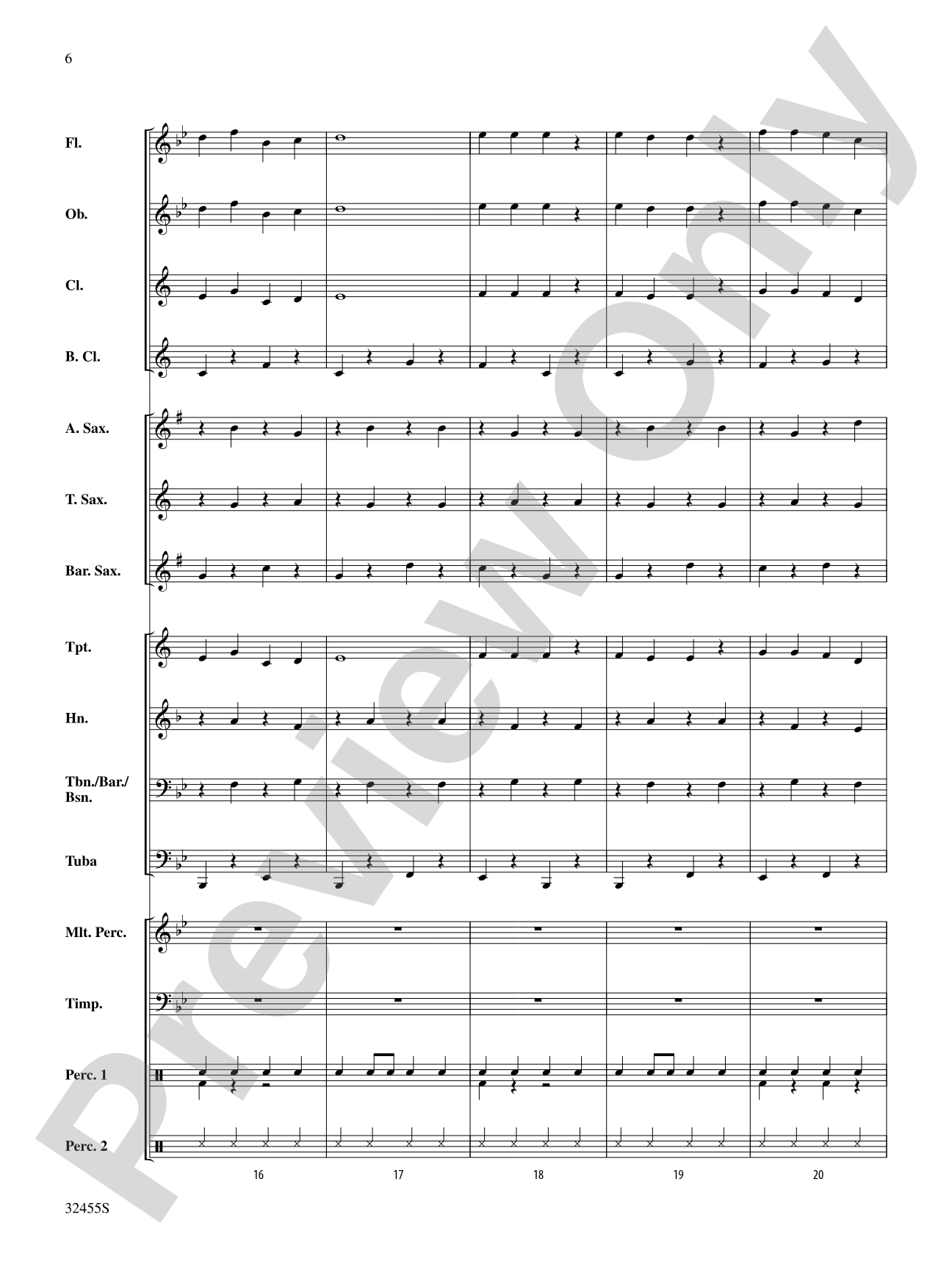
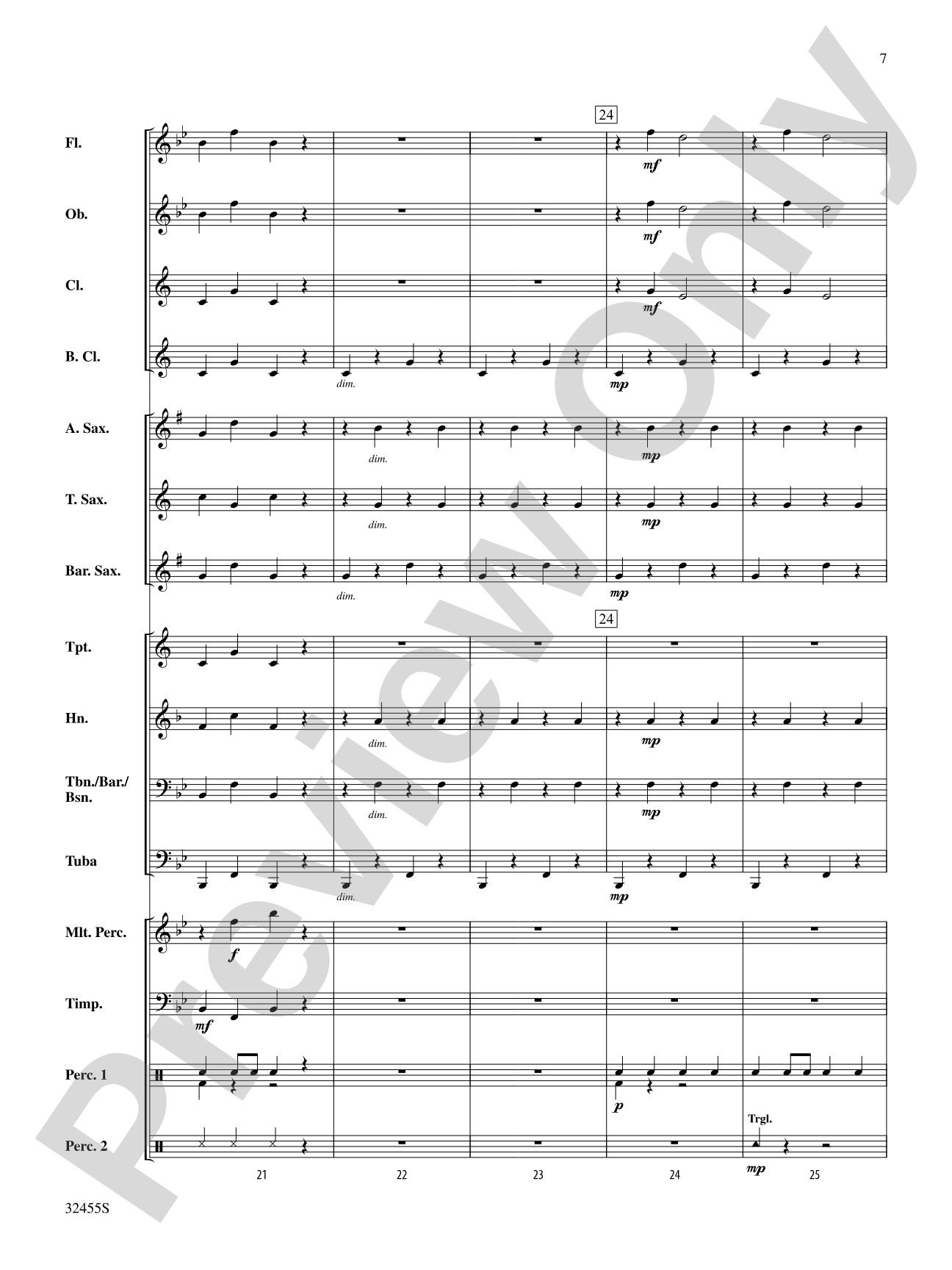
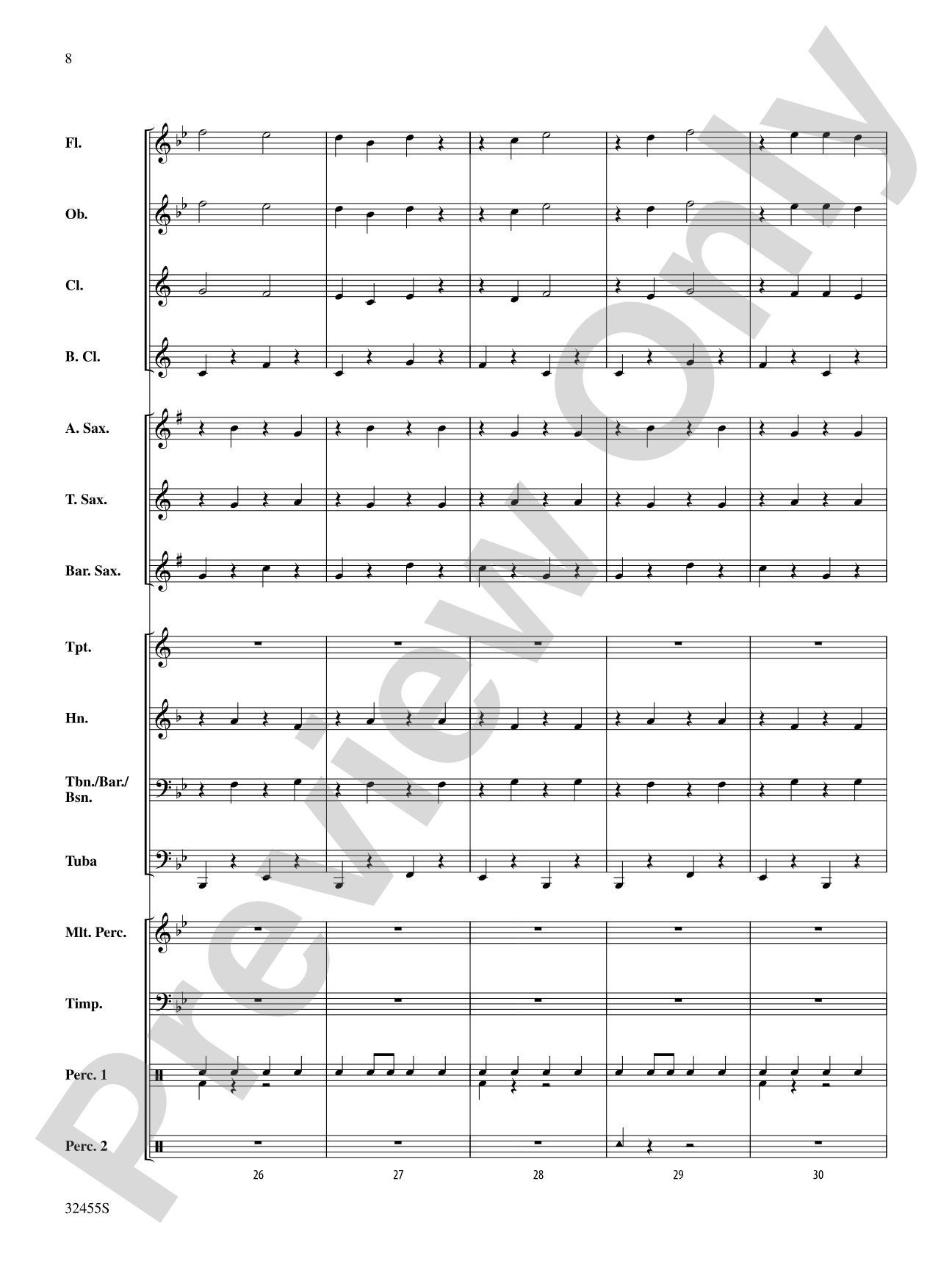
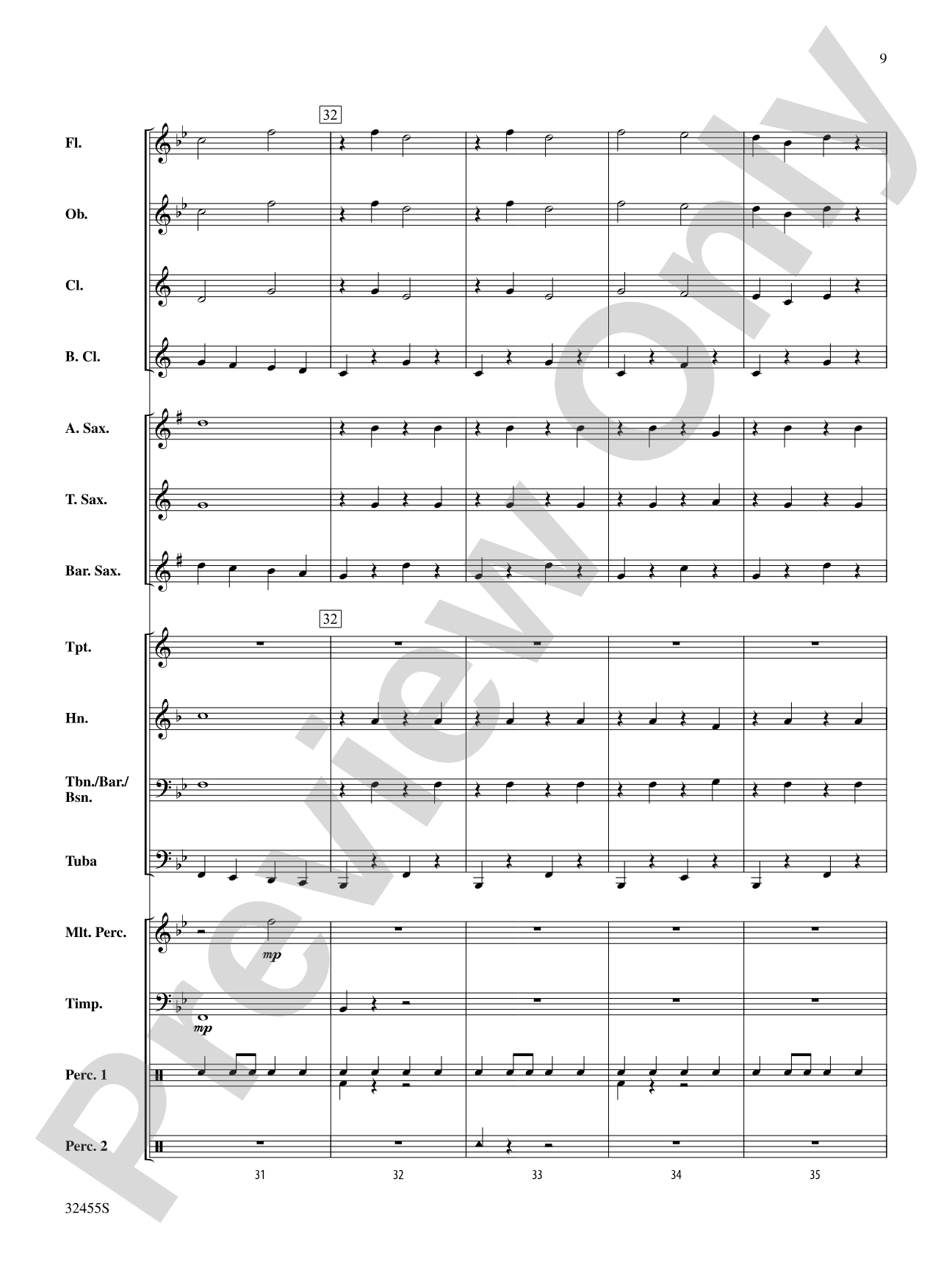
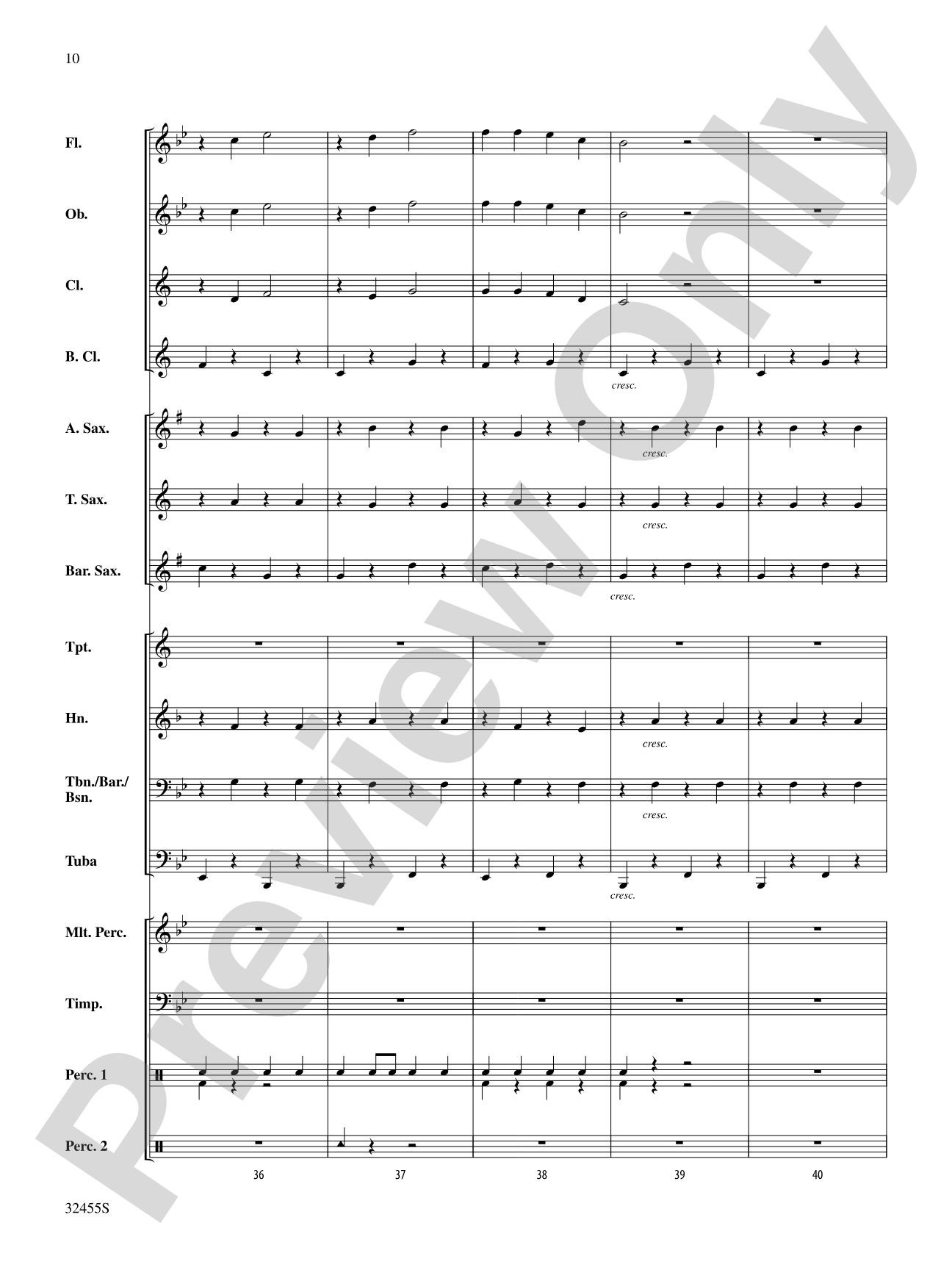
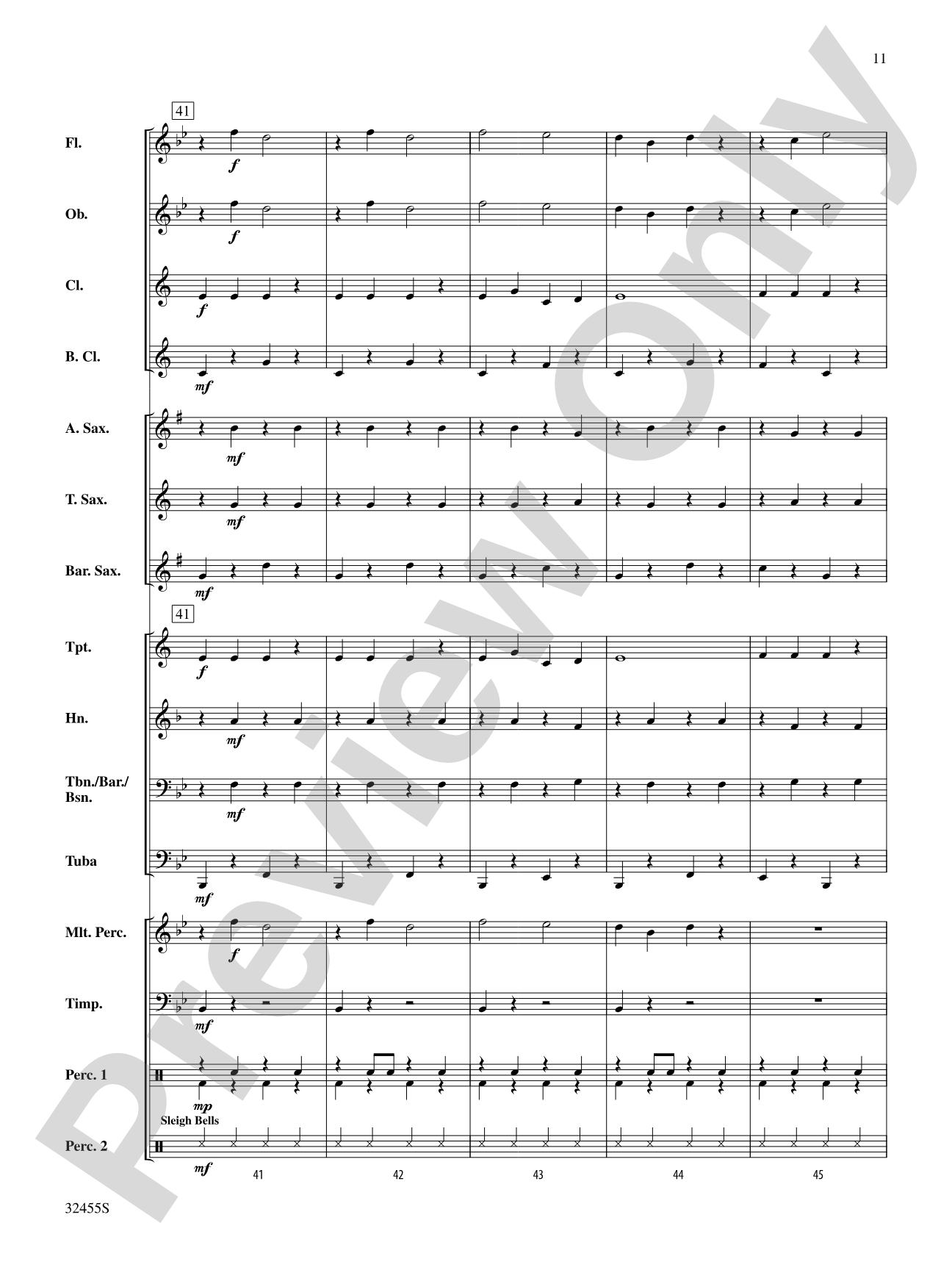
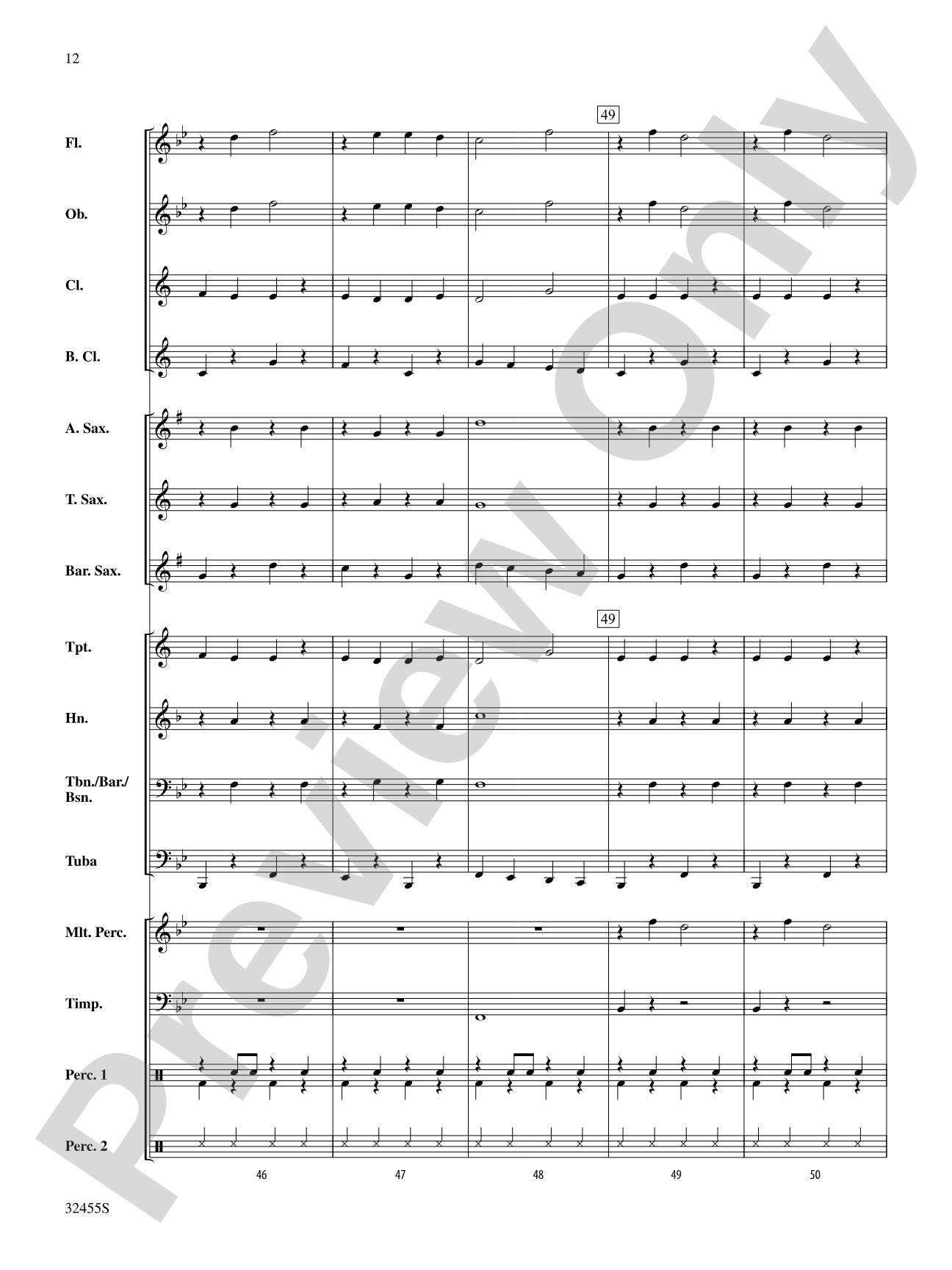
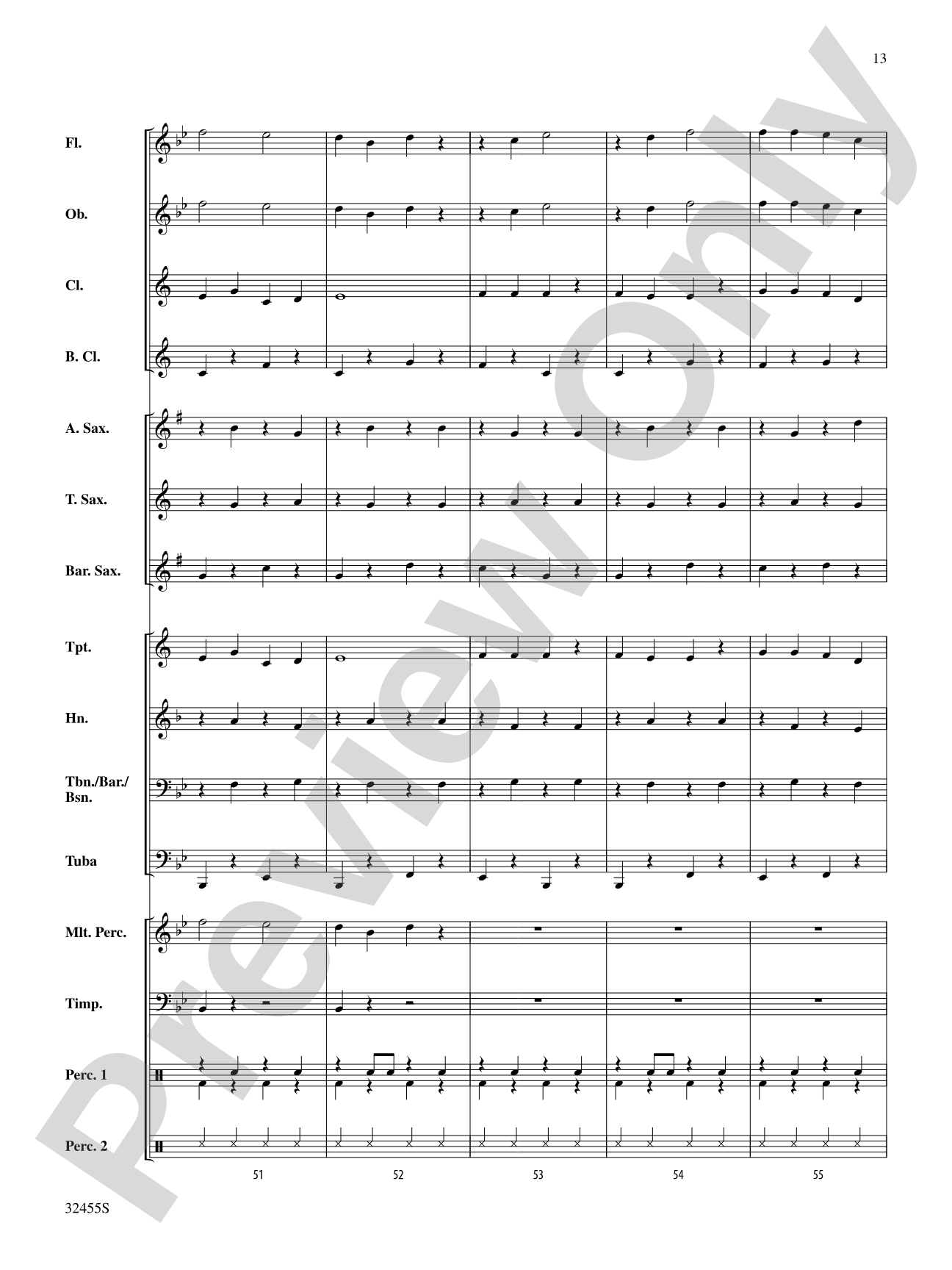
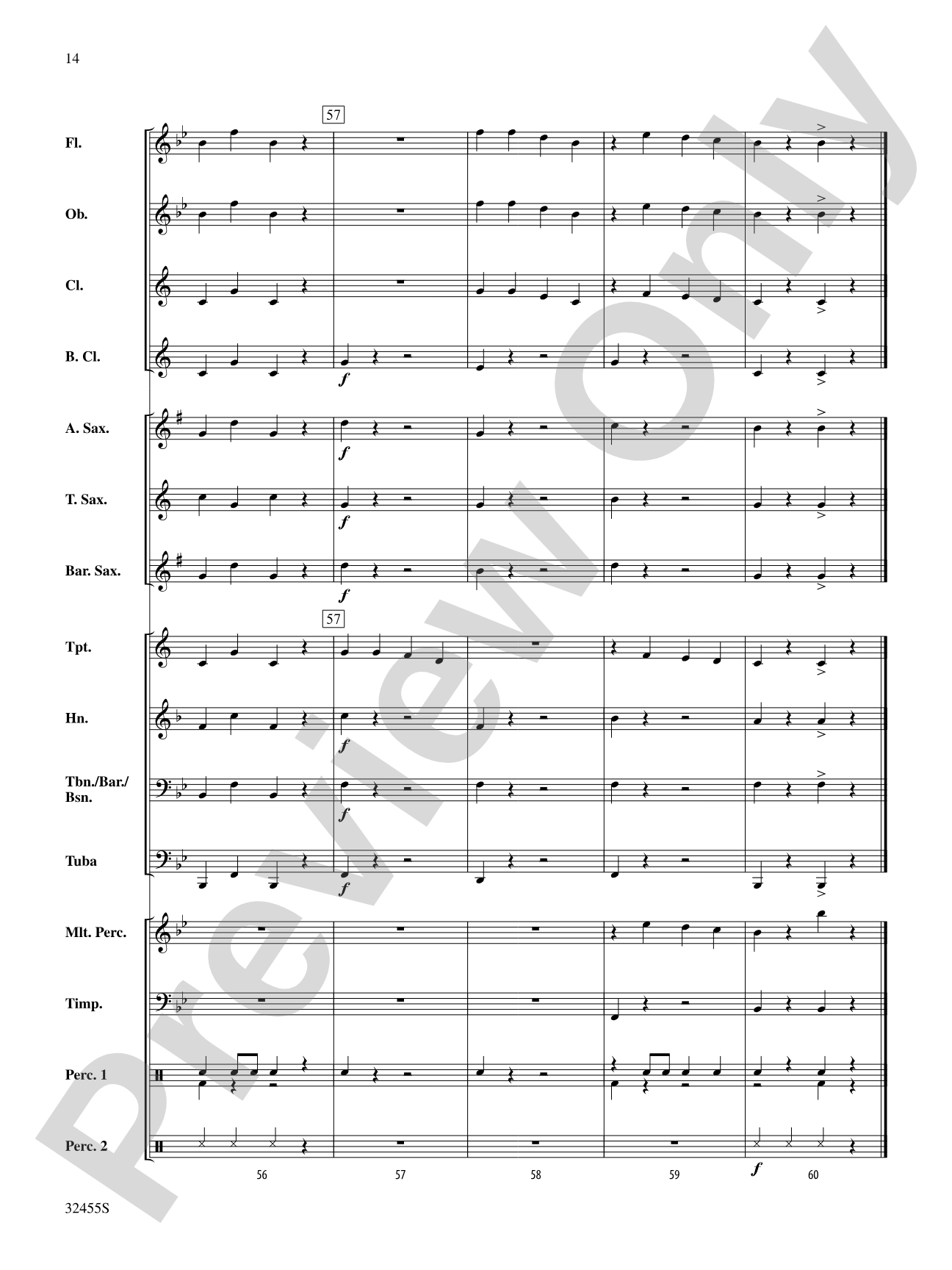



Jingle Bell March: Concert Band Conductor Score & Parts
By James Lord Pierpont / arr. Douglas E. Wagner
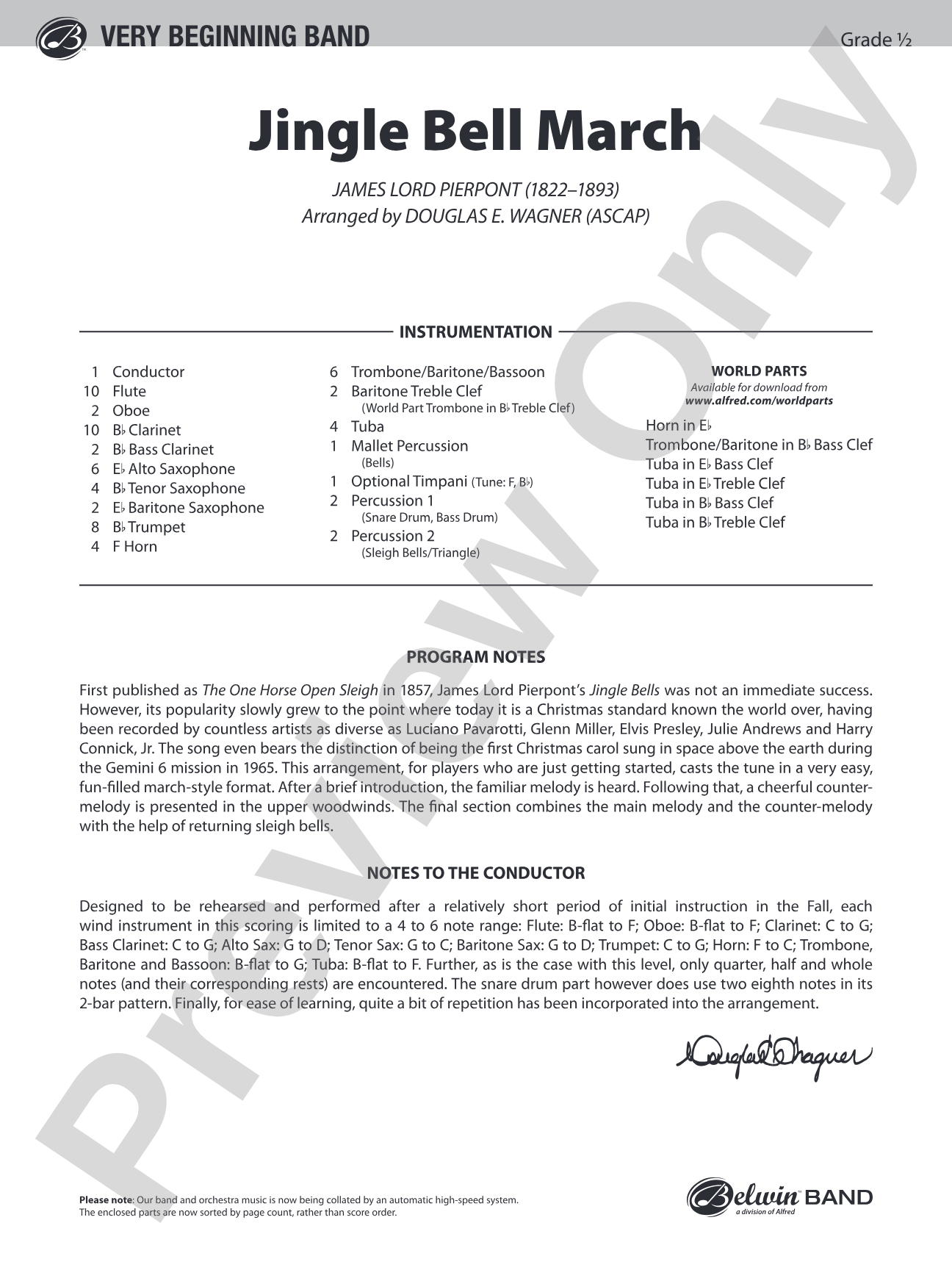
Grade: 0.5 (Very Easy)
Item: 00-PK-0004046

$50.00
Pickup currently not available
Buy Extra Parts (Digital PDF Download)
| Product | Price | Quantity |
|---|---|---|
| Jingle Bell March: Score | $9.00 | |
| Jingle Bell March: Flute | $3.00 | |
| Jingle Bell March: Oboe | $3.00 | |
| Jingle Bell March: 1st B-flat Clarinet | $3.00 | |
| Jingle Bell March: B-flat Bass Clarinet | $3.00 | |
| Jingle Bell March: E-flat Alto Saxophone | $3.00 | |
| Jingle Bell March: B-flat Tenor Saxophone | $3.00 | |
| Jingle Bell March: E-flat Baritone Saxophone | $3.00 | |
| Jingle Bell March: 1st B-flat Trumpet | $3.00 | |
| Jingle Bell March: 1st F Horn | $3.00 | |
| Jingle Bell March: 1st Trombone | $3.00 | |
| Jingle Bell March: Baritone T.C. | $3.00 | |
| Jingle Bell March: Tuba | $3.00 | |
| Jingle Bell March: Mallets | $3.00 | |
| Jingle Bell March: 1st Percussion | $3.00 | |
| Jingle Bell March: 2nd Percussion | $3.00 | |
| Jingle Bell March: Timpani | $3.00 | |
| Jingle Bell March: (wp) Baritone T.C. | $3.00 |
Parts Added to Cart!
Description
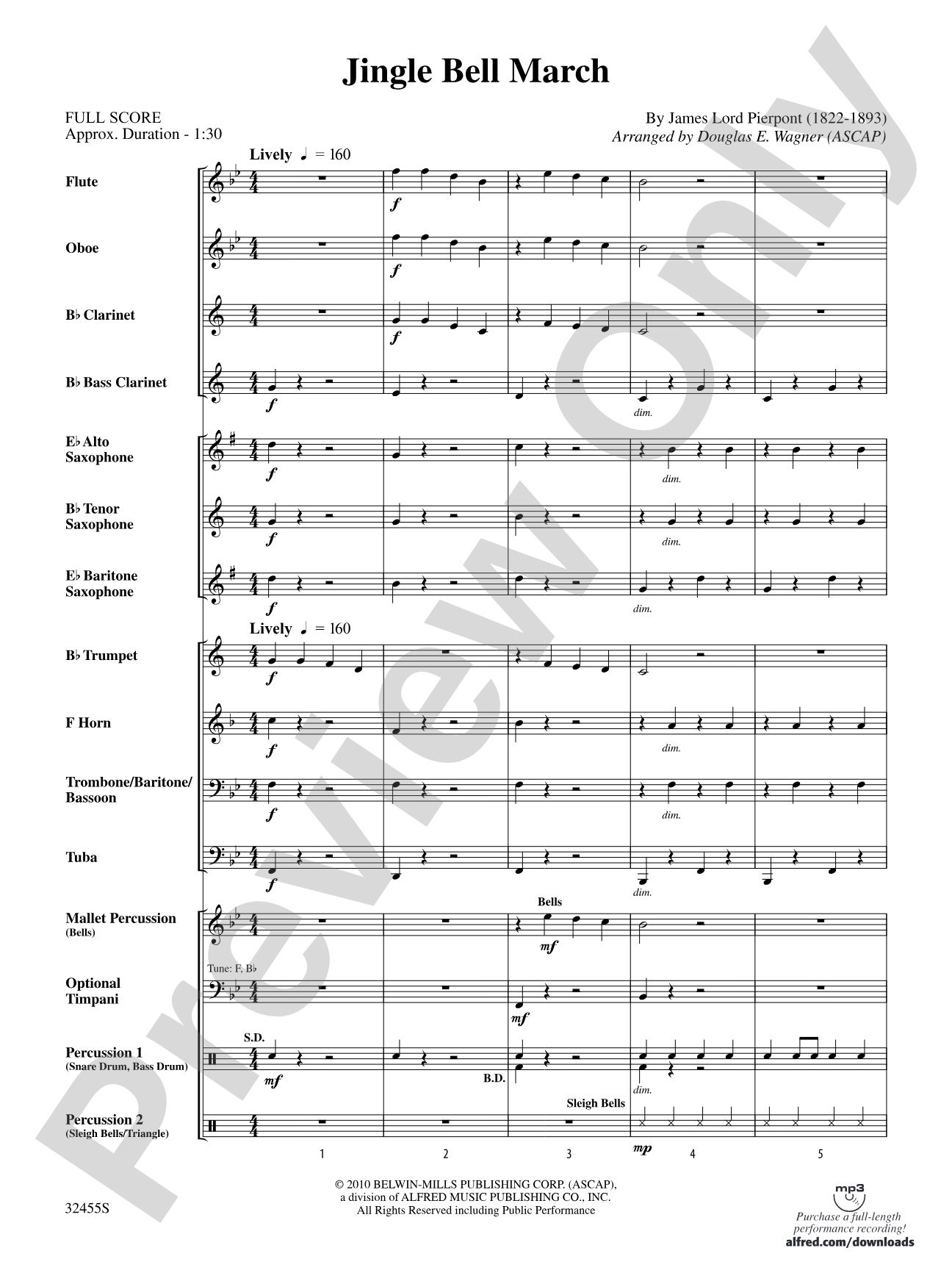
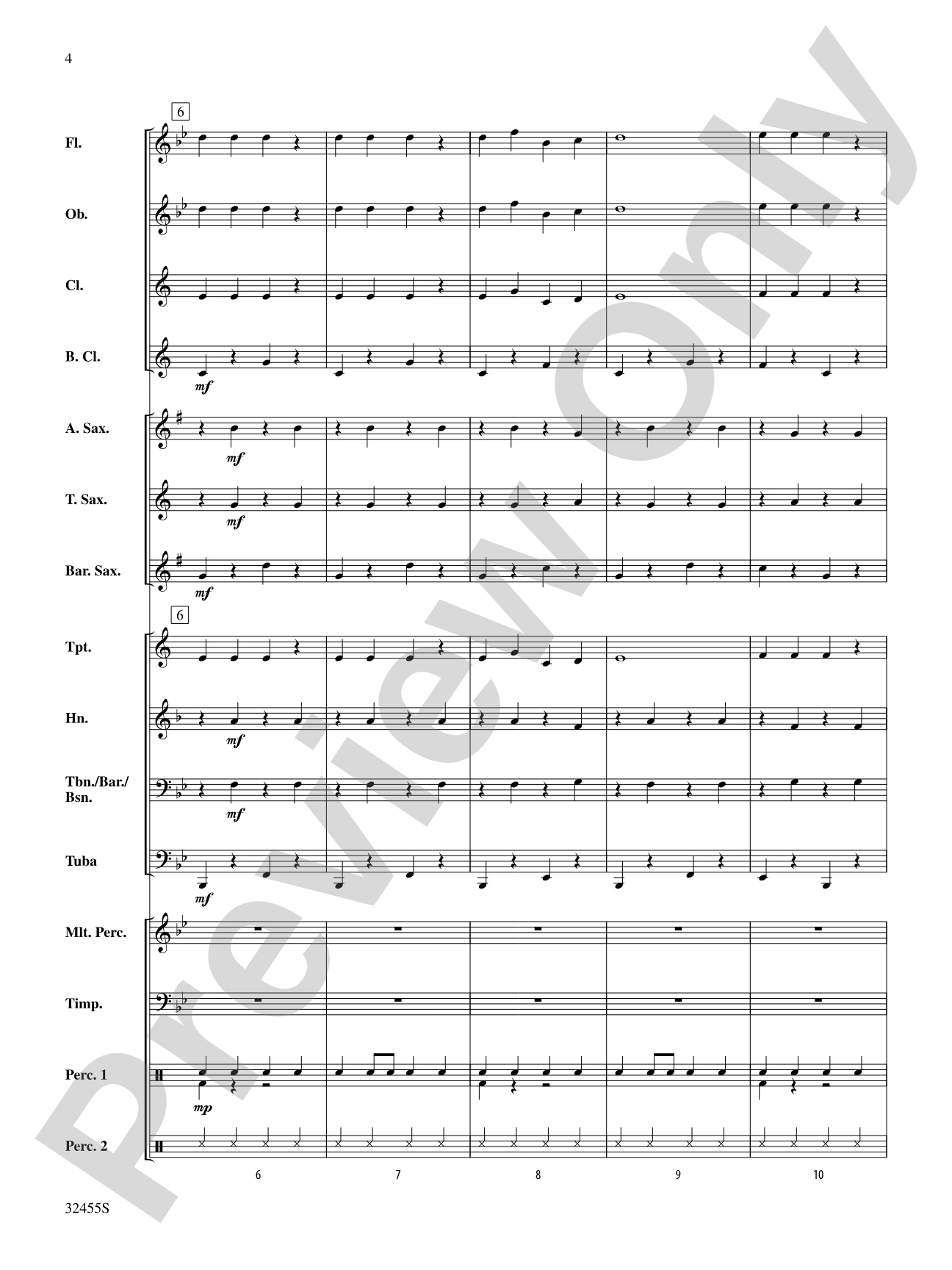
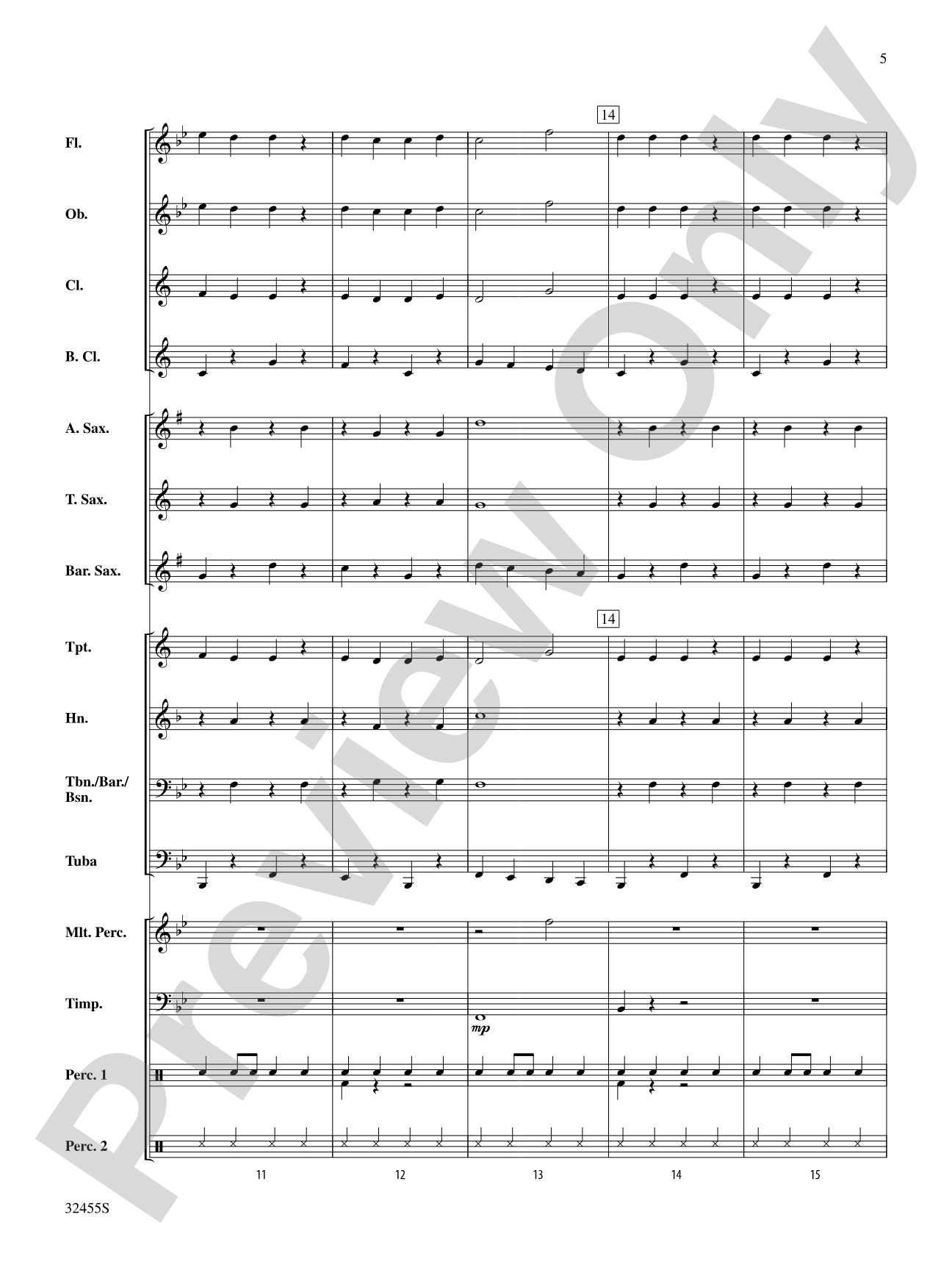
This charming setting of James Lord Pierpont's classic holiday tune is designed to be rehearsed and performed at the earliest stage of instruction. A solid march feel with repetitive phrases ensures a joyous holiday presentation.


Don't just read it, hear it, play along with it, and watch your students grow with it. In MakeMusic Cloud, Jingle Bell March: Concert Band Conductor Score & Parts comes alive with professional accompaniment, adjustable tempo, and built-in practice tools that turn solo practice into real progress.
Open in the Player
Jump straight in and assign it today.
Start Your Free Trial
Open this title and explore the full library in minutes.
Sample Audio
1
Audio File
--:--
0:00
0:00
Sample Video
No sample videos found.
Additional Details
Series:
Belwin Very Beginning Band
Publisher:
Alfred Music
Page Count:
122
SKU:
00-PK-0004046
More about this title
About the Composer: James Lord Pierpont
James Lord Pierpont (1822, 1893) was an American composer best known for creating one of the most enduring melodies in the holiday canon. Though his output was prolific, spanning popular songs, piano pieces, and theatrical works, "Jingle Bells" remains his legacy; originally published as "The One Horse Open Sleigh" in 1857, it became the winter standard performed by musicians of all levels worldwide.
Pierpont's gift for memorable, singable melody made his work ideal for adaptation across ensembles and instruments. His compositions prioritized accessibility and immediate appeal, qualities that have kept them in active repertoire for music education for generations.
Why we love this
Douglas Wagner's arrangement honors the melody's character while giving each section something to play, which means no one sits idle during rehearsal. The march structure is clear enough that even brand-new readers grasp form intuitively, yet the setting remains genuinely musical—it doesn't feel like a compromise between fun and musicality.
What to expect
The piece radiates straightforward joy—crisp, propulsive, and built for momentum. The march rhythm propels the familiar tune forward, creating an energy that feels celebratory without veering into sentimentality. Young musicians experience the satisfaction of playing a recognizable, beloved melody together almost immediately.
Who it's for
This arrangement is ideal for first-year band students and directors launching a holiday concert at the Grade 0.5 level. It works equally well for community bands seeking accessible seasonal material or for mixed ensembles where instrumentation may be incomplete, since the scoring is flexible enough to accommodate what you have.
How to get the most out of it
- Establish a steady pulse early in rehearsals by conducting a clear marcato beat; the repetitive phrases give students time to lock into the tempo without complex rhythmic demands.
- Shape the melody through subtle dynamic swells on repeated sections rather than playing every statement at the same volume, which transforms familiarity into expressiveness.
- Balance the parts carefully so the main tune remains audible; younger ensembles often play tutti passages too evenly, which muddles the melody.
- Use this piece to drill fundamental articulation: march style typically uses separated eighth notes and quarter notes, and consistency across the band here pays dividends in all future repertoire.
How to use it
Open a holiday concert with this to establish audience goodwill and give your beginning band immediate credibility through a universally loved tune. Alternatively, close the first half of a longer concert as a bridge between more challenging concert repertoire and the lighter material that follows, or pair it with one or two other accessible holiday arrangements to create a short, focused seasonal set.
Skills your students will build
- Understanding march form and structure
- Articulation and separation in a foundational style
- Part independence within a homophonic texture
- Phrasing and shaping a simple melodic line
- Reading basic concert band instrumentation and balance