Jewel of the Sea: E-flat Baritone Saxophone Sheet Music Preview

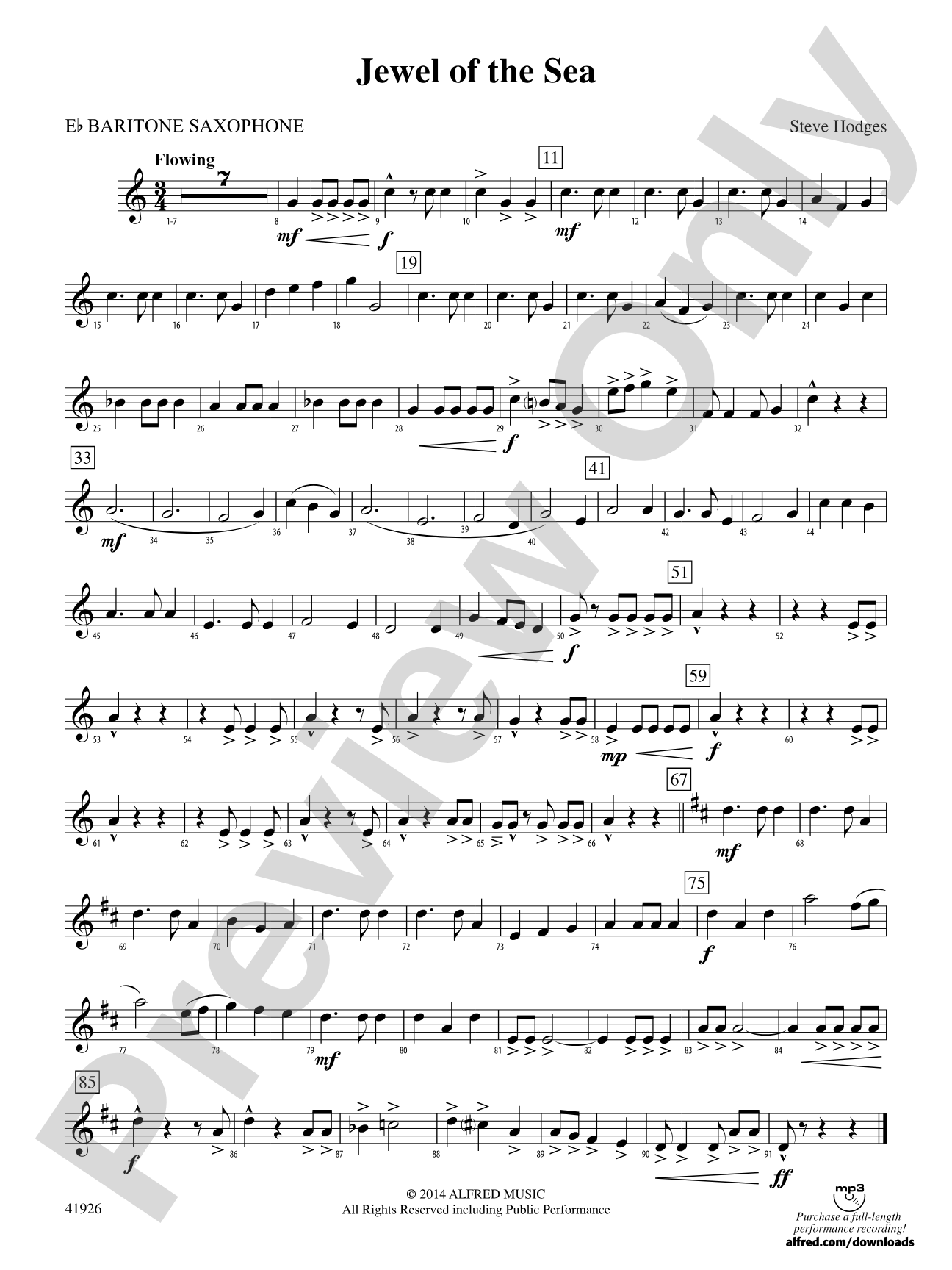
Jewel of the Sea: E-flat Baritone Saxophone

By Steve Hodges

Grade: 1.5 (Easy)

Item: 00-PC-0016408_BTX

Digital Download
$3.00
Description
This piece captures the excitement of setting sail on the open waters. There is ebb and flow as the ship begins the journey, but there are a few anxious moments as the weather becomes more threatening. All is well, however, as the ship continues smooth sailing for the remainder of the journey. (2:05)

Don't just read it, hear it, play along with it, and watch your students grow with it. In MakeMusic Cloud, Jewel of the Sea: E-flat Baritone Saxophone comes alive with professional accompaniment, adjustable tempo, and built-in practice tools that turn solo practice into real progress.

Sample Audio
0:00
0:00
Sample Video
Additional Details
Series: Challenger Band Series
Publisher: Alfred Music
Page Count: 132
SKU: 00-PC-0016408_BTX

More about this title

About the Composer: Steve Hodges

Steve Hodges

Steve Hodges holds degrees from Western Oregon University (Bachelor of Science) and Central Washington University (Master of Music Education). His four-decade career in public school music education spanned all levels of bands, choirs, and chamber ensembles before his retirement.

Since 1986, Hodges has composed over 120 concert band works published by Alfred Music, along with choral arrangements released through Staff Music and Shawnee Press. His music appears regularly at festivals and state conventions worldwide, with commissions from honor bands and school programs across Virginia, Iowa, Winnipeg, British Columbia, Oregon, Washington, and North Carolina. His compositions have also been featured on TBS and ESPN programming. Hodges holds membership in ASCAP and has received multiple standard awards. He resides in The Dalles, Oregon with his wife Teddie, and takes particular joy in hearing his grandchildren perform his pieces in their school bands.

Why we love this

Hodges writes with an instinctive understanding of what young bands can execute musically without overwhelming them technically. The narrative arc here unfolds naturally across the piece, allowing students to feel the drama of a sea voyage without wrestling with rhythmic complexity or extreme ranges. The balance between accessible writing and genuine musical substance makes this a rare find at Grade 1.5.

What to expect

The opening captures that moment of anticipation before departure, with gentle undulating figures suggesting water and movement. When the weather shifts, tension enters without aggression. The return to smooth waters feels earned, offering students the satisfaction of having navigated something with real dramatic shape.

Who it's for

Young concert bands seeking repertoire that tells a clear story without sacrificing musicality. Grade 1.5 players gain experience with dynamic range and musical phrasing while remaining firmly within their technical comfort zone.

How to get the most out of it

  • Shape the opening sections to reflect the ship's journey outward. The ebb and flow work best when the band responds to subtle dynamic shifts rather than treating the music metronomically.
  • Let the anxious middle section breathe with slightly more urgency, but avoid rushing. The tension gains impact when paced deliberately.
  • Bring out the return to calm sailing in the final section with confidence. This is where the band's effort pays off musically, so encourage a full, supported sound.

How to use it

Program this as an opener or early-season piece when you want to establish musicality without technical demands. It works equally well in a concert setting or festival, and the vivid imagery makes it an effective teaching tool for discussing how composers depict narrative through music.

Skills your students will build

  • Responding to dynamic shaping and phrasing across longer musical phrases
  • Maintaining ensemble balance when multiple sections carry the melodic material
  • Connecting rhythmic precision to musical storytelling
  • Sustaining focused sound quality during gradual dynamic transitions

You May Also Like