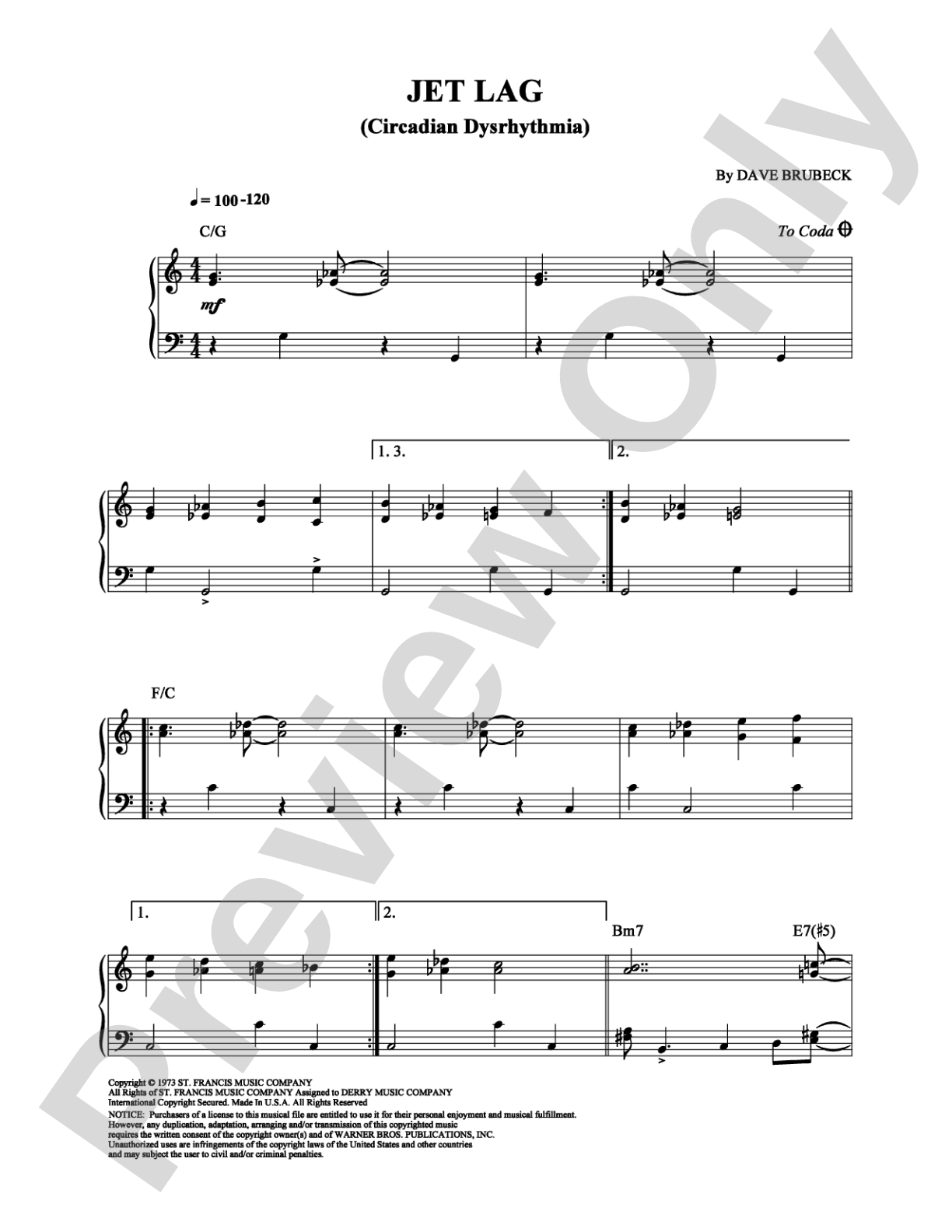
Jet Lag (Circadian Dysrhythmia): Piano Digital Sheet Music

Jet Lag (Circadian Dysrhythmia): Piano Digital Sheet Music

Dave Brubeck

Item: 00-PS-0000795

Digital Download
$3.99
Description

Jet Lag (Circadian Dysrhythmia): Piano Digital Sheet Music isn't in MakeMusic Cloud just yet...but it could be. Let us know you'd like to see it, and you'll help shape what comes next. In the meantime, start a free trial and dive into thousands of interactive titles your students can play along with today.

Sample Audio
No sample audio found.
Sample Video
Additional Details
SKU: 00-PS-0000795

More about this title

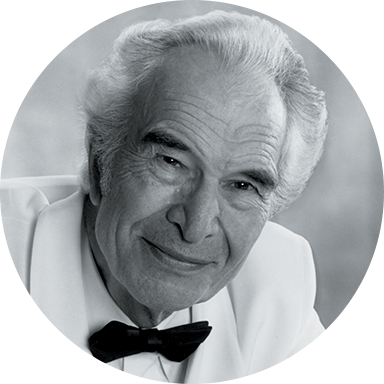
About the Artist: Dave Brubeck

Dave Brubeck

Dave Brubeck brought the language of jazz into concert music with equal fluency on both sides of that divide. Beyond his legendary improvisational work at the keyboard, he composed a vast catalog of fully notated pieces: choral works, hymns, orchestral suites, chamber music, and large-scale choral-orchestral compositions. His study with Darius Milhaud at Mills College after World War II shaped his approach to blending jazz vocabulary with classical forms, a synthesis that defined his artistic voice throughout a remarkably long career.

Brubeck's cultural impact extended far beyond the recording studio. He broke racial barriers in mid-twentieth-century America and received honors from multiple nations, including the Presidential Medal of the Arts from President Clinton and a lifetime achievement award from the London Symphony Orchestra. His mass "To Hope!" and oratorios have been performed and recorded internationally. In 2003, he was elected into the American Classical Music Hall of Fame, cementing his place as one of jazz's most important composers.

Why we love this

Brubeck's ability to write idiomatically for the keyboard shines here, with a piece that respects jazz pianists' improvisational instincts while providing real compositional substance. The subject matter, circadian dysrhythmia, gives students a sophisticated entry point into how contemporary composers translate modern experience into sound, making this more than just another jazz standard.

What to expect

The title signals a modern subject matter, yet Brubeck's treatment is sophisticated and contemplative rather than anxious or disorienting. The piece unfolds with the unhurried clarity of a pianist thinking through a musical idea, where harmonic depth and melodic logic matter as much as groove. There's a restful, introspective quality despite the rhythmic complexity implied by the concept.

Who it's for

Jazz pianists developing their sight-reading skills in notated composition will find Brubeck's voice both approachable and musically substantial. This piece suits intermediate to advanced players who want to explore how a master composed for the keyboard in his own jazz language. It's ideal for recital programming, practice repertoire, or educational contexts where the goal is understanding how jazz and classical music can coexist.

How to get the most out of it

  • Internalize the underlying swing feel before focusing on the notated details; the written rhythms exist within a jazz time framework, not a classical one
  • Balance clarity in the written melody and harmony with the rubato that makes jazz phrasing breathe; don't metronomically lock the tempo
  • Listen to Brubeck's own recordings to understand the character of his harmonic language and how he voices chords across the keyboard
  • Explore the space between the written notes; jazz notation often implies more freedom than classical notation, especially in rhythmic interpretation

How to use it

This works beautifully in a jazz recital or as a contemporary art music addition to a classical piano program. Pair it with other twentieth-century composed jazz works or with Brubeck's chamber pieces to showcase how compositional rigor and improvisational thinking inform each other. It's also an excellent teaching piece for intermediate pianists transitioning into jazz repertoire study.

Skills your students will build

  • Reading jazz harmony and voicings as written on the staff
  • Balancing metric precision with swing feel and rhythmic freedom
  • Understanding Brubeck's compositional approach to form and development
  • Interpreting notated jazz idioms at the keyboard
  • Developing interpretive independence within a fully composed framework

You May Also Like