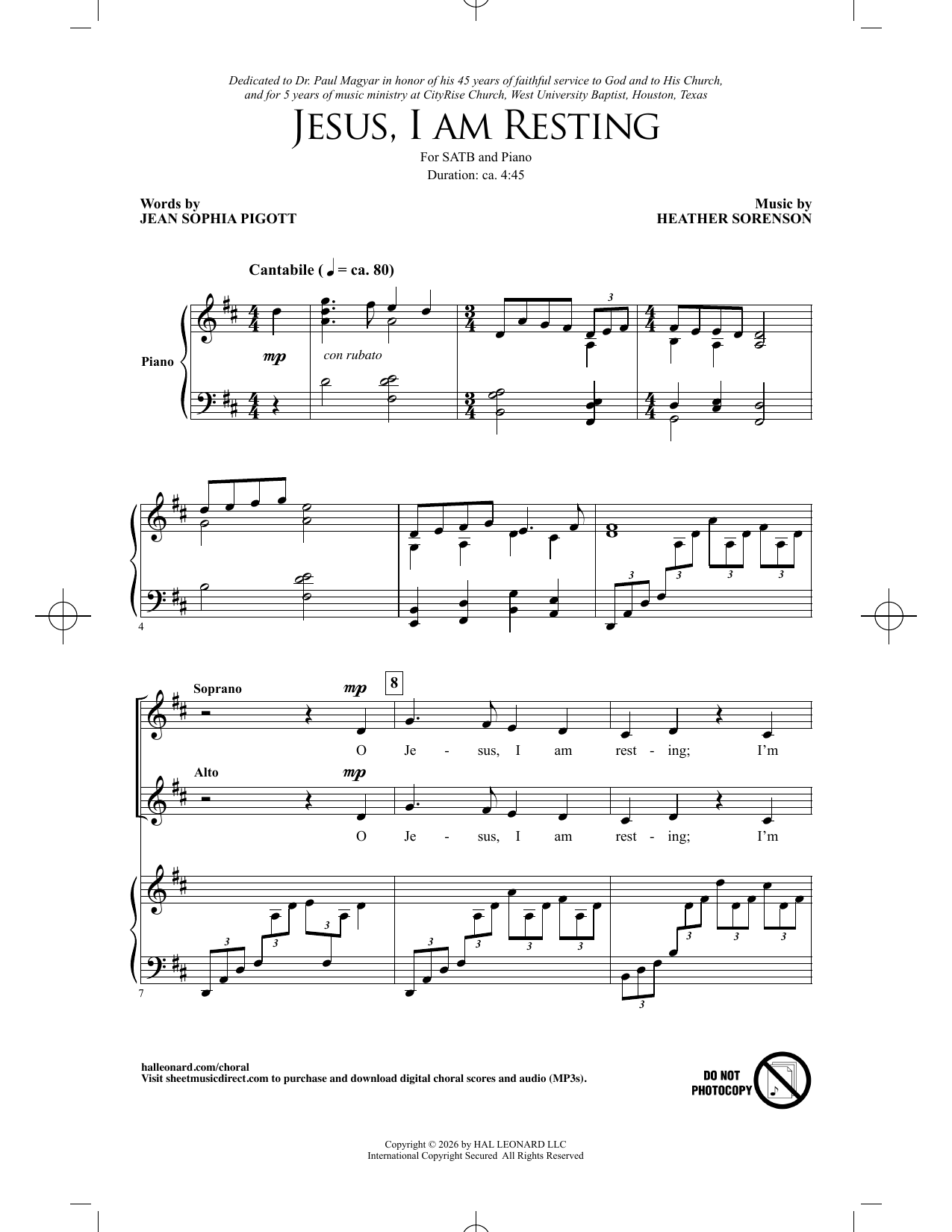
By Heather Sorenson / As performed by Jean Sophia Pigot
Item: 35-DS01938959
Digital Download
$2.75
Minimum order quantity: 10 copies
Please note: Under U.S. copyright law, you must purchase the exact number of copies needed for your ensemble. Printing, duplicating or sharing additional copies is strictly prohibited.
Pickup currently not available
Description
Discover MakeMusic Cloud: thousands of interactive titles your students can play along with today.
Heather Sorenson has built a reputation as a composer and arranger whose music spans sacred and contemporary idioms with equal fluency. Based in Dallas, her works appear regularly in churches, universities, and concert halls across the country, and she has received commissions from institutions including Texas A&M University and Carnegie Hall, where her oratorio EXODUS premiered.
Beyond the page, Sorenson has shaped music education through teaching positions at Grace Academy of Dallas and Baylor University, plus ongoing work as a guest conductor and clinician at worship conferences and schools nationwide. Her influence extends to benefit concerts and collaborative projects with nonprofits, reflecting a commitment to music as both art form and service.
Why we love this
Sorenson's setting of Jean Sophia Pigot's text achieves something rare: it feels both deeply contemplative and immediately singable. The writing honors the poem's quiet trust while giving each voice part melodic integrity, so singers stay engaged rather than locked into harmonic filler. This is the kind of piece that reminds a choir why they rehearse.
What to expect
The piece unfolds with quiet assurance, never pushing or demanding attention but drawing listeners inward through gentle harmonic motion and text that speaks of rest and peace. Sorenson's orchestration of Pigot's words creates an atmosphere of acceptance, where each phrase feels both intimate and universal.
Who it's for
SATB choirs with solid musicianship and comfort with contemporary harmonic language will find this piece accessible and rewarding. It works equally well for church choirs seeking meaningful sacred repertoire and concert ensembles programming a reflective spiritual work.
How to get the most out of it
Allow space in the opening phrases. Sorenson's harmonic language moves thoughtfully, and rushing will bury the text painting.
Shape the dynamic arc gradually across sections rather than applying uniform forte or piano markings. The text itself suggests where the emotional weight sits.
Balance the soprano line carefully; it carries the primary melody in several passages and should float above rather than dominate the voicing.
Consider the recorded accompaniment as a reference for tempo and harmonic color, then adjust based on your acoustic and how your singers respond to the text.
How to use it
Nest this in a program of contemporary sacred works, or use it as a centerpiece for a concert exploring themes of faith and contemplation. Its modest length and gentle character make it an ideal closing piece, leaving the audience in a state of quiet reflection rather than theatrical conclusion.
Skills your students will build
Singing in contemporary harmonic language with secure intonation
Balancing text clarity with legit phrase shapes
Responding to subtle dynamic and tempo nuance
Ensemble blend across SATB voicing
You May Also Like
Scan to Complete Your Purchase
Use your phone's camera to scan the code below
You'll log in on your phone and the order will be added to your account