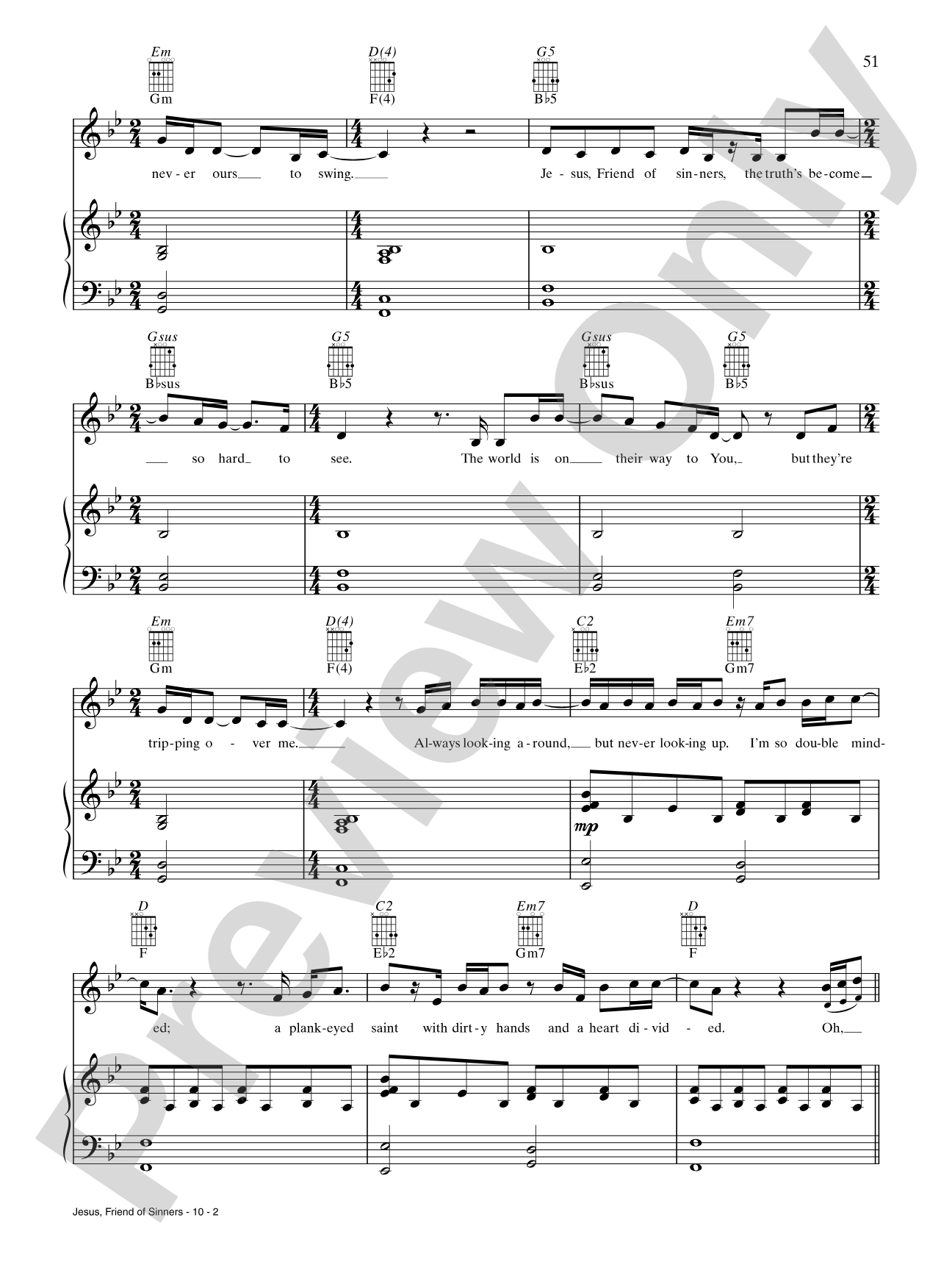
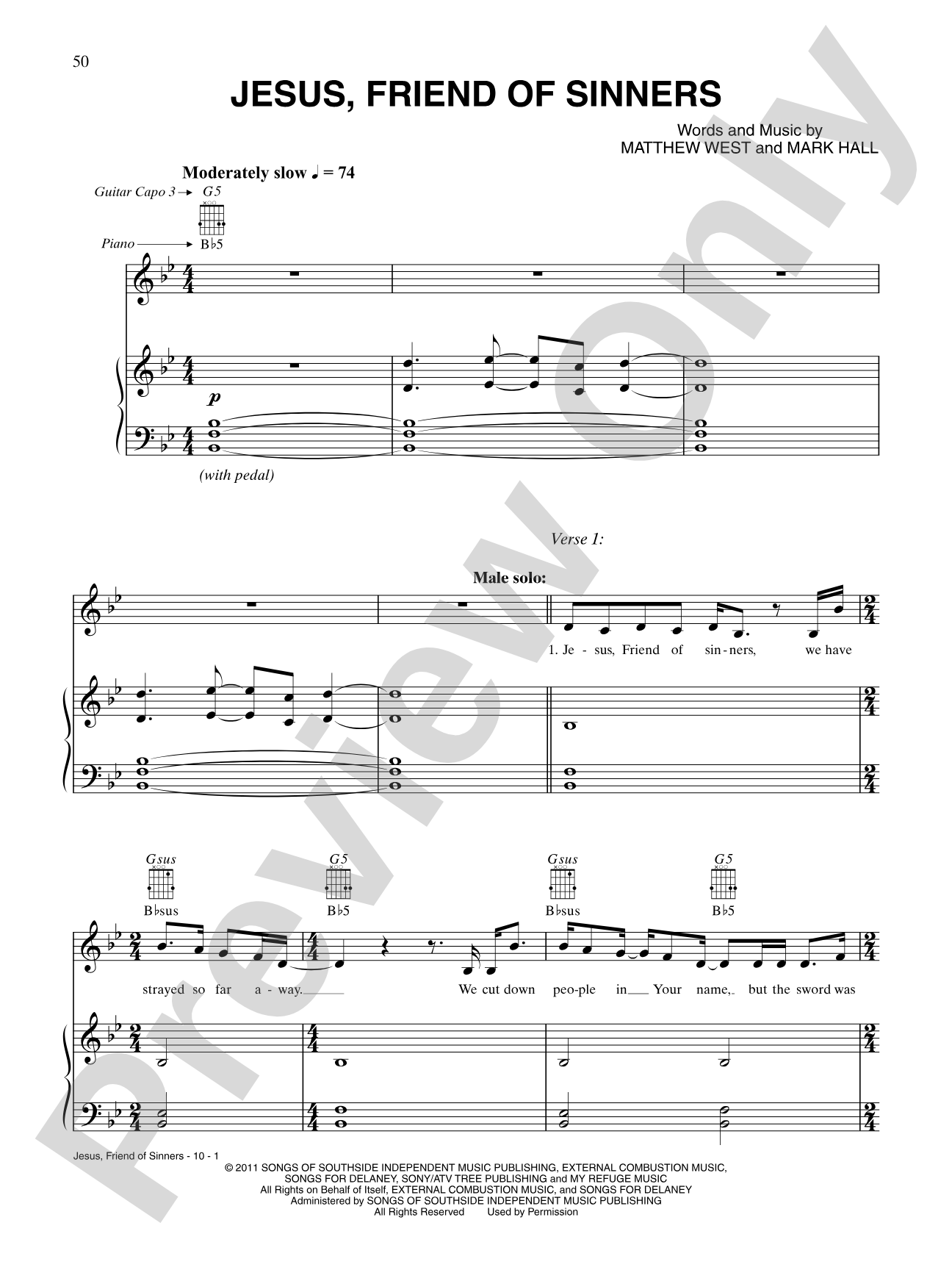
Jesus, Friend of Sinners Sheet Music Preview

Jesus, Friend of Sinners: Piano/Vocal/Chords

Sheet Music for the Year's Most Popular Songs

By various artists and composers

Item: 00-PS-0015686

Digital Download
$9.99

One moment…

Description
From inspirational ballads to up-tempo rock styles, these are the hits to play in 2013! More than 100 pages of piano/vocal/guitar sheet music capture the year's most popular songs. Titles: 10,000 Reasons (Bless the Lord) (Matt Redman) * God's Not Dead (Like a Lion) (Newsboys) * Good Morning (Mandisa) * Hold Me (Jamie Grace featuring TobyMac) * How Great Is Our God (Chris Tomlin) * I Need a Miracle (Third Day) * Jesus, Friend of Sinners (Casting Crowns) * Need You Now (How Many Times) (Plumb) * One Thing Remains (Passion featuring Kristian Stanfill) * The Proof of Your Love (For King & Country) * Redeemed (Big Daddy Weave) * We Are (Kari Jobe) * Who You Are (Unspoken) * Whom Shall I Fear (God of Angel Armies) (Chris Tomlin) * You Are (Colton Dixon) * Your Love Never Fails (Newsboys).

Jesus, Friend of Sinners: Piano/Vocal/Chords isn't in MakeMusic Cloud just yet...but it could be. Let us know you'd like to see it, and you'll help shape what comes next. In the meantime, start a free trial and dive into thousands of interactive titles your students can play along with today.

Sample Audio
No sample audio found.
Sample Video
Additional Details
Series: Greatest Hits
Publisher: Alfred Music
Page Count: 120
SKU: 00-PS-0015686

More about this title

About the Composer: Matthew West

Matthew West is a contemporary Christian music composer and artist known for writing accessible, emotionally direct songs that connect with broad congregational and popular audiences. His work bridges worship settings and mainstream Christian radio, with compositions that emphasize lyrical clarity and singable melodies.

Why we love this

This folio captures the sonic diversity of 2013's Christian music landscape, mixing worship anthems with pop-rock energy and inspirational ballads. The collection gives pianists, singers, and guitarists immediate access to contemporary repertoire that actually resonates with students and congregations, eliminating the hunt for lead sheets of songs people actually want to perform.

What to expect

These arrangements capture the emotional range of contemporary Christian music in 2013, moving between intimate, reflective moments in ballads like "Need You Now" and the driving energy of rock-inflected pieces like "God's Not Dead." The writing emphasizes memorable hooks and accessible chord progressions that invite congregational participation or solo spotlight.

Who it's for

Pianists and keyboardists in church, youth group, or contemporary worship settings who want current, singable repertoire at an intermediate level. Guitarists and singers performing in worship bands or concert contexts will find familiar material with clear harmonic and melodic guidance.

How to get the most out of it

  • Pay attention to the rhythmic groove notated in the piano part; these arrangements often rely on syncopation and specific accompaniment patterns to match the original recordings, so locking the left hand rhythm pays off.
  • Adjust the vocal tessitura to fit your singer's range by transposing strategically. Contemporary Christian arrangements often sit higher than classical standards, so don't hesitate to move keys to suit your vocalist's comfort.
  • Balance the chord symbols with the notated piano voicings; guitarists may need to choose between strumming the provided chords or shadowing the piano part depending on the ensemble size and style.

How to use it

Build a contemporary worship set by pairing hymn-like devotional pieces ("How Great Is Our God," "10,000 Reasons") with more rhythmically adventurous selections to create dynamic evening services or youth group performances. The collection's range also works well as a resource for accompanists learning the current praise and worship repertoire.

Skills your students will build

  • Reading lead sheets and interpreting chord symbols in real time
  • Adapting accompaniment voicings to match both notated parts and harmonic context
  • Balancing melody, text, and rhythmic accompaniment in contemporary styles
  • Transposing songs to fit vocal ranges without losing the character of the original arrangement

You May Also Like