Jesu Rex Admirabilis Sheet Music Preview

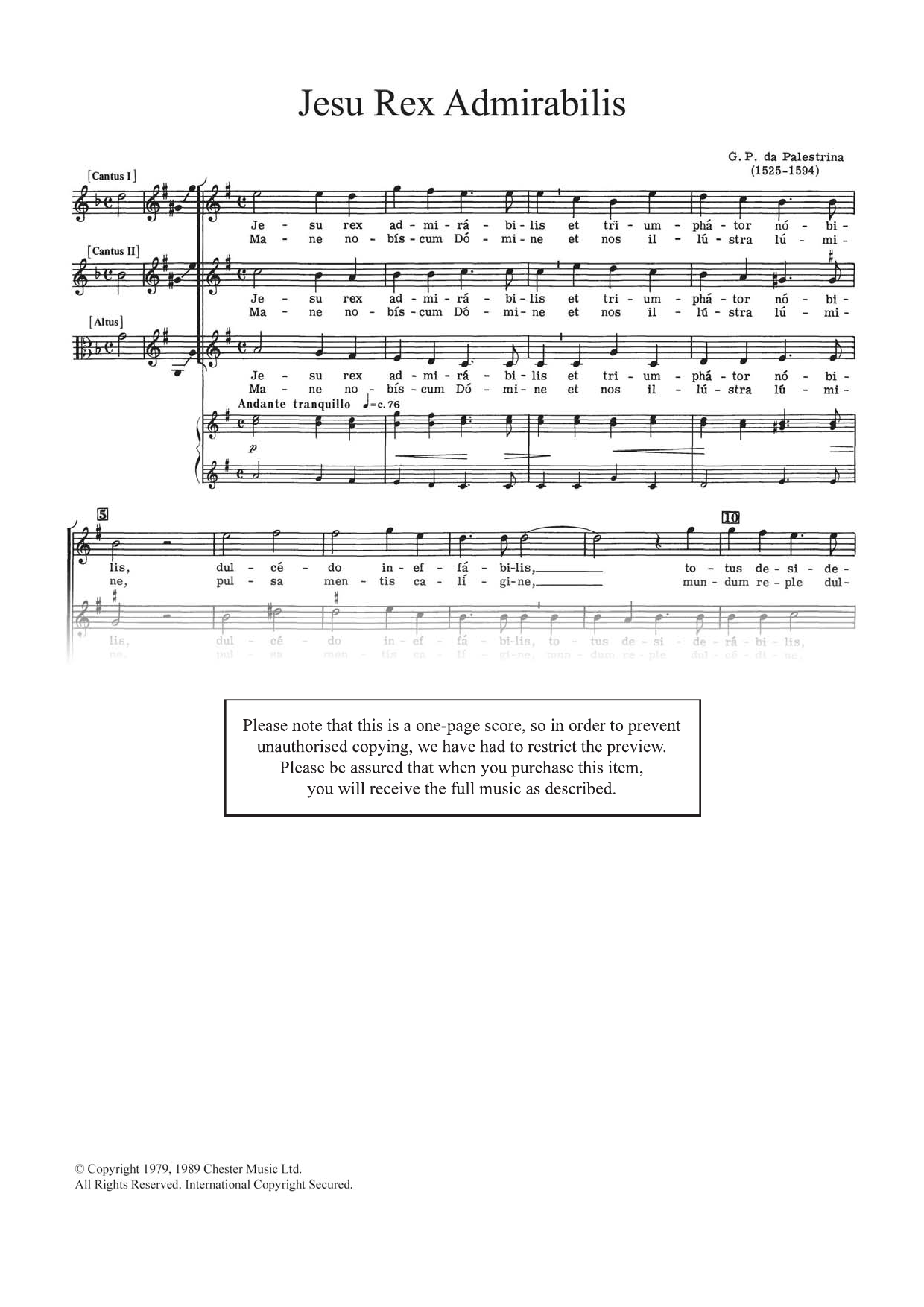
Jesu Rex Admirabilis: SSA Choral Octavo

As performed by Giovanni Palestrina

Item: 35-DS00366721

Digital Download
$2.99
Description

Jesu Rex Admirabilis: SSA Choral Octavo isn't in MakeMusic Cloud just yet...but it could be. Let us know you'd like to see it, and you'll help shape what comes next. In the meantime, start a free trial and dive into thousands of interactive titles your students can play along with today.

Sample Audio
No sample audio found.
Sample Video
Additional Details
Publisher: Hal Leonard
Page Count: 2
SKU: 35-DS00366721

More about this title

About the Artist: Giovanni Palestrina

Giovanni Palestrina (1526-1594) shaped the sound of sacred music for centuries to come. Working in Rome during the Counter-Reformation, he mastered the art of seamless polyphonic writing, proving that complex counterpoint could serve spiritual expression rather than obscure it. His influence on choral writing remains direct and immediate: directors and singers still turn to his motets as models for clarity, balance, and emotional restraint.

Why we love this

Palestrina's economy of means rewards careful listening. This setting asks singers to sustain long lines without excessive text repetition, building intensity through harmonic color rather than bombast. For SSA voicing, it opens the middle register to genuine independence, avoiding the hollow sonorities that can plague upper-voice-only arrangements.

What to expect

Luminous and restrained. The piece unfolds with the patience of stained glass catching light gradually throughout the day, each harmonic shift subtle but purposeful. There is nothing fussy here; just the sound of voices moving through space with devotion and clarity.

Who it's for

SSA and SSAA choirs seeking repertoire that builds vocal control and ensemble balance without theatrical drama. This works equally well for educational choirs building foundations in Renaissance polyphony and for experienced groups exploring the quieter end of the sacred catalog.

How to get the most out of it

  • Approach the opening unison or near-unison passages as a single instrument; lock the tone and vibrato even when parts diverge slightly.
  • Bring out the harmonic motion by listening vertically in rehearsal. Palestrina's voice-leading rewards singers who hear beyond their own line.
  • Balance the text naturally against the musical architecture; resist the urge to rush expressive moments.
  • Shape longer note values with gentle dynamic curves rather than static tone.

How to use it

Pair this with other Renaissance motets to create a thematic concert block, or use it as a centering moment between more extroverted works. Its brevity and two-page format make it ideal for smaller ensemble concerts or as a thoughtful opening piece where you want to establish a quiet, focused acoustic.

Skills your students will build

  • Balancing blend across SSA voicing while maintaining individual line integrity
  • Sustaining longer note values with shape and support
  • Reading Renaissance notation and performance practices
  • Tuning vertical sonorities in four or more parts

You May Also Like