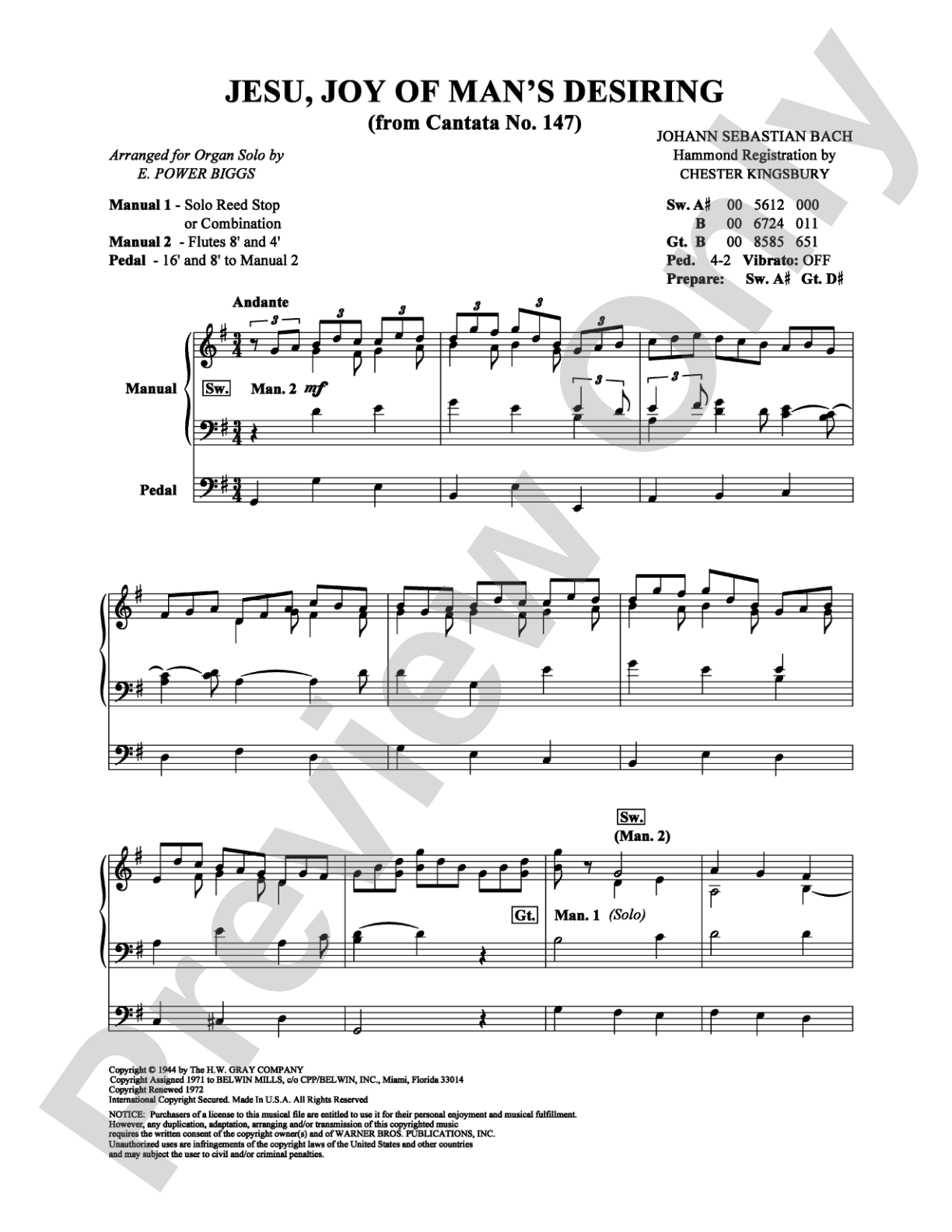
Jesu, joy of man's desiring (from Cantata No. 147): Organ Digital Sheet Music

Jesu, joy of man's desiring (from Cantata No. 147): Organ Digital Sheet Music

Johann Sebastian Bach, E. Power Biggs

Item: 00-PS-0000792

Digital Download
$3.99
Description

Jesu, joy of man's desiring (from Cantata No. 147): Organ Digital Sheet Music isn't in MakeMusic Cloud just yet...but it could be. Let us know you'd like to see it, and you'll help shape what comes next. In the meantime, start a free trial and dive into thousands of interactive titles your students can play along with today.

Sample Audio
No sample audio found.
Sample Video
Additional Details
SKU: 00-PS-0000792

More about this title

About the Arranger: E. Power Biggs

E. Power Biggs was an American organist and recording artist who became one of the twentieth century's most influential voices for the pipe organ. His extensive discography and innovative approach to organ repertoire brought Bach and other classical composers to audiences far beyond the concert hall, establishing the organ as a vital instrument in both sacred and secular contexts.

Why we love this

Biggs's arrangement distills one of Bach's most beloved melodies into a deeply playable organ work that captures the hymn-like warmth of the original without sacrificing musical substance. Organists at any level will find this accessible yet rewarding, and it programs beautifully in both worship settings and recitals where you want a moment of genuine grace.

What to expect

The piece radiates quiet devotion. Biggs's voicing creates an intimate, almost conversational quality, with the melody singing above thoughtful harmonies that feel both classical and timeless. There's a sense of humble joy here, the kind that lingers after the final chord fades.

Who it's for

This arrangement serves organists preparing for worship services, recitals, or informal performances who want an elegant Bach setting that fits comfortably in developing hands. It works equally well for experienced players seeking a transparent, rewarding interpretation of this essential melody.

How to get the most out of it

  • Shape the melody with gentle dynamic shaping rather than terraced changes; let the registration support the architecture of the phrase.
  • Pay attention to voice independence between the hands; the inner voices deserve clarity even when the melody carries the ear.
  • Use the sustain capabilities of the organ to create legato phrasing that honors the vocal origins of this melody.
  • Respect the harmonic rhythm and avoid rushing into cadences; allow silence and breath to complete the musical thought.

How to use it

Include this as a prelude or postlude in a church service, or program it on an organ recital as a bridge between larger Bach works and contemporary pieces. It also serves well as an opening gesture in a mixed recital, setting a reflective tone before moving into contrasting material.

Skills your students will build

  • Legato phrasing on the organ
  • Voice independence between manual and pedal
  • Harmonic analysis and understanding Bach's harmonic language
  • Registration choices that support melodic and harmonic clarity
  • Tempo control and rubato appropriate to baroque material

You May Also Like