Jesu, Joy Of Man's Desiring Sheet Music Preview

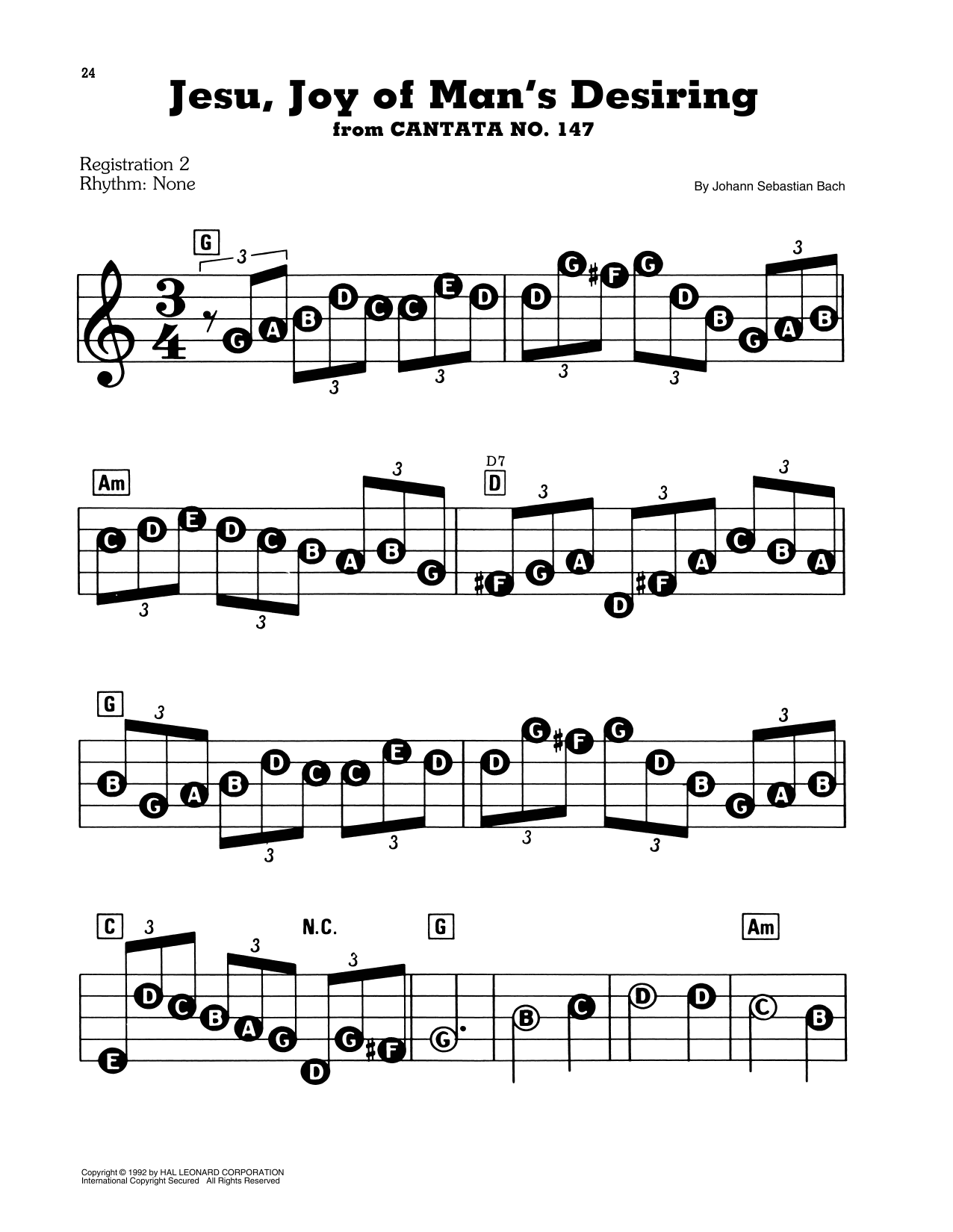
Jesu, Joy Of Man's Desiring: E-Z Play Today

Item: 35-DS00449386

Digital Download
$4.99
Description

Jesu, Joy Of Man's Desiring: E-Z Play Today isn't in MakeMusic Cloud just yet...but it could be. Let us know you'd like to see it, and you'll help shape what comes next. In the meantime, start a free trial and dive into thousands of interactive titles your students can play along with today.

Sample Audio
No sample audio found.
Sample Video
Additional Details
Publisher: Hal Leonard
Page Count: 2
SKU: 35-DS00449386

More about this title

About the Creator: Johann Sebastian Bach

Johann Sebastian Bach (1685-1750) composed this chorale prelude as part of his Clavier-Übung III, a collection of organ works that showcase his mastery of counterpoint and harmonic innovation. Though originally written for organ, the piece has transcended its original instrumentation to become one of the most beloved melodies in Western music, adapted for virtually every instrument and ensemble imaginable.

Why we love this

The E-Z Play Today arrangement makes this cornerstone of wedding and ceremonial music accessible to pianists still building their technical foundation. Two pages is exactly the right amount of real estate for this beloved tune without feeling truncated or oversimplified; students get to experience the full emotional arc of Bach's writing at a manageable level.

What to expect

Peaceful contemplation infused with gentle joy. The piece unfolds like a prayer set to melody, warm and intimate rather than grand. There's a quiet confidence in Bach's harmonic movement that feels both timeless and deeply comforting.

Who it's for

Beginning to early intermediate pianists who need an accessible entry point into Bach's keyboard music, or anyone preparing for wedding services, ceremonies, and formal occasions. This edition serves musicians who want musical substance without navigating the technical demands of the original organ work.

How to get the most out of it

  • Shape the melody through subtle dynamic gradations rather than stark contrasts; Bach's linear writing rewards sensitive phrasing that follows the natural peaks and valleys of the line itself.
  • Allow the harmonic progressions to breathe by slightly extending the fermatas and cadential moments, especially at the midpoint and final resolution.
  • Practice the left hand independently to ensure accompanying figures don't overshadow the soprano line, which should sing throughout.

How to use it

Slot this into ceremonial programs where something both refined and familiar matters. It works equally well as a prelude to a formal event, an interlude between concert pieces, or a standalone offering for piano students taking on their first "grown-up" repertoire.

Skills your students will build

  • Reading two-part counterpoint on the grand staff
  • Balancing melody and accompaniment voices
  • Interpreting baroque phrasing and articulation
  • Handling harmonic progressions with period-appropriate voice leading
  • Sustaining long melodic lines across multiple phrases

You May Also Like