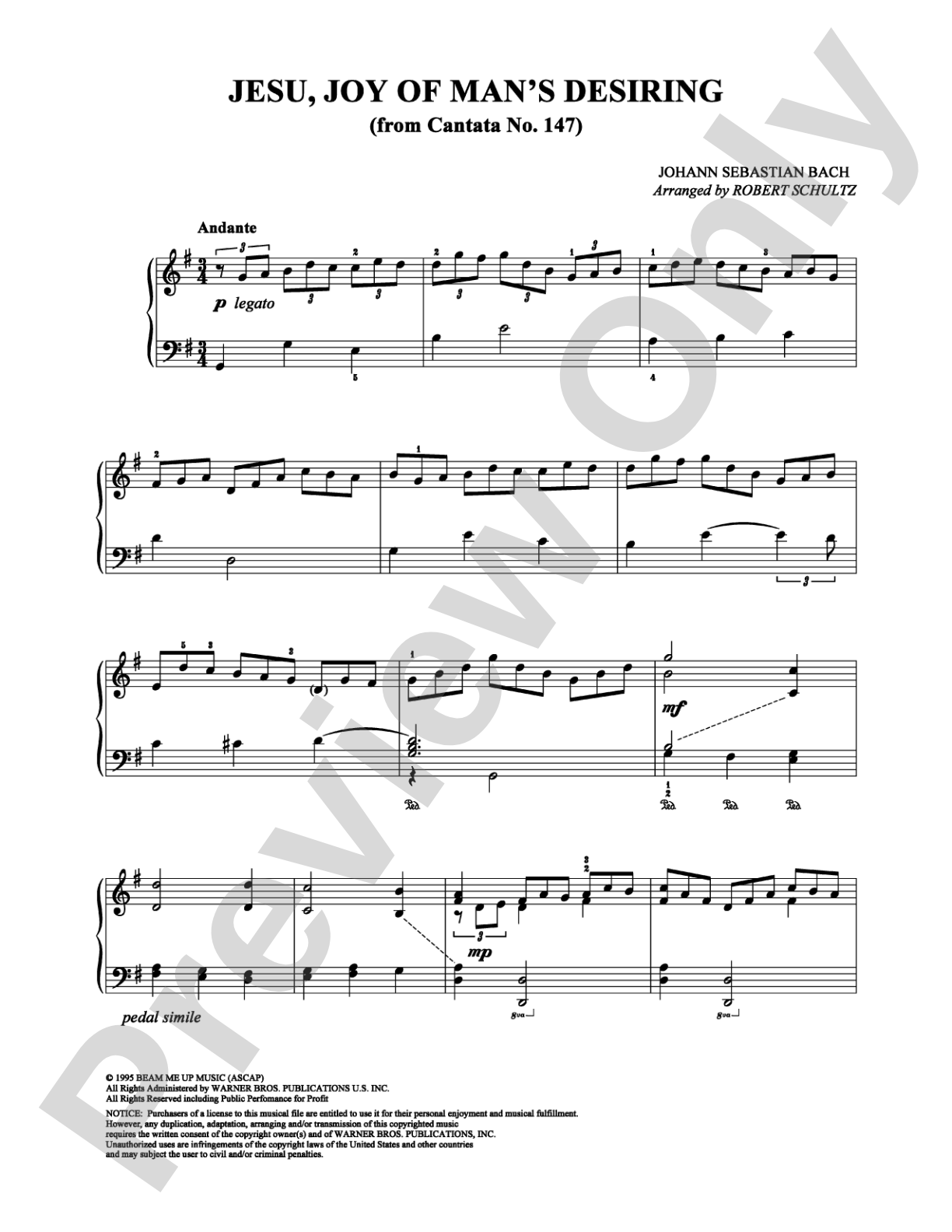
Jesu, Joy of Man's Desiring: Piano Digital Sheet Music

Jesu, Joy of Man's Desiring: Piano Digital Sheet Music

Johann Sebastian Bach, Robert Schultz

Item: 00-PS-0003281

Digital Download
$3.99
Description

Jesu, Joy of Man's Desiring: Piano Digital Sheet Music isn't in MakeMusic Cloud just yet...but it could be. Let us know you'd like to see it, and you'll help shape what comes next. In the meantime, start a free trial and dive into thousands of interactive titles your students can play along with today.

Sample Audio
No sample audio found.
Sample Video
Additional Details
SKU: 00-PS-0003281

More about this title

Why we love this

Schultz's arrangement captures the contemplative elegance of Bach's original while making it accessible to pianists who might not tackle the full Cantata No. 147. The voicing sits naturally under the hands and preserves the harmonic richness that makes this work endure across centuries.

What to expect

Warm and introspective, this arrangement invites listeners into a space of quiet joy. The familiar melody unfolds over flowing accompaniment that suggests both the structural sophistication of Bach and an almost hymn-like simplicity.

Who it's for

Pianists at intermediate to early advanced levels who want a substantial Bach arrangement without the technical demands of the original cantata setting. It works equally well as a recital piece, a meditation for a wedding or memorial service, or a study in Baroque counterpoint and voice leading.

How to get the most out of it

  • Shape the melody with gentle phrasing rather than rigid block chords; think of it as singing through the keyboard even in the accompaniment layers.
  • Let the bass line breathe slightly on longer note values to avoid a metronomic quality that works against the piece's meditative character.
  • Balance transparency in the middle register; busier accompaniment textures should support rather than obscure the primary melodic line.

How to use it

Program this as a recital solo that bridges classical and sacred contexts, or use it as an interlude between longer works. It also serves as an excellent teaching piece for students exploring how arrangements can honor an original composition while reimagining it for a different instrument.

Skills your students will build

  • Phrasing and voice independence across both hands
  • Baroque counterpoint and harmonic analysis
  • Pedal control for sustain without blurring texture
  • Interpretation of transcriptions and respect for source material

You May Also Like