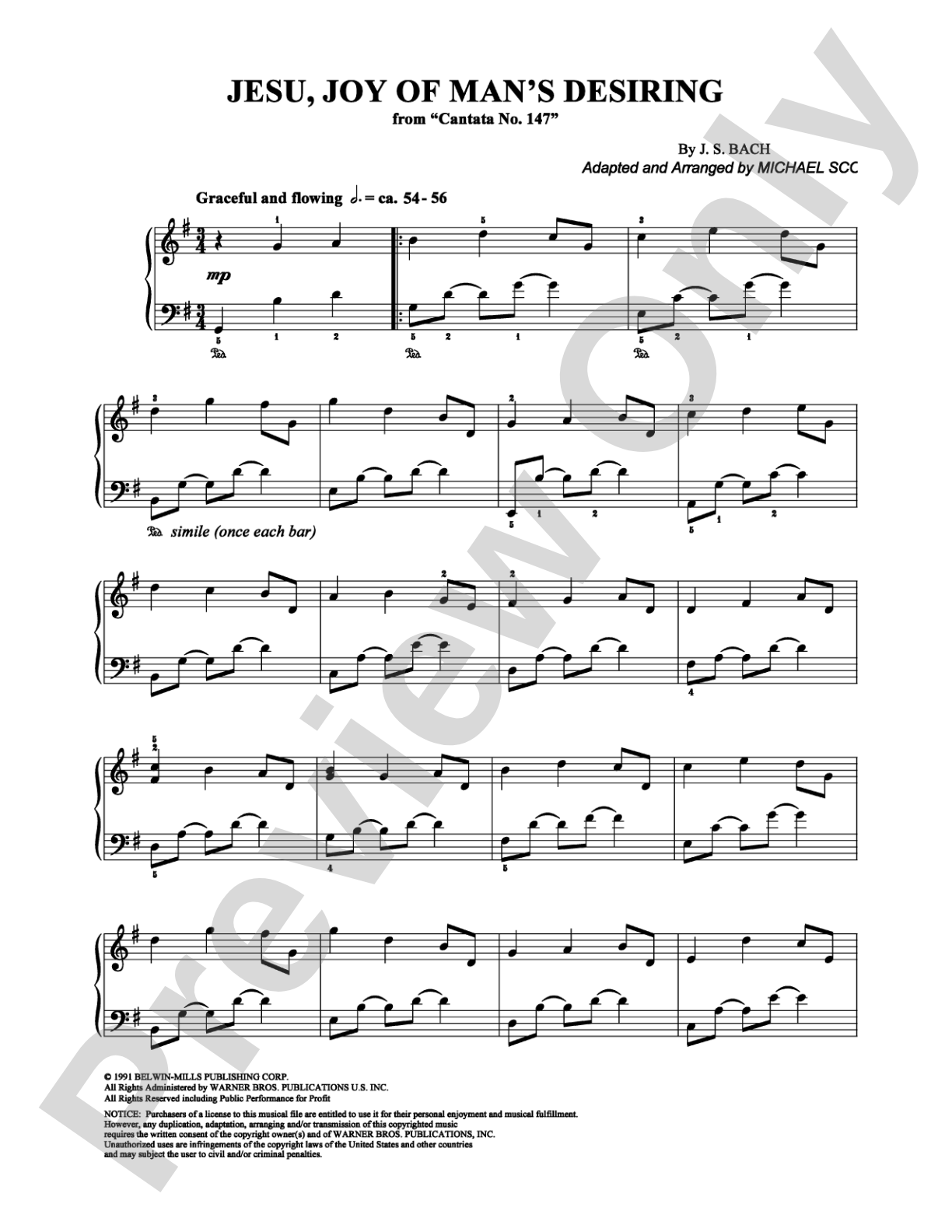
Jesu, Joy of Man's Desiring: Piano Digital Sheet Music

Jesu, Joy of Man's Desiring: Piano Digital Sheet Music

Johann Sebastian Bach

Item: 00-PS-0000584

Digital Download
$3.99
Description

Jesu, Joy of Man's Desiring: Piano Digital Sheet Music isn't in MakeMusic Cloud just yet...but it could be. Let us know you'd like to see it, and you'll help shape what comes next. In the meantime, start a free trial and dive into thousands of interactive titles your students can play along with today.

Sample Audio
No sample audio found.
Sample Video
Additional Details
SKU: 00-PS-0000584

More about this title

About the Creator: Johann Sebastian Bach

Johann Sebastian Bach (1685, 1750) composed this chorale during his time in Weimar, drawing from the rich tradition of Lutheran hymn writing that defined his spiritual and musical life. The piece exemplifies Bach's gift for counterpoint and harmonic sophistication, transforming a simple chorale into a meditation of profound depth that has endured across centuries and musical cultures.

Why we love this

This transcription captures one of the Baroque's most beloved melodies in an arrangement that lies naturally under the hands. The piece works equally well as a recital opener, a communal moment in a student showcase, or a practice piece that rewards both technical control and expressive singing.

What to expect

Serene and deeply spiritual, this music radiates a quiet joy grounded in counterpoint and gentle harmonic progression. The familiar melody unfolds with intimacy, inviting both player and listener into a moment of reflection.

Who it's for

Pianists at the intermediate to advanced-intermediate level will find this piece both accessible and musically rewarding. It suits recital programs, church settings, or educational performances where a meditative, well-crafted work enhances the program.

How to get the most out of it

  • Shape the melody with a singing tone in the right hand while keeping the accompaniment rhythmically steady and transparent; the left hand should support, not compete.
  • Approach the polyphonic sections with clarity of line; each voice should emerge distinctly without heaviness.
  • Allow space for breath within the musical phrases, even though this is an instrumental transcription; the phrasing should mirror vocal gesture.

How to use it

This works beautifully as a recital opening or as the closing piece of a student concert where you want to send the audience out in a contemplative frame of mind. It also pairs well in programs that mix Baroque with contemporary works, anchoring the first half with historical weight.

Skills your students will build

  • Baroque voice leading and counterpoint awareness
  • Lyrical phrasing and melodic shaping on piano
  • Balance between melody and accompaniment voices
  • Legato touch control without pedal dependency

You May Also Like