Jazzy Ol' Saint Nick: (wp) B-flat Tuba B.C. Sheet Music Preview

Jazzy Ol' Saint Nick: (wp) B-flat Tuba B.C.

Arr. Douglas E. Wagner

Grade: 1 (Very Easy)

Item: 00-PC-0001654_wpTBBBC

Digital Download
$3.00
Description
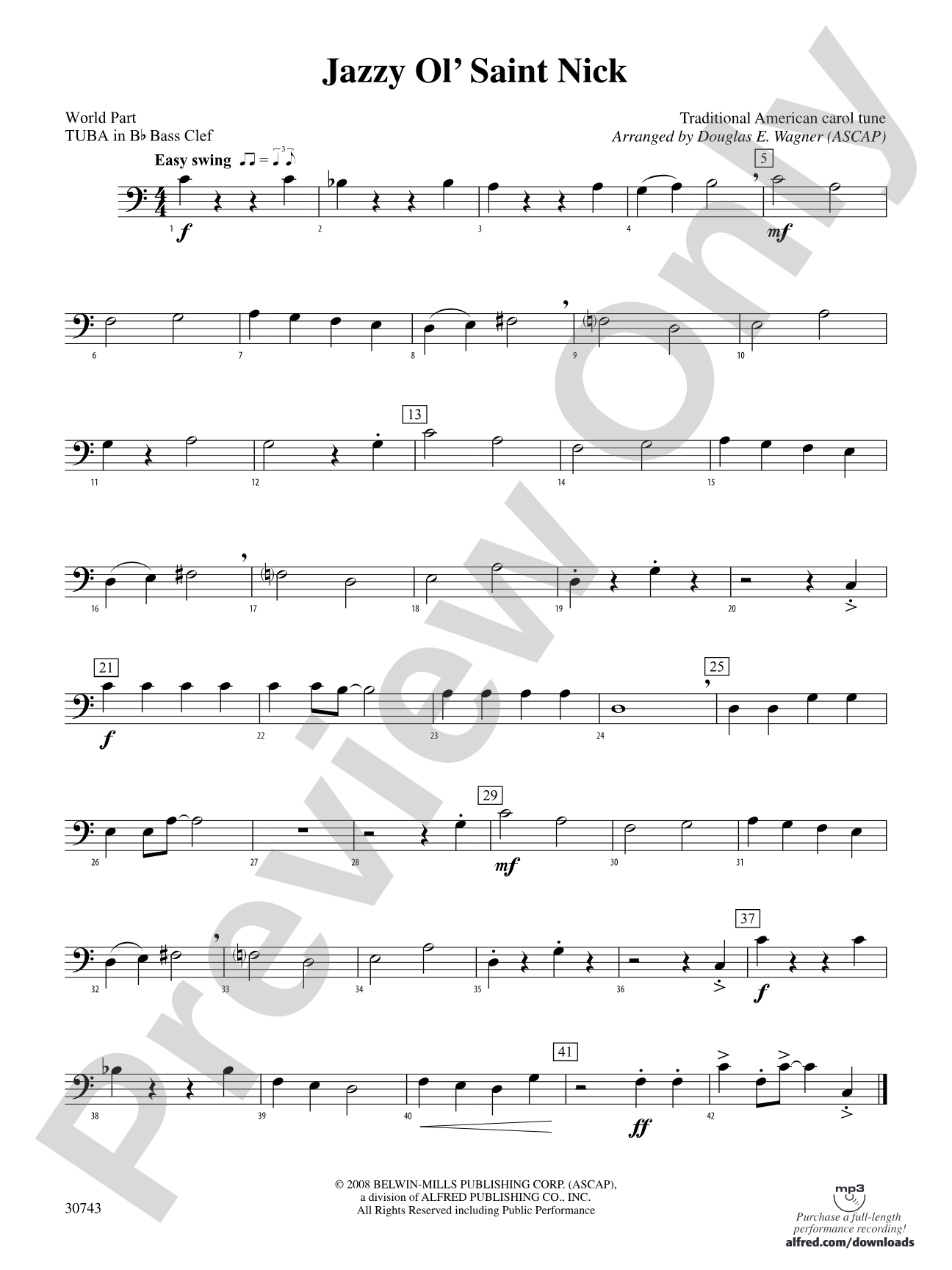
The easy swing style is instantly grasped by your beginning band in Douglas Wagner's treatment of "Jolly Old Saint Nicholas." Clear articulations make preparation and performance of Jazzy Ol' Saint Nick a holiday treasure to be enjoyed for years to come. Highly programmatic! (1:25)

Don't just read it, hear it, play along with it, and watch your students grow with it. In MakeMusic Cloud, Jazzy Ol' Saint Nick: (wp) B-flat Tuba B.C. comes alive with professional accompaniment, adjustable tempo, and built-in practice tools that turn solo practice into real progress.

Sample Audio
0:00
0:00
Sample Video
Additional Details
Series: Belwin Beginning Band
Publisher: Alfred Music
Page Count: 138
SKU: 00-PC-0001654_wpTBBBC

More about this title

About the Arranger: Douglas E. Wagner

Douglas E. Wagner

Douglas E. Wagner grew up in Chicago and earned degrees in music from Butler University before spending thirty years as a high school music educator and administrator. Since 1973, he has composed and arranged over 3,500 works across nearly every medium: concert band, choir, orchestra, handbell ensemble, organ, piano, and voice. His output has reached audiences globally through concert performances, television, and radio broadcasts, with upward of seventeen million copies of his music in circulation.

Wagner's deep understanding of school music programs shows in every piece he writes. His ability to craft accessible, engaging music for young performers without sacrificing musicality has made him a cornerstone of the beginning and intermediate band repertoire. He currently lives in Indianapolis with his wife, Sandy.

Why we love this

Wagner transforms a beloved carol into something your beginning band will actually want to play. The swing style sits naturally under young hands, the rhythms feel modern and fun rather than quaint, and the clear articulations give your students concrete targets for their practice. It's the kind of piece that builds confidence through immediate musical success.

What to expect

Bright, playful, and unmistakably holiday in spirit while sounding refreshingly contemporary. The swing lilt gives it a casual confidence that makes even simple passages feel genuinely groovy, and at just over a minute and a quarter, it lands with perfect economy.

Who it's for

Beginning band directors looking for a holiday selection that teaches swing style without getting bogged down in complexity. Your Grade 1 students will find the ranges, rhythms, and articulations straightforward enough to focus on musicality and feel rather than just note reading.

How to get the most out of it

  • Nail the swing feel from the first rehearsal by conducting in two and letting the rhythm section establish that easy bounce. Once your students hear what swing sounds like, the rest of the band will lock in naturally.
  • Give the melodic voices permission to phrase through the written articulations rather than stopping at each mark. The dots and slurs are there to define character, not to chop the line.
  • Let the accompaniment parts sit lighter in the mix than they might in a traditional march. The simplicity of the texture means even your youngest players can contribute genuine musicality.
  • If you have a piano, add it to the rhythm section for rehearsal and performance. It clarifies the swing framework without overpowering the band sound.

How to use it

Anchor this piece in a December concert as a palate cleanser between traditional carols or as the fun closer before bows. The novelty arrangement gives your audience permission to smile, and it showcases your young musicians performing something with real stylistic personality.

Skills your students will build

  • Swing style interpretation and feel
  • Clear articulation execution (staccato, legato, and mixed)
  • Balanced accompaniment texture
  • Phrasing through written articulation marks
  • Fundamentals in a contemporary musical context

You May Also Like