
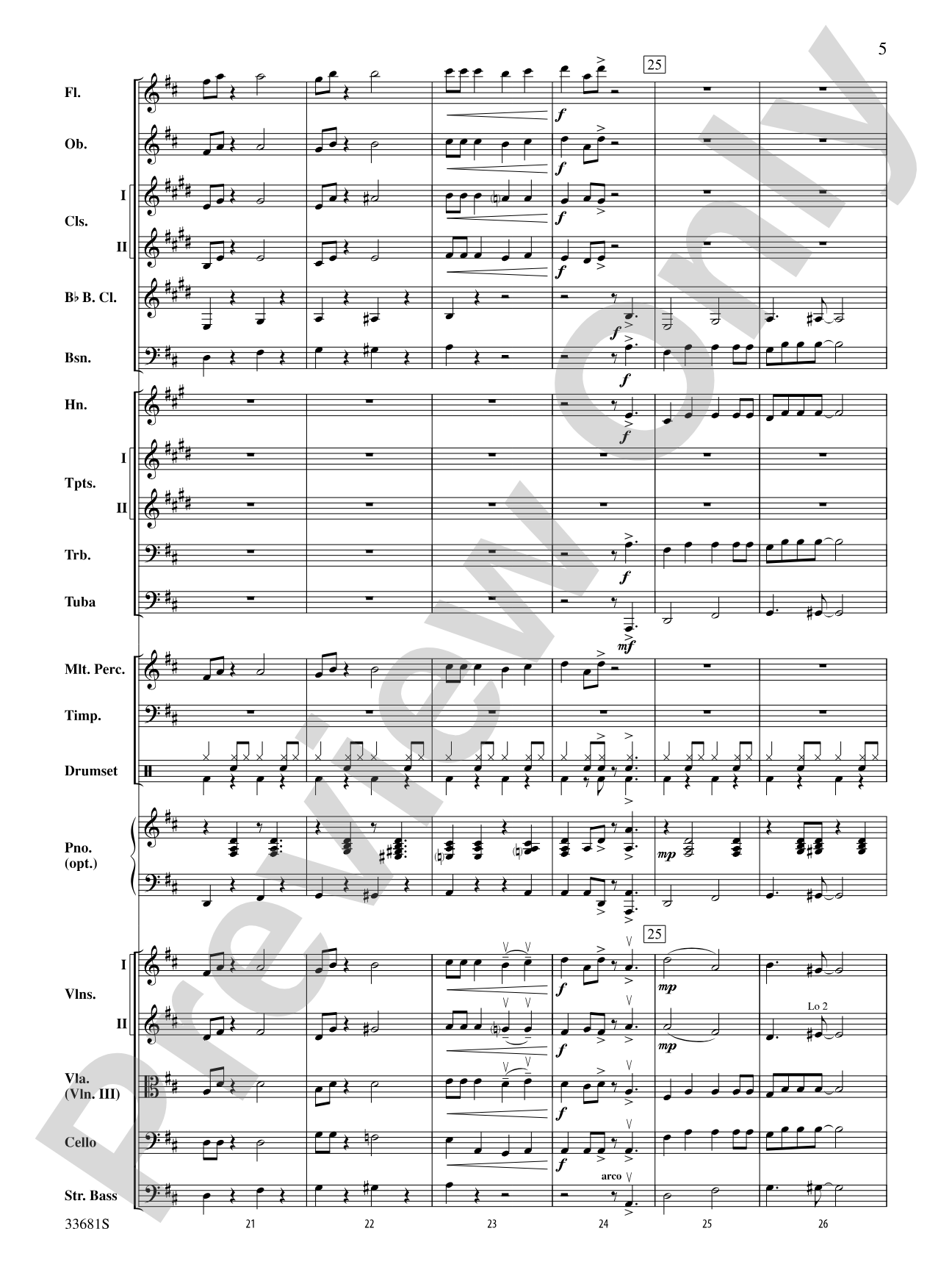
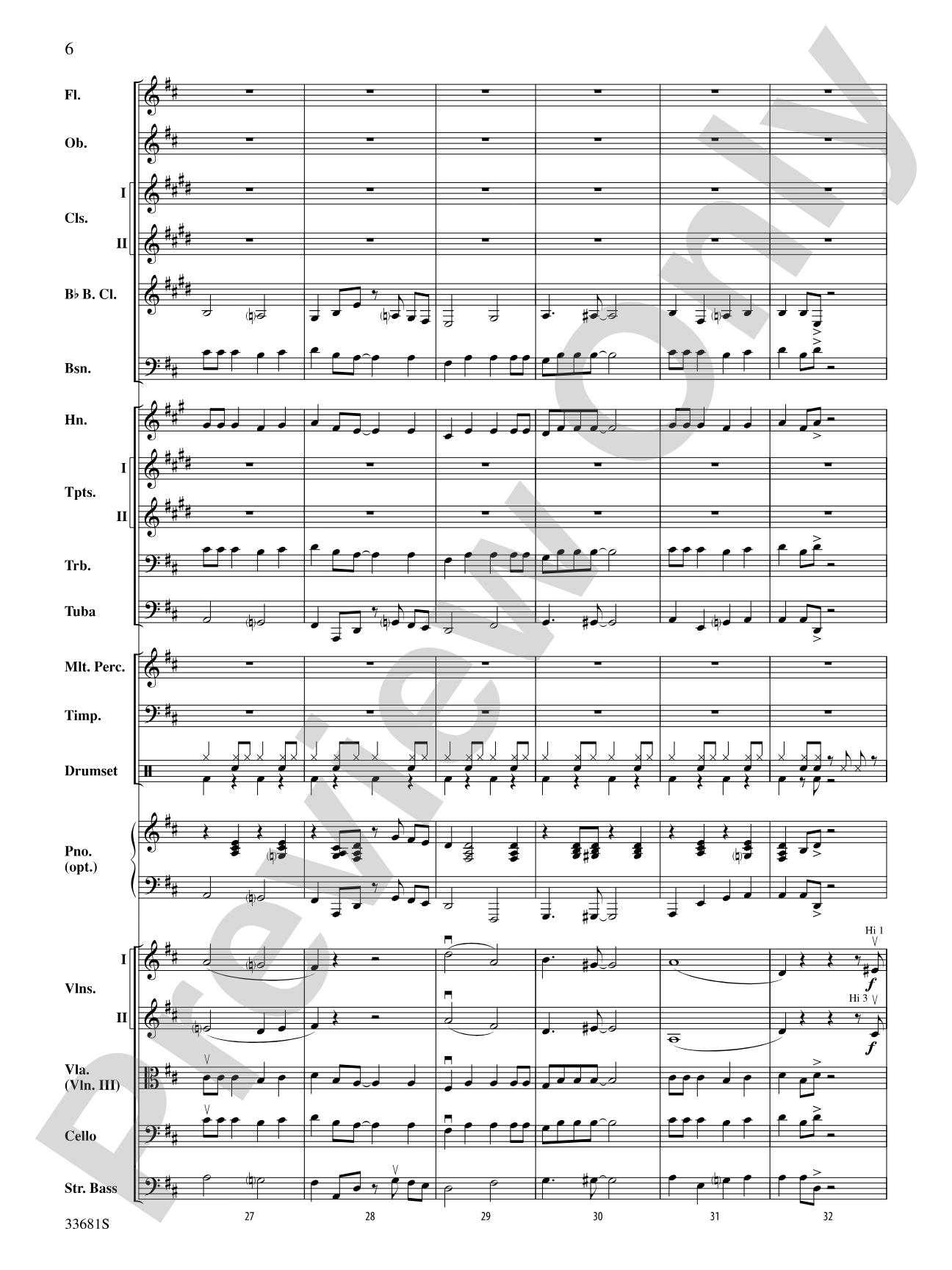
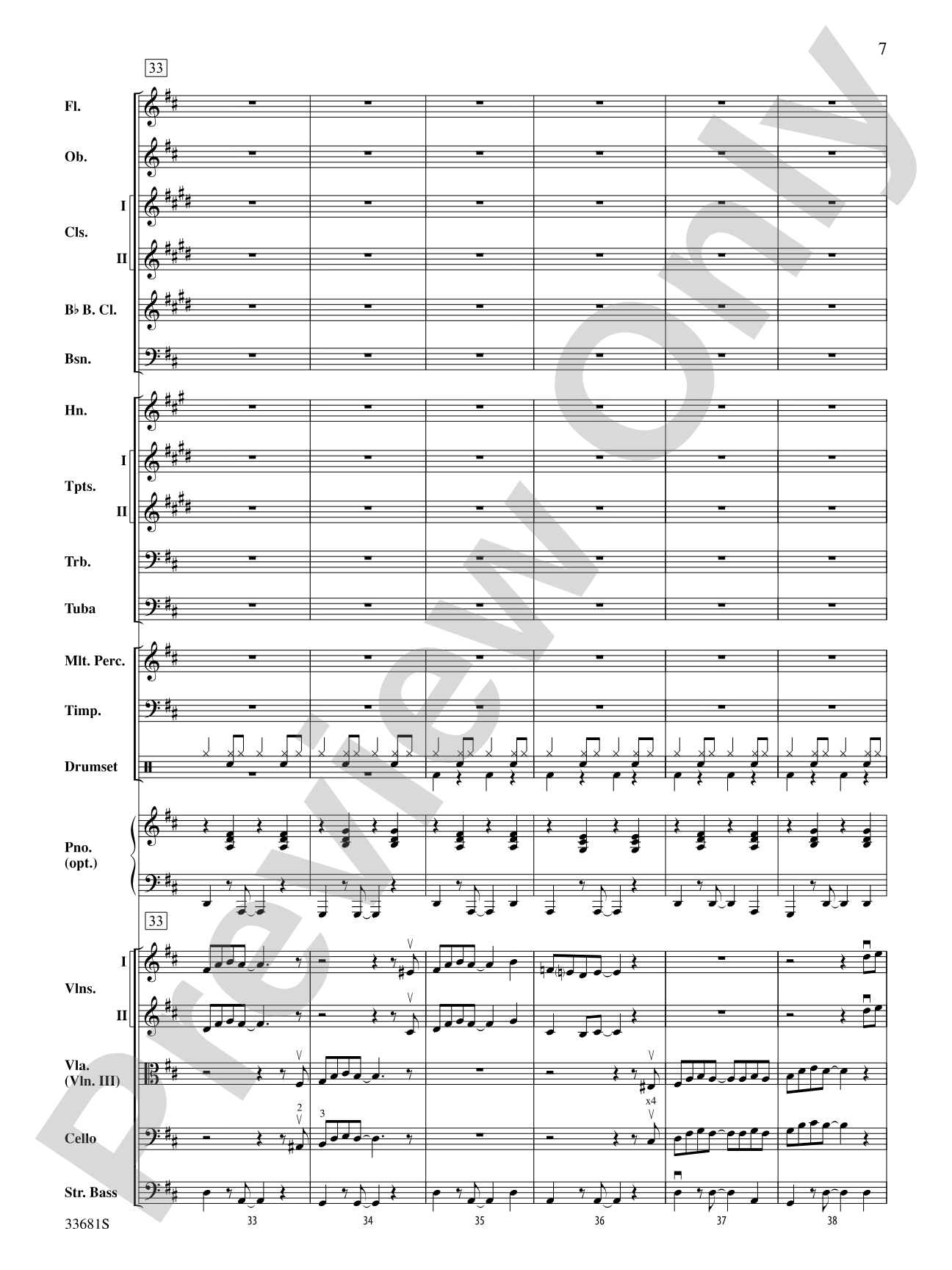
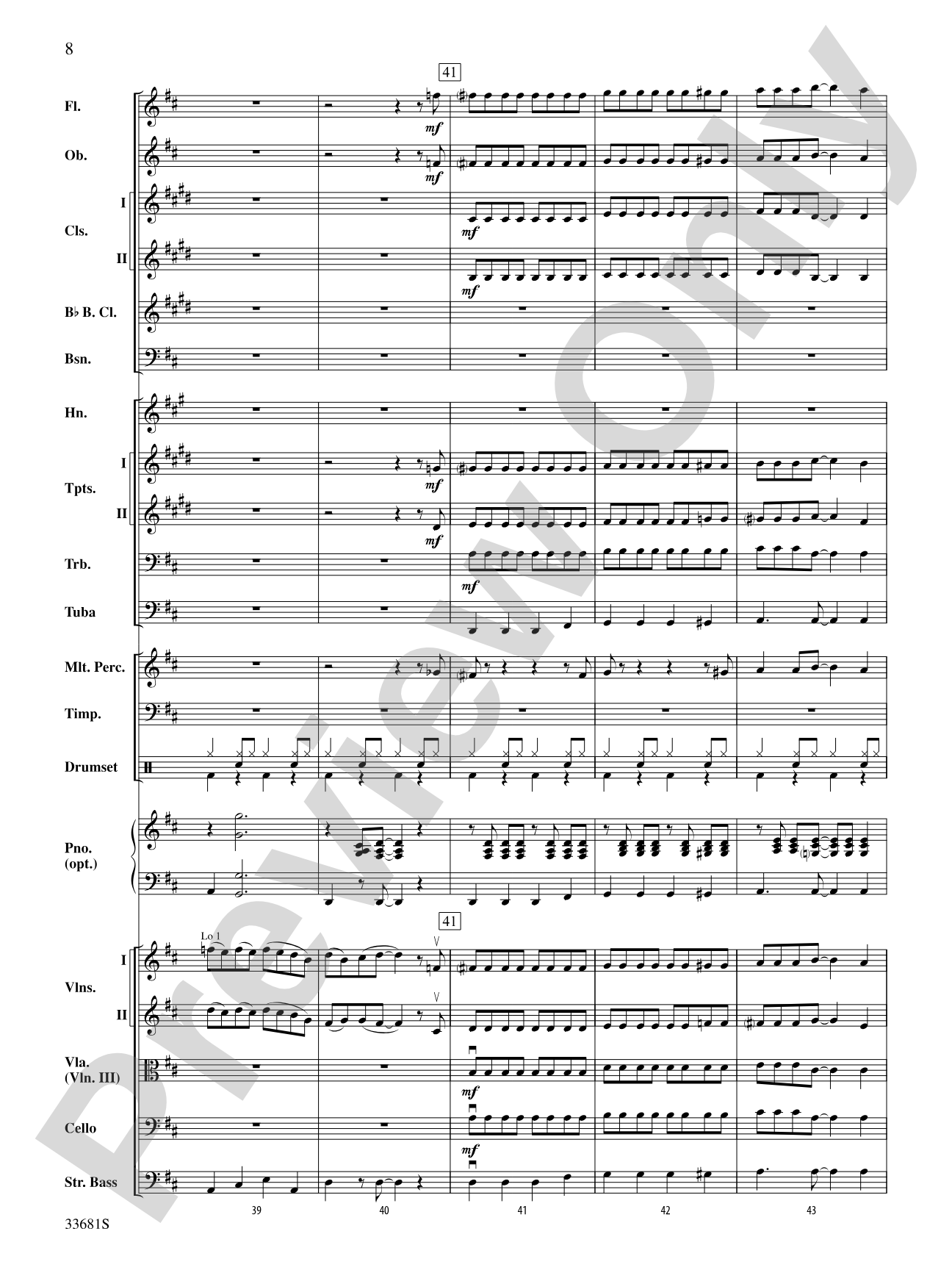
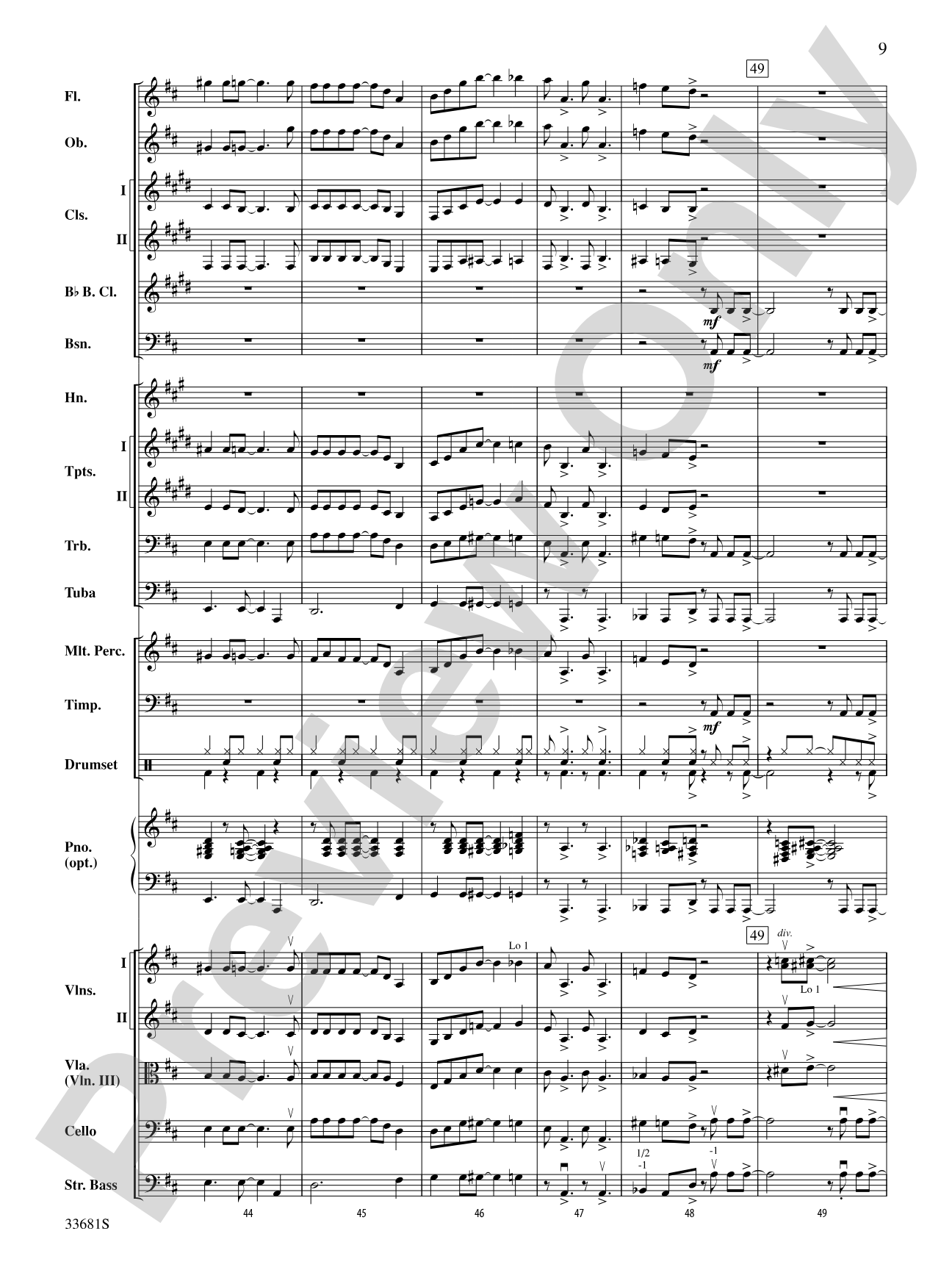
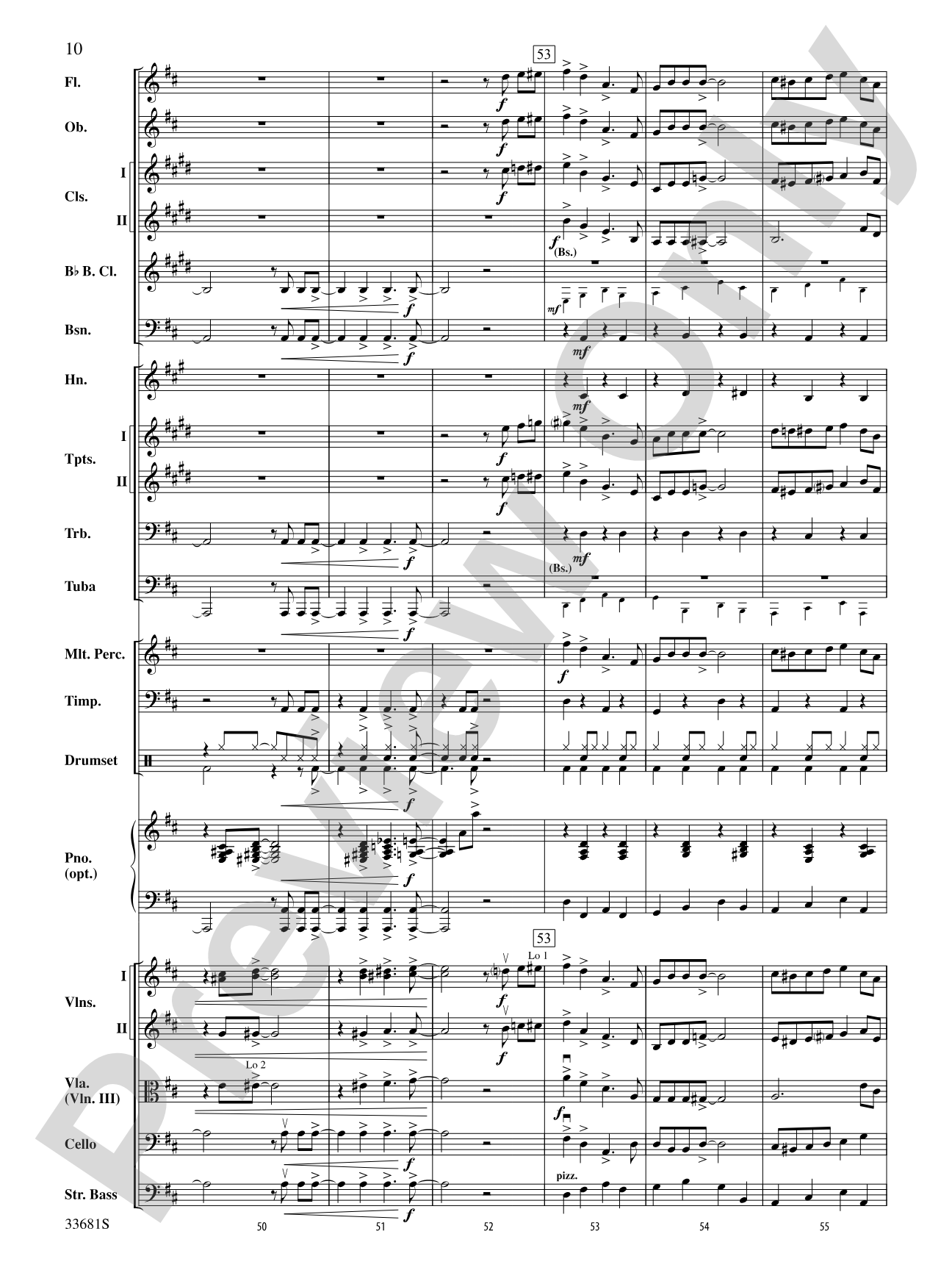
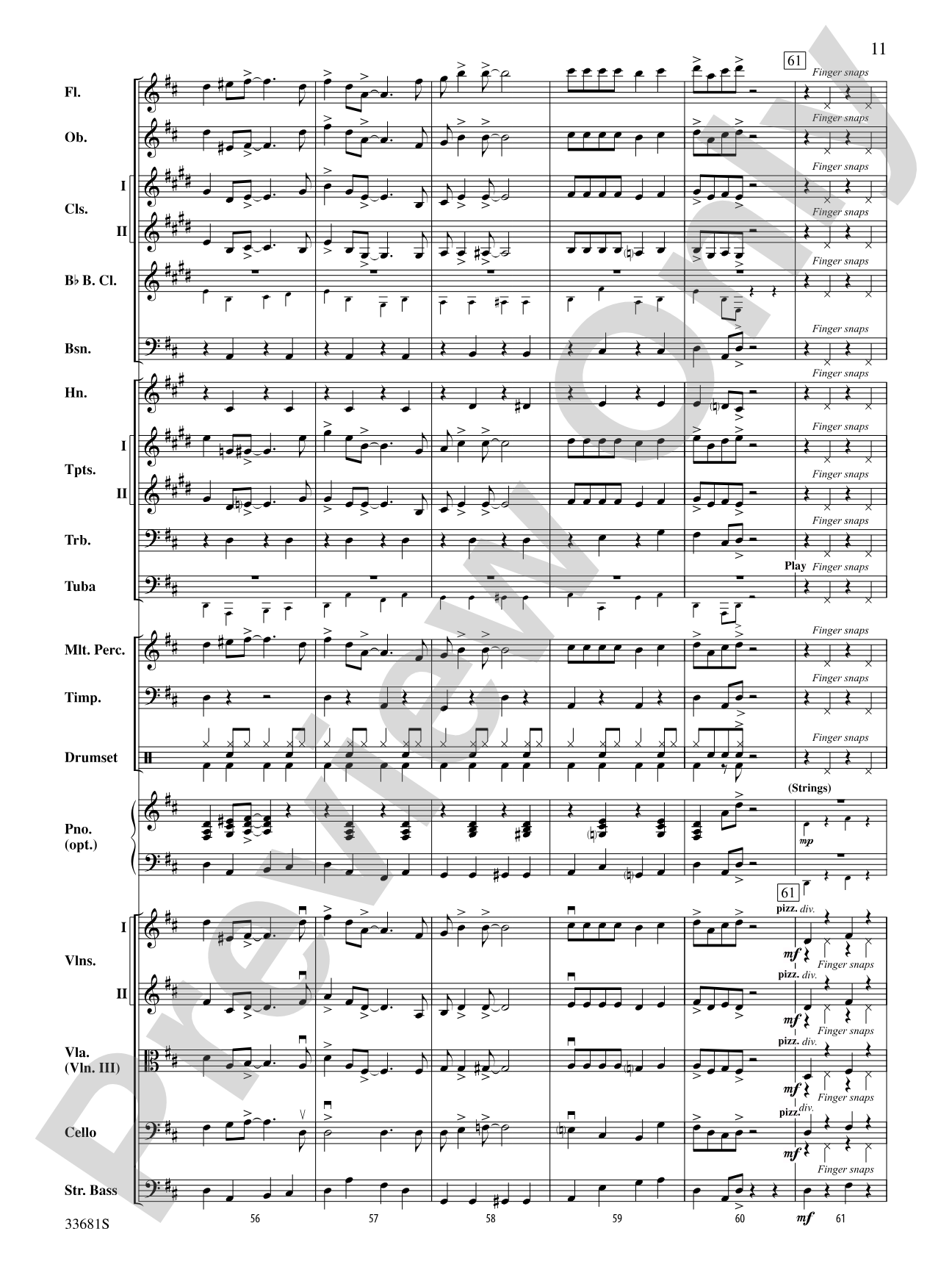
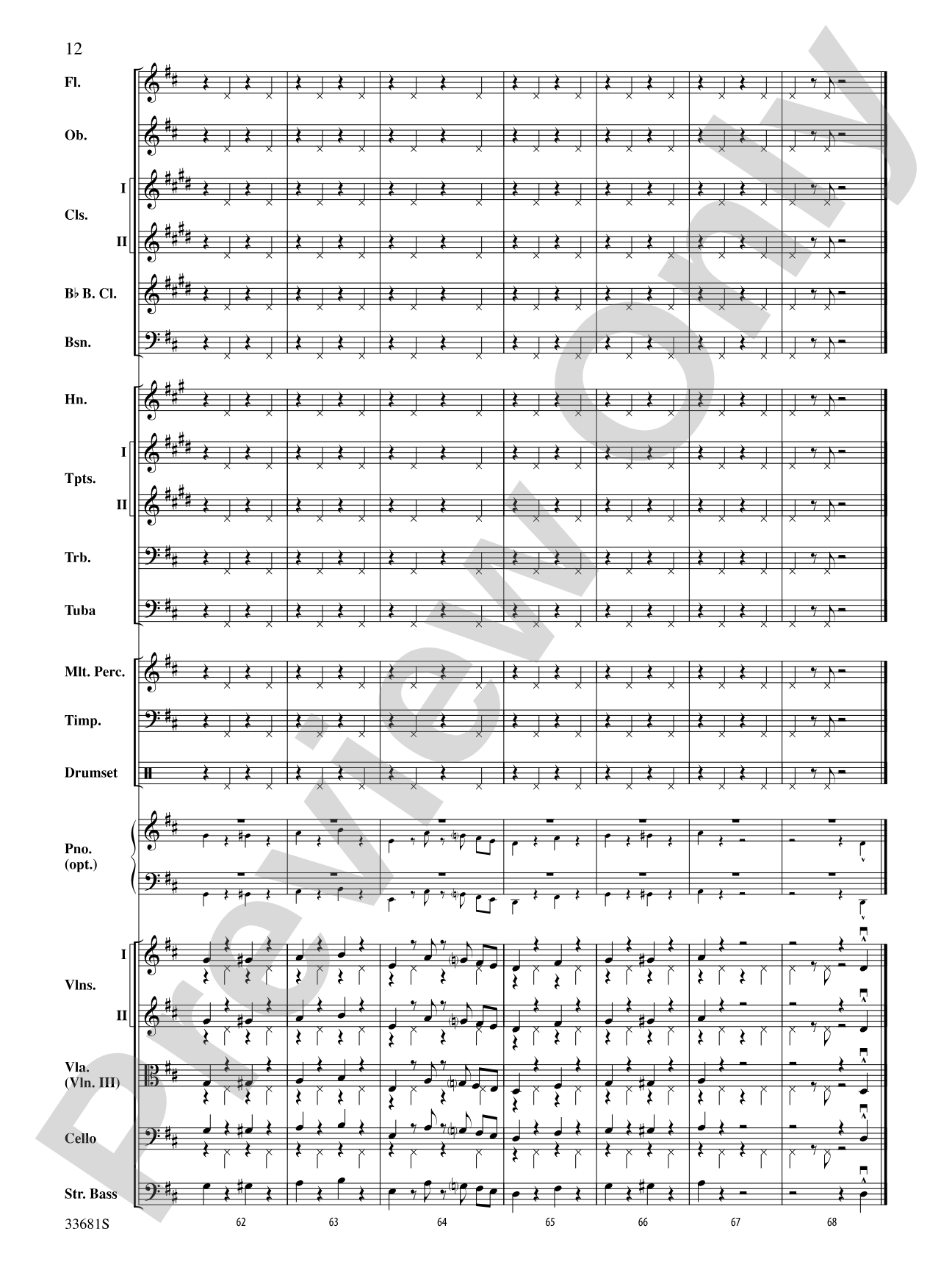

Jazzy Little Brown Jug: Full Orchestra Conductor Score & Parts
By Joseph Winner / arr. Jack Bullock
Grade: 2.5
Item: 00-PK-0004176

$59.00
Pickup currently not available
Buy Extra Parts (Digital PDF Download)
Parts Added to Cart!
Description
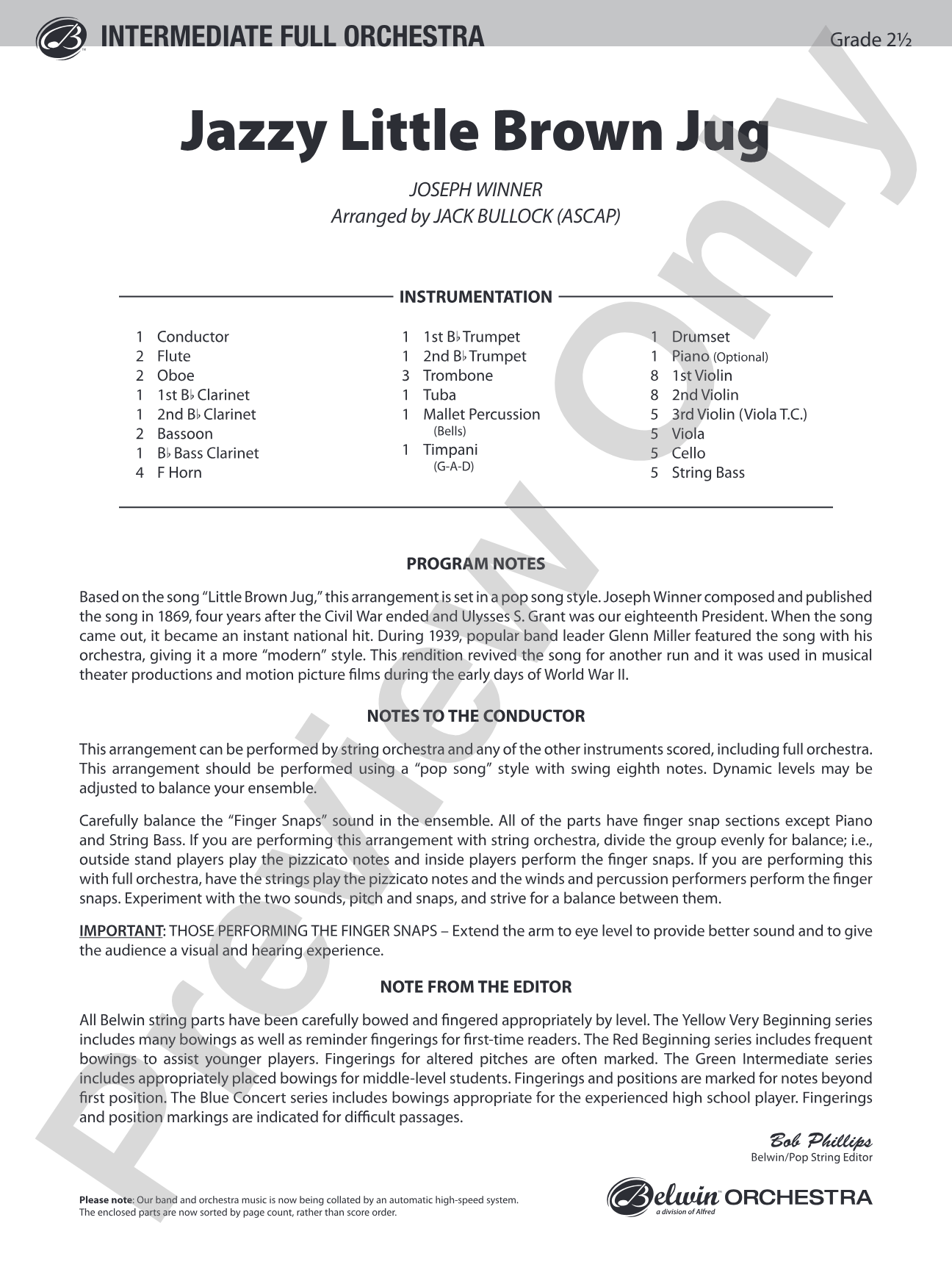
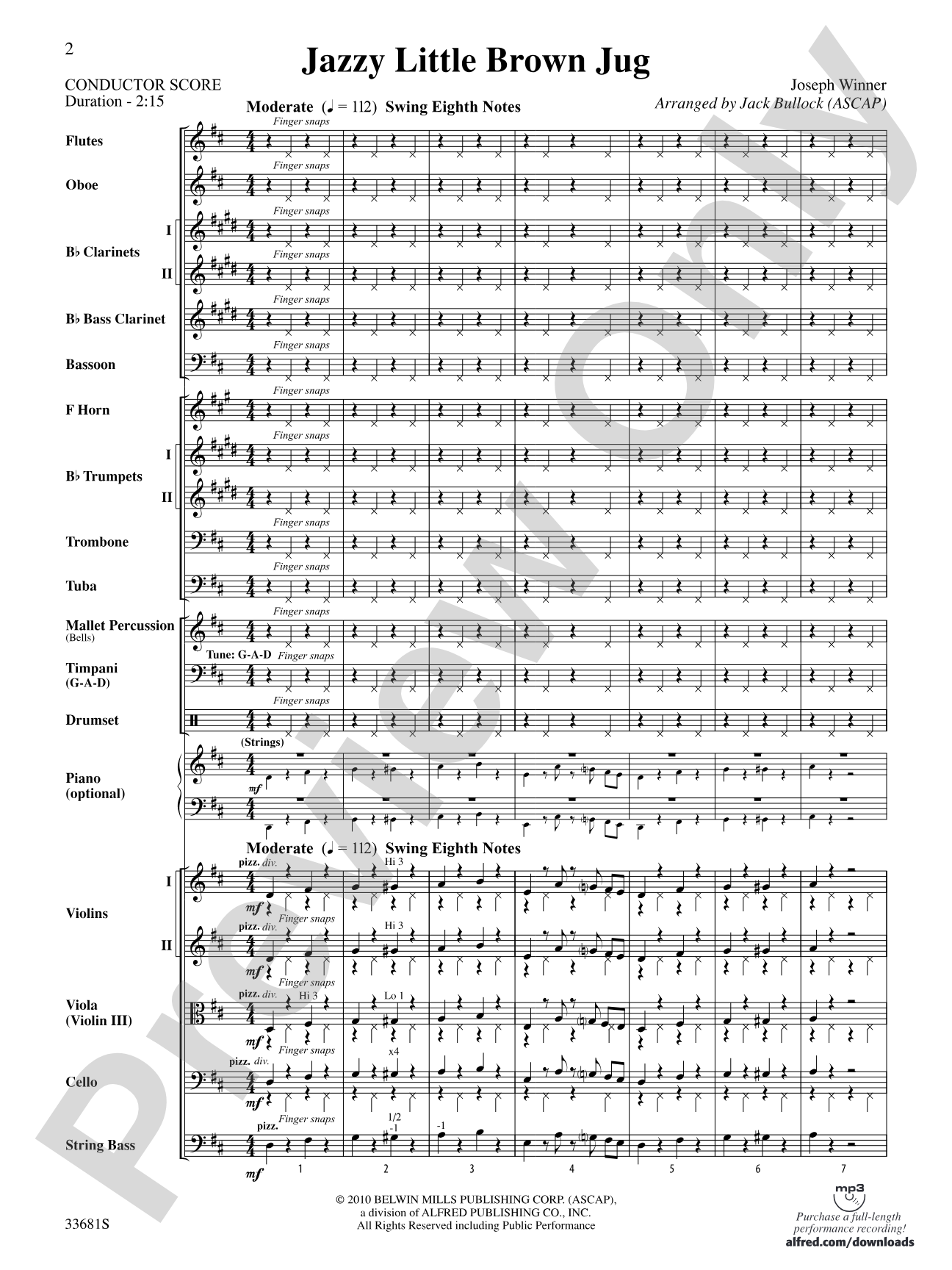
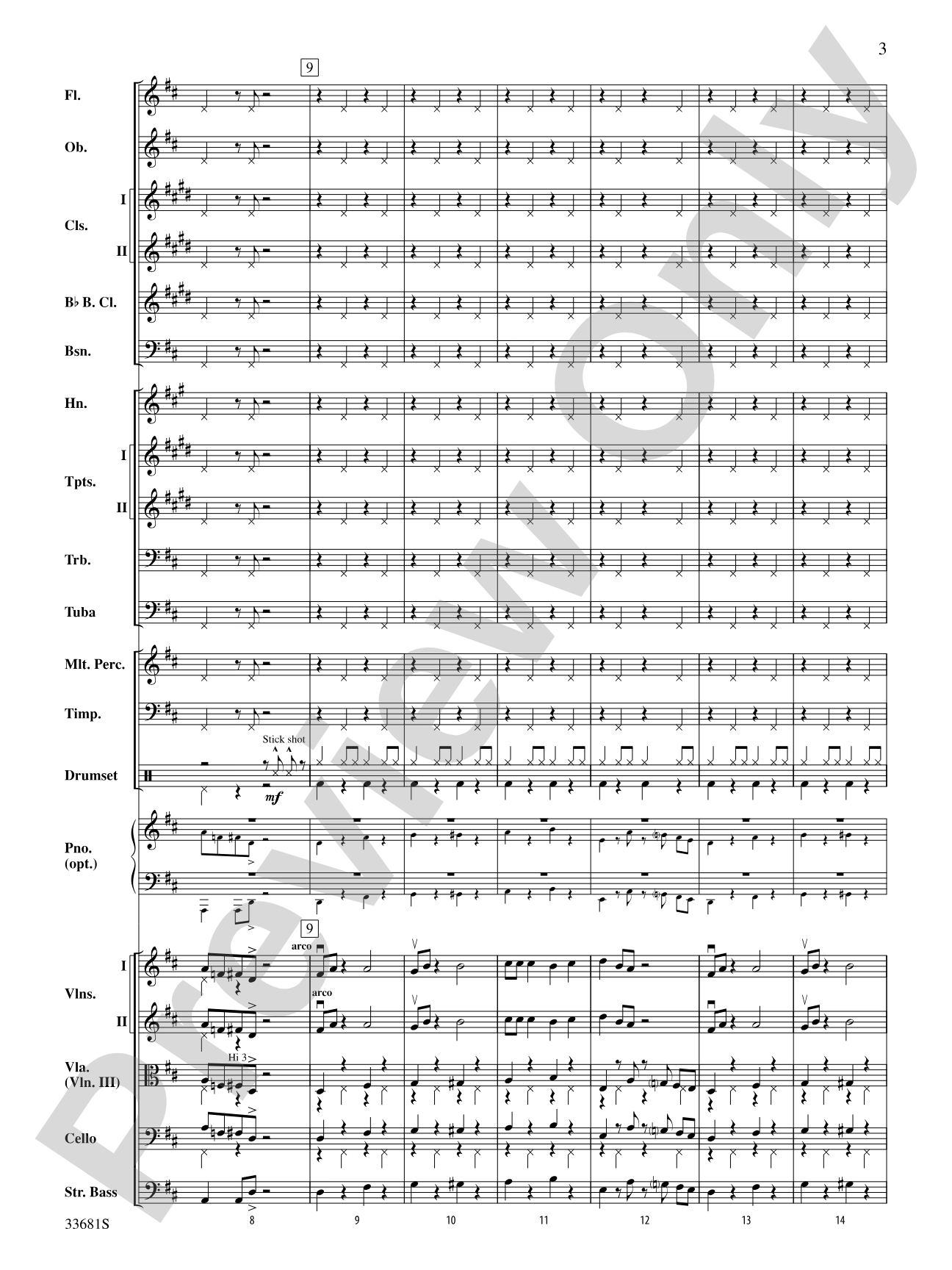
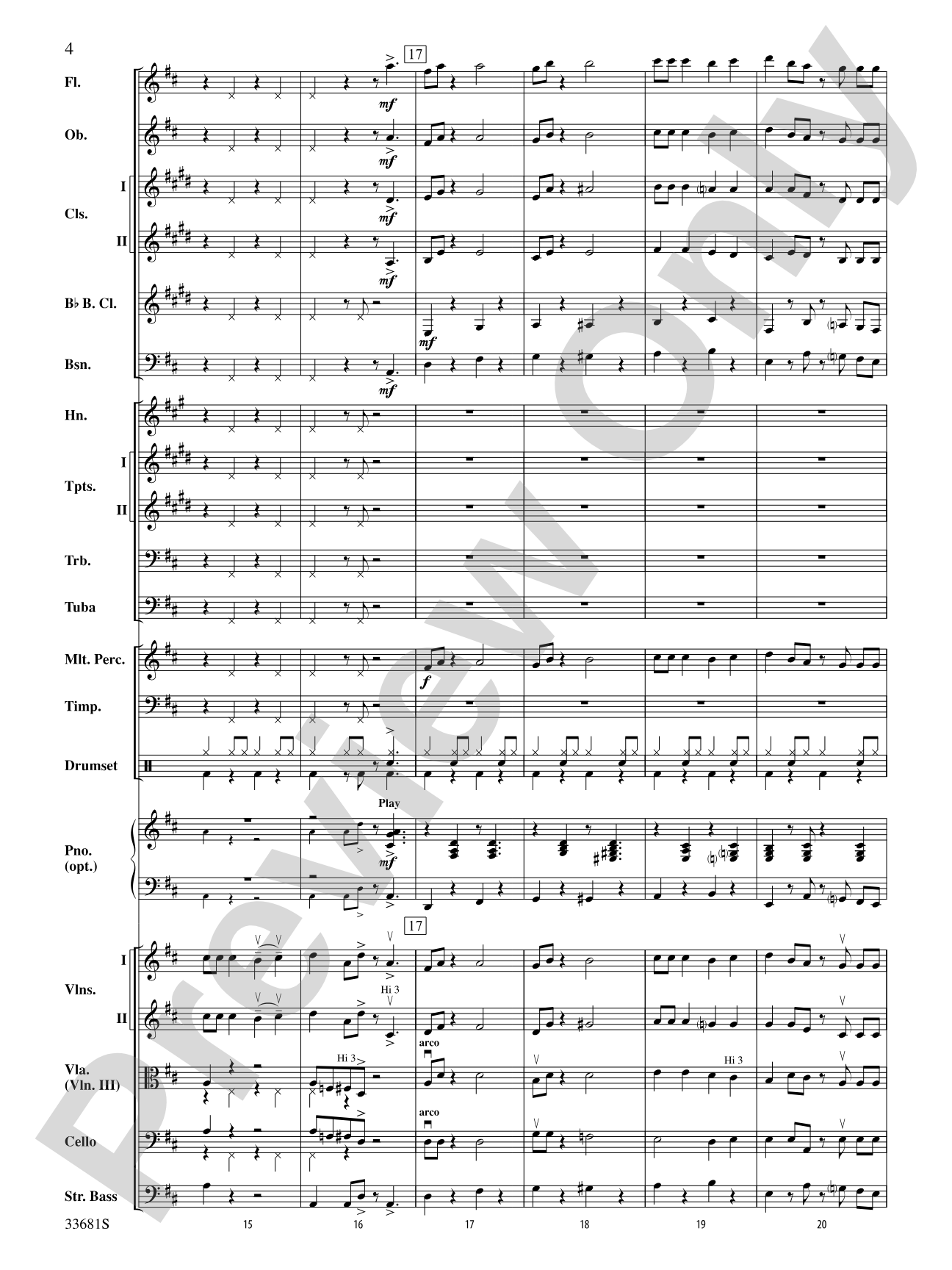
Be ready to swing and recall the days of the big band era! Great practice in playing swing eighth notes. This piece will work well with strings alone or any combination of winds.


Don't just read it, hear it, play along with it, and watch your students grow with it. In MakeMusic Cloud, Jazzy Little Brown Jug: Full Orchestra Conductor Score & Parts comes alive with professional accompaniment, adjustable tempo, and built-in practice tools that turn solo practice into real progress.
Open in the Player
Jump straight in and assign it today.
Start Your Free Trial
Open this title and explore the full library in minutes.
Sample Audio
1
Audio File
--:--
0:00
0:00
Sample Video
No sample videos found.
Additional Details
Series:
Belwin Intermediate String/Full Orchestra
Publisher:
Alfred Music
Page Count:
266
SKU:
00-PK-0004176
More about this title
About the Composer: Joseph Winner
Joseph Winner (1837-1918) was an American composer and conductor who created numerous works for band and orchestra during the nineteenth century. His prolific output includes marches, dances, and character pieces that remain accessible teaching repertoire, valued for their straightforward melodic appeal and functional orchestration.
Why we love this
Jack Bullock's arrangement transforms a nineteenth-century parlor tune into an authentic swing vehicle, complete with the rhythmic groove and big band sensibility that students need to feel and internalize. The flexibility to perform with strings alone or add winds makes this work for ensembles at different developmental stages without compromising the arrangement's character.
What to expect
Upbeat and vintage, with the relaxed swing groove of a 1940s dance floor. The familiar tune settles easily into the ear while the arrangement's rhythmic sophistication keeps young musicians engaged in maintaining the style.
Who it's for
This full orchestra arrangement works for intermediate ensembles with mixed instrumentation. Whether your program leans toward strings, winds, or a combination of both, the flexibility built into this arrangement lets you adapt it to your personnel.
How to get the most out of it
- Lock the swing rhythm in your rhythm section first. The eighth-note interpretation makes or breaks the style, so isolate that feel before rehearsing the full ensemble.
- Balance the melody against the walking bass line and comping harmonies. Swing doesn't sit on top of the accompaniment; it moves through it.
- Use the recorded accompaniment to establish the tempo and groove, then gradually shift to conductor-led rehearsals so students internalize the swing feel rather than relying on the recording.
How to use it
Program this as a palate cleanser between heavier concert works, or pair it with other light jazz selections to create a dedicated swing segment. It also serves as an excellent vehicle for teaching jazz history and big band arranging conventions within a full orchestra context.
Skills your students will build
- Swing eighth-note articulation and interpretation
- Reading and performing in a jazz idiom
- Balancing melody, comping, and bass lines in ensemble texture
- Flexibility with instrumentation (strings-only versus full orchestra renderings)