

Jazzy Blues: String Orchestra Conductor Score & Parts
By Edmund J. Siennicki
Grade: 2
Item: 00-PK-0000341

$42.00
Pickup currently not available
Buy Extra Parts (Digital PDF Download)
| Product | Price | Quantity |
|---|---|---|
| Jazzy Blues: Score | $8.00 | |
| Jazzy Blues: 1st Violin | $5.99 | |
| Jazzy Blues: 2nd Violin | $5.99 | |
| Jazzy Blues: 3rd Violin (Viola [TC]) | $5.99 | |
| Jazzy Blues: Viola | $5.99 | |
| Jazzy Blues: Cello | $5.99 | |
| Jazzy Blues: String Bass | $5.99 | |
| Jazzy Blues: Piano Accompaniment | $5.99 |
Parts Added to Cart!
Description
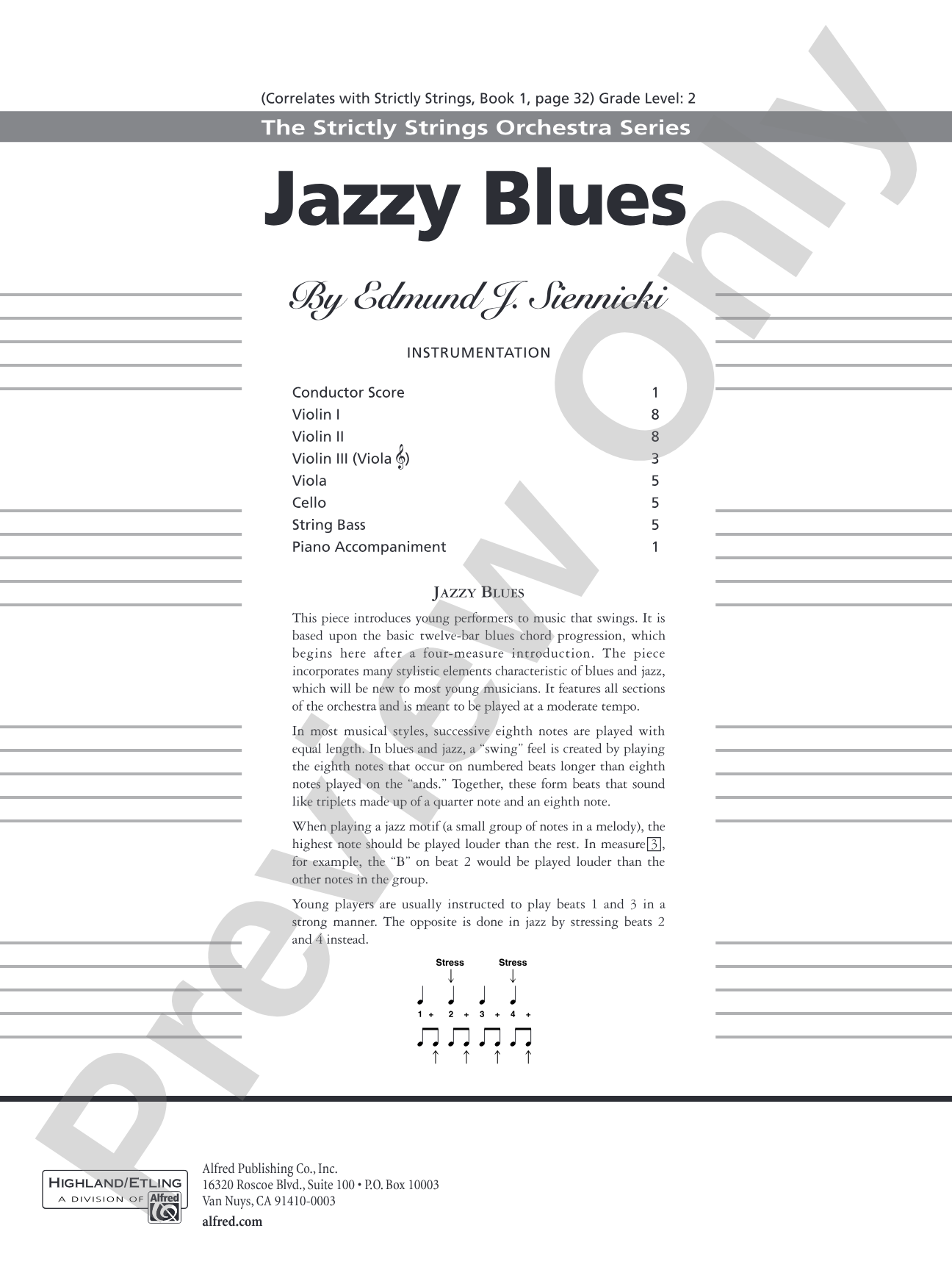
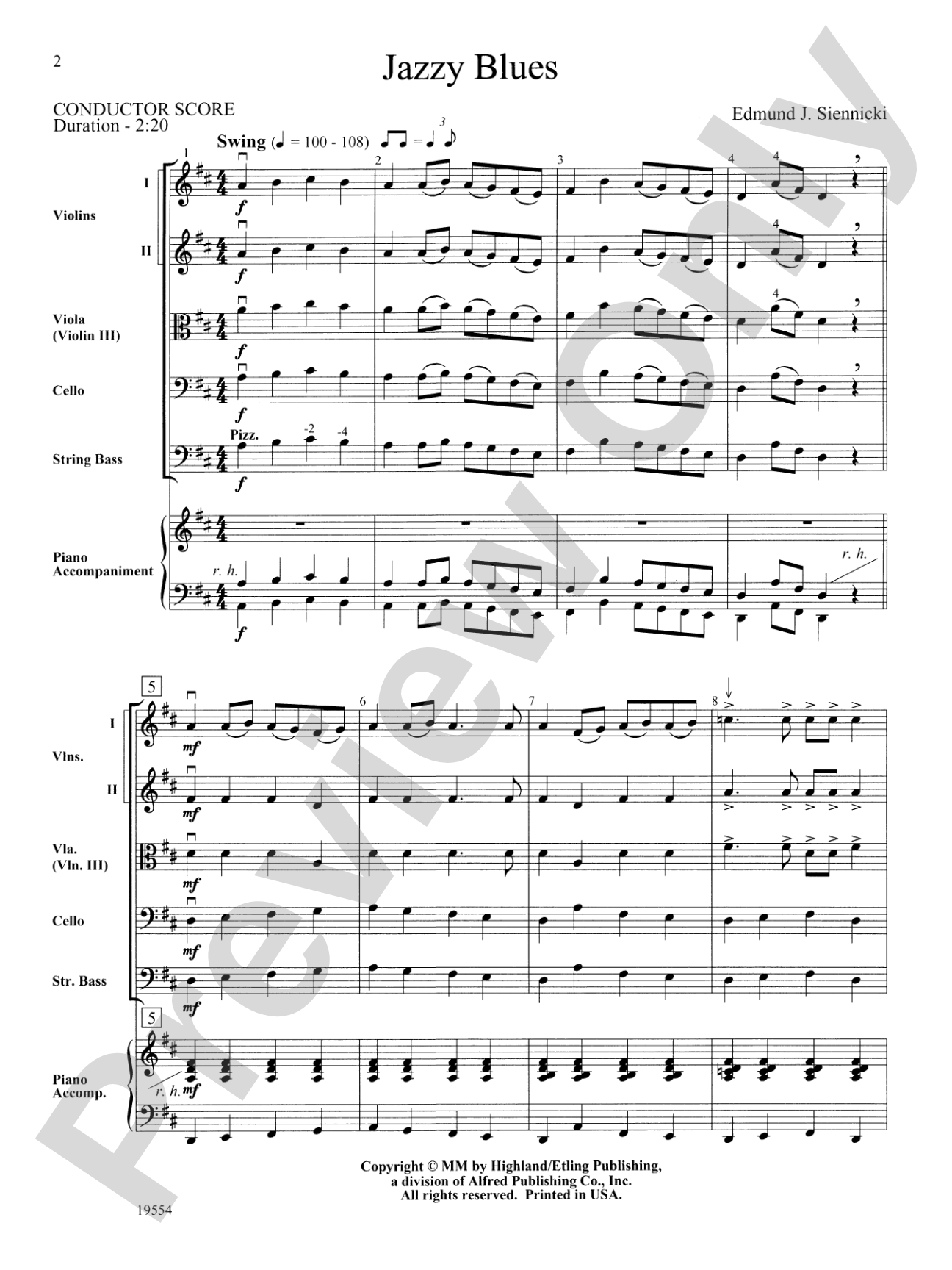
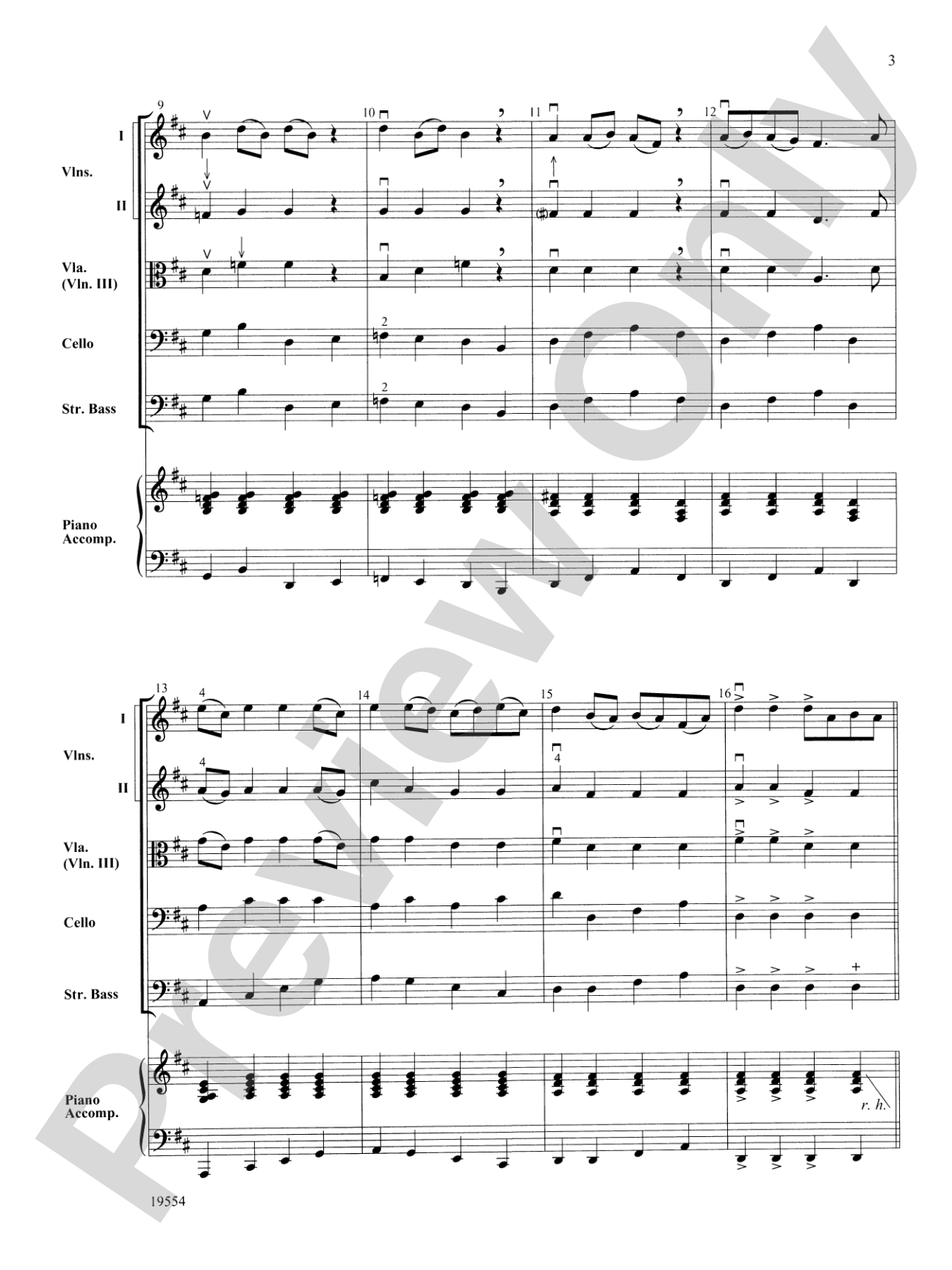
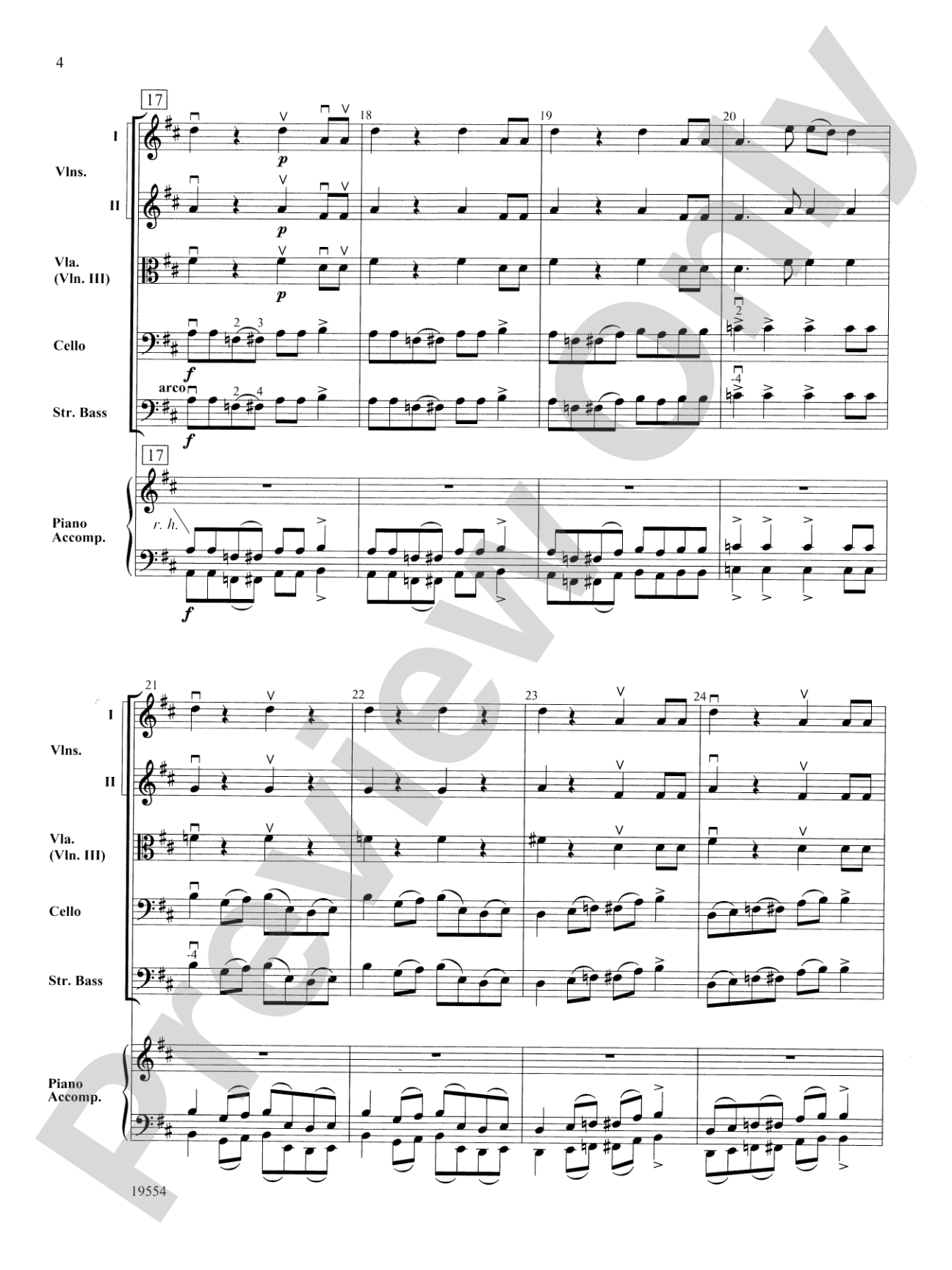
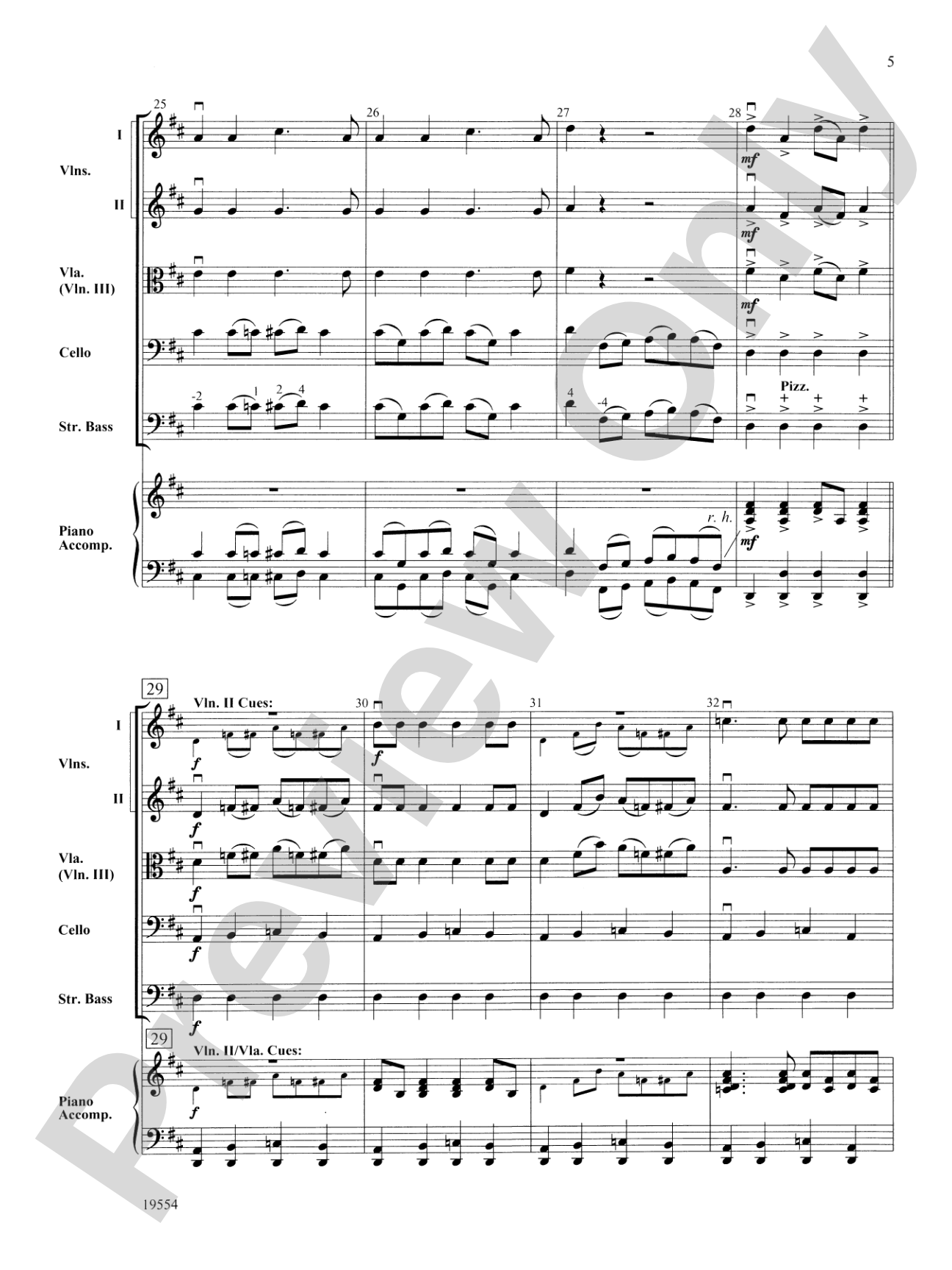
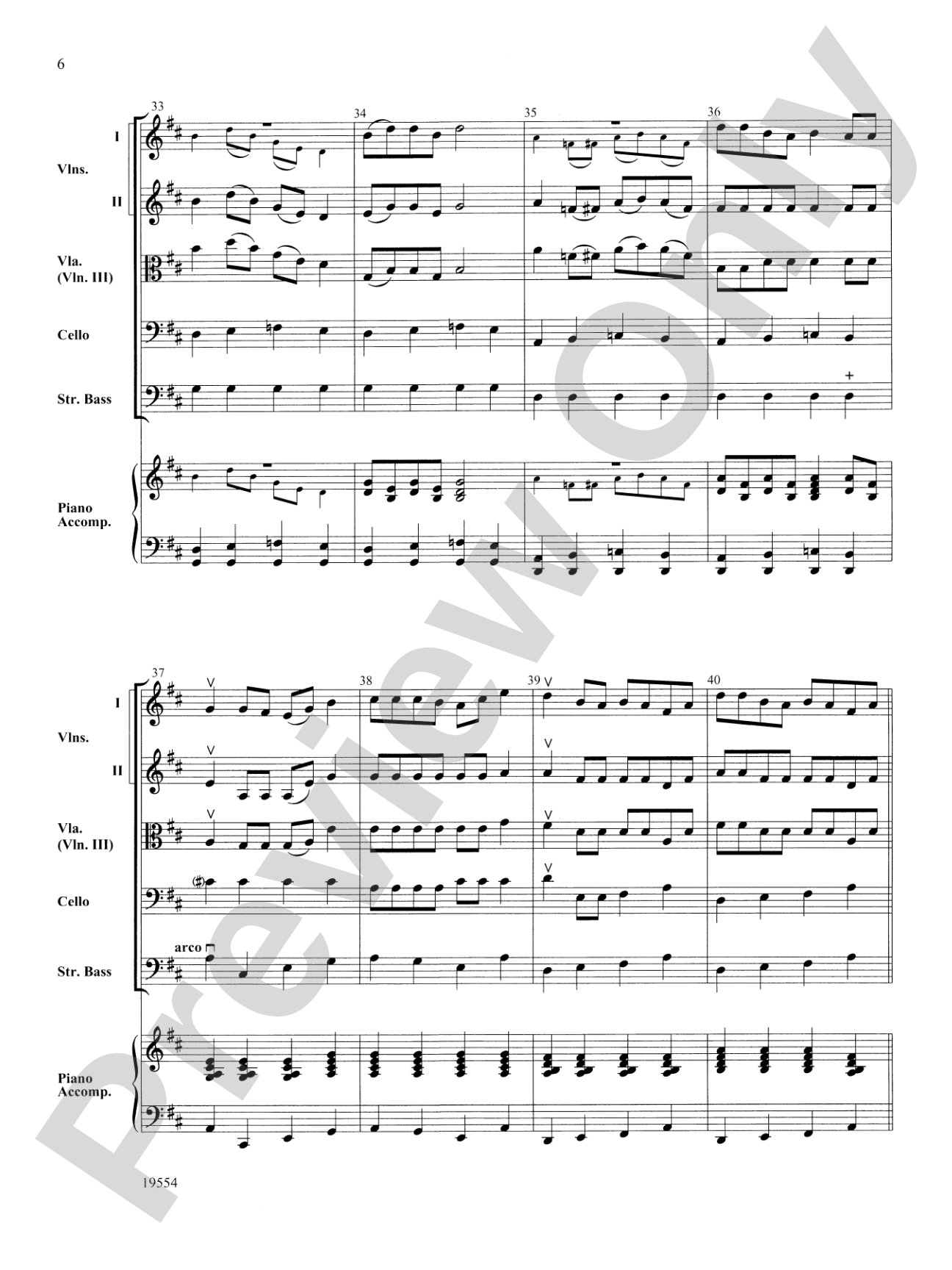
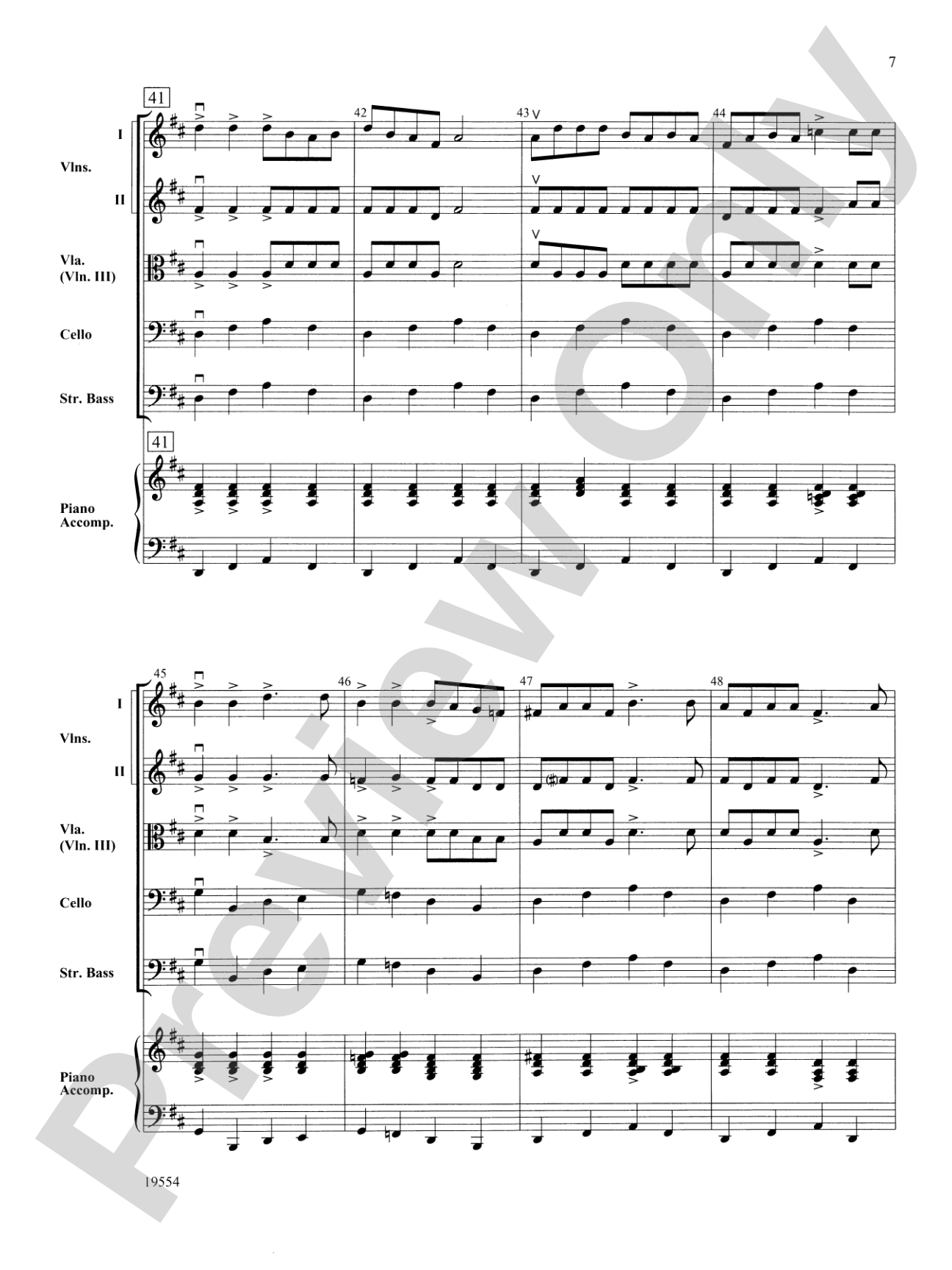
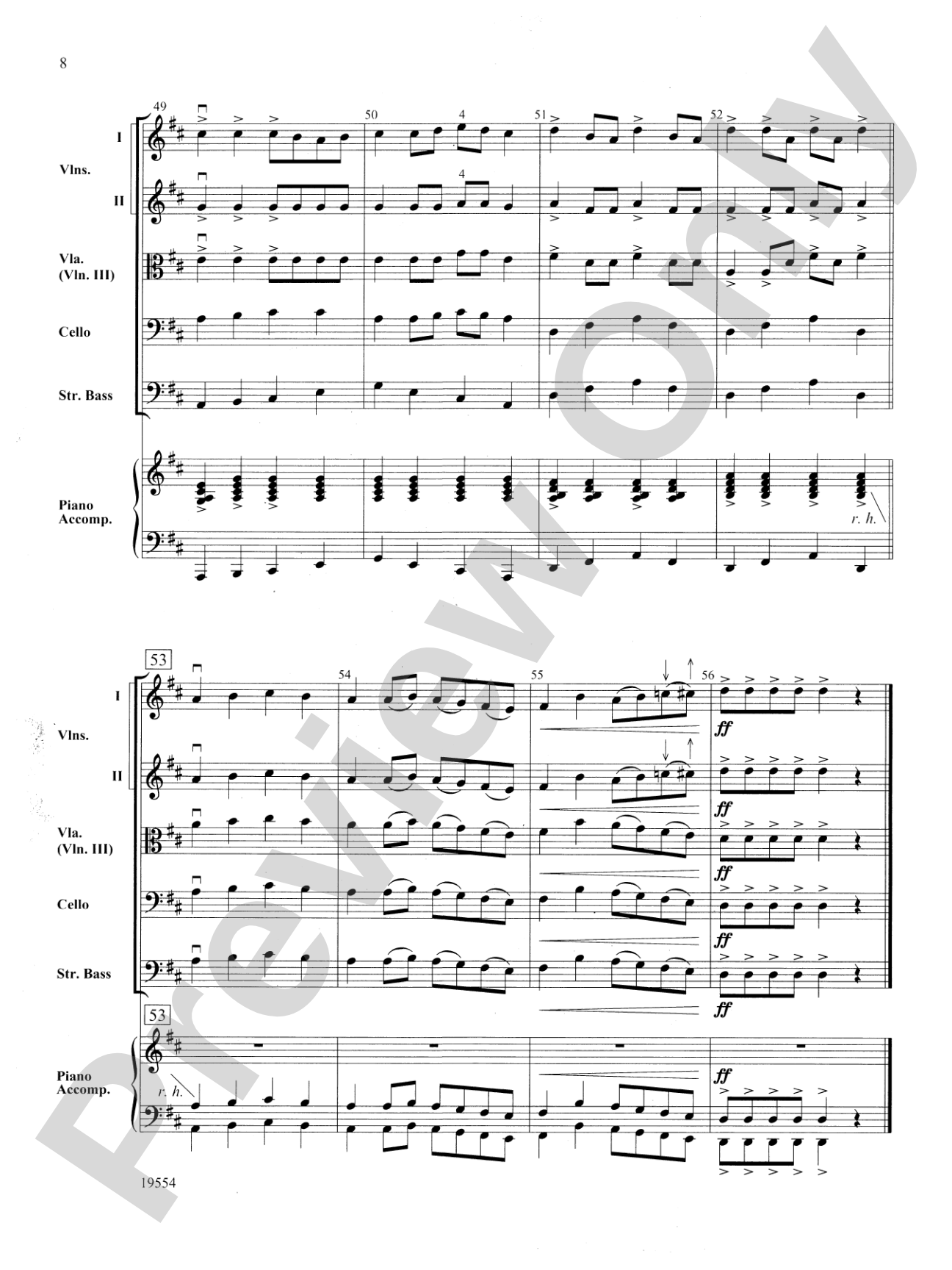
Here it is! A Grade 2 piece that really swings! Based upon the basic twelve-bar blues progression, this very playable original work will get your young strings in the groove as they learn to "swing" eighth notes in a jazz style. Your students will love the "walking" pizzicato bass line and Siennicki's very catchy and bluesy melody. Lots of fun!


Don't just read it, hear it, play along with it, and watch your students grow with it. In MakeMusic Cloud, Jazzy Blues: String Orchestra Conductor Score & Parts comes alive with professional accompaniment, adjustable tempo, and built-in practice tools that turn solo practice into real progress.
Open in the Player
Jump straight in and assign it today.
Start Your Free Trial
Open this title and explore the full library in minutes.
Sample Audio
1
Audio File
--:--
0:00
0:00
Sample Video
No sample videos found.
Additional Details
Series:
Highland/Etling Strictly Strings
Publisher:
Alfred Music
Page Count:
72
SKU:
00-PK-0000341
More about this title
About the Composer: Edmund J. Siennicki
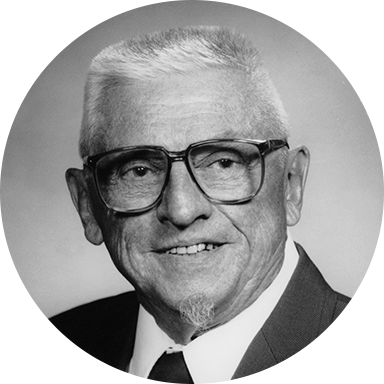
Edmund J. Siennicki grew up in Cleveland, Ohio, and at twelve years old met the legendary pianist Ignacy Jan Paderewski, a conversation that shaped his musical direction for life. He earned his Bachelor's degree from Kent State University, where he composed the school's fight song (still performed at football games today), and later completed his MA at Teachers College, Columbia University. His composition teachers included Herbert Elwell and Vincent Persichetti, and he studied electronic music with Sergio Barroso.
Siennicki built a prolific career as both a performer and composer. He played bassoon and piano professionally and has approximately 200 compositions in print. His works have won prizes in the National School Orchestra composition contests, and he served twice as composer in residence at the MacDoello Colony. For two decades, he has received annual recognition from ASCAP for his compositions. Though his teaching career centered on Cleveland's junior high schools, he also held faculty positions at Michigan and Kent State University and continues to compose, visit schools, and lead clinics.
Why we love this
Siennicki delivers what young string orchestras genuinely want to play: a piece that grooves. The walking pizzicato bass line and memorable melody make this feel like a real jazz composition, not a watered-down imitation, so students engage with authentic style rather than just going through the motions. At Grade 2, it strikes the rare balance of being accessible enough to read smoothly while teaching swing eighths in a context where the music actually calls for them.
What to expect
A relaxed, swinging blues in a minor key with plenty of attitude. The walking bass underneath gives the piece a forward, propulsive motion while the melody floats above with bluesy character and charm. It sounds like a real small jazz ensemble rather than a classical piece wearing a jazz costume.
Who it's for
Grade 2 string orchestras ready to explore jazz style with genuine musical content. Ideal for groups with solid fundamentals in bow control and rhythm reading who are encountering swing style for the first time and need a piece that makes the concept feel natural rather than imposed.
How to get the most out of it
- Shape the swing eighth-note feel by having students listen to recorded jazz examples before rehearsal. Even a brief clip of a walking bass line helps them internalize the lilt rather than learning it as an abstract concept.
- Let the pizzicato bass players feel the groove first. Once they lock in the walking pattern with confidence, the rest of the orchestra settles into the pocket more naturally.
- Balance the melody prominently so it sits above the rhythmic accompaniment; the catchy line is what draws listeners in, so resist letting the harmonic parts overshadow it.
- Consider light articulation on the off-beat figures to keep the ensemble bouncy and light rather than heavy or rigid.
How to use it
Program this as a change-of-pace moment in a concert, especially paired with classical or contemporary string literature to show range and versatility. It works beautifully as a spring concert opener to set an upbeat, approachable tone, or as a fun closer when you want audiences leaving with a smile.
Skills your students will build
- Swing eighth-note rhythm and jazz articulation
- Pizzicato technique (walking bass line for lower strings)
- Playing comfortably in a minor key with a jazz harmonic palette
- Listening and blending with a groove-oriented ensemble context
- Understanding the twelve-bar blues progression as a structural framework