

Jazzin' Americana 3: 8 Intermediate Piano Solos That Celebrate American Jazz: Piano
8 Intermediate Piano Solos That Celebrate American Jazz
By Wynn-Anne Rossi
Level: Intermediate
Item: 00-PB-0000529
$7.99
Pickup currently not available
Related Items
Jazzin' Americana, Book 3: Piano Book |
$7.99
|
View |
Description
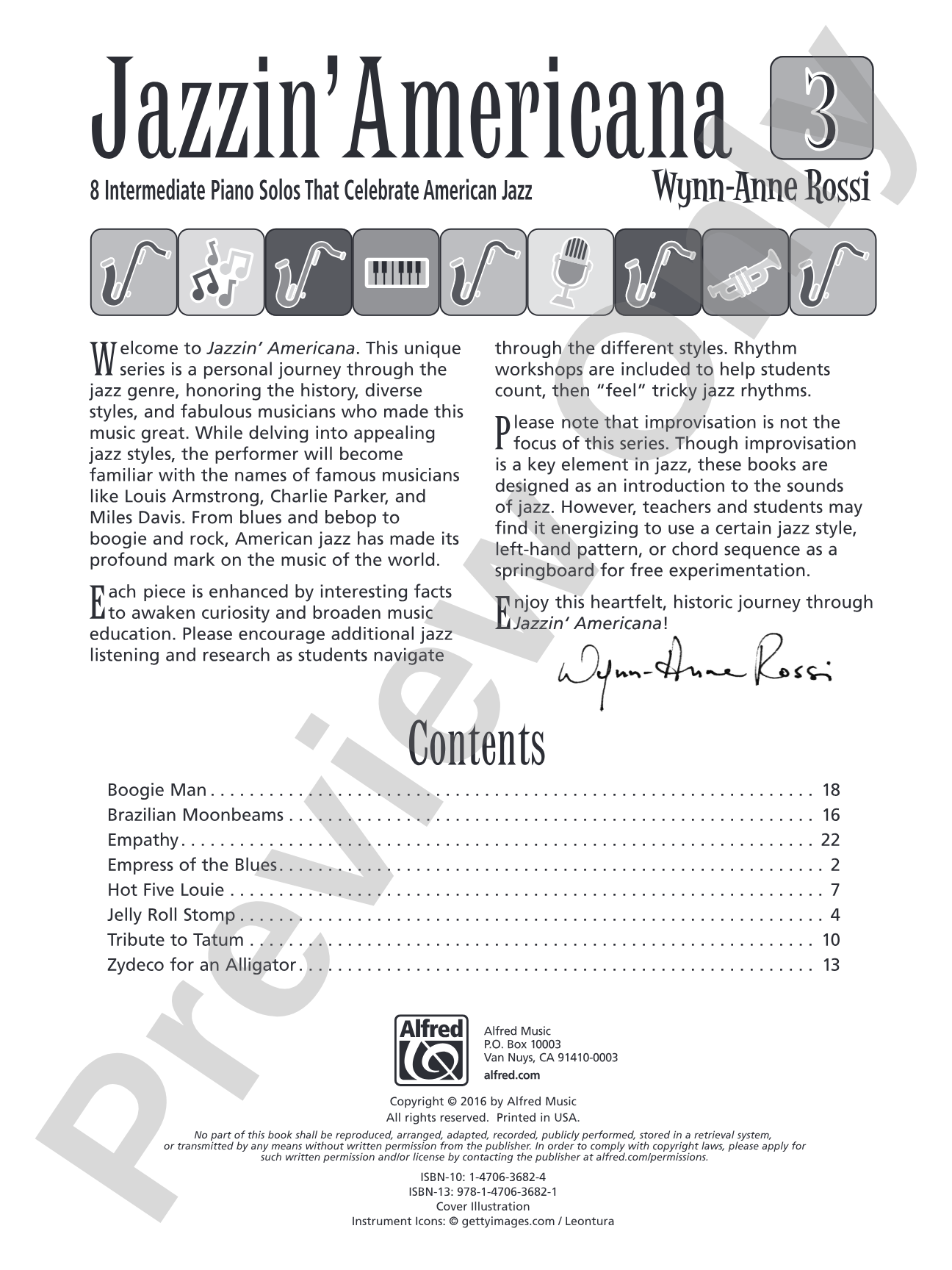
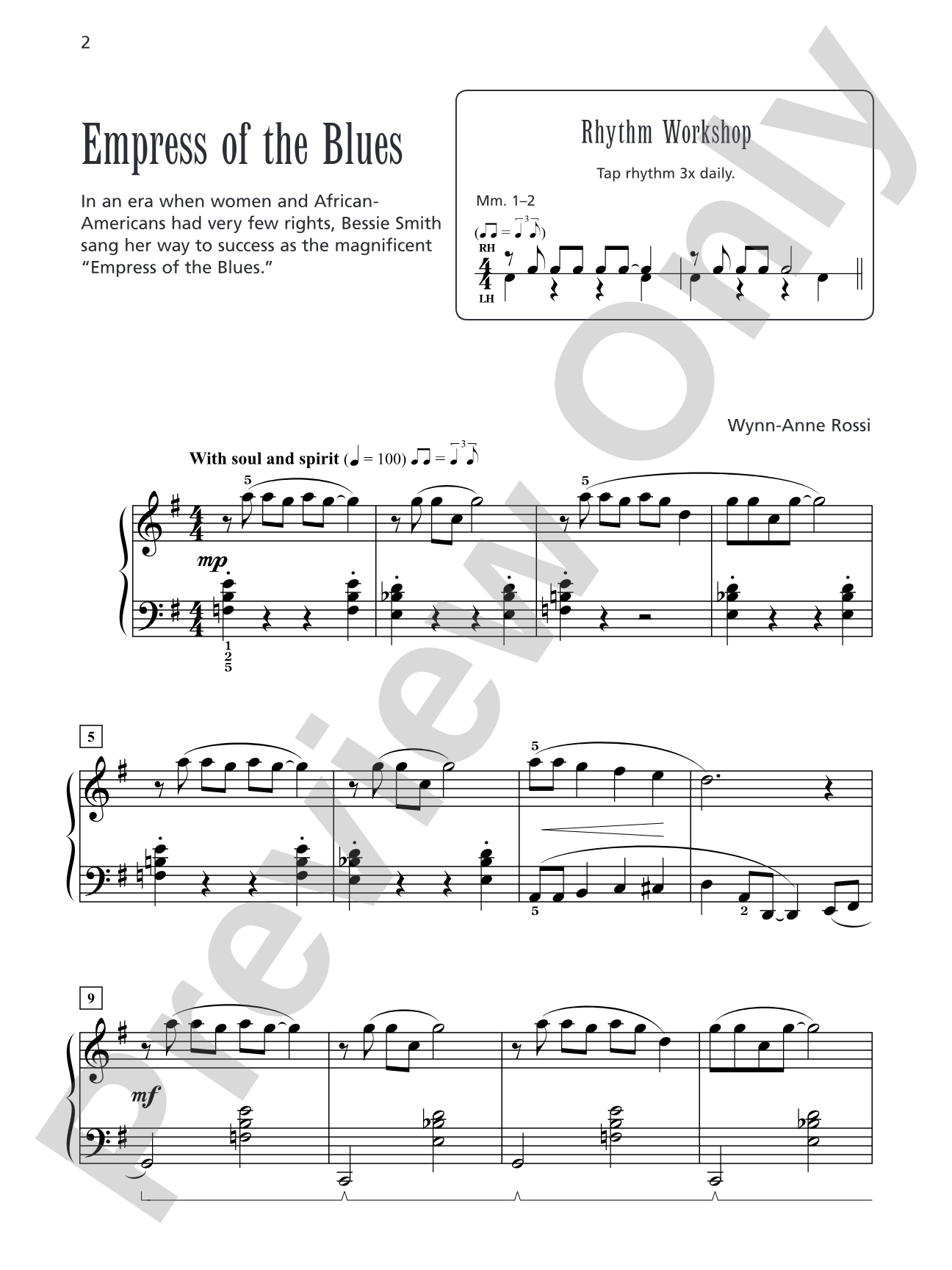
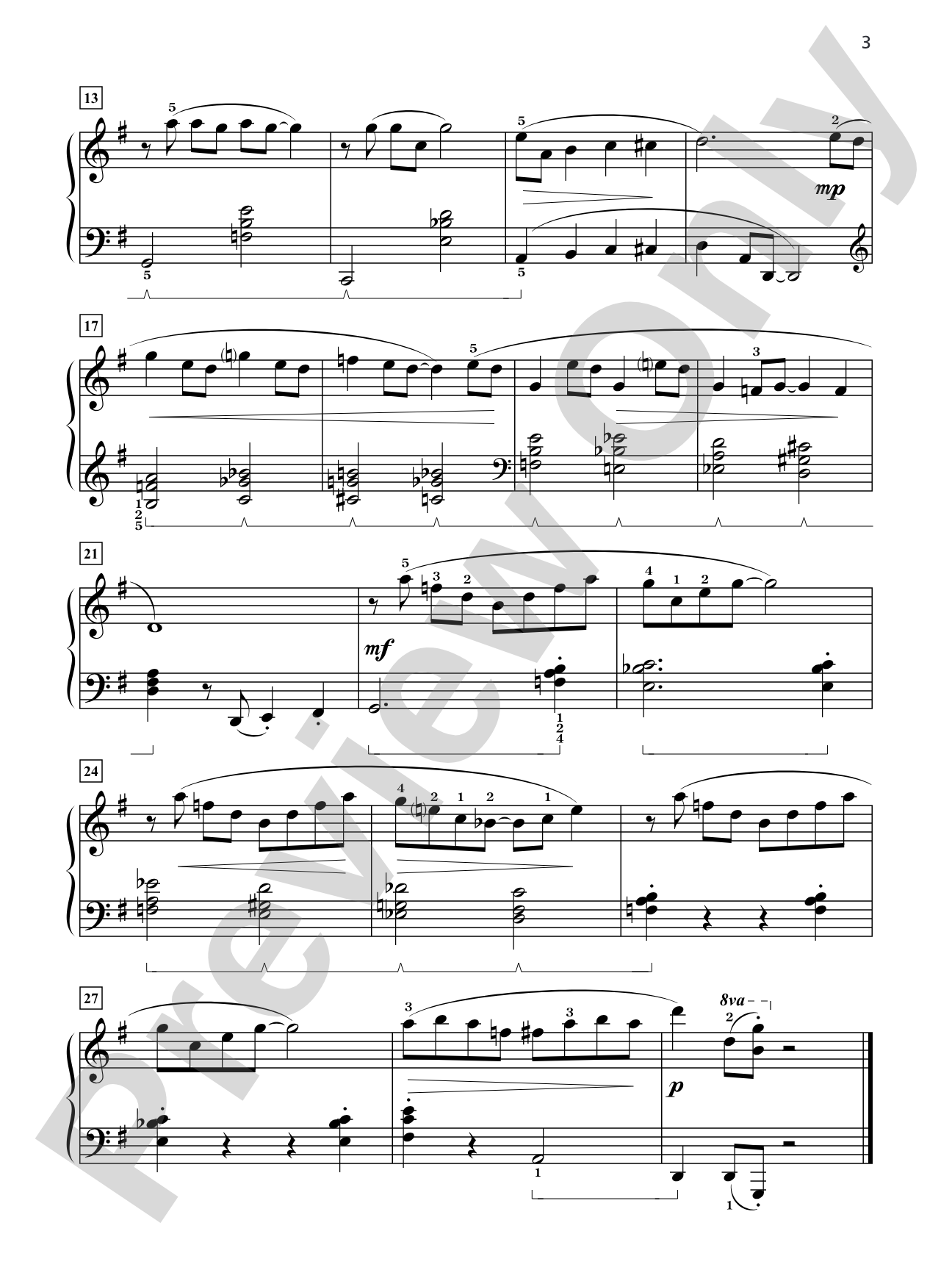
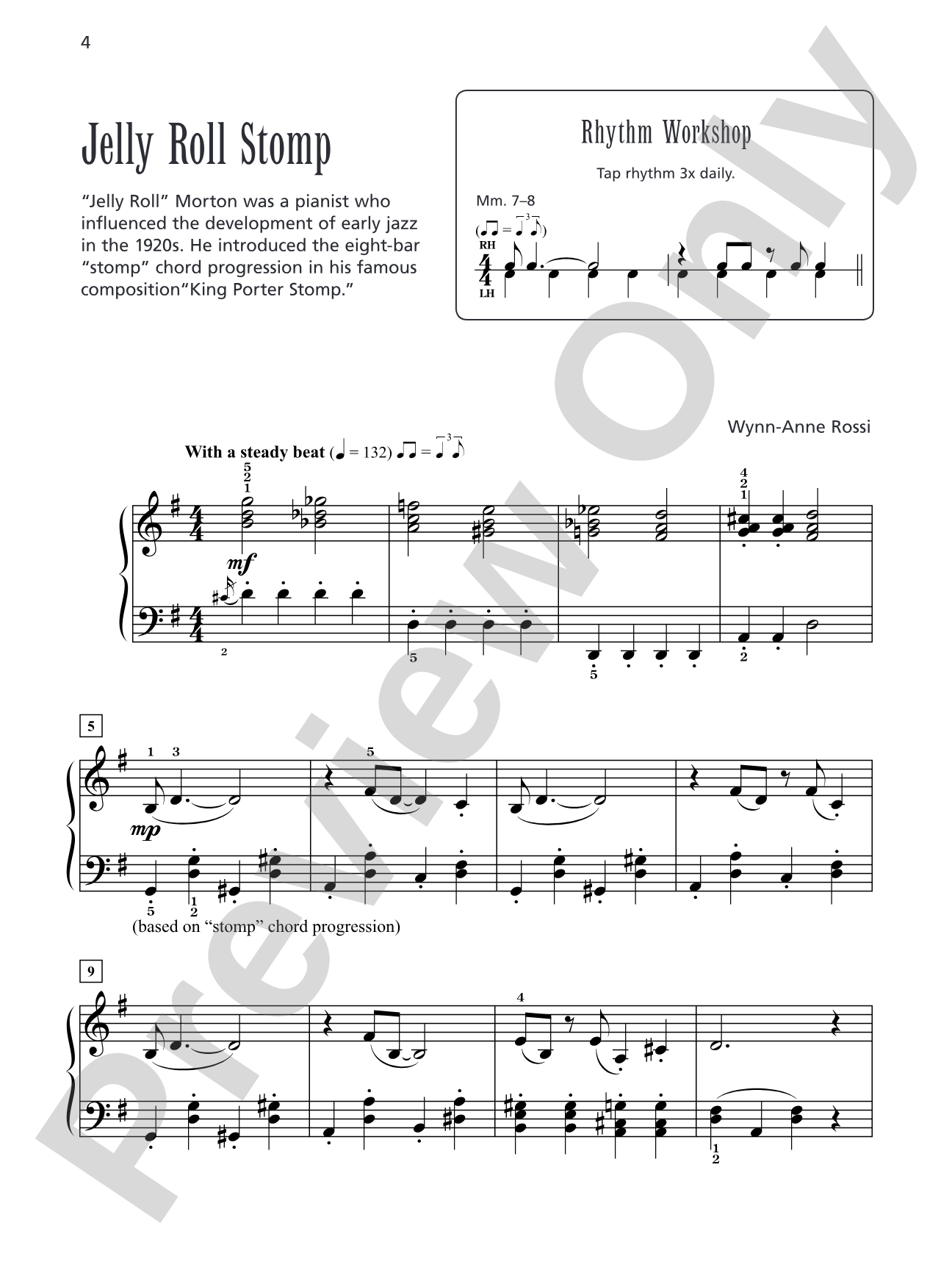
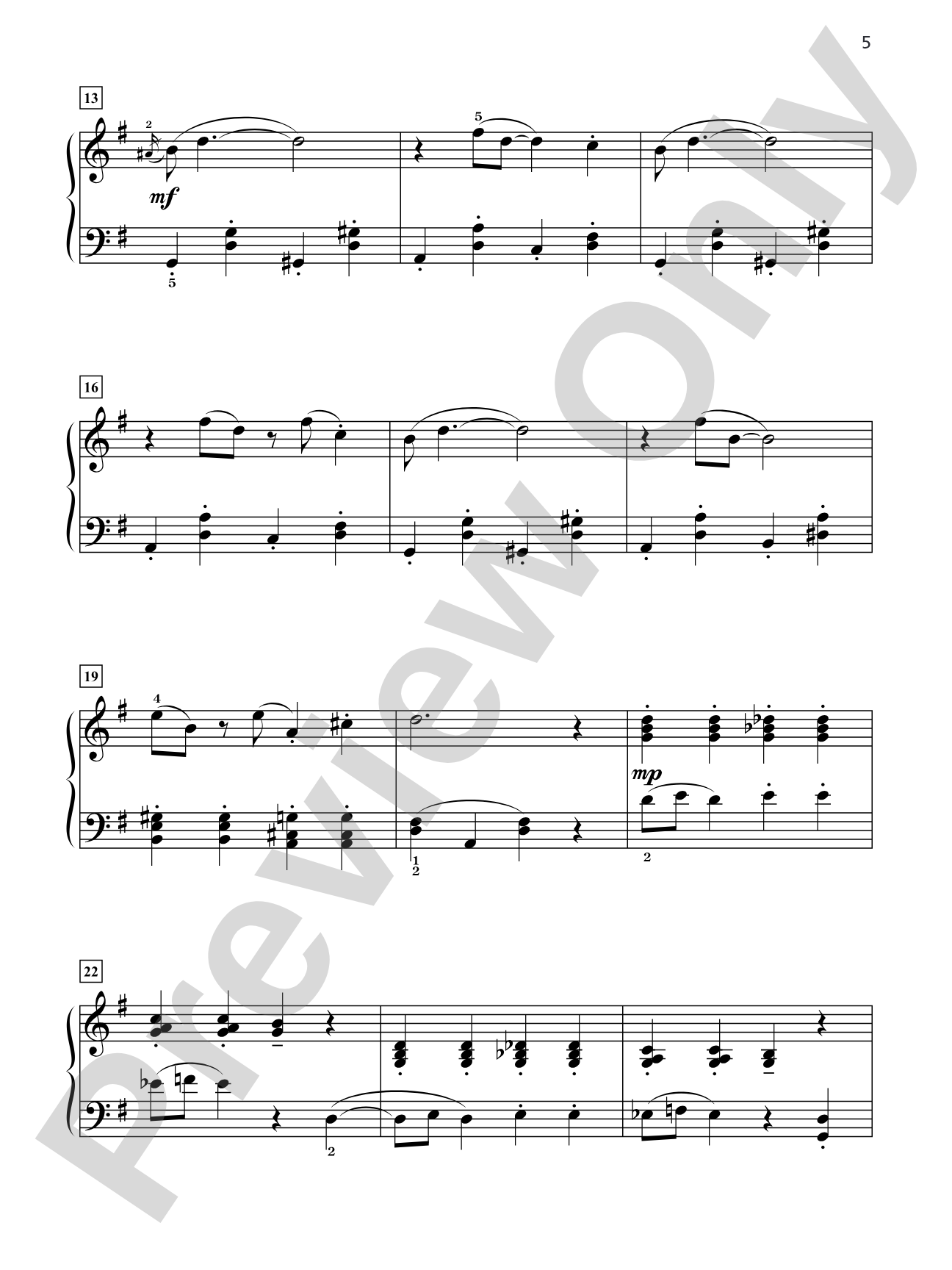
Wynn-Anne Rossi's Jazzin' Americana series is a personal journey through the jazz genre, honoring the history, the diverse styles, and the fabulous musicians who made this music great. Students will become familiar with the names of famous musicians such as Louis Armstrong, Charlie Parker, and Miles Davis while learning different jazz styles, from blues and bebop to boogie and rock. Each piece is enhanced with interesting facts that will awaken curiosity and enhance the musical experience. Titles: Boogie Man * Brazilian Moonbeams * Empathy * Empress of the Blues * Hot Five Louie * Jelly Roll Stomp * Tribute to Tatum * Zydeco for an Alligator. A Federation Festivals 2020-2024 selection.


Jazzin' Americana 3: 8 Intermediate Piano Solos That Celebrate American Jazz: Piano isn't in MakeMusic Cloud just yet...but it could be. Let us know you'd like to see it, and you'll help shape what comes next. In the meantime, start a free trial and dive into thousands of interactive titles your students can play along with today.
Request This Title
Tell us you want it.
Start Your Free Trial
Explore everything that's ready to play right now.
Sample Audio
No sample audio found.
Sample Video
1 / 6
Additional Details
Series:
Jazzin' Americana
Publisher:
Alfred Music
Page Count:
24
SKU:
00-PB-0000529
More about this title
About the Composer: Wynn-Anne Rossi
Wynn-Anne Rossi is a composer and pianist whose work centers on making jazz accessible and engaging for young musicians. Her Jazzin' Americana series reflects a deep commitment to music education, grounding technical skill development in the rich cultural history of American jazz and its legendary innovators.
Rossi's compositions for intermediate students balance musical authenticity with pedagogical clarity, allowing pianists to experience genuine jazz styles without overwhelming technical demands. Her integration of historical context and musician profiles into the learning experience positions her work as both repertoire and cultural education.
Why we love this
Rossi captures eight distinct jazz traditions within a single collection, each piece offering authentic stylistic flavor while remaining solidly intermediate in scope. The historical touchstones and musician references embedded in the music create natural bridges between technical study and cultural literacy, turning a recital set into a jazz history lesson that students will actually remember.
What to expect
Eight different moods unfold across this collection: the earthiness of boogie and blues, the sophistication of bebop-influenced pieces, the warmth of Brazilian warmth, and the swagger of New Orleans traditions. Each title invites you into a distinct moment in jazz history, playfully rendered through accessible piano writing that respects both the tradition and the player.
Who it's for
Intermediate pianists ready to explore jazz idiom with structured guidance. Students studying for music festivals and recitals who want repertoire that sounds sophisticated and feels historically grounded. Piano teachers seeking material that teaches jazz language without requiring students to already understand improvisation or jazz theory.
How to get the most out of it
- Lean into the rhythmic swagger of pieces like "Boogie Man" and "Zydeco for an Alligator" by feeling the groove rather than just counting it; let the jazz pulse guide your phrasing and rubato.
- Balance the walking bass lines in "Hot Five Louie" and "Jelly Roll Stomp" against melodic material in the right hand, treating your left hand as a conversational partner rather than accompaniment.
- Shape the rubato in ballad-influenced pieces such as "Empathy" and "Brazilian Moonbeams" by listening to recordings of the styles they reference; this builds your intuition for when to push and pull the tempo.
- Use the historical context provided about each piece to inform your interpretation; knowing you're evoking Bessie Smith or Art Tatum changes how you approach dynamics and color.
How to use it
Weave these pieces across a recital to showcase range and cultural knowledge; open with a high-energy number like "Boogie Man," move through contrasting styles, and close with something that lingers like "Empathy." Or cluster them thematically for a concert focused on jazz and American music, pairing them with classical repertoire to frame jazz as a legitimate concert genre. The historical notes make each piece a natural conversation starter before or after performance.
Skills your students will build
- Jazz rhythmic phrasing and swing feel
- Blues scale application and blues changes
- Left-hand independence in walking bass and accompaniment patterns
- Stylistic interpretation across bebop, boogie, Brazilian, and blues idioms
- Dynamic control and rubato in jazz ballads
- Approaching standard jazz repertoire with historical awareness