
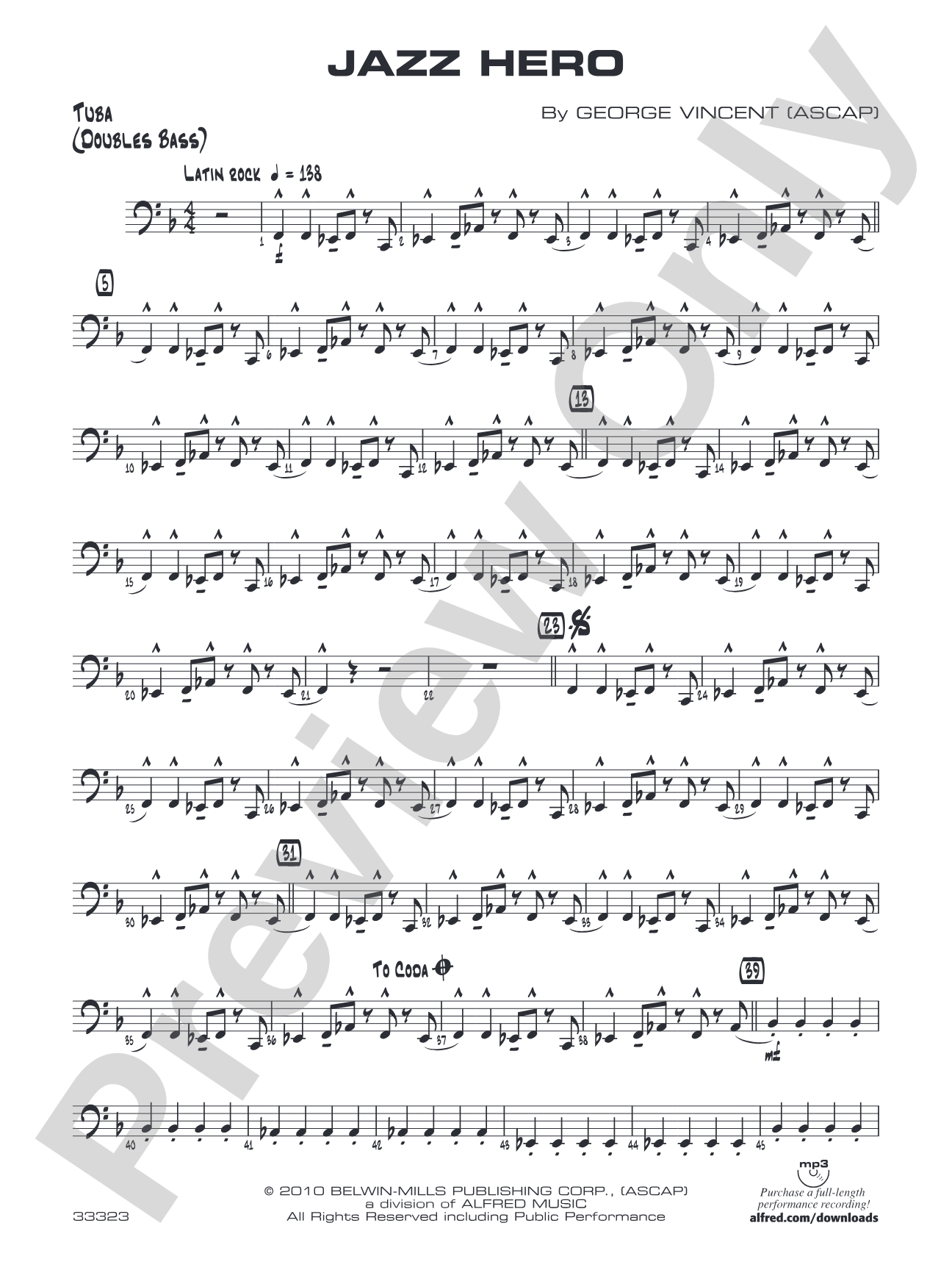

Jazz Hero: Tuba
By George Vincent
Grade: 1 (Easy)
Item: 00-PC-0016201_TB1
$3.00
Pickup currently not available
Description
Jazz Hero is a level 1 Jazz Beginnings series piece designed for very beginning jazz ensembles using limited ranges and rhythms. Instrumentation includes 2 alto saxophones, 2 tenor saxophones, 2 trumpets, 2 trombones, piano, bass, and drumset. This is playable by a reduced instrumentation which include 2 saxophones, 1 trumpet,1 trombone, piano, bass, and drumset. Optional parts call for 2 flutes, 2 B-flat clarinets, a baritone saxophone, a tuba, a horn in F, baritone T.C./ tenor sax, and guitar. Solos are written out with chord changes and the rhythm section parts are fully notated with guitar chord frames.


Don't just read it, hear it, play along with it, and watch your students grow with it. In MakeMusic Cloud, Jazz Hero: Tuba comes alive with professional accompaniment, adjustable tempo, and built-in practice tools that turn solo practice into real progress.
Open in the Player
Jump straight in and assign it today.
Start Your Free Trial
Open this title and explore the full library in minutes.
Sample Audio
1
Audio File
--:--
0:00
0:00
Sample Video
Additional Details
Series:
Jazz Beginnings Series
Publisher:
Alfred Music
Page Count:
86
SKU:
00-PC-0016201_TB1
More about this title
Why we love this
George Vincent designed this piece specifically for conductors launching their first jazz ensemble, which means every note serves a pedagogical purpose. The written-out solos remove guesswork and keep inexperienced players focused on ensemble blend rather than improvisation anxiety, while the fully notated rhythm section parts eliminate the common trap of weak comping that sinks early jazz programs.
What to expect
Straightforward and encouraging. The piece moves with infectious energy while staying rhythmically and melodically accessible, giving students immediate success and genuine fun without overwhelming them with complexity. It has the swagger of jazz without the technical walls that often discourage beginners.
Who it's for
Directors introducing jazz to students who read standard musical notation but have never performed in a jazz context. The piece accommodates both full and reduced ensembles, so it works whether you have a complete jazz band or just enough players to cover the core roles.
How to get the most out of it
- Balance the saxophone section by having the two alto players match tone and volume first, then bring the tenors in at the same dynamic level. This foundation matters more in a Grade 1 piece where students are still developing basic sound production.
- Lock the trumpet and trombone voices together during the main melody line. These players often rush or drag independently, so rehearse them as a unit before adding saxophones.
- Keep the rhythm section listening to each other constantly. The drummer, bass player, and pianist must establish the groove together; a solid foundation here makes everything else sound effortless.
- Use the chord frames in the guitar part as a teaching tool. Have the whole ensemble see how the harmonies are voiced, which builds awareness of the chord changes even for non-pianists.
How to use it
Program this as a feature on your fall jazz concert or pops night to announce the new ensemble to your school community. Its Grade 1 level and engaging character also make it ideal for recruitment performances, letting middle school students hear what they could be playing by spring.
Skills your students will build
- Reading and performing swing rhythms in a written context
- Listening to and matching tone quality with section partners
- Understanding chord changes and harmonic progression through lead lines
- Maintaining consistent ensemble tempo while reading jazz notation
- Balancing melody and supporting parts in a small-group setting
- Interpreting dynamic and articulation cues specific to jazz style