Jazz Conception Piano Comping Cover Image

Jazz Conception Piano Comping: Keyboard/Piano Book & MP3 Online Audio

$28.95 USD
Sale price  $28.95 USD Regular price 
Skip to product information
Jazz Conception Piano Comping Cover Image

Jazz Conception Piano Comping: Keyboard/Piano Book & MP3 Online Audio

21 Complete Transcriptions as Played by Mike Ledonne + 21 Lead Sheets

By Jim Snidero

Level: Intermediate - Advanced

Item: 01-ADV14739

$28.95
Shipped

One moment…

Description
Exact transcriptions, as played by Mike LeDonne, plus 21 simple piano lead sheets.
See and hear how a well known piano player phrases and articulates and comps for the soloists.
Play along with one of today's finest, swinging New York rhythm sections: Mike LeDonne on piano, Dennis Irwin on bass, and Kenny Washington on drums.
Use the book for private lessons, for self-study, or in any combination up to a full jazz ensemble, including flute and clarinet.
If you are more advanced you may want to use the book to develop your sight reading abilities, for transcribing the comping off or for just having fun playing along with a great jazz rhythm section.
The Jazz Conception Series is also perfectly suited for the class room. It can be used to develop younger students jazz style in a big band or small group. In an improvisation class the teacher can use the etudes as studies in improvisation. The Study Guide provides an analysis of each etude, along with practice assignments for each etude.

Jazz Conception Piano Comping: Keyboard/Piano Book & MP3 Online Audio isn't in MakeMusic Cloud just yet...but it could be. Let us know you'd like to see it, and you'll help shape what comes next. In the meantime, start a free trial and dive into thousands of interactive titles your students can play along with today.

Sample Pages

Sample Audio

track 1

0:00
0:00
Sample Video
Additional Details
Series: Advance Music: Jazz Conception
Publisher: Advance Music
UPC: 805095147391
SKU: 01-ADV14739
Instrumentation: Piano

More about this title

About the Author: Jim Snidero
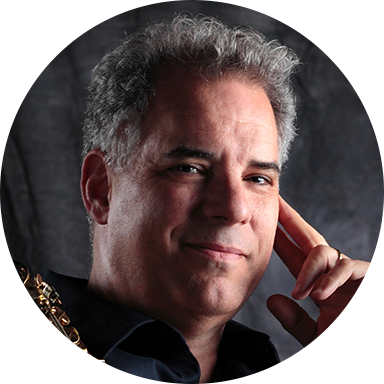
Jim Snidero

Jim Snidero stands among the most recorded and performed alto saxophonists of the past four decades. Downbeat Magazine has recognized him as both a "master musician" and "alto saxophone virtuoso," and his 2017 Critic's Poll placement confirms his sustained influence on the international jazz scene. His path began in Camp Springs, Maryland, where early mentorship from Phil Woods and studies at the University of North Texas shaped his musicianship before his move to New York in 1981.

In New York, Snidero's session credits expanded rapidly, from early work with Brother Jack McDuff to collaborations with the Mingus Big Band, Toshiko Akiyoshi, Eddie Palmieri, and Frank Sinatra. As a bandleader, he built a catalog marked by both consistency and range, including the landmark Mixed Bag and Blue Afternoon. Beyond recording and performing, Snidero has channeled decades of bandstand experience into pedagogy, creating the Jazz Conception series to pass along the practical craft of jazz musicianship.

Why we love this

Snidero transcribed Mike LeDonne's comping with surgical precision, capturing not just the notes but the phrasing and articulation decisions that separate competent piano from swinging piano. Pairing transcriptions with simple lead sheets lets students absorb vocabulary from a master before attempting their own interpretations. The inclusion of a top-tier New York rhythm section on the recordings means students play alongside genuine jazz accompaniment, not a metronome or drum machine.

What to expect

Warm, conversational, and deeply in the pocket. LeDonne's comping breathes with the rhythm section rather than driving from the front, and his voicings sit naturally under a soloist without stepping on space. The result feels less like studied transcription and more like overhearing a master class in real time.

Who it's for

Intermediate and advanced pianists serious about understanding contemporary jazz comping vocabulary. Self-teaching musicians benefit from the dual reinforcement of transcription and recorded model, while ensemble directors can deploy individual etudes as listening assignments or repertoire studies within jazz ensemble curricula.

How to get the most out of it

  • Listen to LeDonne's recording multiple times before opening the score. Notice where his left hand anticipates beat 2 and beat 4, and where he drops out entirely to give the soloist air.
  • Work through the etudes slowly with the audio, then gradually increase tempo. The goal is fluency with the harmonic language, not speed.
  • Transcribe LeDonne's comping independently, comparing your notation to the provided transcription. This builds your ear for upper-structure harmony and rhythmic displacement.
  • Use the lead sheets to voice and comp your own way through the changes, then listen back to how LeDonne solved the same harmonic landscape differently.

How to use it

Feature selected etudes in jazz history or improvisation courses to anchor discussions about comping style and harmonic function across eras. For jazz ensemble programs, assign transcriptions as listening homework before full-band rehearsals, giving players a shared vocabulary for discussing what strong accompaniment sounds like. Solo pianists preparing for jazz combo auditions or gigs can work through the book sequentially, building confidence with the harmonic and rhythmic textures they'll encounter in a working quartet.

Skills your students will build

  • Comping rhythmically and harmonically behind a soloist
  • Recognizing and transcribing upper-structure voicings and reharmonization
  • Internalizing jazz articulation and phrasing at the keyboard
  • Reading and interpreting lead sheets in real time
  • Playing with pocket and swing feel alongside a rhythm section
  • Anticipating harmonic movement and soloist phrasing

You May Also Like