Jazz Conception Piano Cover Image

Jazz Conception Piano: Keyboard/Piano Book & MP3 Online Audio

$28.95 USD
Sale price  $28.95 USD Regular price 
Skip to product information
Jazz Conception Piano Cover Image

Jazz Conception Piano: Keyboard/Piano Book & MP3 Online Audio

21 Solo Etudes for Jazz Phrasing, Interpretation and Improvisation

By Jim Snidero

Level: Intermediate - Advanced

Item: 01-ADV14727

$28.95
Shipped

One moment…

Description
Jazz Conception is a new and exciting way for players at all levels to learn the language of jazz! Each book set features 21 solo etudes based on chord changes to standards and blues. The same 21 etudes transposed and adapted for the main jazz instruments. See and hear how a well known soloist phrases and articulates and play along with or without the soloist. Play along with one of today's finest, swinging New York rhythm sections: Mike LeDonne on piano, Dennis Irwin on bass, and Kenny Washington on drums. Start out fairly easy, then get progressively more difficult. Use the etudes as a bridge to solos of the masters that are usually more complicated and involved. Learn melodies and lines that will give you a solid jazz vocabulary and musicality. Use the book for private lessons, for self-study, or in any combination up to a full jazz ensemble, including flute and clarinet. If you are more advanced you may want to use the book to develop your sight reading abilities, for transcribing the etudes (then check against the book) or for just having fun playing along with a great jazz rhythm section. Use as an improvisation study, learning how to construct a swinging, logical solo - works especially well in combination with the Study Guide.
The Jazz Conception Series is also perfectly suited for the class room. It can be used to develop younger students' jazz style in a big band or small group. In an improvisation class the teacher can use the etudes as studies in improvisation. The Study Guide provides an analysis of each etude, along with practice assignments for each etude.

Jazz Conception Piano: Keyboard/Piano Book & MP3 Online Audio isn't in MakeMusic Cloud just yet...but it could be. Let us know you'd like to see it, and you'll help shape what comes next. In the meantime, start a free trial and dive into thousands of interactive titles your students can play along with today.

Sample Pages

Sample Audio

track a

0:00
0:00
Sample Video
Additional Details
Series: Advance Music: Jazz Conception
Publisher: Advance Music
UPC: 805095147278
SKU: 01-ADV14727
Instrumentation: Piano

More about this title

About the Author: Jim Snidero
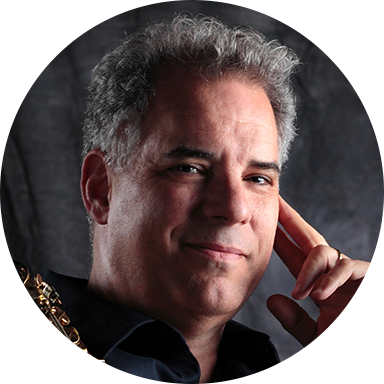
Jim Snidero

Jim Snidero has spent over three decades establishing himself as one of contemporary jazz's most respected voices. As an alto saxophonist, composer, arranger, and educator, he has earned recognition from DownBeat Magazine as both a "master musician" and "alto saxophone virtuoso," and placed in the 2017 DownBeat Critic's Poll. His early years in Camp Springs, Maryland, included formative study with Phil Woods and membership in the One O'Clock Lab Band at the University of North Texas, followed by instruction from Dave Liebman that crystallized his artistic direction.

After moving to New York in 1981, Snidero quickly became an in-demand sideman, recording with Jack McDuff, the Mingus Big Band, Frank Wess, the Toshiko Akiyoshi Jazz Orchestra, Eddie Palmieri, and Frank Sinatra. His own recording career, which began with On Time (1984), demonstrates remarkable consistency across diverse stylistic territory. Landmark releases including Mixed Bag (1987) and Blue Afternoon (1989) have secured his place in jazz history, making him an ideal guide for musicians learning the language of improvisation.

Why we love this

Snidero's twenty-one etudes function as a genuine apprenticeship in jazz vocabulary rather than abstract technique. The progressive difficulty structure makes this resource genuinely useful across multiple class levels, while the rhythm section backing (Mike LeDonne, Dennis Irwin, Kenny Washington) invites students into real swing feel from day one. For teachers juggling improvisation classes, jazz ensemble, and individual study, this single book handles all three contexts without feeling stretched thin.

What to expect

These etudes carry the unmistakable swing and snap of a real New York rhythm section, immediately grounding abstract chord changes in the physicality of actual jazz. Playing along feels like sitting in with accomplished musicians who know exactly how to support without overwhelming, making each attempt feel like genuine musicmaking rather than a practice exercise.

Who it's for

Pianists at the intermediate-advanced level who want a structured entry into jazz improvisation, as well as teachers building jazz programs in high school or college settings. The material also serves advancing students looking to refine sight-reading and transcription skills alongside their improvisational practice.

How to get the most out of it

  • Study the melody and rhythm section voicings before attempting any improvisation; understanding the harmonic landscape makes spontaneous lines sound intentional rather than wandering.
  • Transcribe the recorded soloist's phrasing choices, then compare your transcription to the printed etude. This trains your ear to hear the difference between what's written and how it breathes when played.
  • Play along with the rhythm section version first, focusing on pocket and phrasing rather than dazzling note choices. A well-placed rest is more valuable than excessive fast runs.
  • Work through the etudes in order, resisting the urge to skip ahead. Each harmonic situation builds on previous ones, establishing patterns you'll recognize in real tunes.

How to use it

Use this as the core material for an improvisation elective or jazz ensemble improvisation unit, pairing it with the study guide for systematic harmonic analysis. In a big band setting, work through the etudes with piano and bass sections, then apply those vocabulary patterns to full arrangements; the rhythm section practice translates directly to better comp decisions during ensemble rehearsals.

Skills your students will build

  • Constructing logical, goal-oriented solos over standard changes and blues progressions
  • Recognizing and internalizing common jazz phrasing patterns and articulation
  • Harmonizing melodies and building chord-tone soloing strategies
  • Locking into swing pocket with a functioning rhythm section
  • Sight-reading in jazz context with appropriate syncopation and feel
  • Transcription and ear training through soloist analysis

You May Also Like