Jazz Conception: Passage Cover Image

Jazz Conception: Passage: 5 Saxophones AATTBar & Rhythm Section Conductor Score & Parts with CD

$45.95 USD
Sale price  $45.95 USD Regular price 
Skip to product information
Jazz Conception: Passage Cover Image

Jazz Conception: Passage: 5 Saxophones AATTBar & Rhythm Section Conductor Score & Parts with CD

By Jim Snidero

Item: 01-ADV14733

$45.95
Shipped

One moment…

Description
"Passage" is a medium up-swing arrangement for five saxophones (AATTBar) that features an open solo section and solo space for drums.

Jazz Conception: Passage: 5 Saxophones AATTBar & Rhythm Section Conductor Score & Parts with CD isn't in MakeMusic Cloud just yet...but it could be. Let us know you'd like to see it, and you'll help shape what comes next. In the meantime, start a free trial and dive into thousands of interactive titles your students can play along with today.

Sample Pages

Sample Audio

track 1

0:00
0:00
Sample Video
Additional Details
Series: Advance Music: Jazz Conception
Publisher: Advance Music
UPC: 805095147339
SKU: 01-ADV14733
Instrumentation: 5 Saxophones AATTBar & Rhythm Section

More about this title

About the Author: Jim Snidero
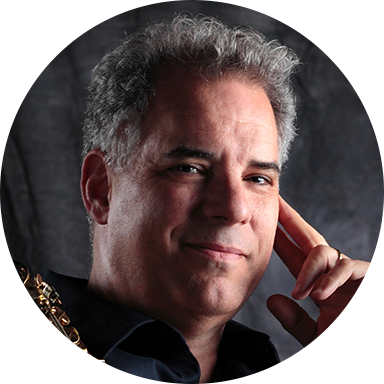
Jim Snidero

Jim Snidero stands as one of the most versatile voices in contemporary jazz. A composer, arranger, and educator alongside his work as an alto saxophonist, Snidero has earned recognition from Downbeat Magazine as both a "master musician" and "alto saxophone virtuoso," and his consistent presence in the Downbeat Critic's Poll underscores his sustained relevance on the international jazz stage.

Snidero's path to prominence began in Camp Springs, Maryland, where early musical training set the foundation for what would become a distinguished career. Study with Phil Woods and Dave Liebman refined his conception, and his time in the One O'Clock Lab Band at the University of North Texas connected him to one of jazz education's most rigorous programs. After relocating to New York in 1981, Snidero quickly established himself through sideman work with Brother Jack McDuff, the Mingus Big Band, Frank Wess, the Toshiko Akiyoshi Jazz Orchestra, and others. His own recordings, beginning with On Time in 1984 and continuing through acclaimed releases like Mixed Bag and Blue Afternoon, demonstrate a musician equally comfortable leading and collaborating.

Why we love this

Snidero writes for saxophone sections with the ear of someone who has spent decades listening to and playing alongside world-class players. "Passage" swings with natural sophistication; the voicings sit comfortably across the five saxes while remaining engaged harmonically, and the open solo sections give your section room to stretch without losing the musical thread. This is the kind of chart that rewards careful ensemble work and sounds immediately more polished with each rehearsal.

What to expect

"Passage" has the loose-limbed confidence of a medium-tempo swing groove. The piece breathes naturally; it's not overstuffed, and the open space around the solo section lets players hear what they're doing. There's a sense of forward motion without urgency, the kind of feeling that makes an audience relax into the music.

Who it's for

Jazz ensembles with an intermediate to advanced saxophone section that want a vehicle for building tight five-part writing skills and exploring open solo territory. This works equally well for university jazz programs looking for a manageable big band alternative and for semi-pro or community jazz groups with solid fundamentals in place.

How to get the most out of it

  • Balance the five-part harmony by tuning the inner voices (tenor and baritone sax) first, then adjusting altos and soprano around them rather than the reverse. This tightens the overall sonority.
  • Use the recorded accompaniment to lock the rhythm section's pocket, but rehearse passages without it so your saxes develop independent time feel and can breathe through the swing eighth-note phrasing.
  • Shape the ensemble figures with dynamic contour that mirrors the phrasing of the rhythm section; listen carefully to how the piano and bass voice the changes, and follow that architectural logic in your tutti sections.
  • Mark your solos during sectional rehearsal to identify which players take which breaks. Establish clear handoffs and make sure non-soloing voices maintain texture and energy behind the solo feature.

How to use it

Position this on a concert alongside a heavier ensemble arrangement and a smaller jazz standard feature; its lean, swinging character provides welcome contrast and showcases section work in a different light than full big band charts do. It also fits well as a first advanced sax quintet selection if your ensemble is transitioning from three-part to five-part voicing.

Skills your students will build

  • Five-part saxophone voicing and balance in swing style
  • Reading and executing open solo sections with appropriate jazz phrasing
  • Listening to rhythm section chord voicings and mirroring harmonic architecture in ensemble figures
  • Trading solos and managing section energy during featured improvisation
  • Swing eighth-note articulation and time feel across a full section

You May Also Like