Jazz Conception: Handbuch Cover Image

Jazz Conception: Handbuch: Book & CD

$28.95 USD
Sale price  $28.95 USD Regular price 
Skip to product information
Jazz Conception: Handbuch Cover Image

Jazz Conception: Handbuch: Book & CD

Ein Handbuch für Lehrer und zum Selbststudium

By Jim Snidero

Item: 01-ADV14738

$28.95
Shipped

One moment…

Description
Das Jazz Conception Handbuch gibt anhand detaillierter Analysen Einblicke in den kreativen Prozess des Jazz-Solospiels. Gleichzeitig enthält das Buch eine Vielzahl von Ideen und praktischen Vorschlägen für den Lehrenden und den Autodidakten. Die Jazz Conception Reihe bietet allen Musikern eine neue und spannende Methode, die Sprache des Jazz zu erlernen und zu üben. Jede Buch/CD-Kombination enthält 21 Soloetüden auf der Grundlage von Standard- und Bluesakkordfolgen. Sie werden von hervorragenden Solisten und einer der gegenwärtig besten und swingendsten New Yorker Rhythmusgruppen mit Mike LeDonne am Piano, Dennis Irwin am Bass und Kenny Washington am Schlagzeug dargeboten.

Sehen und hören Sie, wie der Solist artikuliert und phrasiert, spielen Sie mit oder ohne ihn mit der CD und lernen Sie das Vokabular des Jazz aus erster Hand.

Diese Methode stellt eine Brücke dar zu den großen Meistern des Jazz.

Kompatible Ausgaben sind für alle gängigen Instrumente lieferbar. (German Edition) English Edition is item #01-14730.

Jazz Conception: Handbuch: Book & CD isn't in MakeMusic Cloud just yet...but it could be. Let us know you'd like to see it, and you'll help shape what comes next. In the meantime, start a free trial and dive into thousands of interactive titles your students can play along with today.

Sample Pages

Sample Audio
No sample audio found.
Sample Video
Additional Details
Series: Advance Music: Jazz Conception
Publisher: Advance Music
UPC: 805095147384
SKU: 01-ADV14738

More about this title

About the Author: Jim Snidero
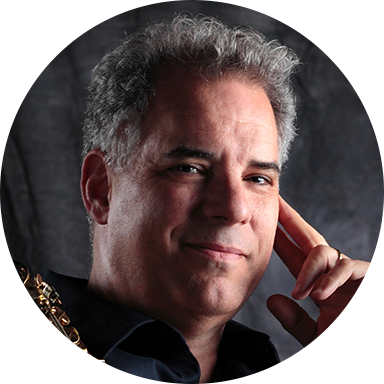
Jim Snidero

Jim Snidero has established himself as one of the most respected voices in contemporary jazz across three decades of performance, composition, and teaching. An alto saxophonist who studied with Phil Woods and Dave Liebman, he performed in the One O'Clock Lab Band at the University of North Texas before moving to New York in 1981, where he quickly became a sought-after sideman with leaders including Brother Jack McDuff, the Mingus Big Band, Frank Wess, and the Toshiko Akiyoshi Jazz Orchestra. Downbeat Magazine has recognized him as both a "master musician" and "alto saxophone virtuoso," and he appeared in the 2017 Downbeat Critic's Poll.

As a bandleader, Snidero created a substantial catalog of recordings beginning with On Time (1984), followed by acclaimed releases including Mixed Bag (1987) and Blue Afternoon (1989). Beyond his work as a performer and composer, he has become a dedicated educator whose instructional materials reflect decades of practical experience navigating the language of jazz improvisation. The Jazz Conception series represents his commitment to making the creative processes of jazz accessible to musicians at all levels.

Why we love this

Snidero distills the analytical rigor and creative strategies he has refined over a lifetime in New York's jazz scene into exercises that feel like learning directly from a master. Rather than abstract theory, each of the 21 etudes grounds improvisation in the standard and blues progressions you will actually encounter, paired with recordings from an elite rhythm section that demonstrates authentic phrasing, articulation, and swing feel. The ability to play along with or apart from the recorded soloists gives students both a model to emulate and the independence to develop their own voice.

What to expect

Honest and unromanticized. Snidero does not dress up the work of learning jazz vocabulary; instead, he shows you the tools professional musicians use and invites you to apply them directly. The recorded solos swing with genuine groove and confidence, and the rhythm section (featuring Mike LeDonne on piano, Dennis Irwin on bass, and Kenny Washington on drums) establishes a standard of musicianship that is both inspiring and achievable.

Who it's for

Jazz students and private instructors seeking a systematic pathway into jazz improvisation, from beginning improvisers through intermediate players ready to tackle standard progressions. Musicians on any instrument will find etudes written in their own range, supported by a professional recording that models authentic jazz phrasing and interaction with a rhythm section. Both formal students and self-directed learners benefit from the detailed analysis of the creative process that anchors this handbook.

How to get the most out of it

  • Study the recorded soloist's phrasing and articulation before you play through the written etude. Pay attention to note placement, breath points, and how ideas land rhythmically against the accompaniment.
  • Use the CD accompaniment to lock in with the rhythm section at different tempos. Start slowly to focus on clarity and intonation, then build speed as your comfort with the changes increases.
  • Sing the melodic ideas on your instrument before improvising over them. This helps internalize the vocabulary Snidero presents and prevents you from defaulting to familiar licks.
  • Record yourself playing the etudes and listen back critically. Identify which harmonic and rhythmic ideas feel natural to you and which ones need more work.

How to use it

Assign individual etudes as weekly practice assignments in private jazz lessons, rotating through different standard progressions and harmonic concepts. Use the recorded solos as models during section rehearsals or full ensemble coaching to illustrate how strong time-feel and phrasing elevate the ensemble sound. The handbook itself serves as a reference resource for any director building a jazz curriculum, providing analysis and vocabulary exercises that complement ensemble charts and repertoire.

Skills your students will build

  • Improvising over standard chord progressions and 12-bar blues forms
  • Matching phrasing, articulation, and time-feel to an experienced rhythm section
  • Developing personal melodic vocabulary while learning from professional models
  • Understanding the relationship between harmonic analysis and solo construction
  • Building confidence and ear training through repeated exposure to authentic jazz language

You May Also Like