
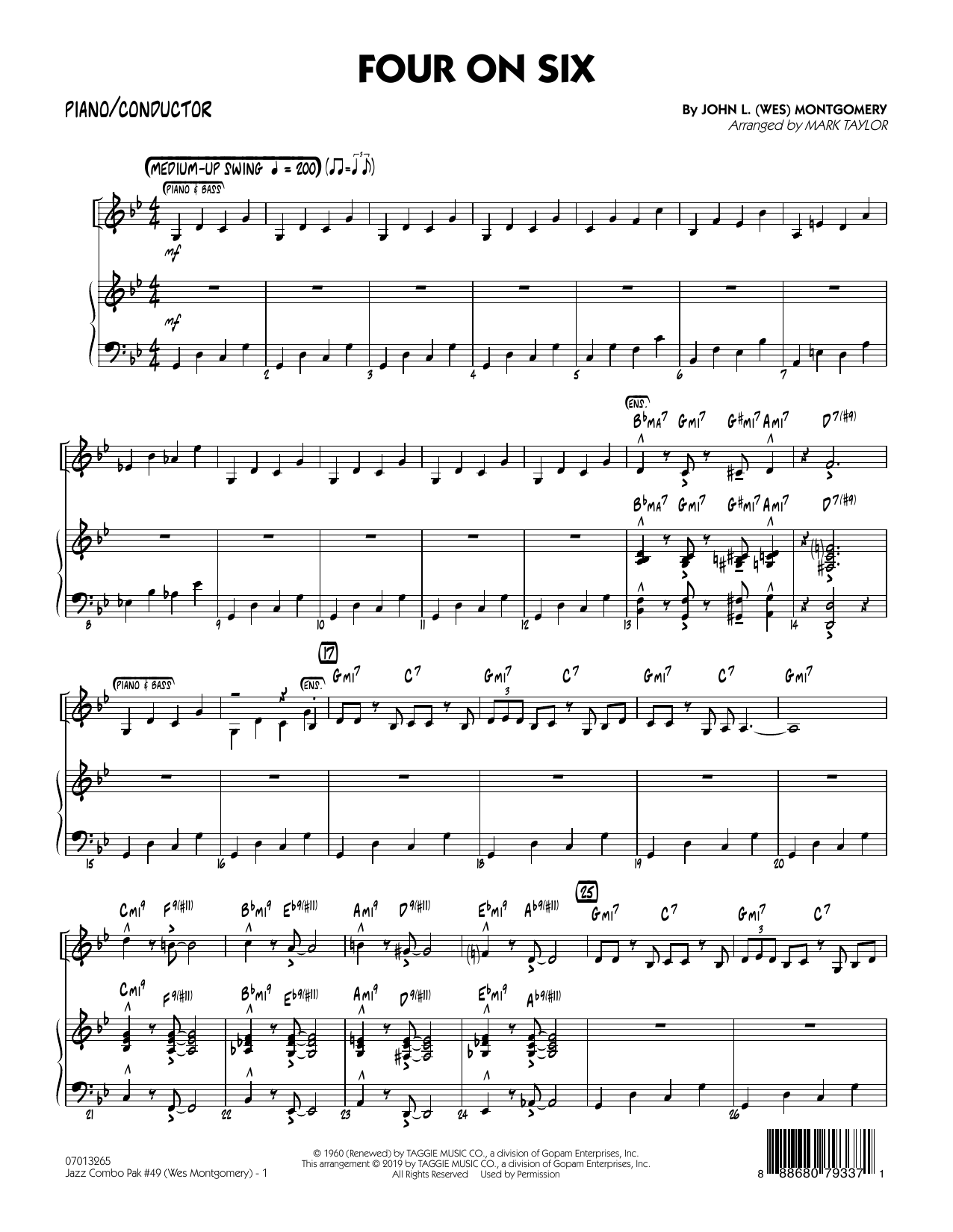

Jazz Combo Pak #49 (Wes Montgomery) (arr. Mark Taylor): Jazz Ensemble Conductor Score & Parts
As performed by Wes Montgomery / Arranged by Mark Taylor
Grade: 3
Item: 35-PK00449923
$45.00
Pickup currently not available
Buy Extra Parts (Digital PDF Download)
Parts Added to Cart!
Description
Includes: Four on Six, Road Song, West Coast Blues, Twisted Blues


Jazz Combo Pak #49 (Wes Montgomery) (arr. Mark Taylor): Jazz Ensemble Conductor Score & Parts isn't in MakeMusic Cloud just yet...but it could be. Let us know you'd like to see it, and you'll help shape what comes next. In the meantime, start a free trial and dive into thousands of interactive titles your students can play along with today.
Request This Title
Tell us you want it.
Start Your Free Trial
Explore everything that's ready to play right now.
Sample Audio
No sample audio found.
Sample Video
No sample videos found.
Additional Details
Publisher:
Hal Leonard
SKU:
35-PK00449923
More about this title
About the Artist: Wes Montgomery
Wes Montgomery (1923–1968) was a guitarist who fundamentally shaped how jazz musicians approached the instrument. Working primarily in Indianapolis before moving to California, he developed a signature sound using his thumb instead of a pick, creating a warm, rounded tone that became instantly recognizable. His recordings for Riverside Records and later Verve Records established him as a major voice in hard bop and soul jazz, with particular strength in blues-based compositions and standards.
Montgomery's influence on jazz education stems from his approachable yet sophisticated harmonic language and his gift for crafting memorable melodies over blues changes. He proved that a jazz guitarist could be both accessible and deeply musical, making his compositions and arrangements ideal for student ensembles learning to navigate swing rhythms, blues tonality, and small group interplay.
Why we love this
Mark Taylor's arrangements capture Montgomery's relaxed swing feel and blues sensibility without overwhelming younger players. Each piece in this collection gives students direct exposure to authentic jazz language, from the straightforward blues changes in West Coast Blues to the smoother harmonic movement in Road Song, creating variety while maintaining pedagogical clarity.
What to expect
These arrangements breathe with the unhurried confidence of a master blues player. There is no showiness here, just straightforward swing grooves, memorable heads, and room for individual voices to emerge. The overall character is warm and inviting, with just enough harmonic sophistication to keep musicians engaged and curious.
Who it's for
Jazz combos and small ensembles at the intermediate level who are ready to move beyond strictly notated rhythm section parts and want exposure to authentic jazz from a major historical figure. Directors programming Grade 3 jazz literature for festivals, concerts, or ongoing jazz curriculum will find these four pieces offer stylistic variety while maintaining accessibility.
How to get the most out of it
- Build the swing feel gradually by having your rhythm section lock in the pocket before adding horn lines. The groove in Four on Six depends entirely on the bassist and drummer finding that relaxed, behind-the-beat timing that defines Montgomery's style.
- Shape melodic phrases with the phrasing of a vocalist rather than strictly to the written rhythms. These arrangements benefit from rubato in the head, particularly in Road Song, which allows the ensemble to breathe together.
- Balance ensemble unisons carefully so that individual voices remain clear. Taylor's voicings often feature parallel lines that need definition rather than blend.
- Let soloists take real space during the blues changes. Students need room to experiment with call and response and to feel the form without rushing back to the head.
How to use it
Pair these pieces with each other to build a small jazz concert or to create a focused unit on blues variations and standard forms. West Coast Blues and Twisted Blues work particularly well as back-to-back selections showcasing different approaches to the same harmonic language. This collection also serves well as foundational material for students learning to improvise over changes that actually occur in real jazz repertoire.
Skills your students will build
- Blues form comping and improvisation over I-IV-V changes
- Swing rhythmic feel with emphasis on behind-the-beat phrasing
- Reading and executing jazz ensemble articulations and notation
- Small group balance and collective listening in a combo setting
- Melody phrasing with space and breath rather than mechanical rhythm