Jazz Combo Pak #48 (Thelonious Monk) (arr. Mark Taylor) Sheet Music Preview

Jazz Combo Pak #48 (Thelonious Monk) (arr. Mark Taylor): Jazz Ensemble Conductor Score & Parts

As performed by Thelonious Monk / Arranged by Mark Taylor

Grade: 3

Item: 35-PK00449922

Digital Download
$45.00

One moment…

Description
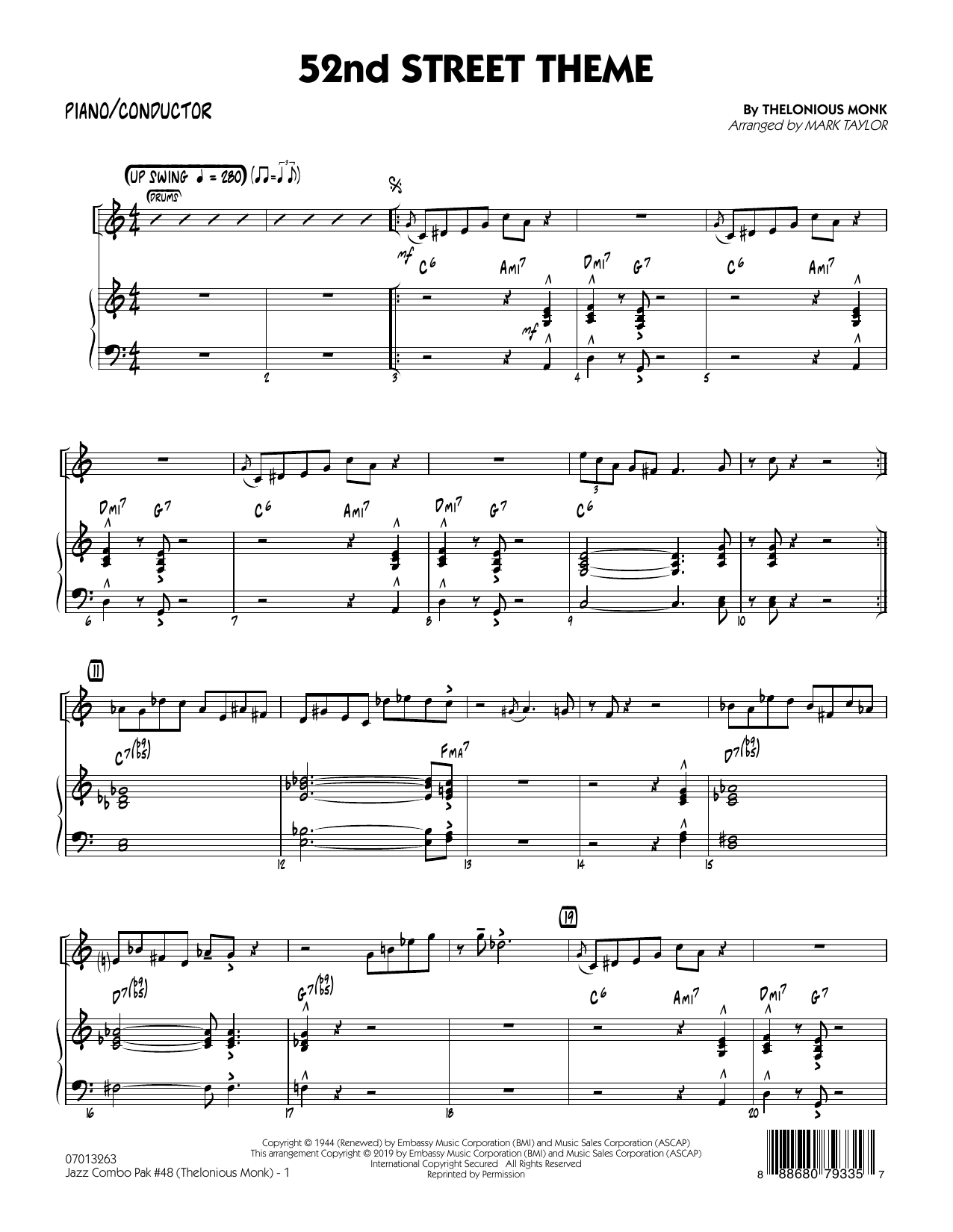
Includes: Epistrophy, 52nd Street Theme, I Mean You, Well You Needn't

Jazz Combo Pak #48 (Thelonious Monk) (arr. Mark Taylor): Jazz Ensemble Conductor Score & Parts isn't in MakeMusic Cloud just yet...but it could be. Let us know you'd like to see it, and you'll help shape what comes next. In the meantime, start a free trial and dive into thousands of interactive titles your students can play along with today.

Sample Audio
No sample audio found.
Sample Video
Additional Details
Publisher: Hal Leonard
SKU: 35-PK00449922

More about this title

About the Artist: Thelonious Monk

Thelonious Monk stands as one of jazz's most uncompromising harmonic innovists and pianists. His compositions feature angular melodies, unexpected chord substitutions, and rhythmic displacements that challenge conventional jazz vocabulary while remaining remarkably singable and memorable. Monk's influence on jazz education extends far beyond his playing; his four pieces in this collection represent some of the most frequently studied works in jazz curricula, offering students direct access to his compositional logic and harmonic thinking.

As a bandleader and small ensemble master, Monk understood how to voice instruments economically and effectively. His tunes have become standards in the jazz repertoire precisely because they reward deep study; each phrase reveals new layers of sophistication when examined closely. For young musicians, learning Monk's music provides a gateway into bebop and post-bebop harmonic language while developing their ears for chromaticism and reharmonization.

Why we love this

Mark Taylor's arranging touch preserves the idiosyncratic character of these four Monk staples while making them accessible to Grade 3 ensembles. Each tune retains its harmonic spine and melodic integrity; the voicings breathe authentically without requiring virtuosic soloists. Your students will encounter genuine bebop language and chromaticism without drowning in unplayable chord changes.

What to expect

Epistrophy opens with a chromatic twist that immediately signals Monk's fingerprints; there's a scholarly quality to the harmonic movement that rewards close listening. 52nd Street Theme carries an urban coolness and straightforward groove, while I Mean You leans playful with its angular phrasing. Well You Needn't balances accessibility with genuine harmonic interest, giving newer soloists a tune where clarity shines.

Who it's for

This collection suits jazz ensembles at the intermediate level who are ready to tackle the real vocabulary of bebop and post-bebop jazz. Your students should have a solid foundation in jazz articulation and comping fundamentals; these four tunes assume that vocabulary and build from there. A band with one or two reliable soloists will get the most from this material, though section improvisation also works.

How to get the most out of it

  • Establish the ride cymbal pattern early in rehearsal; it anchors the rhythmic feel across all four tunes and shapes how the ensemble interprets the metric displacements Monk built into these melodies.
  • Balance the horn section carefully during head statements. These melodies can muddy if players aren't precise with their articulation and phrasing; Monk's tunes demand clarity and intentional space.
  • Have your soloists listen to Monk's recordings before they improvise. His compositional voice is so distinctive that the tune's harmonic journey makes far more sense when students hear how it lands.
  • Lock the comping rhythm section first, then layer in the melody. The piano voicings and bass lines drive these tunes forward; horns enter most effectively when that foundation is solid.

How to use it

These four standards work beautifully in a concert framed around bebop history or as the centerpiece of a jazz set that explores different compositional approaches. Consider programming one or two alongside works by other standard bearers (Parker, Gillespie, Davis) to show your audience how Monk's voice differs from his contemporaries. They're equally effective as rehearsal material for deepening your ensemble's understanding of jazz harmony and melodic construction.

Skills your students will build

  • Reading and performing bebop melody with precise articulation and phrasing
  • Understanding chromatic harmony and Monk's approach to chord substitution
  • Improvising over changes with angular melodic language and rhythmic displacement
  • Comping voicings that support rather than compete with the melody
  • Listening to and interpreting ride cymbal patterns that shape rhythmic feel

You May Also Like