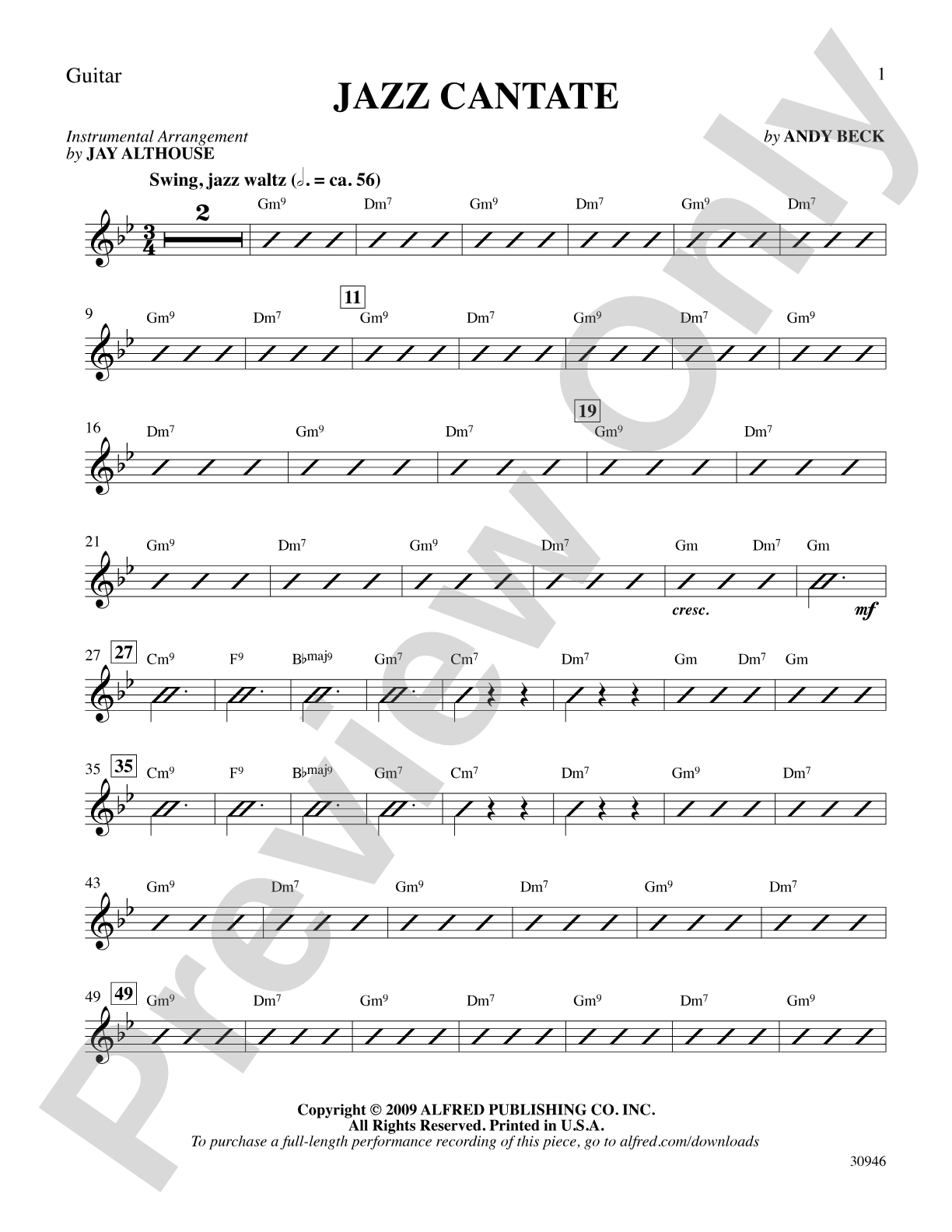
Jazz Cantate: Guitar Sheet Music Preview

Jazz Cantate: Guitar: Choral SoundPax

By Andy Beck

Item: 00-PC-0014832_G

Digital Download
$5.00
Description
The brief Latin text, "Cantate canticum novum," means "Sing a new song." And this is an outstanding new song to sing. All voicings include legitimate jazz sonorities, canonic verses, and logical choral phrasing, making it just right for the music classroom, performance hall, or festival stage.

Don't just read it, hear it, play along with it, and watch your students grow with it. In MakeMusic Cloud, Jazz Cantate: Guitar: Choral SoundPax comes alive with professional accompaniment, adjustable tempo, and built-in practice tools that turn solo practice into real progress.

Sample Audio
0:00
0:00
Sample Video
Additional Details
Series: Alfred Choral Designs
Publisher: Alfred Music
Page Count: 16
SKU: 00-PC-0014832_G
Instrumentation: SoundPax

More about this title

About the Composer: Andy Beck

Andy Beck

Andy Beck leads the choral publications division at Alfred Music, where he oversees a catalog that reflects his own prolific output as a composer and arranger. With more than 450 choral works in print, Beck has established himself as a central figure in contemporary choral pedagogy and performance; his compositions span concert literature, vocal training resources, and musical theatre, and his work reaches singers of all ages across the globe.

Beyond the page, Beck is a sought-after guest conductor, clinician, and adjudicator, and has recently served as composer and conductor for honor choirs and all-state ensembles throughout the Southeast. A tenor singer himself, he maintains an active performance life with the North Carolina Master Chorale Chamber Choir and brings decades of studio recording experience. Beck holds degrees in Music Education from Ithaca College and Northwest Missouri State University, anchoring his work in both pedagogical rigor and artistic excellence.

Why we love this

Beck writes with genuine understanding of what voices can do together. The jazz voicings here feel sophisticated without becoming precious, and the canonic writing creates textural momentum that students actually enjoy singing. This is the kind of piece that sounds more advanced than it is, which builds real confidence in an ensemble.

What to expect

The piece captures a kind of luminous confidence. Jazz sonorities give the simple Latin text unexpected warmth and sophistication, while the canonic sections create an almost hypnotic sense of musical dialogue. It feels both contemporary and timeless.

Who it's for

This work suits choirs at the middle school through collegiate level who are ready for jazz harmony and canonic writing. It works equally well in the classroom as a sight-singing tool and on the concert stage as a polished performance piece.

How to get the most out of it

  • Balance the jazz chord colors carefully in sectional rehearsals; have singers listen across parts to lock the harmonic sonority before adding text and phrasing.
  • Approach the canonic sections with precise rhythmic clarity. Lock the rhythmic pattern in unison first, then layer voices one at a time to establish clean entries.
  • Shape the Latin text with deliberate articulation and vowel consistency. The brevity of the words demands crisp diction that lets the harmony breathe.
  • Use the recorded accompaniment in early rehearsals to establish harmonic context, then gradually reduce dependence so voices learn to blend independently.

How to use it

Program this as an opener or early second-half piece where its compact length and sophisticated sound can refresh an audience. It pairs well with traditional sacred works, offering a modern harmonic perspective on spiritual themes without abandoning choral accessibility.

Skills your students will build

  • Reading and balancing jazz chord voicings (sevenths, extensions, alterations)
  • Performing canonic entrances with rhythmic precision and clear voice leading
  • Singing Latin text with proper vowel consistency across changing harmonies
  • Hearing and maintaining harmonic context independent of accompaniment support

You May Also Like