

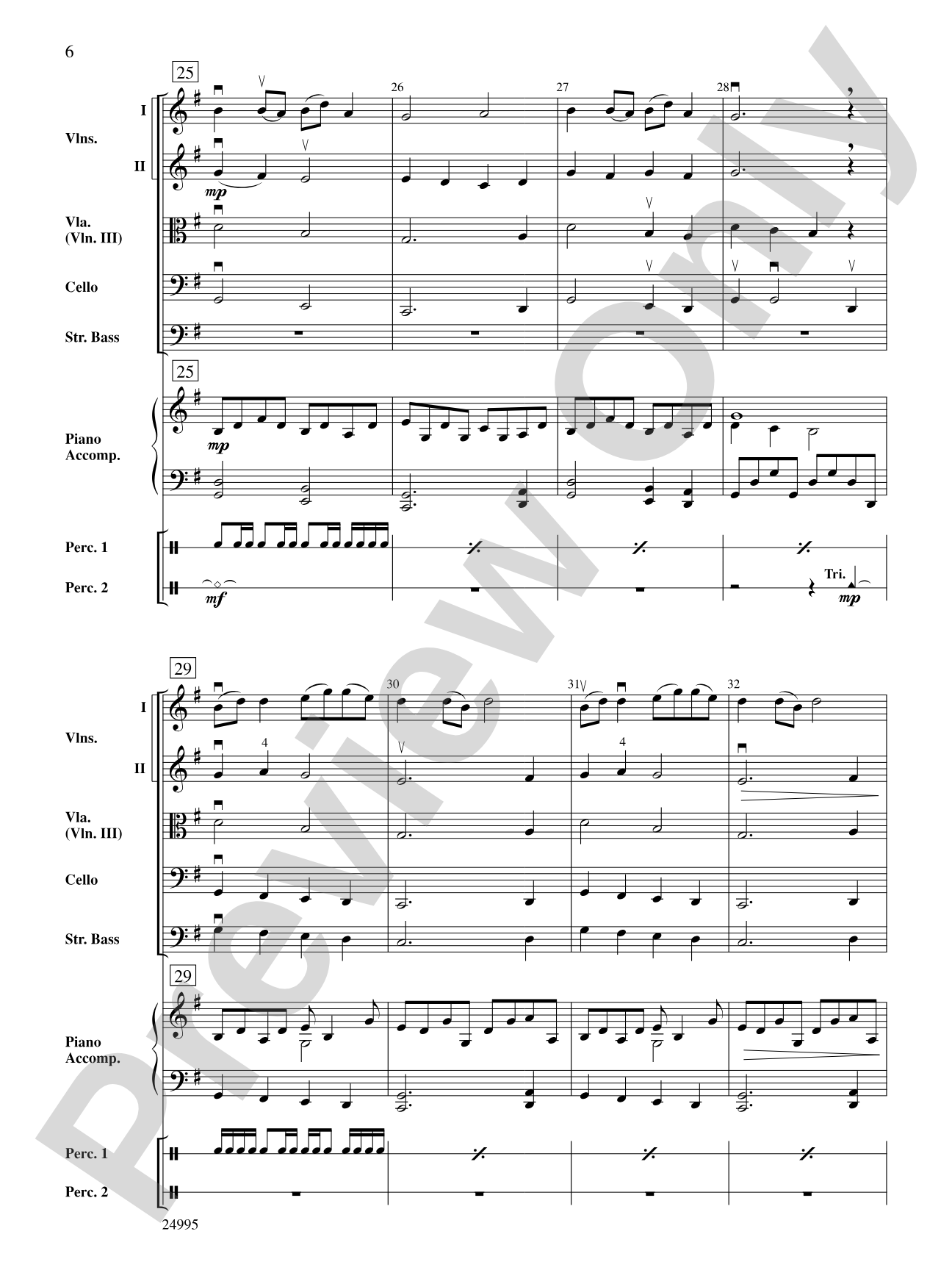
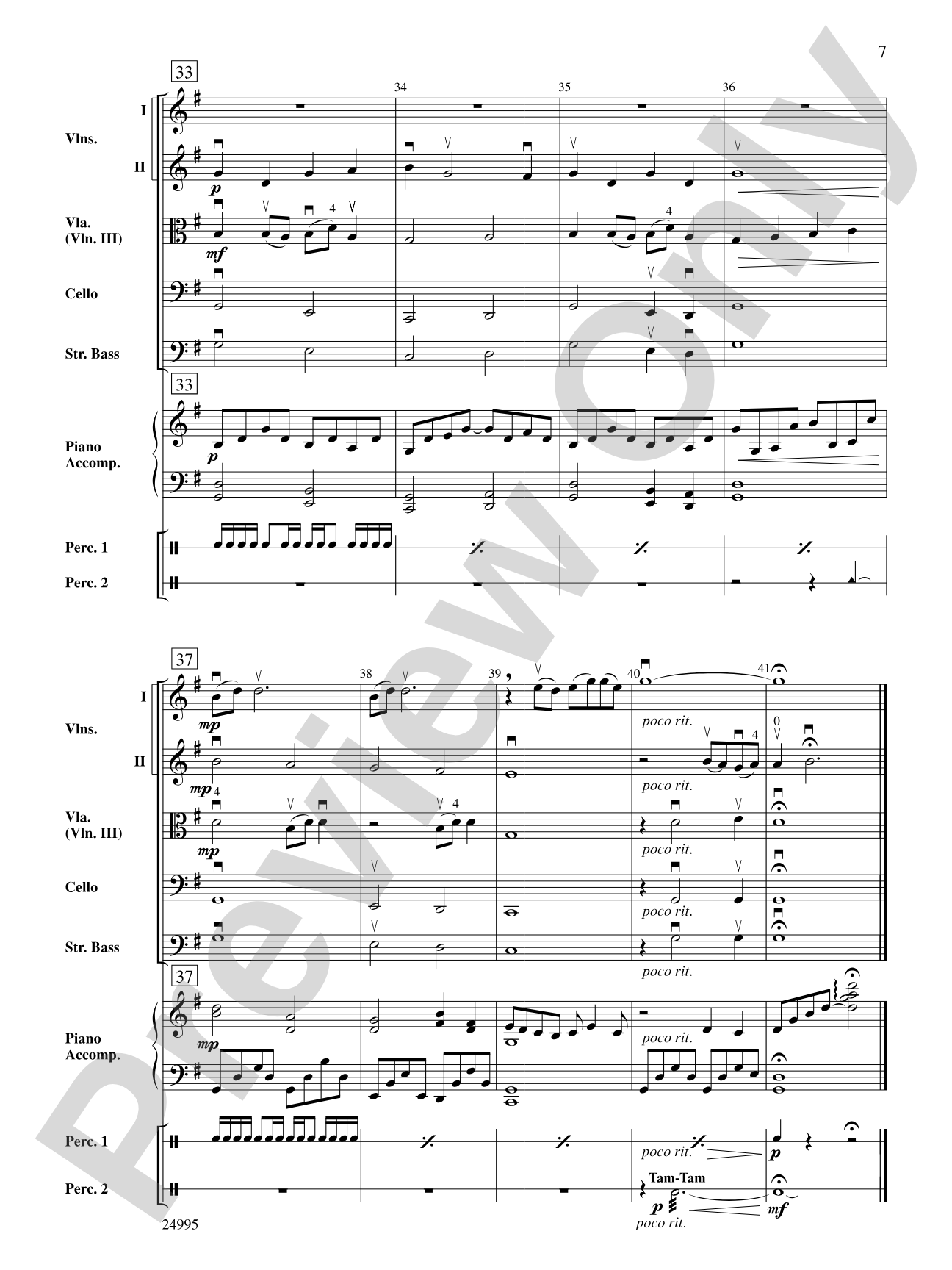


Jasmine Flower: String Orchestra Conductor Score & Parts
By Douglas E. Wagner
Grade: 1.5
Item: 00-PK-0000985

$46.00
Pickup currently not available
Buy Extra Parts (Digital PDF Download)
| Product | Price | Quantity |
|---|---|---|
| Jasmine Flower: Score | $8.00 | |
| Jasmine Flower: 1st Violin | $5.99 | |
| Jasmine Flower: 2nd Violin | $5.99 | |
| Jasmine Flower: 3rd Violin (Viola [TC]) | $5.99 | |
| Jasmine Flower: Viola | $5.99 | |
| Jasmine Flower: Cello | $5.99 | |
| Jasmine Flower: String Bass | $5.99 | |
| Jasmine Flower: Piano Accompaniment | $5.99 | |
| Jasmine Flower: 1st Percussion | $5.99 | |
| Jasmine Flower: 2nd Percussion | $5.99 |
Parts Added to Cart!
Description
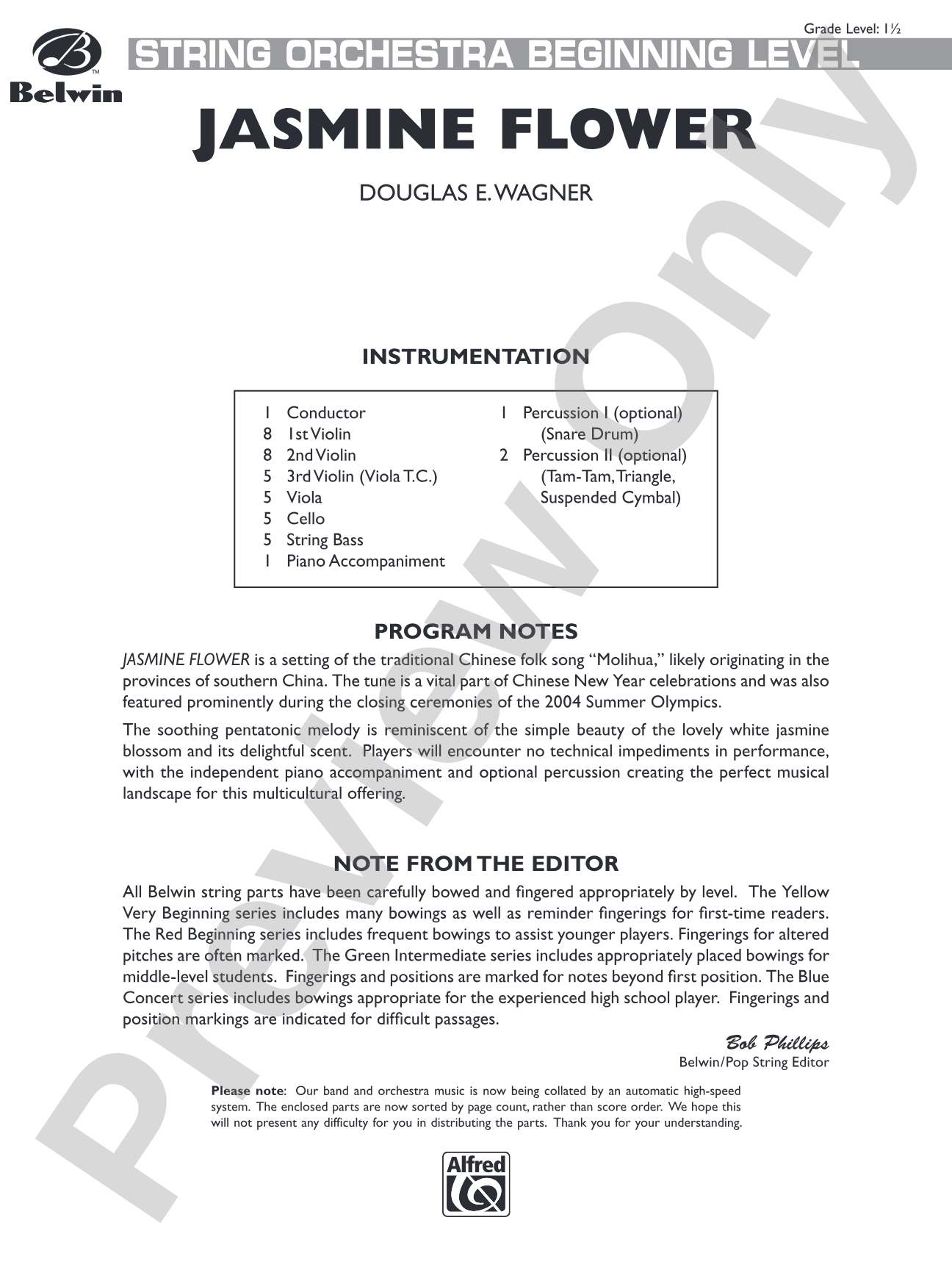
"Jasmine Flower" is a setting of the traditional Chinese folk song "Molihua," likely originating in the southern China provinces. The tune is a vital part of Chinese New Year celebrations and was also featured prominently during the closing ceremonies of the 2004 Summer Olympics. The soothing pentatonic melody is reminiscent of the simple beauty of the lovely white jasmine blossom and its delightful scent. Players will encounter no technical impediments in performance, with the independent piano accompaniment and optional percussion creating the perfect musical landscape for this multicultural offering.


Don't just read it, hear it, play along with it, and watch your students grow with it. In MakeMusic Cloud, Jasmine Flower: String Orchestra Conductor Score & Parts comes alive with professional accompaniment, adjustable tempo, and built-in practice tools that turn solo practice into real progress.
Open in the Player
Jump straight in and assign it today.
Start Your Free Trial
Open this title and explore the full library in minutes.
Sample Audio
1
Audio File
--:--
0:00
0:00
Sample Video
No sample videos found.
Additional Details
Series:
Belwin Beginning String Orchestra
Publisher:
Alfred Music
Page Count:
84
SKU:
00-PK-0000985
More about this title
About the Composer: Douglas E. Wagner

Douglas E. Wagner studied music at Butler University, where he earned both undergraduate and graduate degrees. After thirty years leading music programs in high schools, he transitioned to full-time composition and has since published over 3,500 works across virtually every musical ensemble type: orchestras, choirs, concert bands, handbells, organ, piano, and voice.
Wagner's output has reached an estimated seventeen million copies in circulation worldwide, with performances documented across concert halls, television, and radio in the United States and internationally. Based in Indianapolis, Indiana, he continues to compose with focus and prolific energy.
Why we love this
Wagner's setting captures the meditative quality of the "Molihua" melody while keeping the technical demands accessible for beginning ensembles. The independent piano accompaniment and optional percussion give students rich harmonic and textural context without requiring advanced string technique, making this an ideal entry point for introducing world music repertoire. Programming this piece signals genuine cultural engagement rather than superficial multiculturalism.
What to expect
Serene and gently contemplative. The pentatonic melody unfolds with the quiet elegance of jasmine flowers opening at dusk, supported by warm harmonic colors in the piano. There is no virtuosity here, only clarity and restful beauty.
Who it's for
Young string orchestras in their first or second year of reading and performing. The Grade 1.5 level places it well within reach of ensembles ready to move beyond unison playing but not yet tackling complex rhythms or extended positions. This is ideal repertoire for musicians developing confidence in their section independence.
How to get the most out of it
- Shape the pentatonic melody with gentle phrasing rather than choppy articulation; the tune's grace depends on smooth line continuity even at beginner level.
- Balance the string voices against the piano accompaniment by allowing the keyboard to support rather than dominate; the piano's role is to create atmosphere.
- If adding percussion, keep the parts delicate and sparse; intricate or busy rhythms undermine the soothing character the piece seeks.
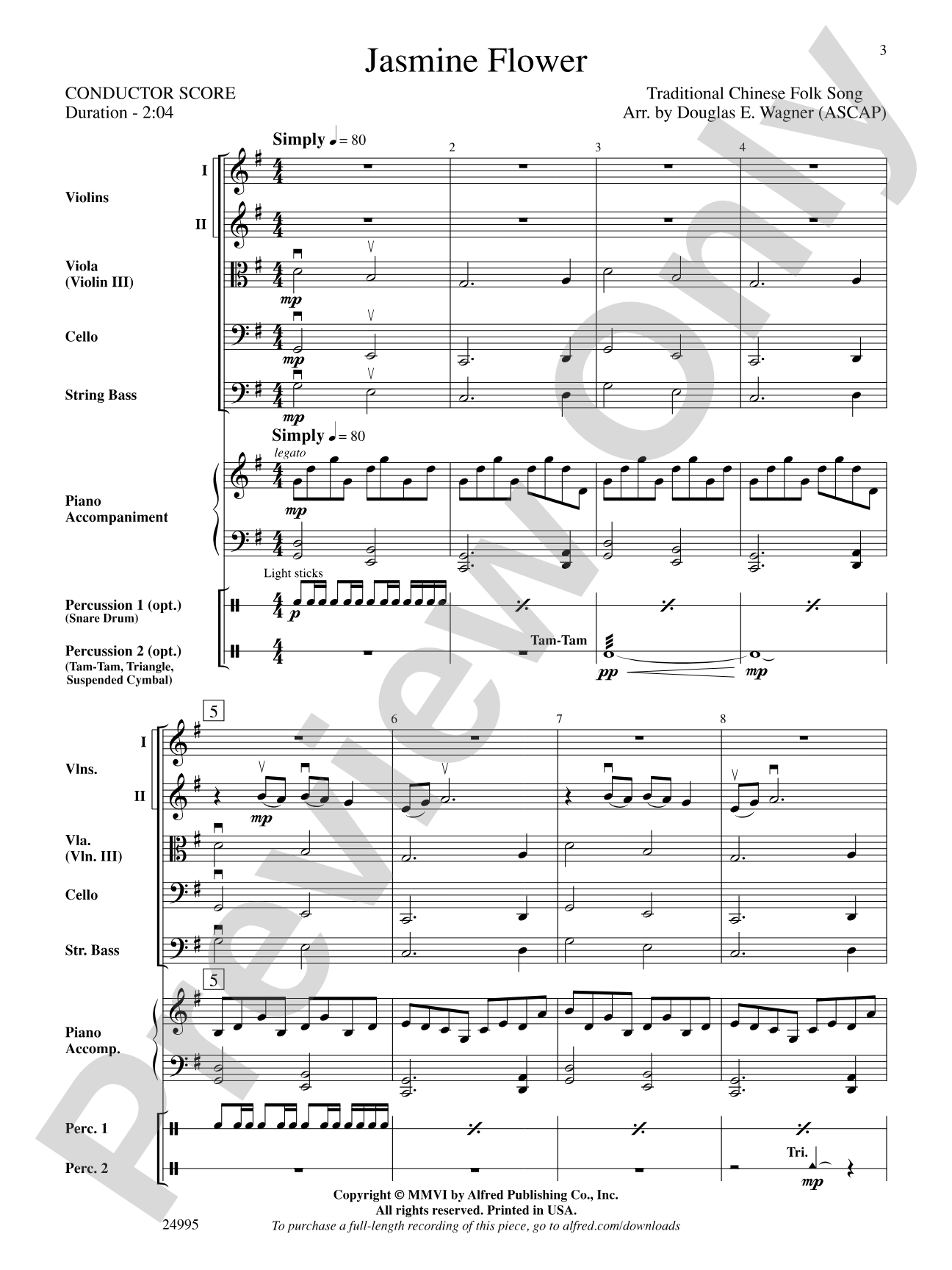
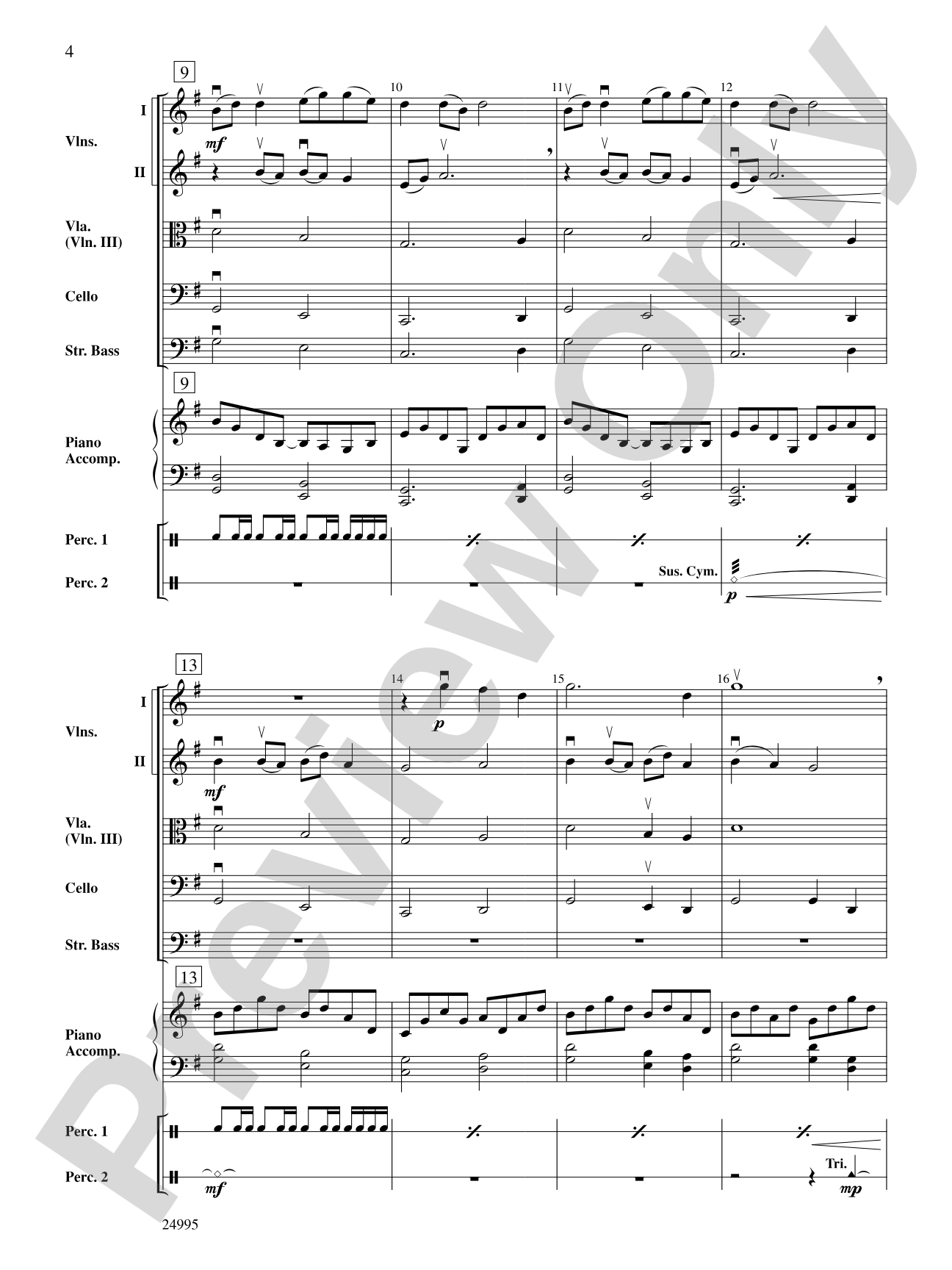
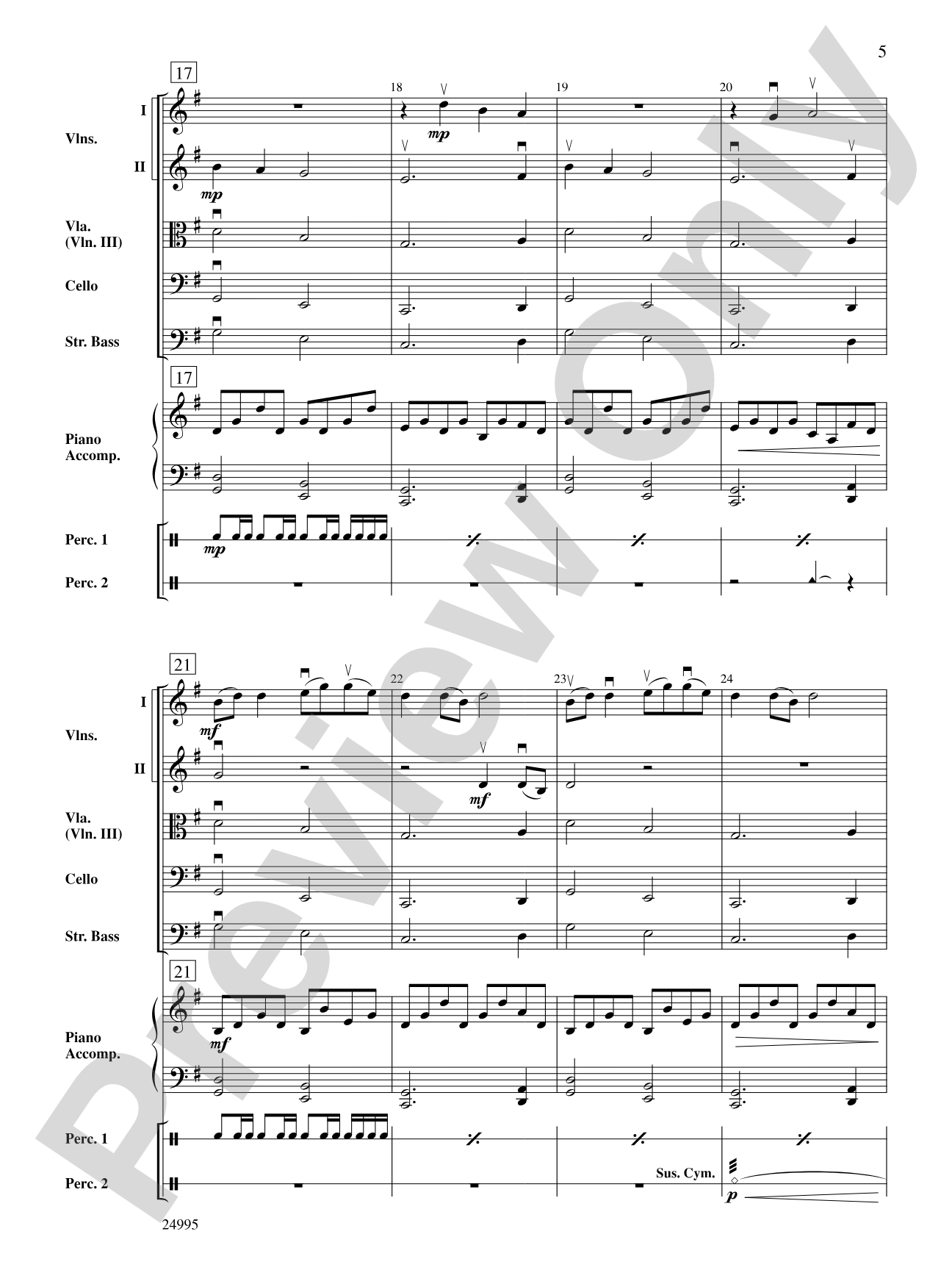
- Rehearse the conductor score and parts together from the start so your ensemble understands how their individual lines combine into the larger harmonic picture.
How to use it
Pair this with other cultural traditions during a world music concert or a spring/New Year celebration. It can also serve as a bridge between unison or easy two-part repertoire and more textured writing, introducing students to the sound of independent voices working as one without overwhelming demands. The relatively short duration makes it suitable as a prelude or interlude in a longer program.
Skills your students will build
- Reading and maintaining independent string parts within a harmonic texture
- Balancing dynamic control in pentatonic melodies without vibrato-dependent tone
- Listening to and blending with piano accompaniment and optional percussion
- Understanding cultural context and appropriate phrasing for non-Western repertoire
- Sustaining soothing, expressive playing at softer dynamic levels