
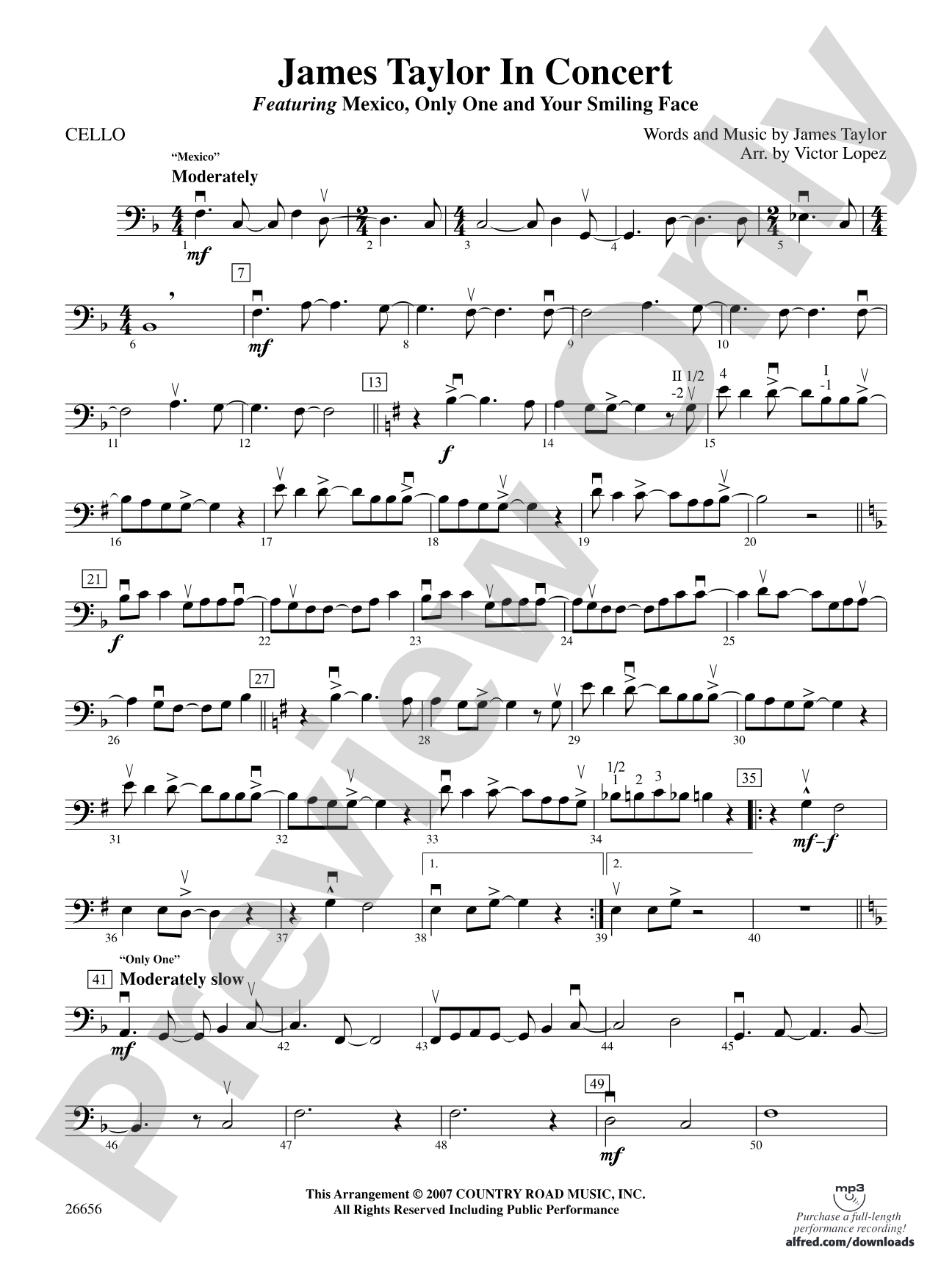

James Taylor in Concert: Cello
Featuring: Mexico / Only One / Your Smiling Face
By James Taylor / arr. Victor López
Grade: 3
Item: 00-PC-0015673_VC1
$3.00
Pickup currently not available
Description
Harmonically colorful and reminiscent of an unforgettable era, this smooth, mellow piece showcases the best of James Taylor's unforgettable hits. Lush Grammy-award winning tunes for string orchestra that can only be enhanced with the addition of any combination of winds. A great exercise in key changes! This title is available in MakeMusic Cloud.


Don't just read it, hear it, play along with it, and watch your students grow with it. In MakeMusic Cloud, James Taylor in Concert: Cello comes alive with professional accompaniment, adjustable tempo, and built-in practice tools that turn solo practice into real progress.
Open in the Player
Jump straight in and assign it today.
Start Your Free Trial
Open this title and explore the full library in minutes.
Sample Audio
1
Audio File
--:--
0:00
0:00
Sample Video
No sample videos found.
Additional Details
Series:
Pop Intermediate String/Full Orchestra
Publisher:
Alfred Music
Page Count:
238
SKU:
00-PC-0015673_VC1
More about this title
About the Composer: James Taylor
James Taylor emerged as one of the defining singer-songwriters of the 1970s, bringing introspective lyrics and sophisticated acoustic arrangements to mainstream audiences. His influence on popular music spans decades, with chart-topping albums and Grammy recognition cementing his place in American music history. For music educators, Taylor's catalogue offers accessible yet harmonically rich material that appeals across age groups and skill levels.
Why we love this
Victor Lopez's arrangement captures the warmth and harmonic sophistication of Taylor's best-known work while making it genuinely playable for intermediate orchestras. The inclusion of optional winds means you're not locked into one instrumentation; build the sound your ensemble needs. Key modulations keep musicians engaged and prevent this from feeling like background music, even though the mellow character makes programming it feel natural alongside more challenging contemporary work.
What to expect
Warm, reflective, and effortlessly sophisticated. The orchestration suggests a late-night listening session translated into ensemble sound; lush without becoming saccharine, accessible without sacrificing musical substance. Taylor's signature melodic sensibility pairs with harmonies that have earned multiple Grammy recognition, creating a piece that feels both intimate and undeniably polished.
Who it's for
Orchestra directors programming family concerts, pops series, or school-community collaborations will find a sophisticated pop arrangement that audiences recognize and musicians respect. Intermediate-level players benefit from the harmonic vocabulary and modulation work without confronting extreme technical demands. This works equally well as a full orchestral statement or as a framework for adding winds as your ensemble grows.
How to get the most out of it
- Balance the strings as your foundation; their legit voice carries the melody and harmonic color. Winds should blend and enhance, not dominate.
- Approach the key changes deliberately rather than rushing them. Give the orchestra a moment to reset before each new center, and mark those transitions in rehearsal so they land smoothly.
- Let the middle voices breathe. Second violins and violas often carry inner lines that define Taylor's harmonic character; make sure they're heard alongside the melody.
- Use dynamics expressively but conservatively. This music lives in the mellow end of the spectrum; over-exaggeration flattens the mellow quality that makes it distinctive.
How to use it
This works beautifully as a bridge between classical and contemporary repertoire, positioning it midway through a concert where you've warmed up the audience but before heavier contemporary work. Pair it with other pop-era standards or use it as the capstone of a light concert program. The 238-page score suggests substantial material; allocate it early in your rehearsal schedule so musicians have time to absorb the key relationships and nuance.
Skills your students will build
- Navigating multiple key changes and shifts in harmonic center
- Balancing ensemble sound across strings with optional wind additions
- Maintaining legit vibrato and tone quality in mellow, sustained passages
- Reading and executing contemporary pop-rock idioms within an orchestral texture
- Listening across sections to support inner-voice countermelodies