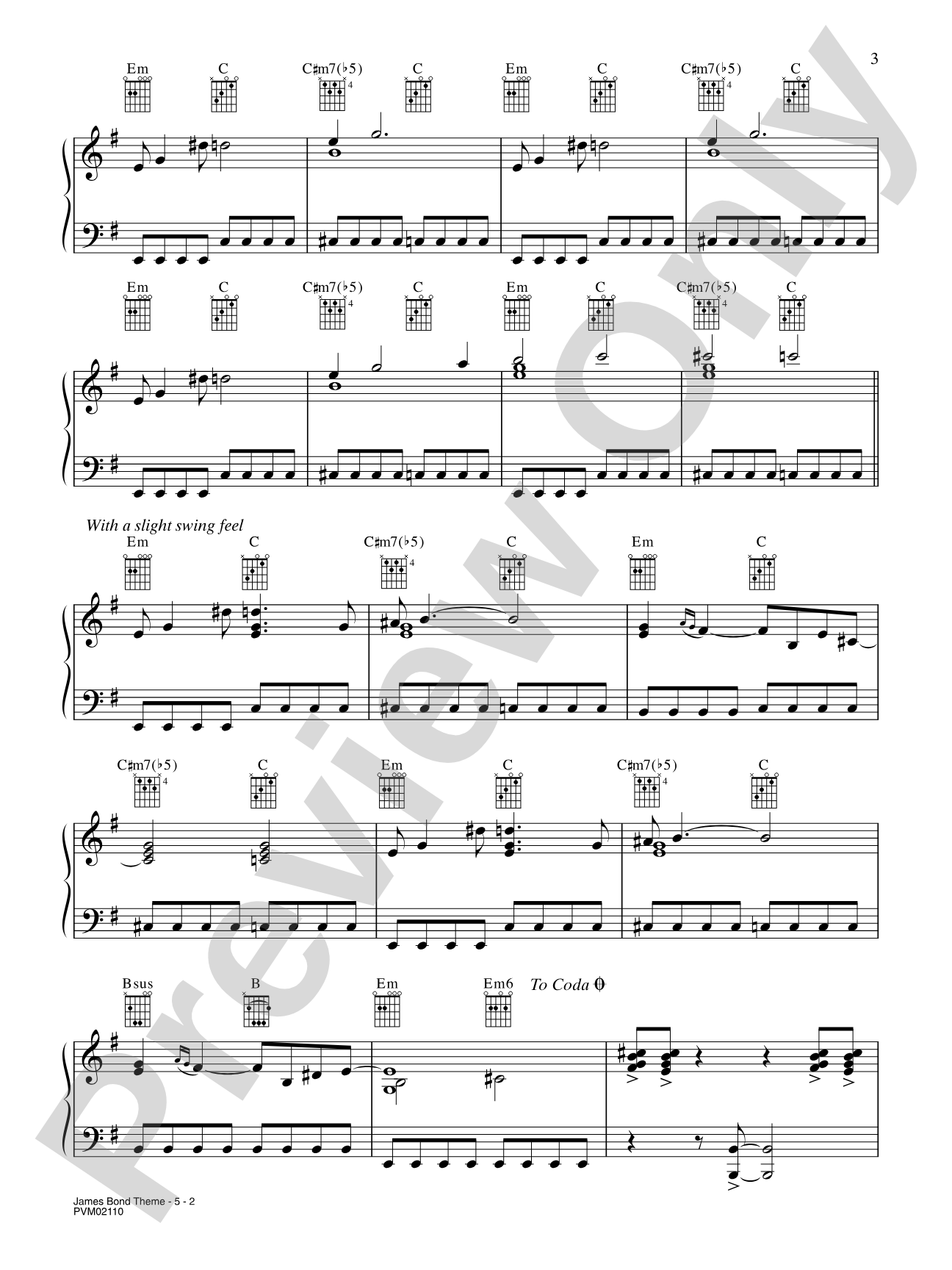
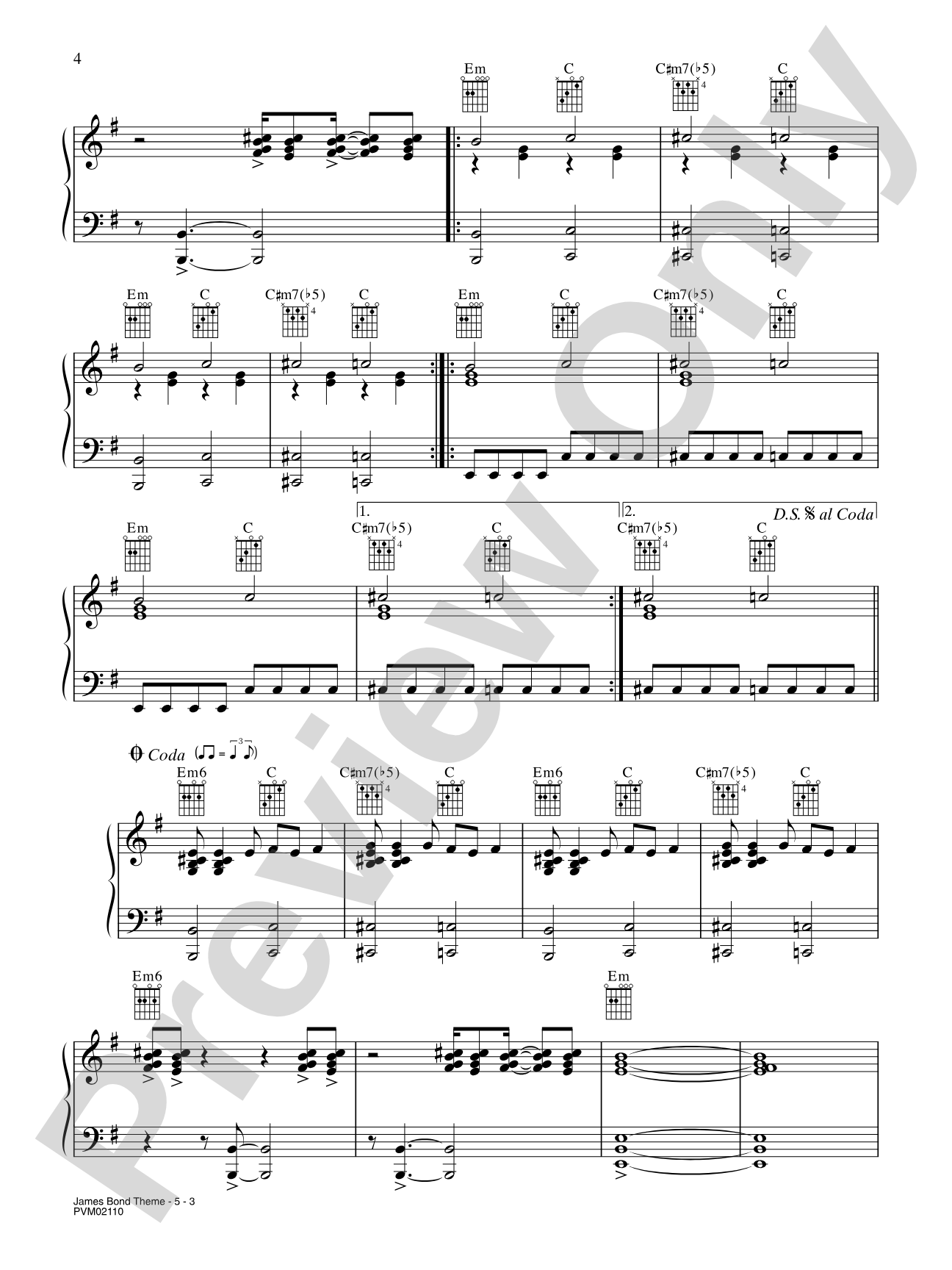
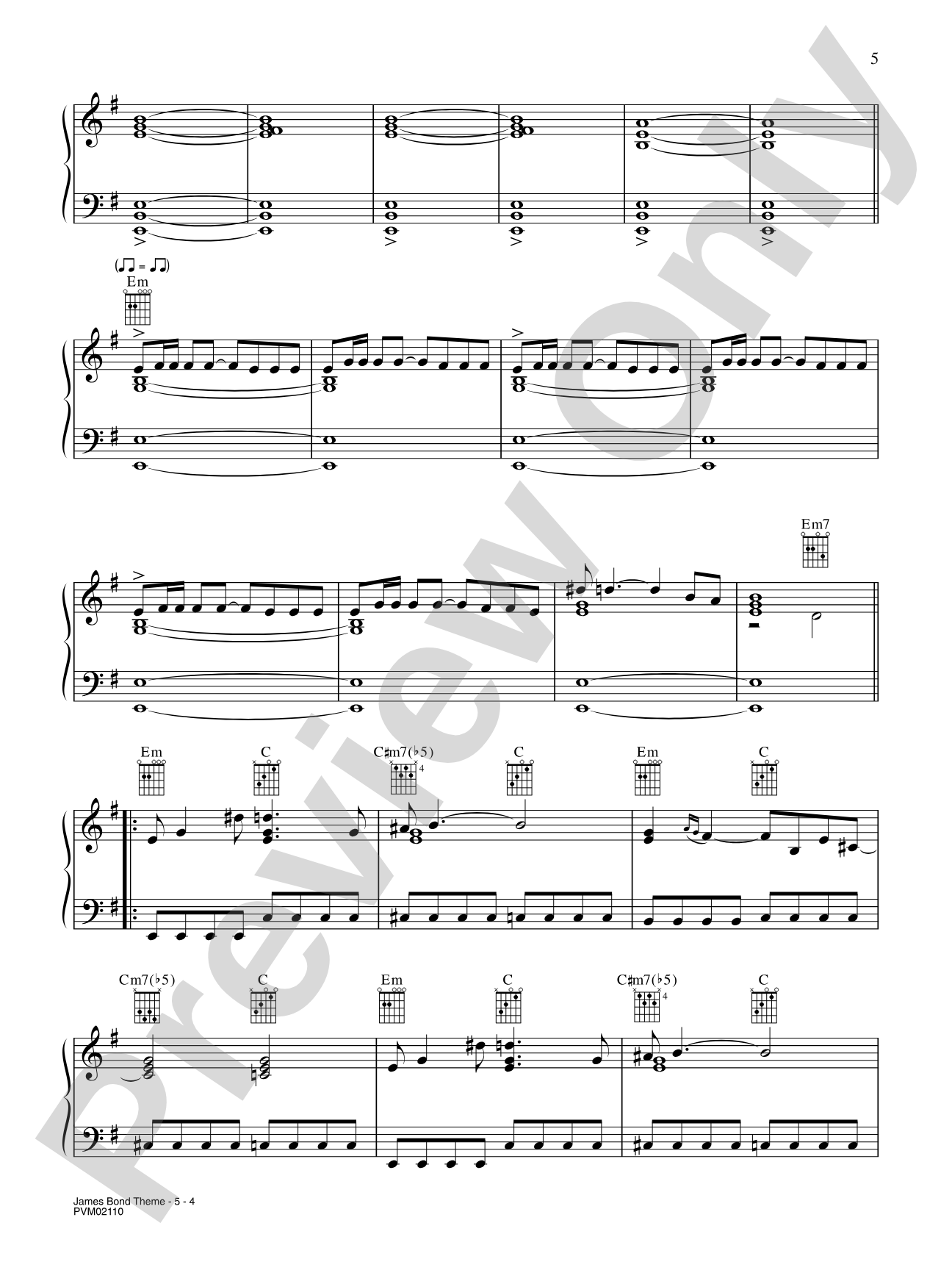
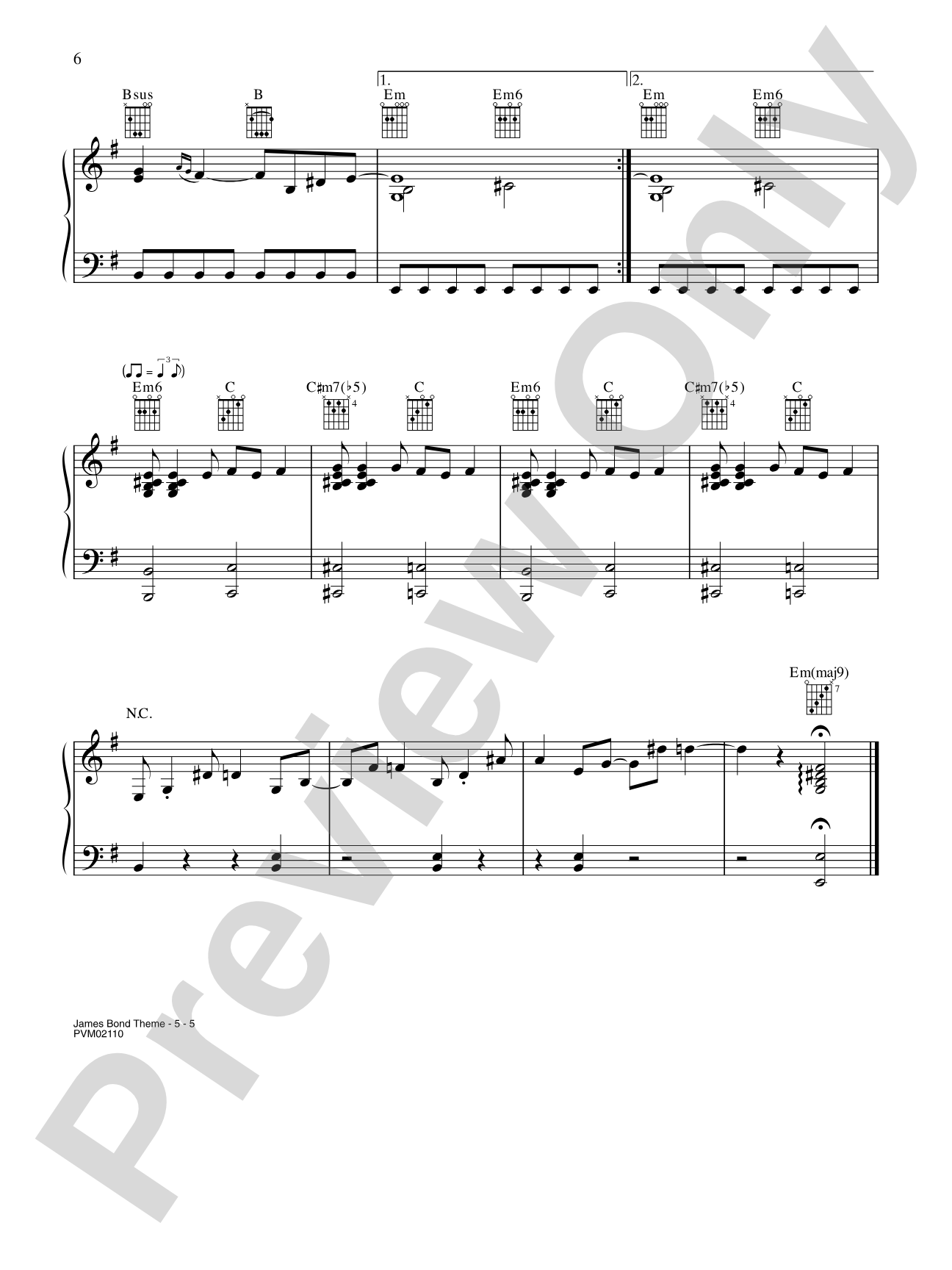
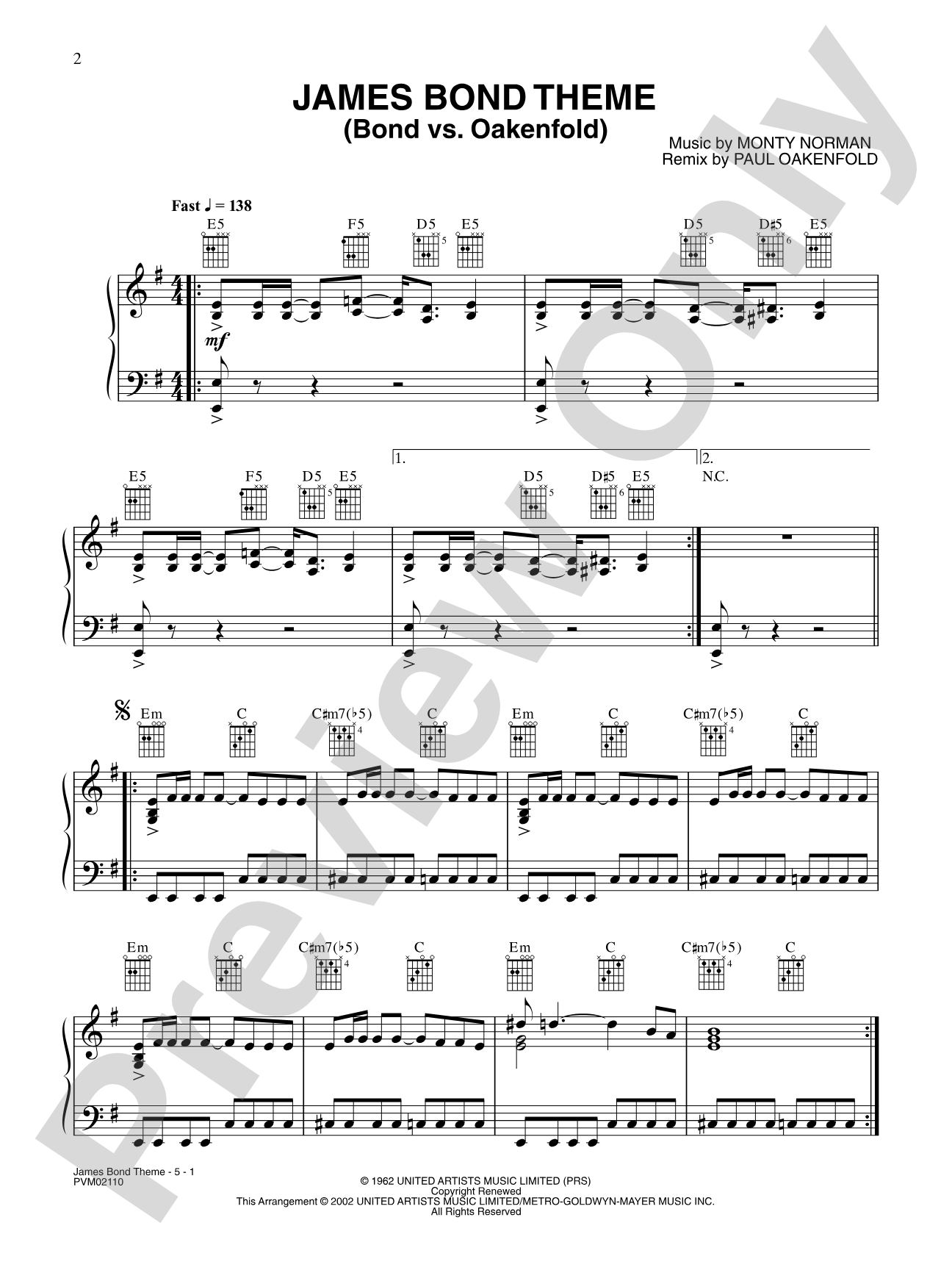
James Bond Theme (Bond vs. Oakenfold) (from Die Another Day) Sheet Music Preview

James Bond Theme (Bond vs. Oakenfold) (from Die Another Day): Piano

Music by Monty Norman

Item: 00-XIP-000152

Digital Download
$3.99

One moment…

Description

James Bond Theme (Bond vs. Oakenfold) (from Die Another Day): Piano isn't in MakeMusic Cloud just yet...but it could be. Let us know you'd like to see it, and you'll help shape what comes next. In the meantime, start a free trial and dive into thousands of interactive titles your students can play along with today.

Sample Audio
No sample audio found.
Sample Video
Additional Details
Publisher: Alfred Music
SKU: 00-XIP-000152

More about this title

About the Composer: Monty Norman

Monty Norman composed the iconic James Bond theme in 1962, establishing the musical signature that has defined the franchise for over six decades. His work as a film composer spanned from the 1950s through the early 2000s, with the Bond theme remaining his most recognized and enduring creation. Norman's ability to craft memorable, immediately recognizable melodies made him a central figure in film music composition during the golden age of cinema.

Why we love this

This arrangement captures the cultural weight of one of the most recognizable film themes ever written while offering pianists and vocalist-pianist collaborators a chance to explore how electronic production (the Oakenfold remix) can reimagine classical composition. The piece carries instant appeal for any program seeking contemporary relevance without sacrificing musical substance, and it works equally well as a recital opener or as part of a film music or popular music unit.

What to expect

Sleek, modern, and undeniably cool. The piece channels the spy-film sophistication of its source while the Oakenfold remix infuses it with electronic sharpness and a driving energy that feels current. Playing it invokes the suave confidence of its cinematic context.

Who it's for

Pianists exploring film music and popular song arrangements will find this straightforward and engaging to learn. Vocalist-pianist teams looking for recognizable material with contemporary credibility can develop interpretive flexibility by comparing the original orchestral conception with the modern electronic treatment.

How to get the most out of it

  • Balance the iconic melodic line so it cuts through clearly, whether you're playing solo or accompanying vocals. The theme's recognition depends on its profile in the texture.
  • Pay attention to the rhythmic pocket created by the accompaniment pattern. Even with a synth-influenced source, anchor it with a steady underlying pulse to ground the arrangement.
  • If performing with a vocalist, establish a strong harmonic foundation in the left hand while the voice takes the melody. This is fundamentally a partnership between accompaniment and lyric.

How to use it

Include this in a film music showcase or as part of a popular music recital that bridges classical and contemporary styles. It pairs well with other recognizable soundtrack material and works as a high-energy closer or a statement piece early in a program.

Skills your students will build

  • Balancing melody and accompaniment texture in arrangements
  • Interpreting hybrid classical-electronic idioms
  • Managing rhythmic precision in syncopated accompaniment patterns
  • Collaborating vocally and instrumentally in shared arrangements

You May Also Like