James Bond Medley: String Bass Sheet Music Preview

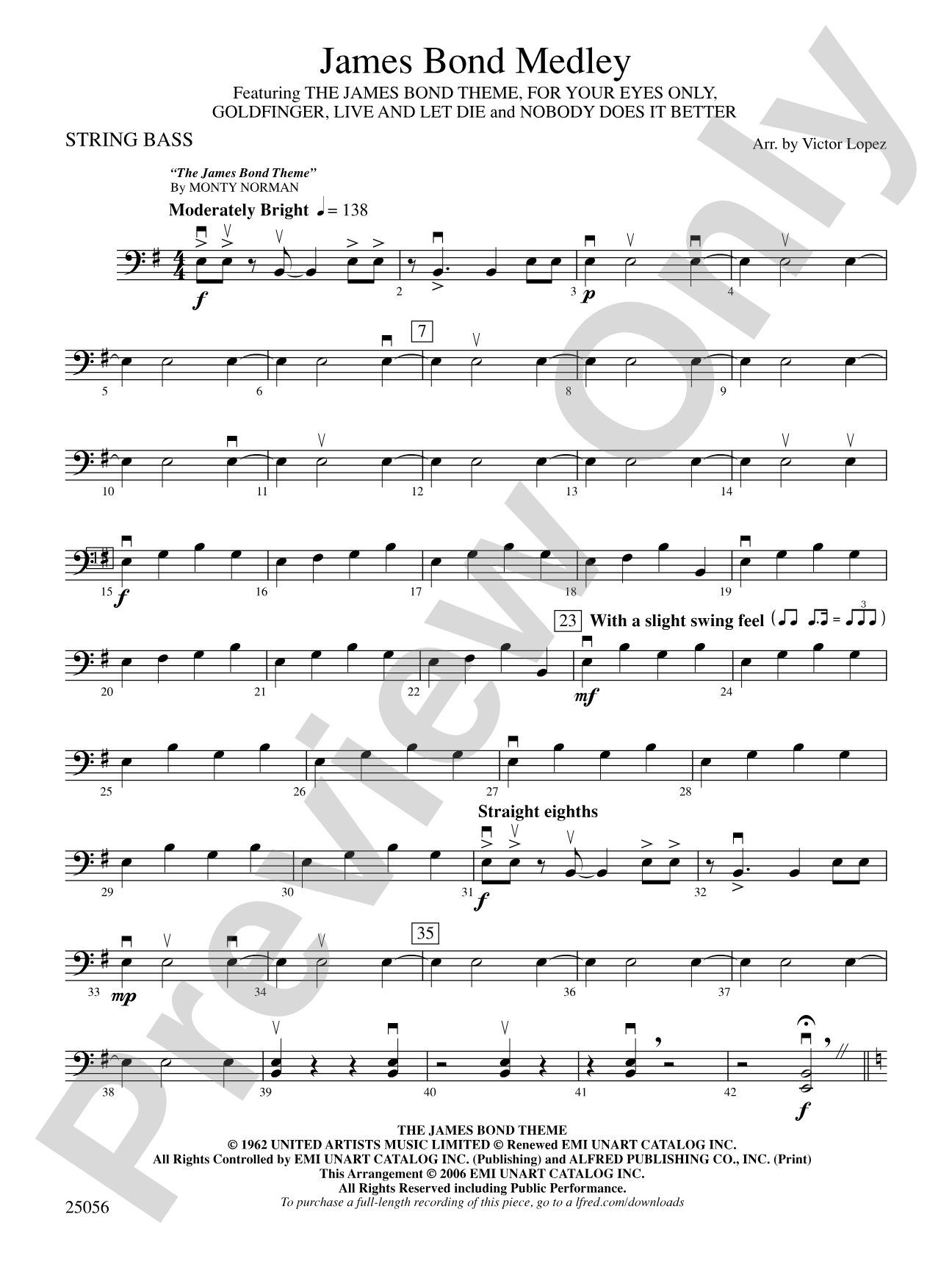
James Bond Medley: String Bass

Featuring: The James Bond Theme / For Your Eyes Only / Goldfinger / Live and Let Die / Nobody Does It Better

By Monty Norman / arr. Victor López

Grade: 4

Item: 00-PC-0015659_SB

Digital Download
$3.00
Description
In his James Bond Medley arrangement, Victor López shows that the 007 agent is alive and well. The medley features five classic hits, the "James Bond Theme," "For Your Eyes Only," "Goldfinger," "Live and Let Die," and "No Body Does It Better." Although this arrangement is written for intermediate full orchestra, it has been scored in such a way that it will also sound as effective with strings only. Careful considerations have been given to tonality and rhythmical issues as related to the strings. Bowings have also been included to facilitate playability. For more additional flexibility, solo parts have been cued throughout. With solid scoring, adequate ranges and classic selections, this James Bond Medley is a sure winner! (9:23)

Don't just read it, hear it, play along with it, and watch your students grow with it. In MakeMusic Cloud, James Bond Medley: String Bass comes alive with professional accompaniment, adjustable tempo, and built-in practice tools that turn solo practice into real progress.

Sample Audio
0:00
0:00
Sample Video
Additional Details
Series: Pop Concert Full Orchestra
Publisher: Alfred Music
Page Count: 236
SKU: 00-PC-0015659_SB

More about this title

About the Composer: Monty Norman

Monty Norman composed the iconic James Bond theme in 1962, creating one of the most recognizable film scores in cinema history. His work on the Bond franchise established the sonic identity that has defined the series for decades, blending orchestral sophistication with popular appeal in ways that continue to influence film music pedagogy and arrangement practices.

Why we love this

Victor López's orchestration captures the cinematic sweep of these five beloved Bond themes while remaining genuinely playable at the Grade 4 level. The flexibility to perform with full orchestra or strings alone, combined with thoughtful cueing and detailed bowings, means you can program this for your exact instrumentation and still deliver a polished, exciting concert.

What to expect

Suave, propulsive, and cinematic. The James Bond sound carries inherent drama and sophistication, yet López's arrangement is welcoming enough that young orchestras can inhabit the style without sounding mannered or overstretched. At just over nine minutes, it delivers the glamour and momentum of a complete concert experience.

Who it's for

Orchestra directors seeking substantial repertoire that engages intermediate players and audiences alike. This medley works for concert programs where you want to celebrate film music without sacrificing musicality or technical integrity.

How to get the most out of it

  • Balance the melody between sections during the theme statements; this medley succeeds when the main ideas sing clearly above the accompaniment, much as they do on screen.
  • Attend to the rhythmical considerations López built into the string writing: these details prevent the arrangement from sounding thin and anchor the ensemble's cohesion.
  • Lean into the stylistic contrasts between the five themes; each one carries different character and tempo, so help your orchestra feel the shape-shifting rather than rush through transitions.

How to use it

Open a pops concert or feature this as your centerpiece when you want to reach audiences who know these melodies from the films. The medley format makes it an ideal standalone selection for a spring concert, gala, or community performance where film music resonates with families and newcomers to orchestral concerts.

Skills your students will build

  • Stylistic interpretation of popular melodic material in an orchestral context
  • Dynamic balance between melody and accompaniment across different instrumental families
  • Reading and executing detailed bowings and articulation markings
  • Ensemble coordination across multiple theme statements and tempo/character changes
  • Part independence and awareness (through effective use of cued parts)

You May Also Like