

Jamaican Folk Song Suite: SATB Choral Octavo
1. Train a Blow 2. Cookie, Cookie 3. Ha One Cousin
Traditional Jamaican Folk Songs / arr. Marjorie Whylie
Item: 00-PO-0006860
$2.05
Minimum order quantity: 20 copies
Pickup currently not available
Related Items
Jamaican Folk Song Suite: SATB Choral Octavo |
$2.05
|
View |
Description
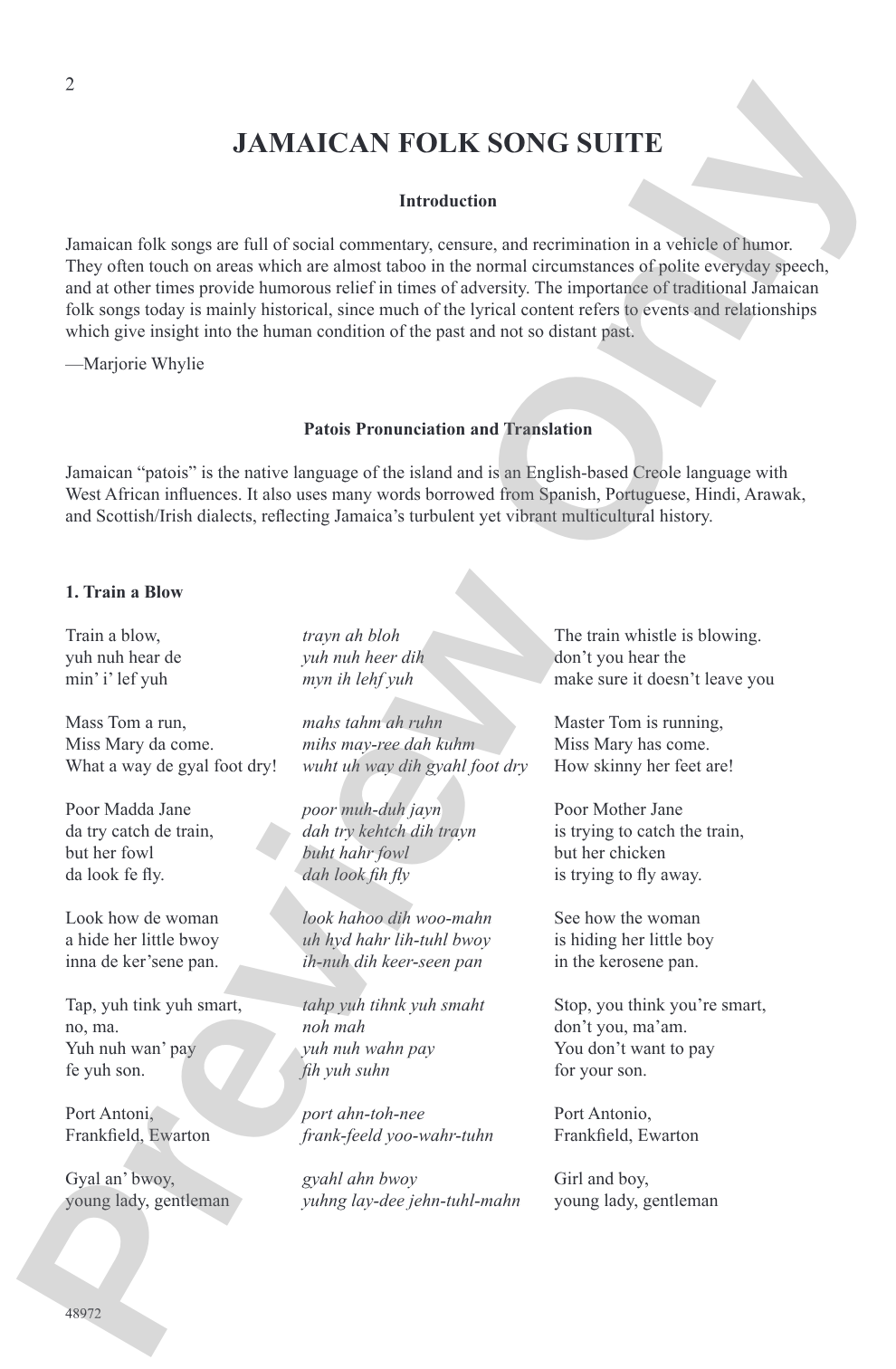
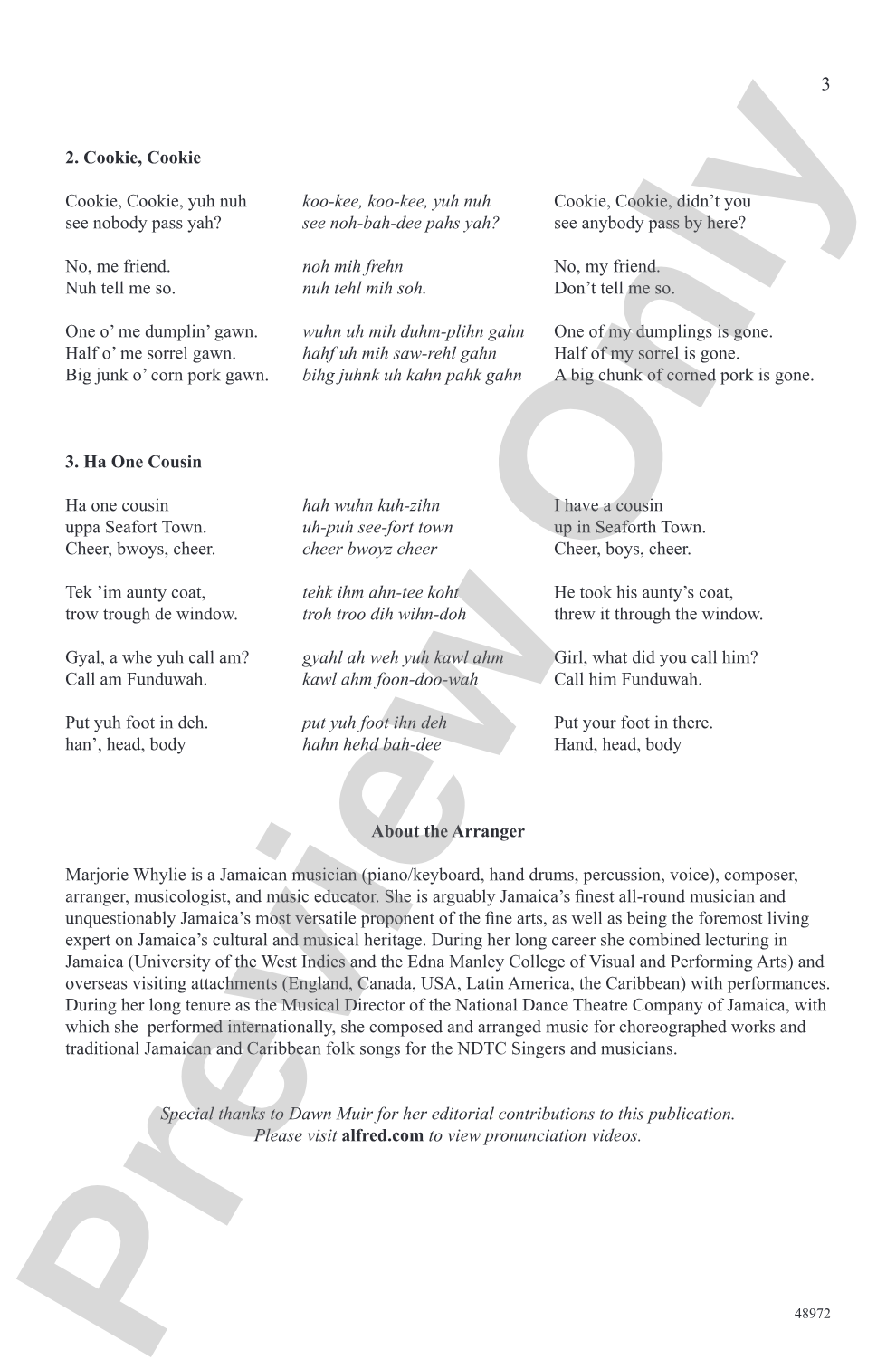
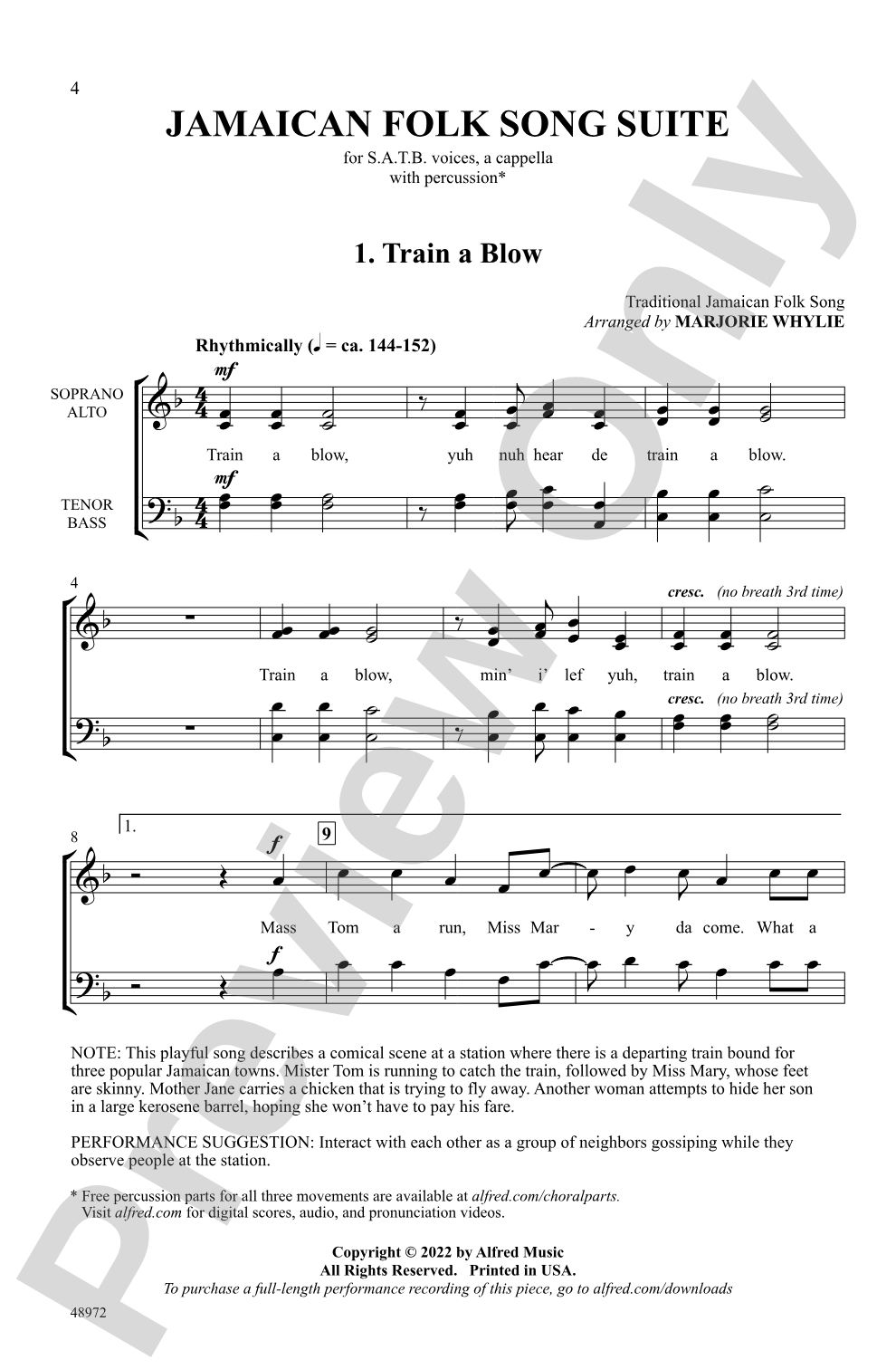
In the words of Jamaican musicologist Marjorie Whylie, "Jamaican folk songs are full of social commentary, censure, and recrimination in a vehicle of humor." This publication includes three charming arrangements for a cappella singers and percussion. One describes a comical scene at a train station; a second playfully questions a neighbor about some missing food; and the third (complete with simple instructions to recreate a ringplay game) cheers a naughty cousin who threw his aunt's coat out the window. A printed guide and online video provide vetted learning tools for the Patois language. Unique, authentic, fun!


Jamaican Folk Song Suite: SATB Choral Octavo isn't in MakeMusic Cloud just yet...but it could be. Let us know you'd like to see it, and you'll help shape what comes next. In the meantime, start a free trial and dive into thousands of interactive titles your students can play along with today.
Request This Title
Tell us you want it.
Start Your Free Trial
Explore everything that's ready to play right now.
Sample Audio
1
1 Train a Blow
--:--
2
2 Cookie, Cookie
--:--
3
3 Ha One Cousin
--:--
1 Train a Blow
0:00
0:00
Sample Video
1 / 2
Additional Details
Series:
Alfred Choral Designs
Publisher:
Alfred Music
Page Count:
12
SKU:
00-PO-0006860
More about this title
About the Arranger: Marjorie Whylie

Marjorie Whylie is a Jamaican musicologist and composer whose scholarship centers on the cultural and linguistic richness of Caribbean folk traditions. Her work bridges academic research and practical music education, bringing authentic Jamaican music and Patois language into choral settings that honor both historical context and contemporary performance.
Whylie's arrangements prioritize accessibility without sacrificing cultural integrity. By pairing musical scores with learning resources for language and cultural context, she creates pathways for singers outside Jamaica to engage meaningfully with these traditions.
Why we love this
Whylie's ear for humor and narrative detail shines through every arrangement. These aren't precious museum pieces; they're stories with rhythm and warmth that your singers will want to tell. The inclusion of a printed language guide and online video transforms what could be surface-level exoticism into genuine cultural learning.
What to expect
Energetic, conversational, and shot through with joy. These arrangements capture the social function of folk song as entertainment and community commentary. Singers feel the humanity in the storytelling, from the bustle of a busy train station to the mischief of a family scene that hasn't changed across centuries.
Who it's for
SATB choirs at the high school level and above who are ready to expand beyond Western European traditions and engage with world music authentically. Directors seeking repertoire with genuine cultural grounding and educational depth will find these arrangements both rewarding and straightforward to prepare.
How to get the most out of it
- Study the Patois pronunciation guide before rehearsal so singers understand the text they're singing. Meaning informs musicality.
- Let the comical situations breathe. The train station piece and the missing food song depend on choral precision and character work to land their humor.
- Work the ringplay game instructions into your rehearsal if performance space allows. Embodied knowledge of the tradition deepens singers' connection to the music.
- Balance the a cappella texture carefully across all four parts. Without instrumental support, intonation and blend demand attention, especially in the sections with divisi.
How to use it
Program this suite as a window into Caribbean musical life, especially in concerts exploring world cultures or celebrating community diversity. The three movements offer flexibility; you might program all three together for maximum impact, or space them across a season to punctuate programs with lighter, engaging material that audiences will remember.
Skills your students will build
- Singing in Jamaican Patois with clear diction and authentic rhythmic phrasing
- A cappella intonation and blend in four-part harmony
- Narrative interpretation and character work in choral music
- Understanding folk music as social and historical document
- Rhythmic precision and ensemble awareness in percussion-accompanied sections