Ja-Da: Drum Set Sheet Music Preview

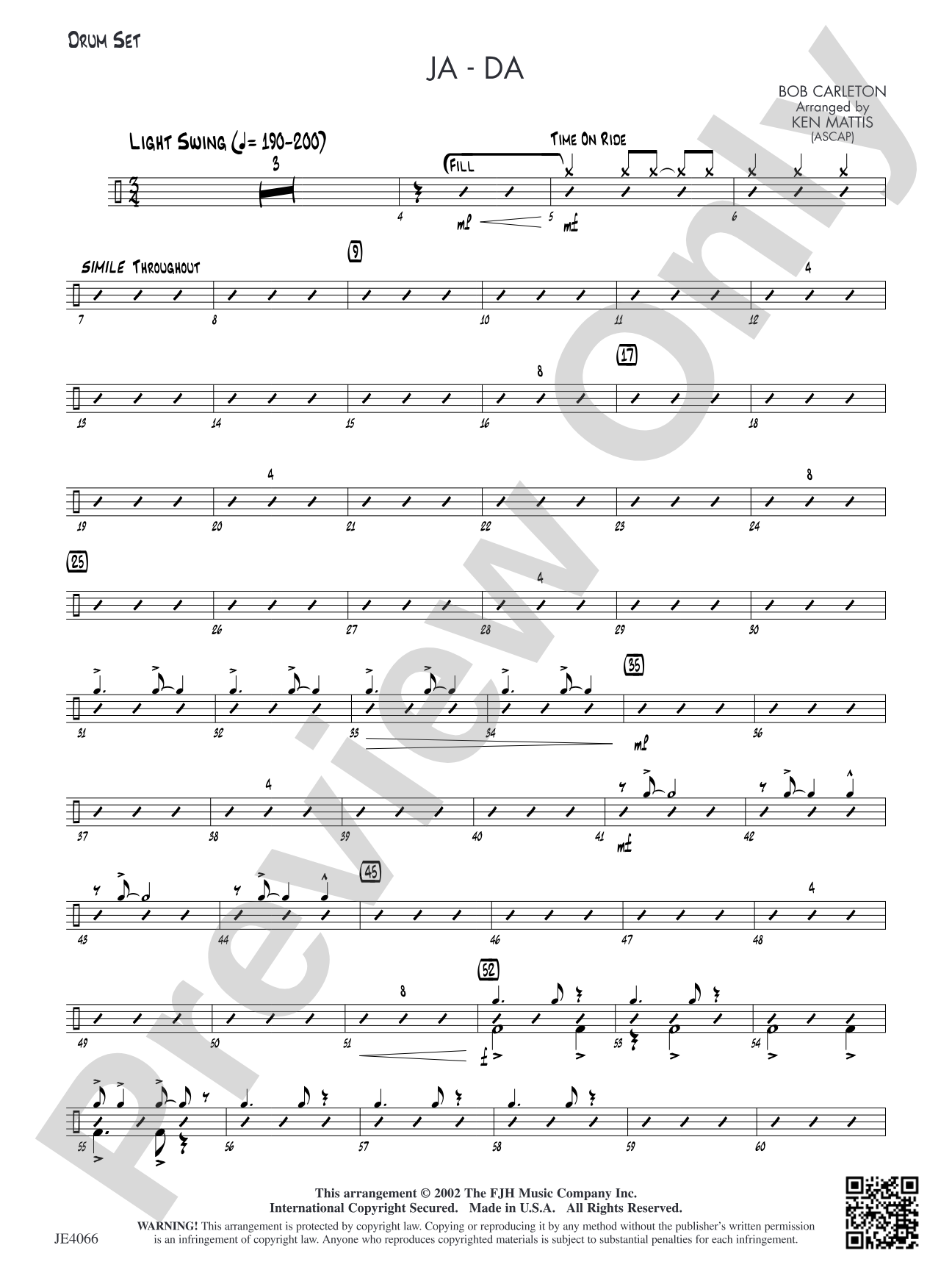
Ja-Da: Drum Set

By Bob Carleton / arr. Ken Mattis

Grade: 4

Item: 98-PC-DJE4066_DS

Digital Download
$7.00
Description
Hot-hot-hot may be the best way to describe Ken's new arrangement of this old jazz classic. Written in a driving three, the piece starts off with bass alone and gradually adds the rest of the band. A great groove with a wonderful opportunity for your tenor to shine.

Ja-Da: Drum Set isn't in MakeMusic Cloud just yet...but it could be. Let us know you'd like to see it, and you'll help shape what comes next. In the meantime, start a free trial and dive into thousands of interactive titles your students can play along with today.

Sample Audio
0:00
0:00
Sample Video
Additional Details
Series: FJH Advanced Jazz Ensemble
Publisher: The FJH Music Company, Inc.
SKU: 98-PC-DJE4066_DS

More about this title

About the Composer: Bob Carleton

Bob Carleton composed "Ja-Da" in 1918, and the piece became a jazz standard that has endured for over a century. Originally written during the early years of jazz, it captures the playful spirit and rhythmic vitality of that era, making it a foundational work in the jazz repertoire that musicians continue to discover and reimagine.

Why we love this

Ken Mattis's arrangement brings fresh energy to a timeless standard by framing it in a driving three-feel that makes the melody sound both familiar and unexpectedly modern. The orchestration strategy of building gradually from bass solo creates natural tension and keeps the ensemble engaged from the downbeat, while the tenor feature gives your lead soloist a moment that feels earned rather than inserted.

What to expect

Ja-Da swings with infectious joy and effortless cool. The piece has a laid-back groove that never loses momentum, building from intimate bass conversation into a full-band celebration that feels both contemporary and rooted in jazz tradition.

Who it's for

Jazz ensemble directors looking for a Grade 4 standard that offers sophistication without overwhelming younger or developing players. Ensembles with a confident tenor player will benefit most, as this arrangement makes the soloist central to the piece's appeal.

How to get the most out of it

  • Establish a rock-solid foundation with your bass player; the solo opening sets the groove for everything that follows, so lock in the time feel before the rest of the band enters.
  • Balance the gradual addition of voices carefully so each entrance (whether a new section or individual) reads as a distinct event rather than simply getting louder.
  • Give your tenor soloist room to breathe and personalize the melody; this is their moment to shine, so let dynamics and phrasing come from the player rather than dictating every note.
  • Keep the swing feel relaxed and grooving rather than rushed; the three-feel works best when it breathes between the beat rather than pushing forward.

How to use it

This works beautifully as a feature piece on a jazz concert where you want to showcase both ensemble cohesion and individual soloist talent. It also fits naturally into a program focused on jazz standards or as a lighter contrast to more contemporary or challenging works.

Skills your students will build

  • Maintaining steady swing eighth-note feel and groove
  • Building ensemble balance through layered entrances
  • Accompanying and supporting a featured soloist
  • Phrasing and expression within a jazz standard context

You May Also Like