
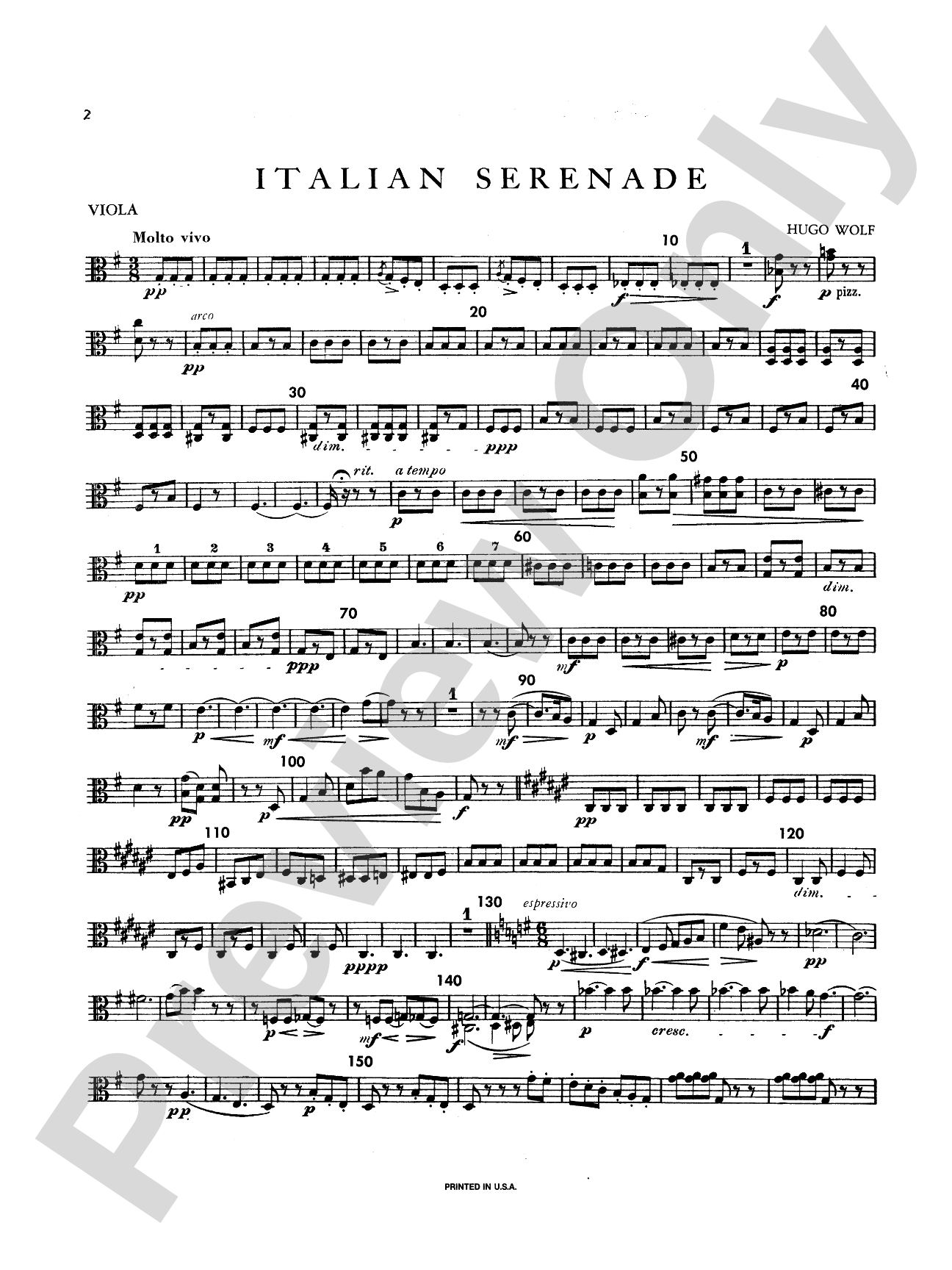

Italian Serenade: Viola
By Hugo Wolf
Item: 00-PC-0002530_VA1
$3.00
Pickup currently not available
Description
Expertly arranged string quartet from our Kalmus Edition.


Don't just read it, hear it, play along with it, and watch your students grow with it. In MakeMusic Cloud, Italian Serenade: Viola comes alive with professional accompaniment, adjustable tempo, and built-in practice tools that turn solo practice into real progress.
Open in the Player
Jump straight in and assign it today.
Start Your Free Trial
Open this title and explore the full library in minutes.
Sample Audio
No sample audio found.
Sample Video
No sample videos found.
Additional Details
Series:
Kalmus Edition
Publisher:
Alfred Music
Page Count:
32
SKU:
00-PC-0002530_VA1
More about this title
About the Composer: Hugo Wolf
Hugo Wolf (1860-1903) was an Austrian composer whose output was lean but intensely focused. Unlike his contemporaries who composed symphonies and operas prolifically, Wolf concentrated on songs and chamber music, pouring his gifts for harmonic innovation and emotional depth into works of concentrated power. His string quartet output was modest, but the Italian Serenade stands as a masterwork of the medium, written during a period of productive brilliance in the 1880s.
Wolf's compositional voice emerged from the Romantic tradition yet pushed harmonic language into ambiguous, modern territory. He studied at the Vienna Conservatory and worked as a conductor and music critic before his composition career flourished late in his life. His chamber works reveal a composer equally at home with intimate musical dialogue and the expressive possibilities of extended tonality.
Why we love this
The Italian Serenade delivers sophisticated harmonic language and genuine four-part dialogue without requiring enormous technical virtuosity from all players. Wolf's gift for spinning engaging melodic material across multiple instruments means no part feels accompanimentary, making rehearsals rewarding for every musician in the quartet. This is a piece that improves with performance and deepens with familiarity, perfect for groups seeking repertoire that satisfies both aesthetically and pedagogically.
What to expect
Lyrical and conversational, with a warmth that recalls an Italian setting even as the harmonic language ventures into unexpected emotional territory. The piece unfolds with the ease of overheard dialogue, yet beneath its surface run currents of chromatic complexity and tender introspection. Wolf creates an atmosphere of intimate companionship, as if four musicians are sharing thoughts rather than performing.
Who it's for
String quartets ranging from intermediate to advanced who have developed secure intonation and the ability to balance multiple melodic lines simultaneously. Ensembles preparing for competitions or festivals will find this Kalmus edition practical and performance-ready. This is also ideal repertoire for student groups working to understand how Romantic composers approached chamber music beyond the Classical quartet traditions.
How to get the most out of it
- Balance the opening melody with transparent accompaniment; Wolf's orchestration works best when inner voices remain audible rather than thickened. Use dynamic restraint in the accompanimental figures so the primary line speaks clearly.
- Attend to the harmonic language carefully during sight-reading. Wolf uses chromatic voice leading and unexpected tonal shifts that can sound muddy if the ensemble rushes; allow time in rehearsal to establish where the harmonic movement occurs.
- Shape phrases through subtle rubato rather than metronomic strictness. The piece breathes like song, and slight flexibility in tempo at phrase endings honors Wolf's intimate, vocal approach to string writing.
- Establish secure ensemble rhythm in the faster passages by locking in the rhythmic foundation early; once that's secure, you can afford the expressive freedoms the lyrical sections demand.
How to use it
Pair this with Classical quartet repertoire to show audiences how the genre evolved harmonically and expressively in the hands of a Late Romantic master. It works beautifully on a concert devoted to Austro-German chamber music of the 1880s-1890s. For festival entries, it offers substantial musical weight and competitive distinctiveness without the technical extremes of some contemporary pieces.
Skills your students will build
- Navigating chromatic voice leading and harmonic ambiguity
- Balancing multiple independent melodic lines without sacrificing ensemble cohesion
- Reading and performing with Romantic-era expressive markings and rubato
- Intonation precision in extended harmonic contexts
- Collaborative listening and phrase shaping across four equal partners