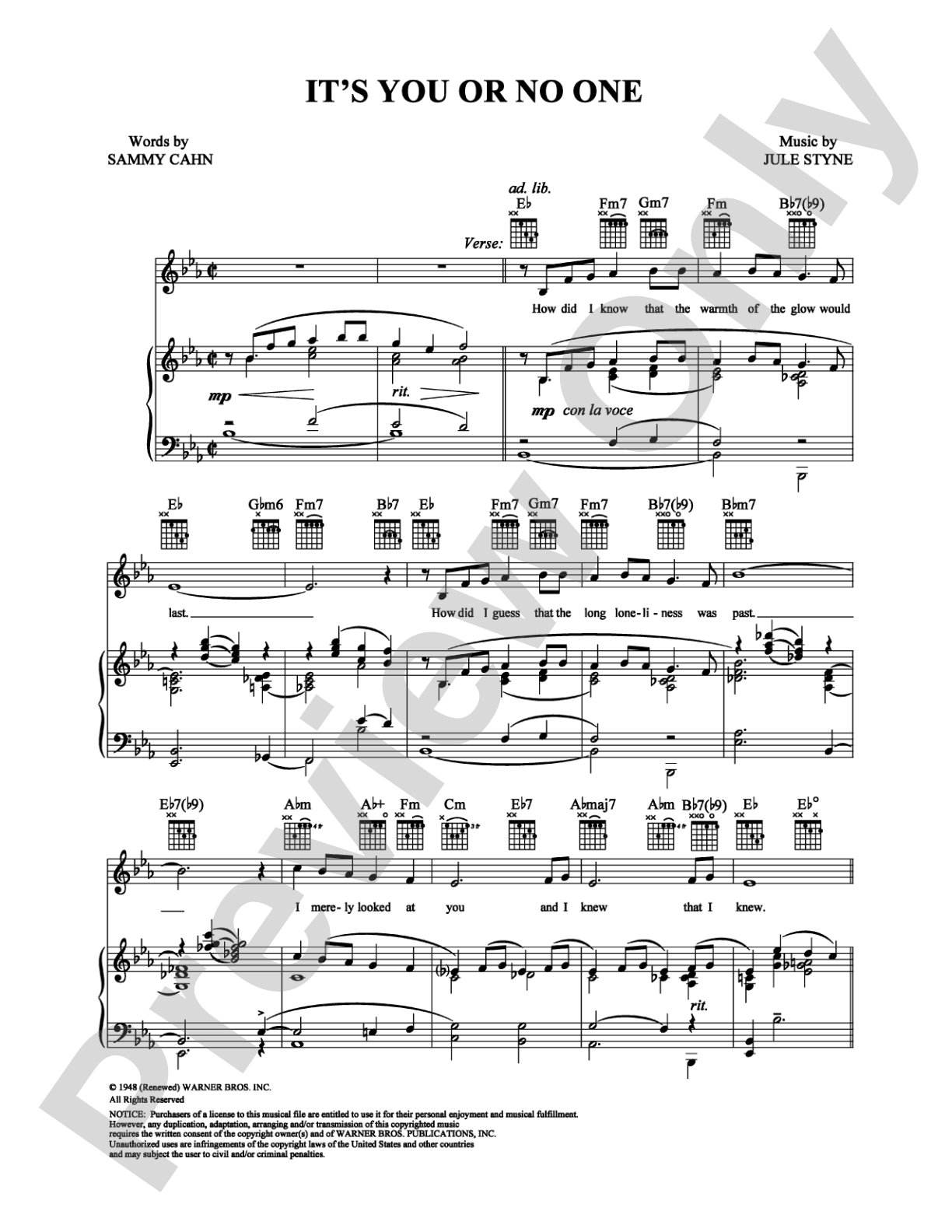
It's You or No One: Piano/Vocal/Chords Digital Sheet Music

It's You or No One: Piano/Vocal/Chords Digital Sheet Music

Duke Ellington, Jule Styne, Joe Williams

Item: 00-PS-0005329

Digital Download
$3.99
Description

It's You or No One: Piano/Vocal/Chords Digital Sheet Music isn't in MakeMusic Cloud just yet...but it could be. Let us know you'd like to see it, and you'll help shape what comes next. In the meantime, start a free trial and dive into thousands of interactive titles your students can play along with today.

Sample Audio
No sample audio found.
Sample Video
Additional Details
SKU: 00-PS-0005329

More about this title

About the Artist: Duke Ellington

Duke Ellington (1899-1974) stands as one of the most consequential composers and bandleaders in American music. His work transcended jazz categories, embracing classical forms, theatrical scoring, and popular song with equal sophistication. Ellington's harmonic language and orchestral thinking fundamentally shaped how musicians understood composition across genres.

Beyond the bandstand, Ellington's legacy as an educator lies in his prolific output of standards that remain essential repertoire for jazz study. His pieces reward close listening and careful practice, revealing new layers of melodic and harmonic invention with each encounter. For singers and pianists, his songs offer a masterclass in swing phrasing, voice leading, and the integration of jazz vocabulary into memorable melodies.

Why we love this

"It's You or No One" exemplifies Ellington's gift for writing a melody that feels both conversational and composed, with just enough harmonic sophistication to keep pianists engaged. The piano/vocal/chords format makes it ideal for jazz combos, vocal recitals, or informal performance classes where students need a lead sheet that guides without dictating. This is the kind of standard that teaches swing phrasing, jazz comping, and lyrical storytelling in equal measure.

What to expect

The tune carries an understated elegance, with a melody that suggests intimacy without sentimentality. There's a natural swing to the phrasing that asks for relaxation and taste rather than urgency, creating space for the lyric and the emotional content beneath the surface.

Who it's for

Jazz singers preparing a classic interpretation for recitals or ensemble performance will find this lead sheet essential. Piano students exploring jazz accompaniment and comping will benefit from the clear chord notation, while jazz combos can build full arrangements from this foundation.

How to get the most out of it

  • Pay attention to the rhythmic placement of the vocal melody against the beat; Ellington's phrasing often sits slightly behind the pulse, creating that characteristic swing feel rather than strict metronomic precision.
  • Use the chord symbols as a starting point for reharmonization and variation in the piano part. Jazz standards invite personal interpretation, especially in the intro, between verses, and under solos.
  • Shape the dynamic arc across the entire form rather than treating each section identically. Build intensity gradually, then pull back for intimate moments to mirror the song's romantic sensibility.
  • Lock the vocal and piano together during the melody; clear communication about where you'll breathe and land on strong beats prevents the performance from drifting.

How to use it

Feature this in a jazz standards recital or a vocal/piano duo concert. It also works beautifully as a palate cleanser in a longer jazz program, offering singers and pianists a moment to showcase their interpretive musicality between more elaborate arrangements.

Skills your students will build

  • Reading and interpreting jazz chord symbols in real time
  • Singing with swing phrasing and behind-the-beat placement
  • Voice-leading reharmonization within the jazz idiom
  • Collaborative listening between vocalist and pianist
  • Building a solo piano arrangement from a lead sheet

You May Also Like