

It's Up to You: SATB a cappella Choral Octavo
By Andrew Bruhn
Item: 00-PO-0006630
$2.05
Minimum order quantity: 20 copies
Pickup currently not available
Related Items
It's Up to You: SATB a cappella Choral Octavo |
$2.05
|
View |
Description
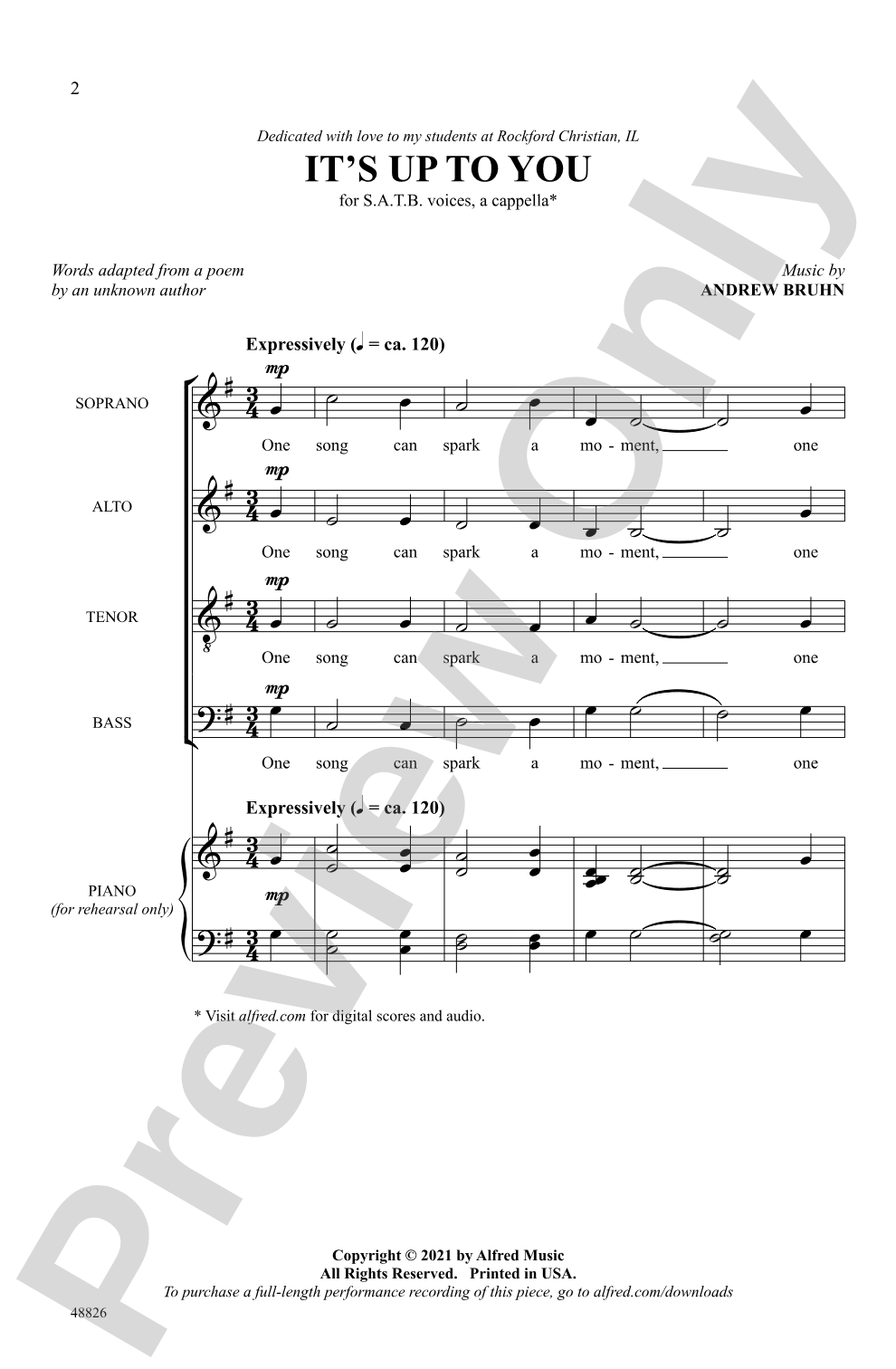
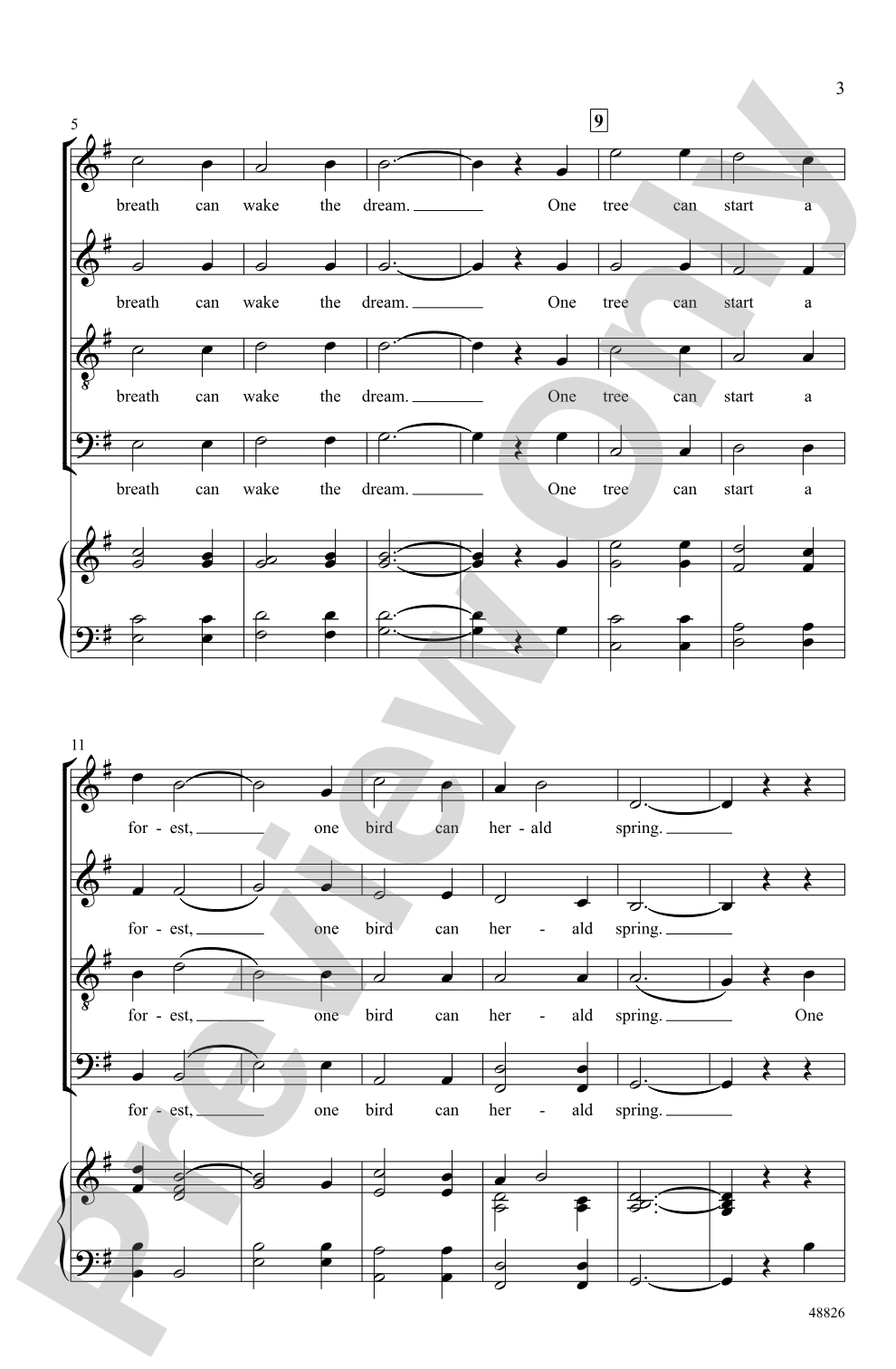
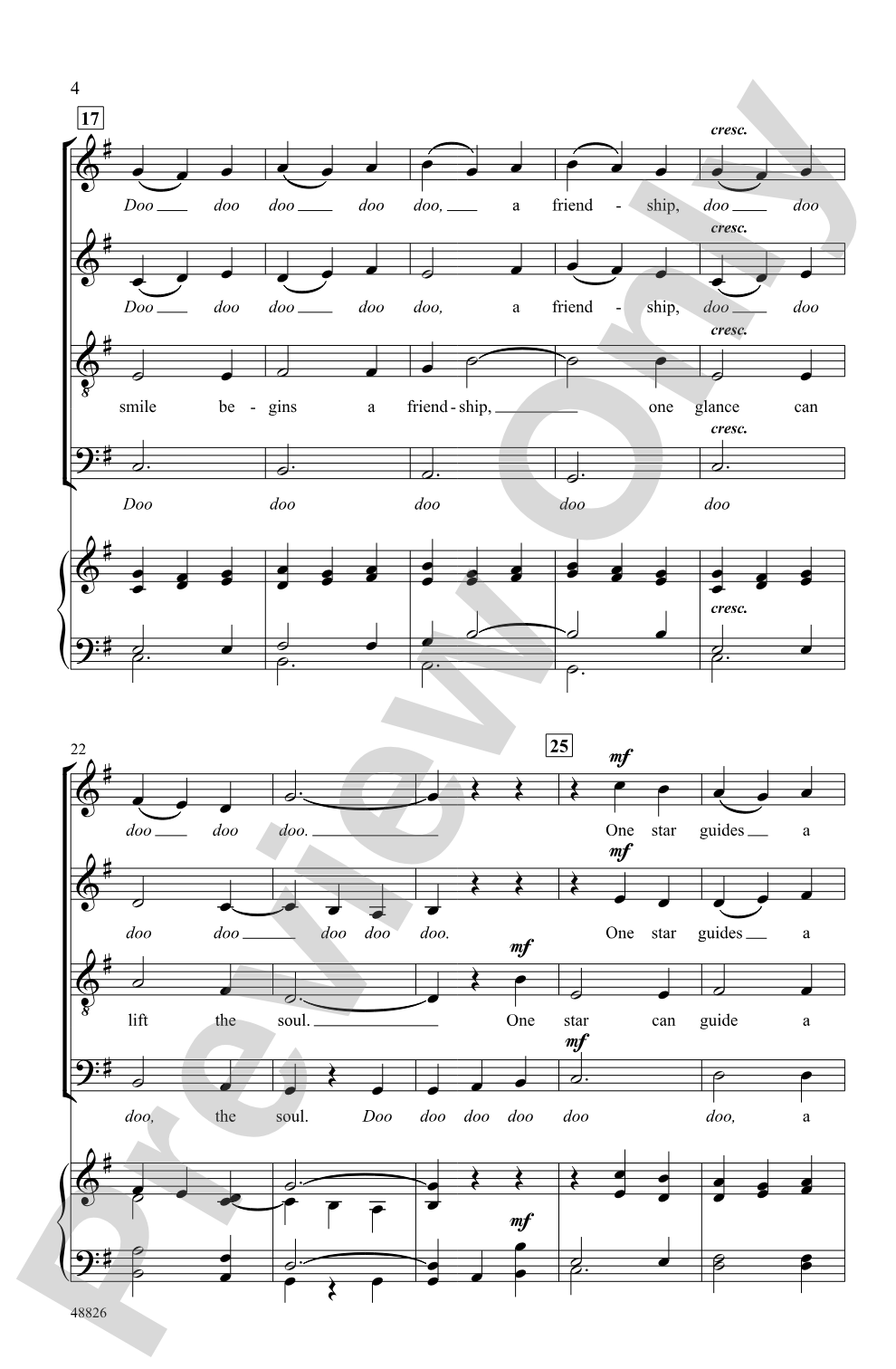
"One song can spark a moment, one breath can wake the dream." This introspective original is based on an unattributed poem that illustrates the impact a small moment can have in our lives. Traditional homophonic writing soon expands to a bevy of swirling choral textures and a dreamy chorus that floats the central motive over a wave of vocal layers. It's a remarkable contemporary a cappella effect and a fitting treatment for these words of worth.


Discover MakeMusic Cloud: thousands of interactive titles your students can play along with today.
Sample Audio
1
Audio File
--:--
0:00
0:00
Sample Video
1 / 2
Additional Details
Series:
Lawson-Gould
Publisher:
Alfred Music
Page Count:
12
SKU:
00-PO-0006630
More about this title
About the Composer: Andrew Bruhn
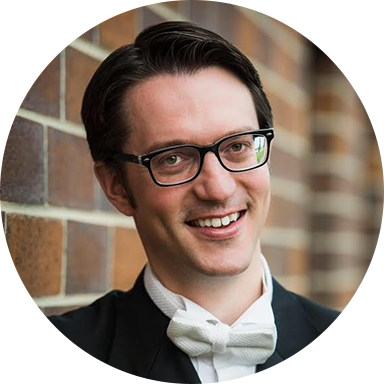
Andrew Bruhn conducts choirs across multiple settings: he directs the choral program at Rockford Christian Schools in Illinois (serving grades 6-12) and leads the choir at Westminster Presbyterian Church in Rockford. His training in choral conducting came through Luther Seminary and St. Olaf College, where he studied under Anton Armstrong, Christopher Aspaas, and Mark Stover. He also spent two years directing the Luther Seminary Choir and Luther Brass in St. Paul.
As a composer, Bruhn has earned significant recognition in the choral field. He won the 2017 Illinois ACDA Composition Contest and was a semi-finalist for The American Prize in Choral Composition in 2019. His works appear with major publishers including GIA, Alfred Music, Carl Fischer, Concordia, and Lawson-Gould. His school choirs consistently earn superior ratings at state contests and have performed at the Illinois Music Education Conference. Beyond composition, Bruhn has contributed articles on vocal music education to publications from the American Choral Directors Association and National Association for Music Education. He studied composition with David Cherwien and Alice Parker.
Why we love this
Bruhn's textural sophistication here is the standout. The piece begins with accessible homophonic writing, then gradually reveals layers of counterpoint and swirling vocal movement that feel effortless rather than cramped. The dreamy chorus is particularly effective at creating that contemporary a cappella sound without relying on overly complex part-writing; it's the kind of piece that sounds more intricate than it plays.
What to expect
The piece opens quietly, almost like an intimate conversation. As it unfolds, additional vocal layers enter in a gentle cascade, creating a sense of depth and movement that feels more like watching clouds drift than hearing traditional choir parts stack. The dreamy chorus floats the central idea above this texture, producing an effect that is both contemporary and deeply human.
Who it's for
This piece serves concert choirs and festival ensembles looking for contemporary a cappella work with genuine artistic substance. It works well for advanced high school choirs and collegiate groups seeking repertoire that balances accessibility with sophisticated musical thinking. The introspective text and meditative quality make it suitable for peace-focused programming or occasions emphasizing human connection.
How to get the most out of it
- Emphasize the introspective character of the opening by keeping the homophonic section grounded and spacious; resist the urge to rush into the more textural material that follows.
- As the piece expands into layered textures, maintain clarity by isolating each voice part in rehearsal and identifying how individual lines weave together rather than rehearsing vertically.
- Shape the dreamy chorus by thinking of the central motive as a soloist floating above the other voices; this hierarchy will help the ensemble understand its role in creating the overall effect.
- Pay attention to phrase breathing across voice parts; staggered breaths can enhance the floating quality without creating rhythmic gaps.
How to use it
Program this alongside other contemporary a cappella work to create a cohesive set that showcases modern choral writing. Its introspective quality and message of individual impact pair well with pieces addressing social awareness or community values. The moderate length and 12-page score make it suitable for mixed repertoire concerts or festival contexts where it can serve as a focal point without consuming excessive program time.
Skills your students will build
- Singing independent melodic lines within layered vocal textures
- Balancing blend while maintaining individual line identity in a cappella context
- Sustaining intonation across extended phrases without instrumental support
- Interpreting contemporary compositional techniques (homophonic to polyphonic transitions)
- Responding to subtle dynamic and textural shifts that create musical architecture