It's the Most Wonderful Time of the Year: Viola Sheet Music Preview

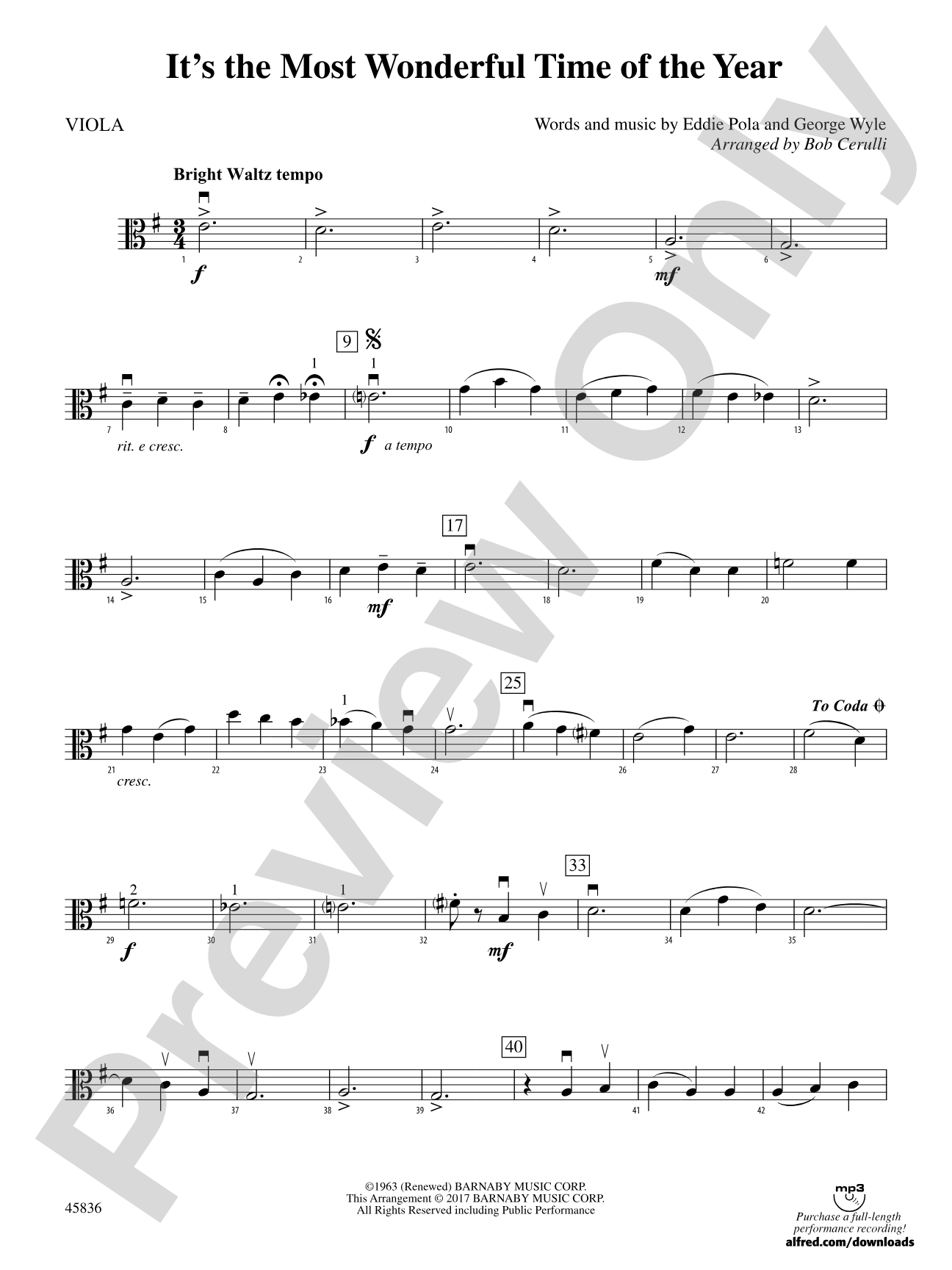
It's the Most Wonderful Time of the Year: Viola

Words and music by Eddie Pola and George Wyle / arr. Bob Cerulli

Grade: 2.5

Item: 00-PC-0017638_VA1

Digital Download
$7.99
One moment…
One moment…
Description
A bright, fun arrangement by Bob Cerulli of the Christmas classic, "It's the Most Wonderful Time of the Year," this one stands the test of time. It will go together easily and delight audiences. Written by Eddie Pola and George Wyle, it was originally recorded by Andy Williams and later by Garth Brooks. (2:30)

Don't just read it, hear it, play along with it, and watch your students grow with it. In MakeMusic Cloud, It's the Most Wonderful Time of the Year: Viola comes alive with professional accompaniment, adjustable tempo, and built-in practice tools that turn solo practice into real progress.

Sample Audio
0:00
0:00
Sample Video
Additional Details
Series: Pop Intermediate String Orchestra
Publisher: Alfred Music
Page Count: 144
SKU: 00-PC-0017638_VA1

More about this title

About the Composer: Eddie Pola

Eddie Pola composed some of America's most enduring holiday standards during the mid-twentieth century. Writing alongside George Wyle, Pola created melodies that became fixtures in seasonal programming and popular culture, with "It's the Most Wonderful Time of the Year" standing as one of the most recognizable Christmas songs ever written.

Pola's gift was crafting memorable, singable melodies that appeal across generations. His work demonstrates how a strong melodic idea, paired with clear harmonic support, can transcend its original recording to become repertoire that orchestras and ensembles continue to perform decades later.

Why we love this

Bob Cerulli's arrangement captures the warmth and optimism of the original without overwhelming young string players. The Grade 2.5 scoring sits right at the sweet spot where students feel like they're making real music while parts remain manageable, and orchestras will genuinely enjoy performing this familiar tune rather than sight-reading through unfamiliar arrangements.

What to expect

Nostalgic and genuine, with the kind of straightforward charm that makes people smile when they hear the opening phrase. The arrangement preserves the melody's inherent warmth while letting young string players contribute real musicianship rather than just reading notes.

Who it's for

String orchestras at the intermediate level, especially those looking for Christmas repertoire that sounds polished without requiring extensive rehearsal time. This works equally well for school orchestras, youth ensembles, and community groups performing winter concerts.

How to get the most out of it

  • Keep the opening light and buoyant; resist the urge to drag the tempo. This melody thrives on forward momentum, so maintain a conversational pace that lets the tune sing naturally.
  • Balance the melody across your first violins and violas so the transition between sections feels seamless. When the melody passes, avoid sudden dynamic shifts that would interrupt the flow.
  • Tune the sustained harmonies carefully in the second and third measures; young string sections often go flat on held notes, and these supports need to stay centered so the tune can sit confidently on top.
  • Encourage vibrato in the melody during the main phrases, especially in the second half. This warmth transforms a simple arrangement into something that genuinely connects with an audience.

How to use it

Open your winter concert with this number to set an audience's mood immediately, or place it strategically in the second half after a more serious work to shift the energy. Its 2:30 duration makes it an ideal pairing with another medium-length piece to create a substantial but not exhausting Christmas-themed concert block.

Skills your students will build

  • Balancing a clear melodic line with accompanimental figures
  • Sustaining tone quality across longer held notes
  • Maintaining rhythmic precision in accompaniment patterns while the melody section breathes naturally
  • Responding to subtle dynamic changes that preserve forward momentum
  • Collaborating between violin sections and lower strings to create cohesive phrasing

You May Also Like