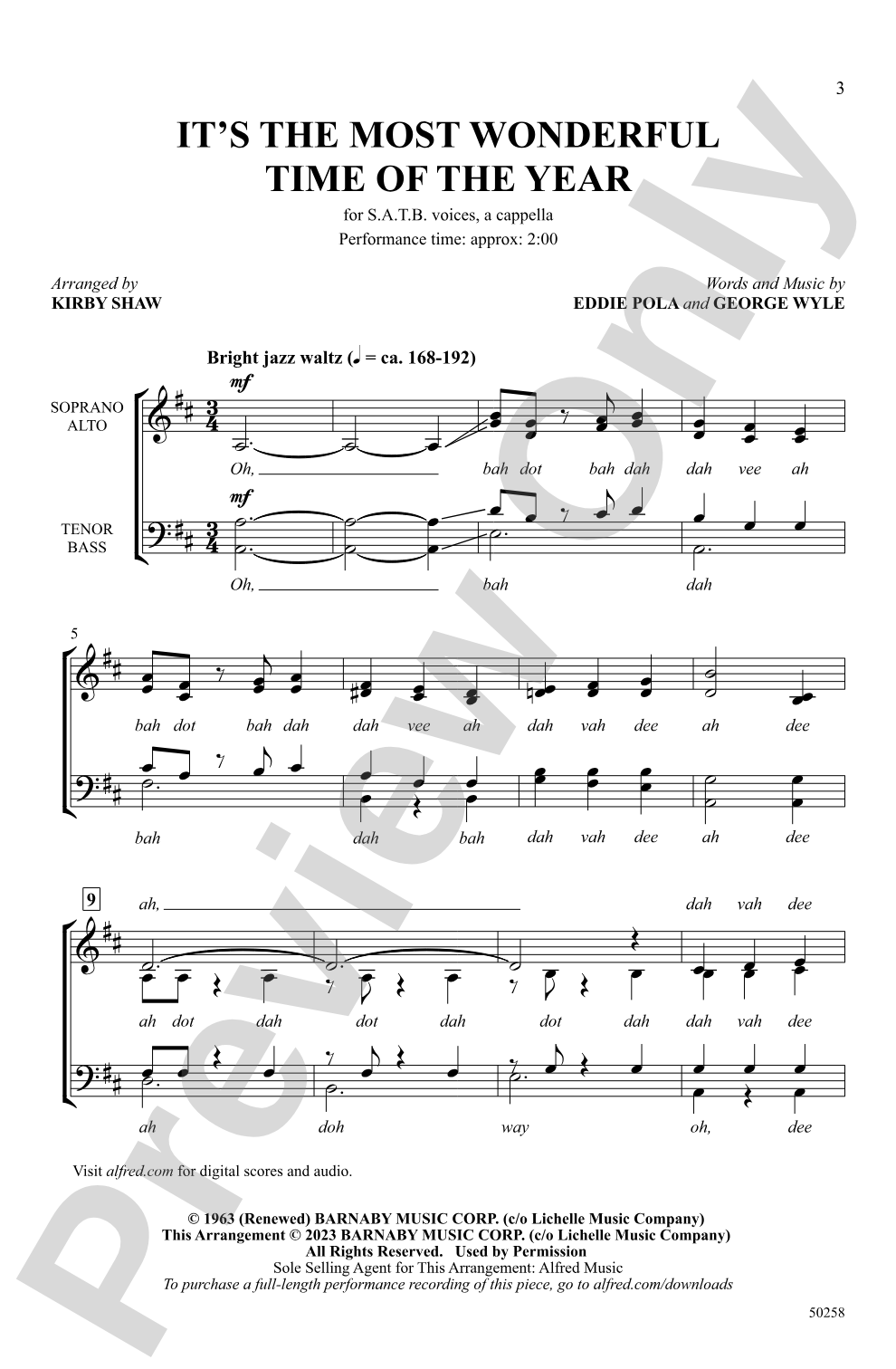
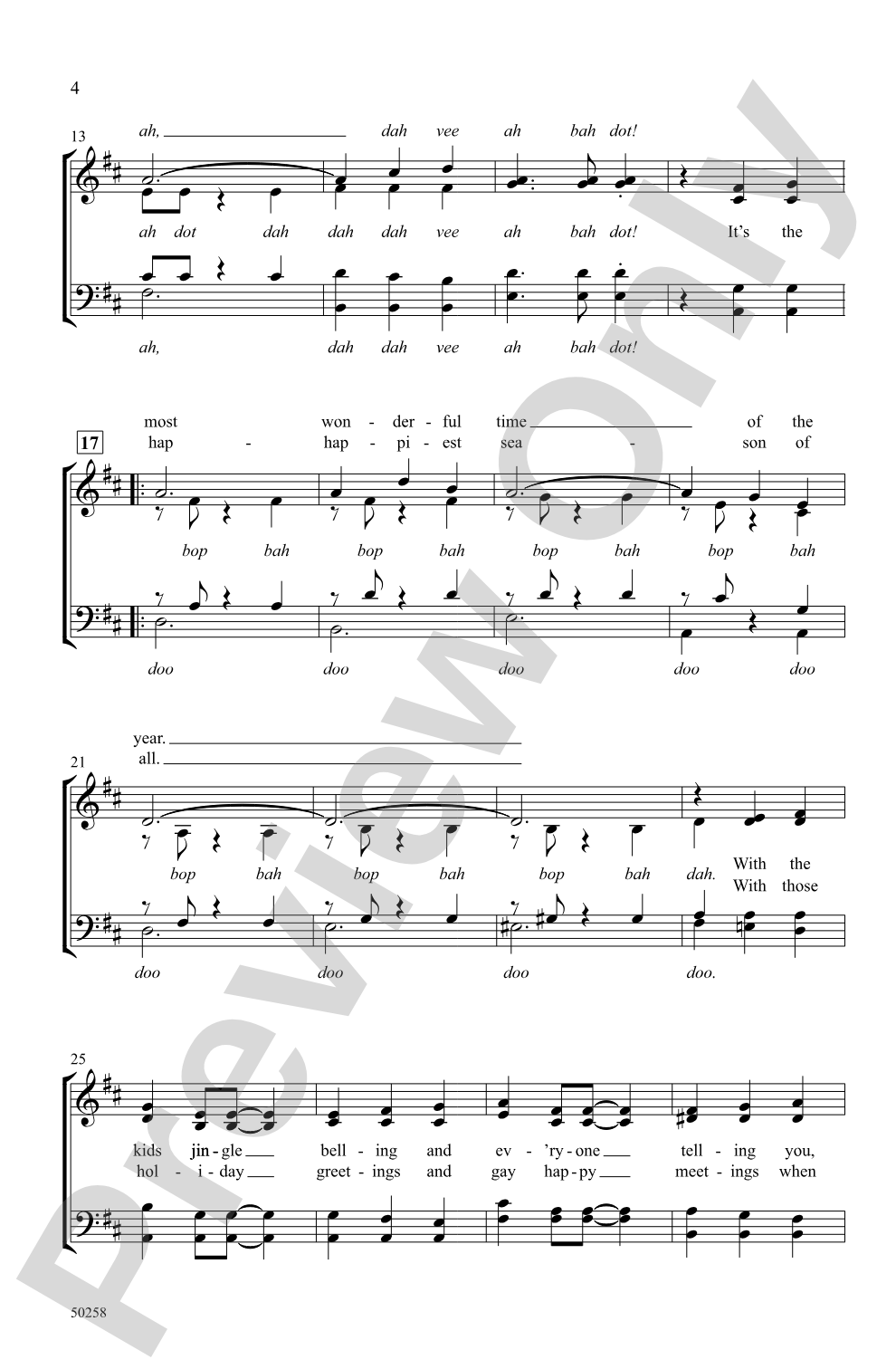
Greet the season with this festive a cappella arrangement of a true holiday favorite! Both sopranos and basses take the jazz waltz melody for a spin while the other voices provide an a cappella scat-syllable accompaniment. This versatile setting is fitting for the stage or for door-to-door caroling.
Discover MakeMusic Cloud: thousands of interactive titles your students can play along with today.
Eddie Pola (1910–1976) was an American songwriter whose catalog spans popular standards and seasonal favorites. His melodies have become woven into American holiday traditions, particularly through his collaboration with George Wyle on "It's the Most Wonderful Time of the Year," which debuted in 1963 and quickly became a perennial classic.
Why we love this
Kirby Shaw's arrangement captures the infectious energy of this standard while solving a real programming challenge: how to keep a beloved holiday tune fresh for experienced singers. The jazz waltz setting and strategic use of scat syllables make this feel contemporary without sacrificing the song's essential warmth, and the transparent a cappella texture means your singers become the entire musical landscape.
What to expect
The piece sparkles with that nostalgic-yet-contemporary feeling that Kirby Shaw does so well. The scat accompaniment creates a playful, almost conversational texture while the waltz melody swings gently, evoking both the intimacy of a cappella singing and the infectious joy that makes this song a holiday staple.
Who it's for
This arrangement works for experienced SATB choirs comfortable with scat singing and rhythmic independence. It's equally suited to a polished concert setting or to singers bundled up on a winter evening, making it ideal for groups that want to offer something sophisticated during holiday season performances.
How to get the most out of it
Lock the scat accompaniment rhythmically between the altos and tenors; this rhythmic precision will make the soprano and bass melody voices stand out clearly and keep the groove propulsive.
Shape the melody through dynamic contrast rather than tempo changes. The sopranos and basses should trade phrases with conversational phrasing to highlight the waltz's lilting character.
Rehearse the scat syllables as pure rhythm first, without worrying about pitch. This builds ensemble confidence and prevents the accompaniment from overwhelming the melodic lines.
If performing for caroling, mark clear cutoff points at rehearsal letters or phrase endings so singers can sustain momentum through multiple verses without stopping to reorient.
How to use it
This works beautifully as a high-energy closer on a holiday concert, where its approachability and inherent cheerfulness will send audiences out smiling. It's also a natural fit for community caroling events or informal seasonal celebrations where the a cappella format adapts instantly to any venue.
Skills your students will build
Scat singing with rhythmic precision
Jazz waltz phrasing and swing inflection
A cappella balance and blend across four parts
Melodic independence while maintaining harmonic support
Rhythmic coordination between accompaniment and melody voices
You May Also Like
Scan to Complete Your Purchase
Use your phone's camera to scan the code below
You'll log in on your phone and the order will be added to your account