Scott Joplin (1868-1917) defined ragtime as an art form, elevating syncopated piano music from saloon entertainment to serious composition. His innovations in rhythmic complexity and harmonic sophistication influenced generations of composers across jazz, classical, and popular music, cementing his legacy as the "King of Ragtime Composers."
Why we love this
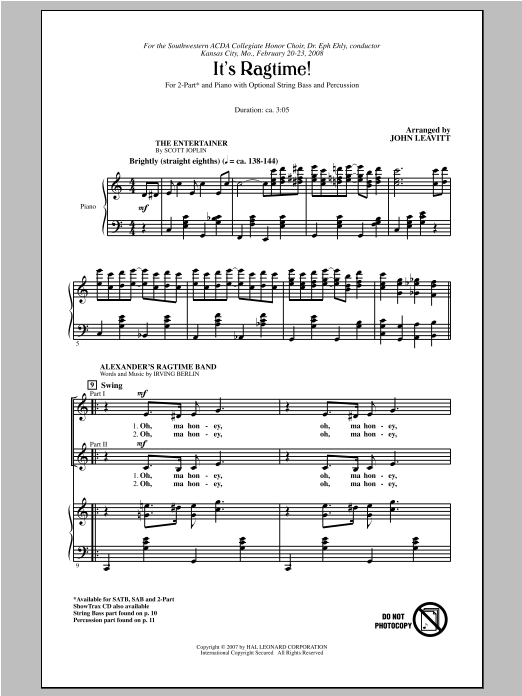
John Leavitt's arrangement captures the infectious energy and structural sophistication of ragtime in an accessible 2-part setting that actually teaches voice independence. The syncopated figures and swing rhythms engage singers immediately while the writing remains singable enough for developing choirs to build genuine confidence.
What to expect
Playful, propulsive energy infuses every measure. The syncopated rhythms create a forward momentum that feels almost dance-like, while the ragtime harmonies remind listeners why this music sparked a cultural phenomenon.
Who it's for
This arrangement works for young singers encountering syncopation for the first time as well as intermediate choirs wanting an energetic, repertoire-expanding piece. It's ideal for singers who respond to groove and rhythmic clarity over lyrical demands.
How to get the most out of it
Establish a steady pulse in rehearsal before layering the syncopation; the piece lives and dies on rhythmic clarity between parts.
Emphasize the staccato articulation in the rhythmic figures to unlock the piece's bounce and character.
Record a rehearsal run-through and have singers listen back to hear how their part locks with the other voice; this builds awareness of interdependence.
Shape the phrasing through dynamic contour rather than holding notes longer than written; ragtime phrases should breathe naturally and move forward.
How to use it
Pair this with other early twentieth-century American choral works to show the diversity of voices emerging from that era, or program it in a pops concert where the groove and accessibility shine. It also works beautifully as a musical bridge between classical and jazz studies.
Skills your students will build
Reading and performing syncopated rhythms accurately
Maintaining rhythmic independence while listening to another part
Understanding ragtime's historical and cultural context
Executing clean articulation in fast passage work
Building awareness of swing and stylistic interpretation
You May Also Like
Scan to Complete Your Purchase
Use your phone's camera to scan the code below
You'll log in on your phone and the order will be added to your account