

It's Orff Showtime!: Songs, Dances, Chants, and Orff Accompaniments for Elementary and Middle School Students
Songs, Dances, Chants, and Orff Accompaniments for Elementary and Middle School Students
By Konnie Saliba
Item: 00-PB-0002159
$16.95
Pickup currently not available
Related Items
It's Orff Showtime!: Book |
$16.95
|
View |
Description
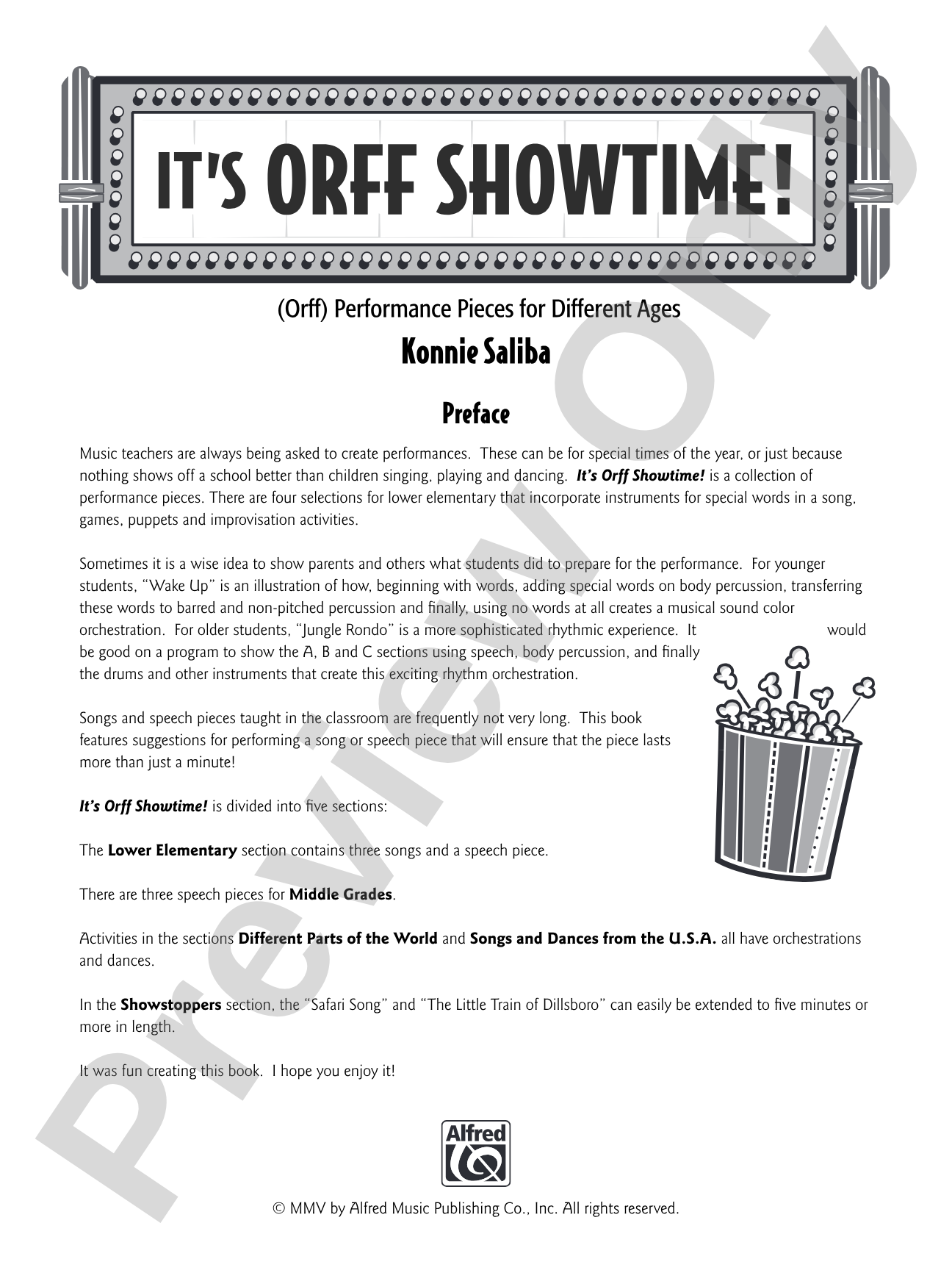
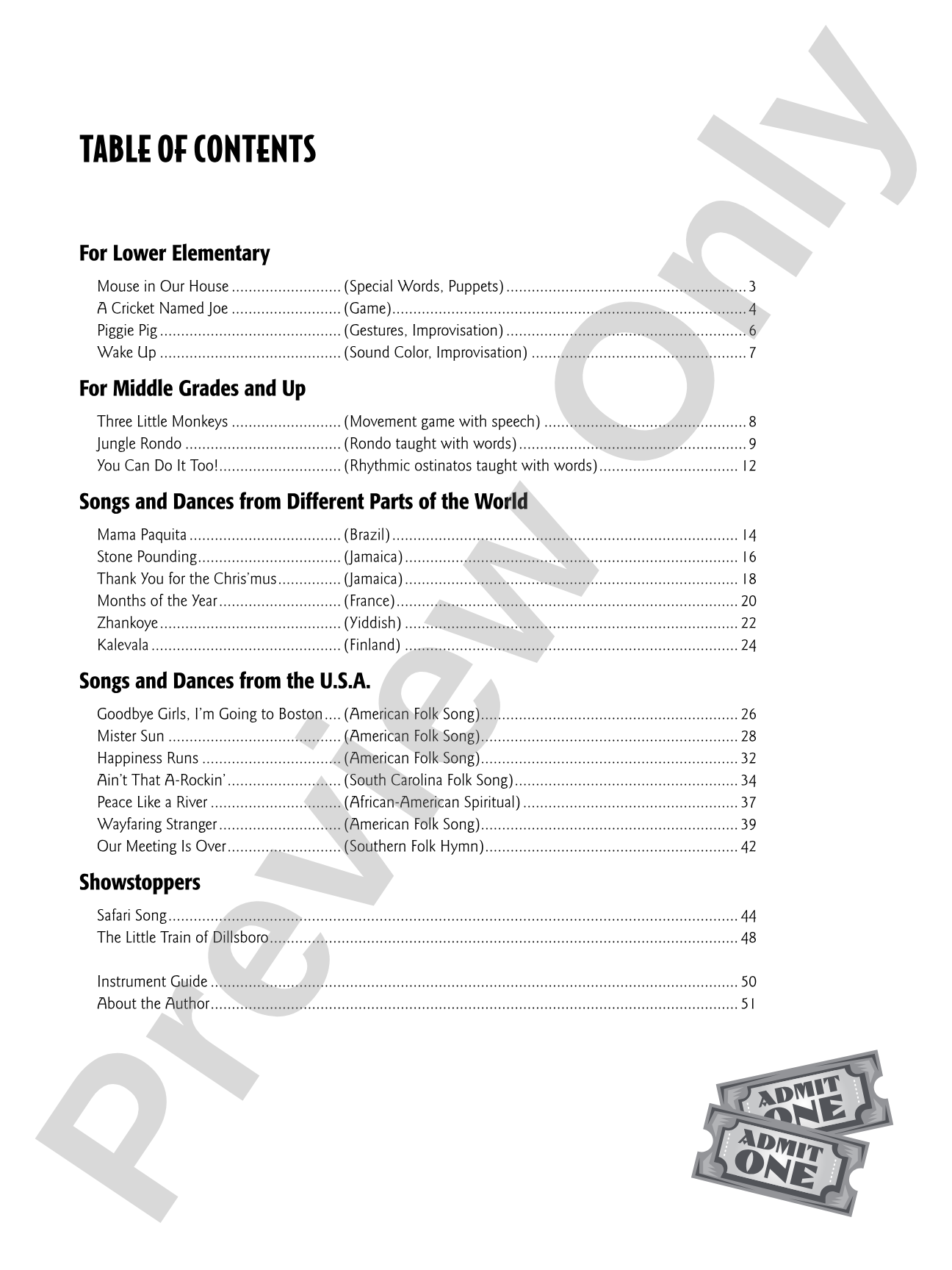
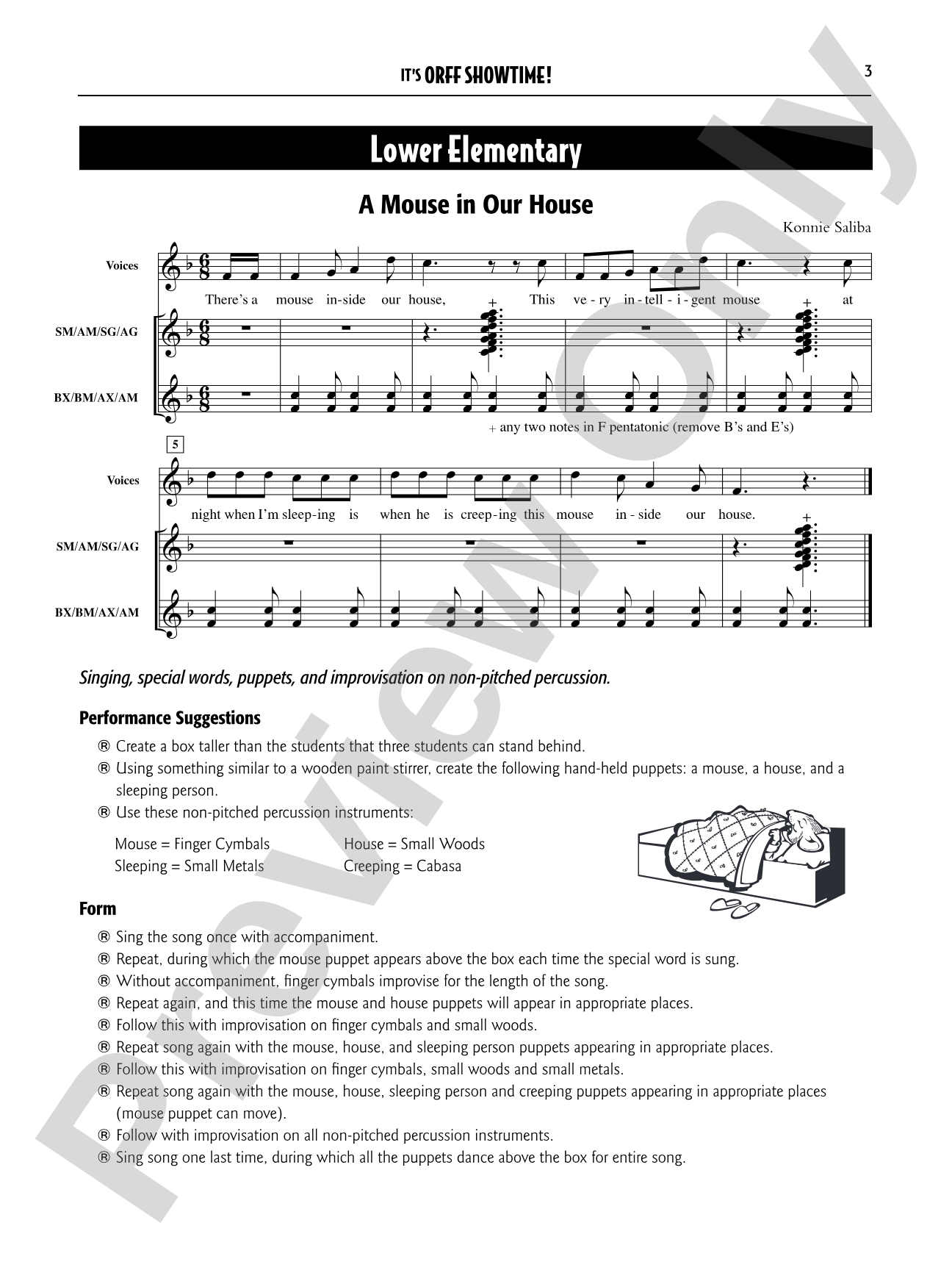
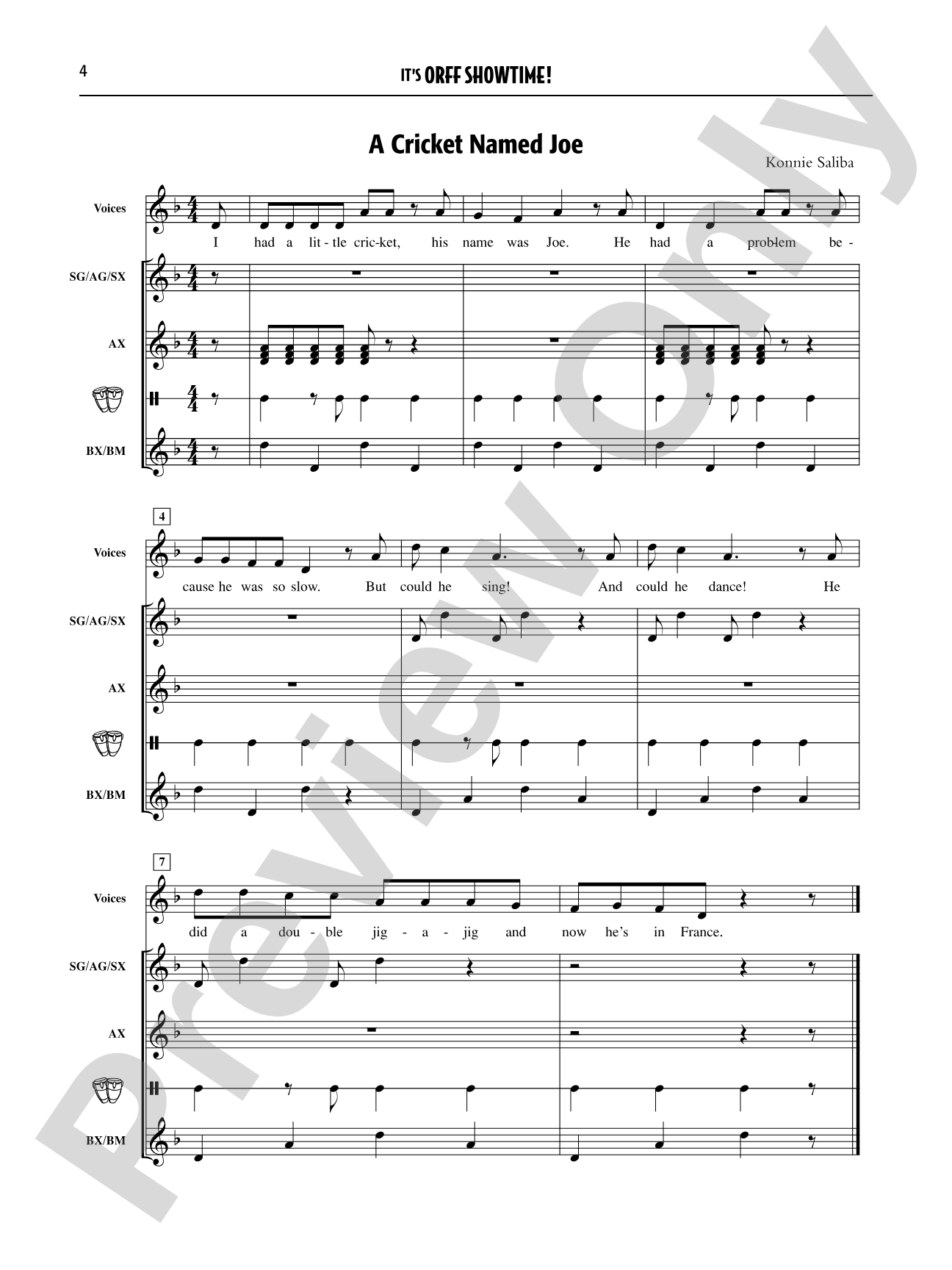
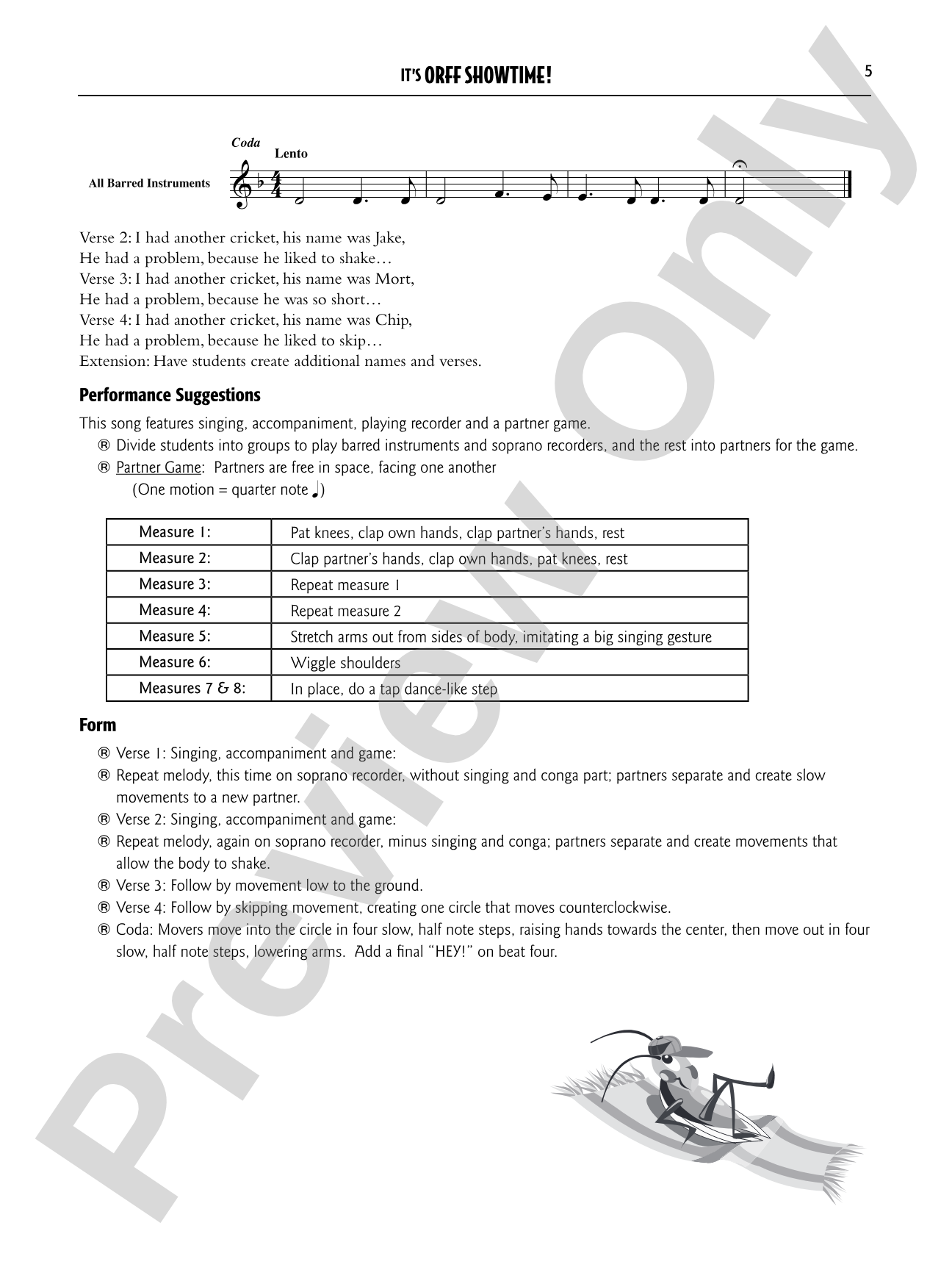
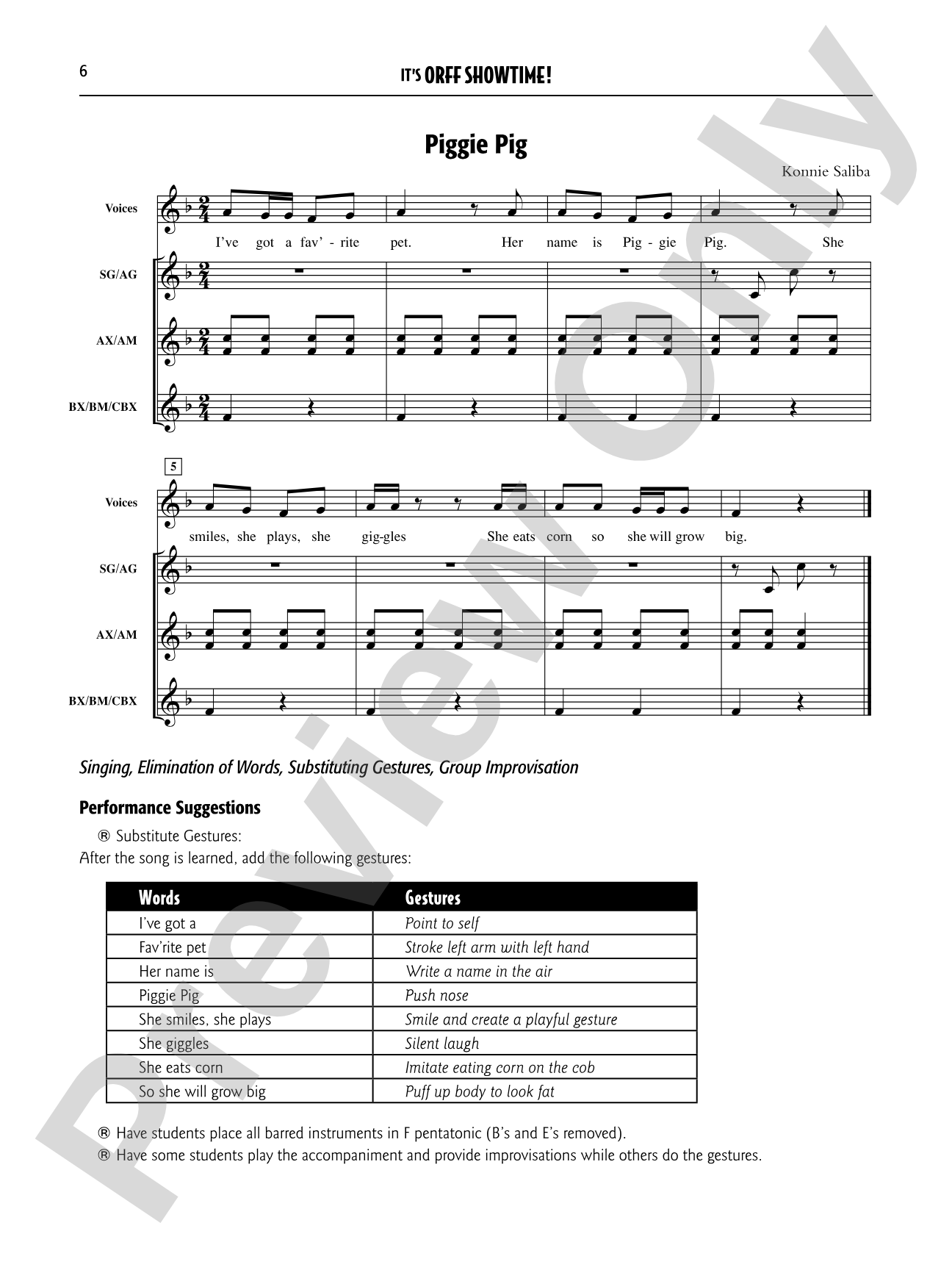
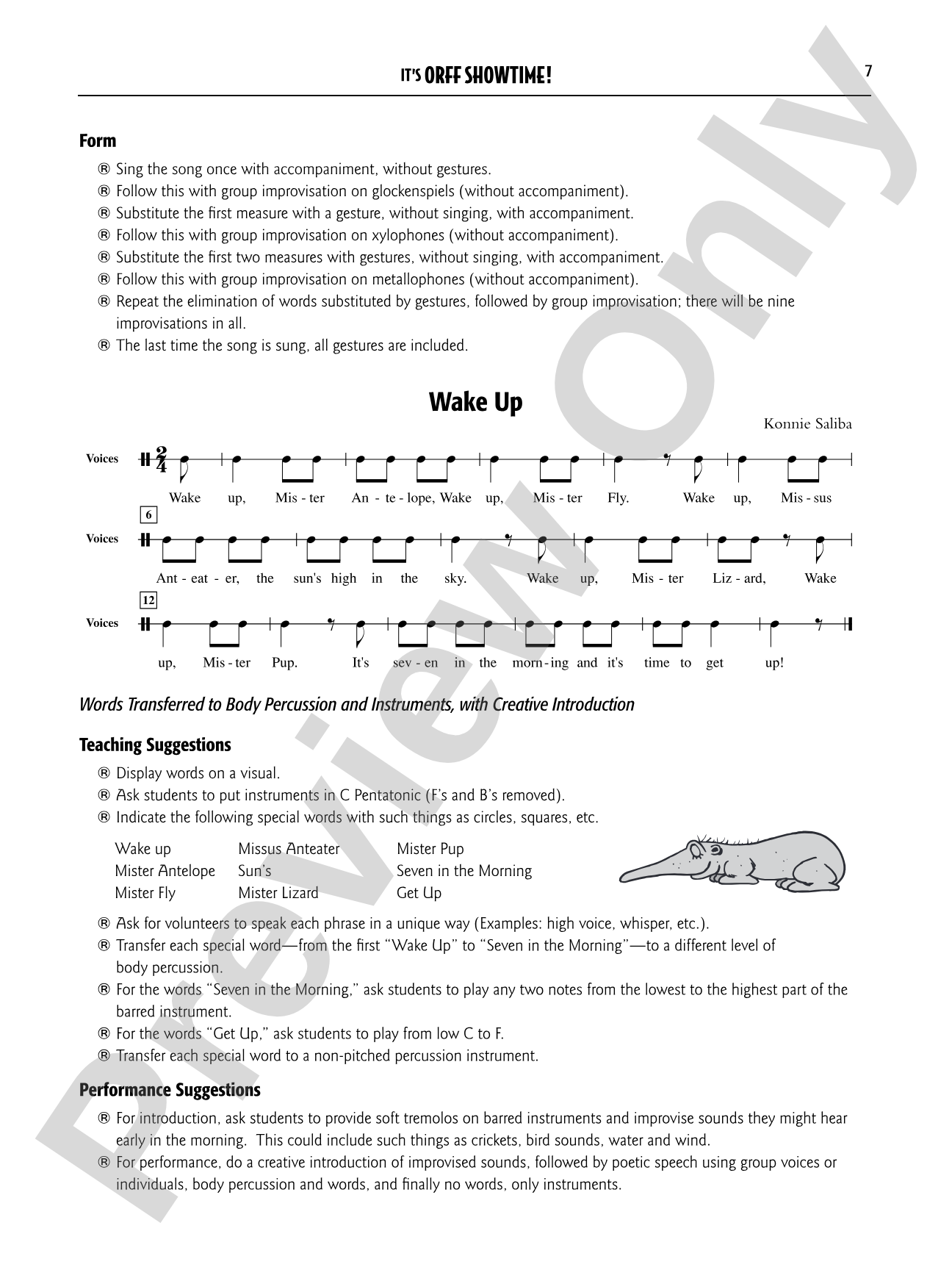
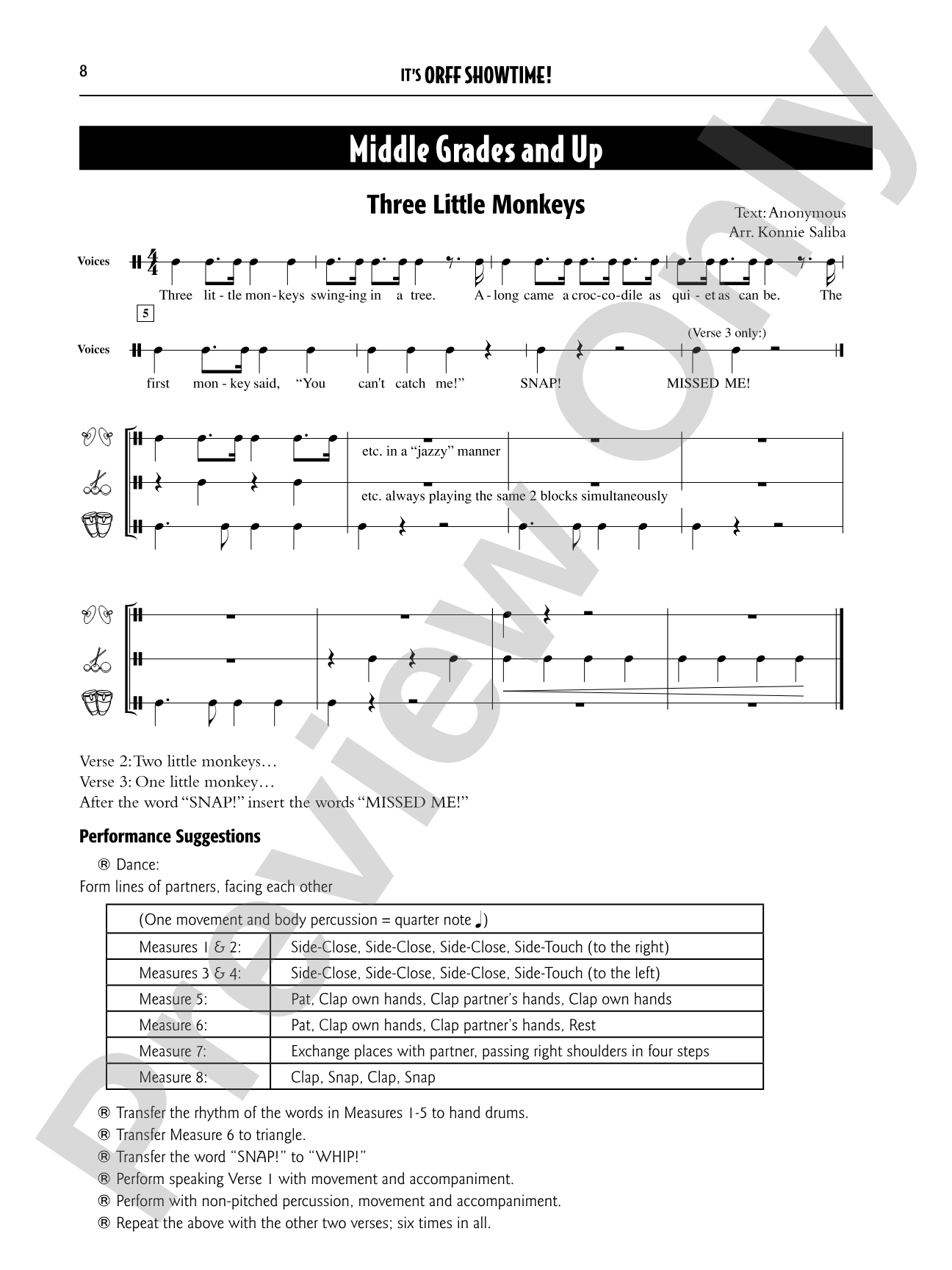
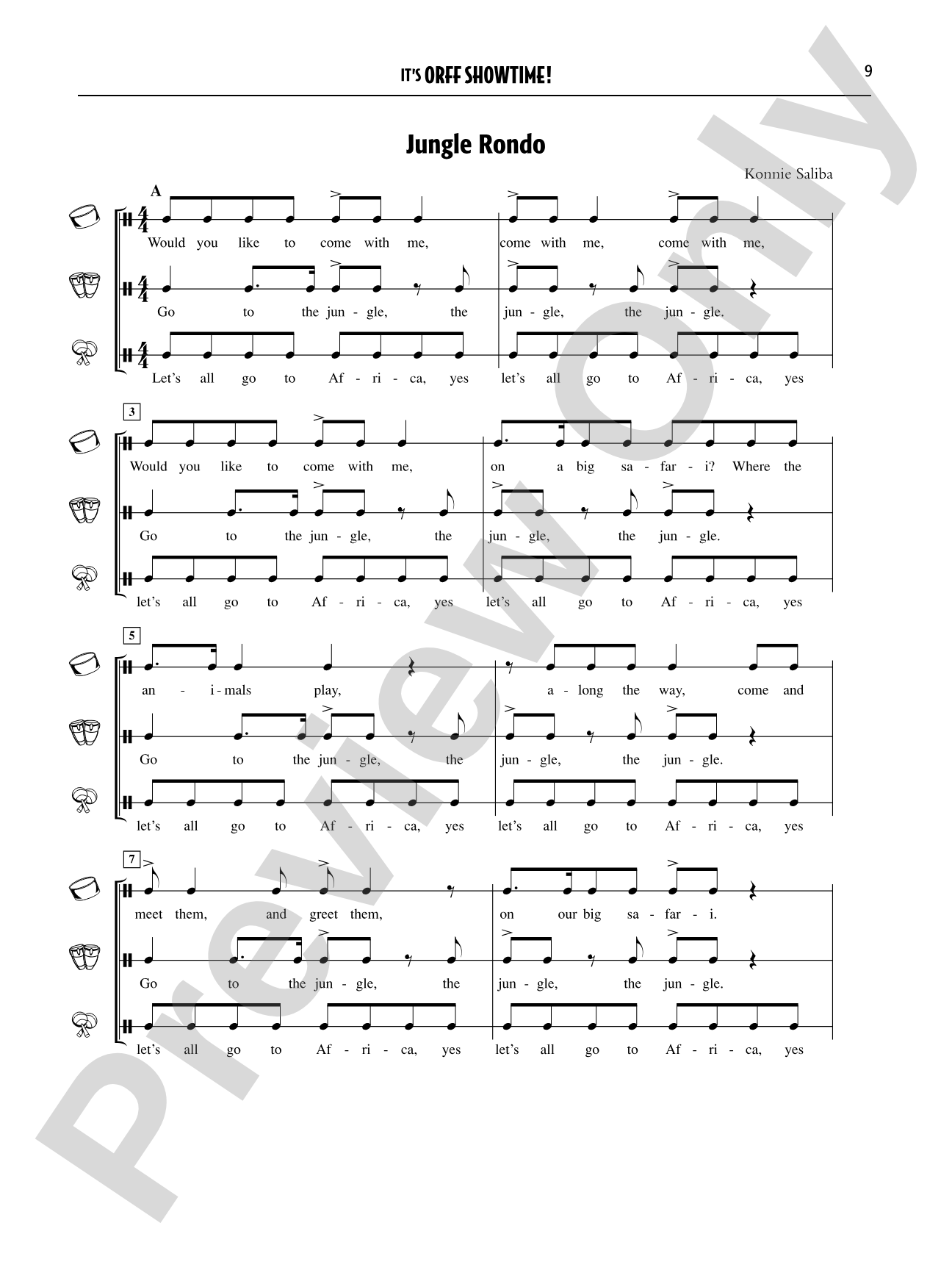
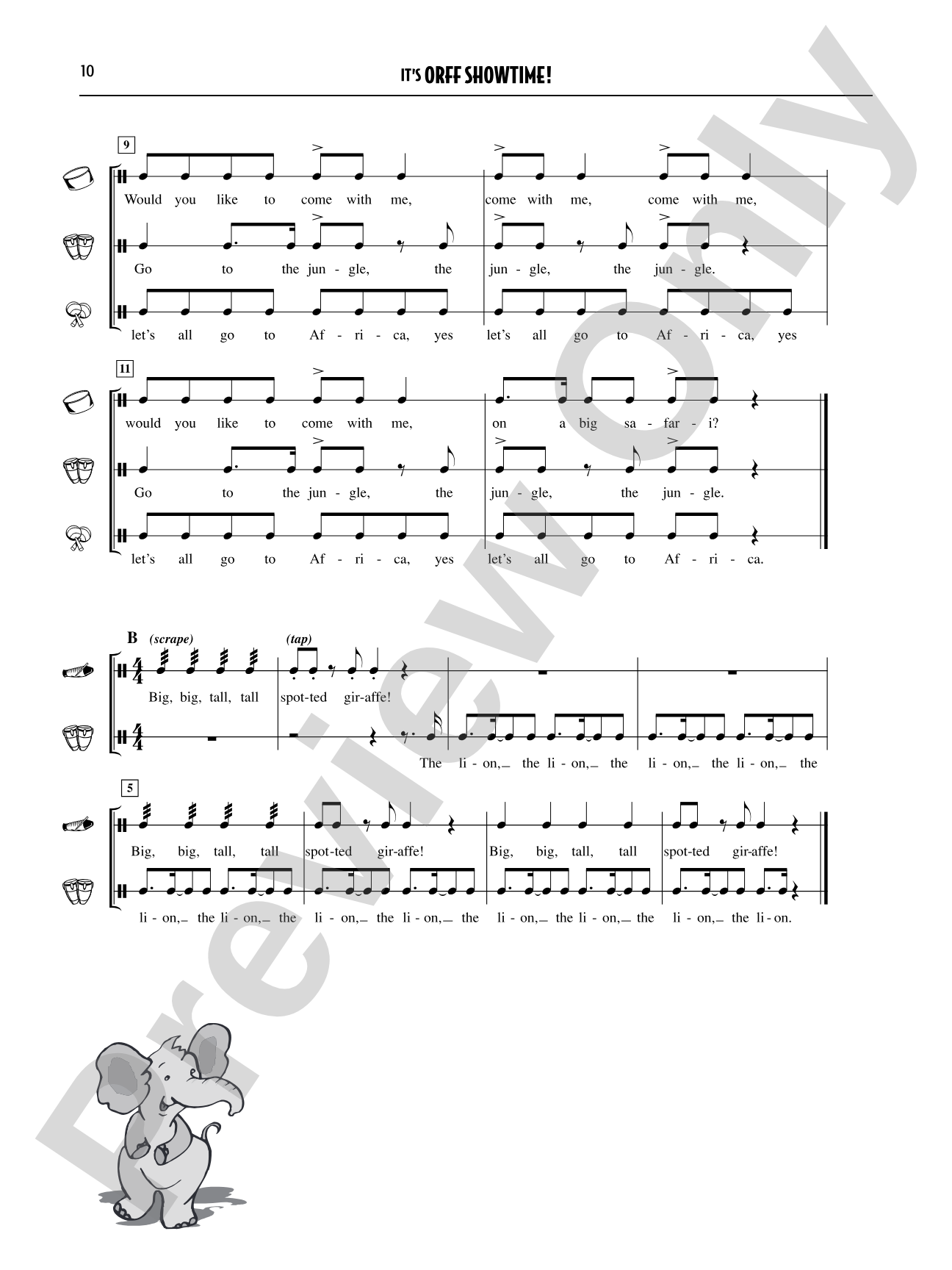
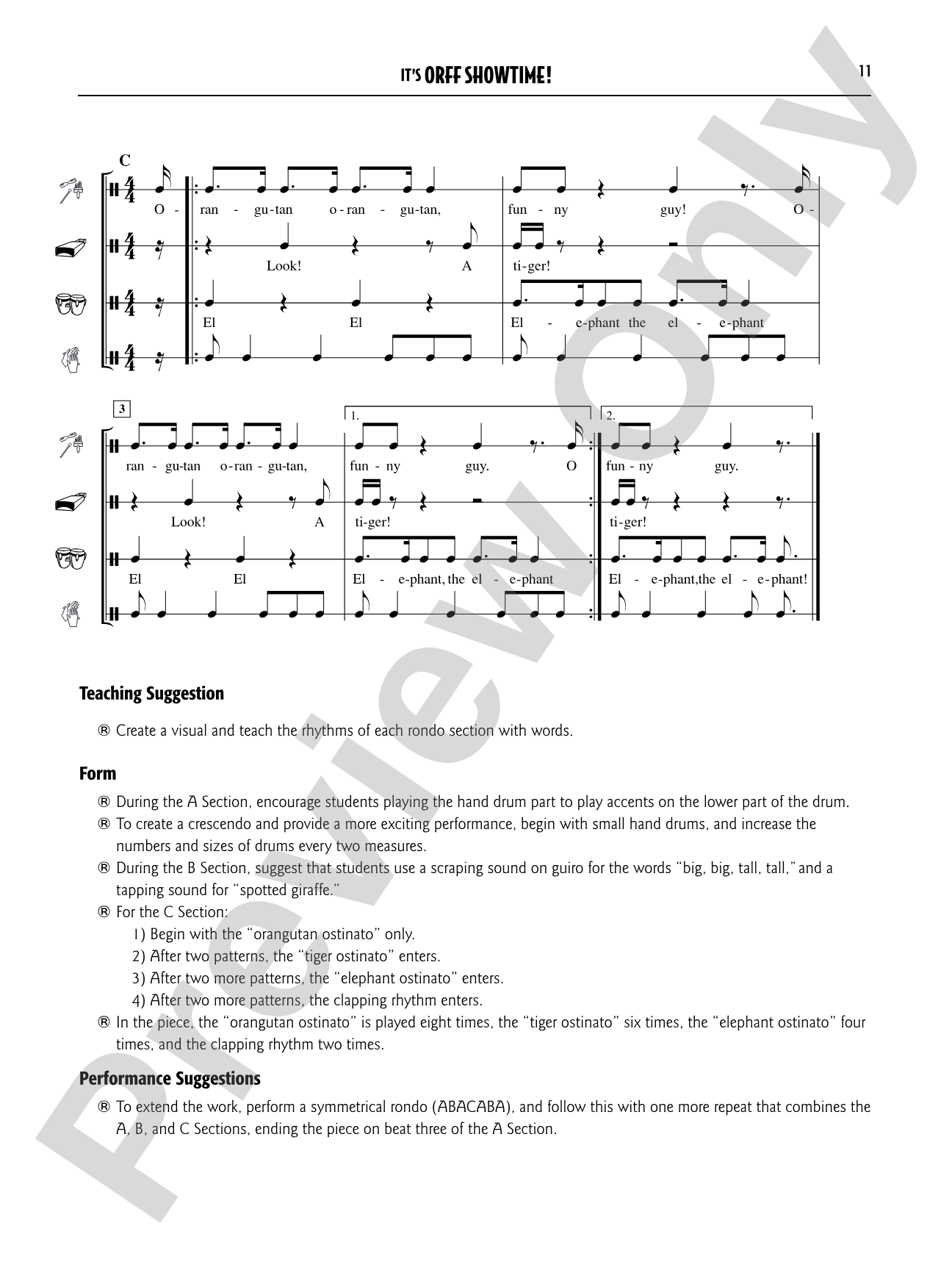
A collection of performance pieces especially designed to impress, because nothing shows off a school better than children singing, playing, and dancing! Includes selections for lower elementary students that incorporate instruments and body percussion with special words in speech pieces, songs, games, puppets, dances, and improvisation activities. For older students, there are more sophisticated rhythmic, vocal, and instrumental experiences, as well as dances that create exciting orchestrations.


It's Orff Showtime!: Songs, Dances, Chants, and Orff Accompaniments for Elementary and Middle School Students isn't in MakeMusic Cloud just yet...but it could be. Let us know you'd like to see it, and you'll help shape what comes next. In the meantime, start a free trial and dive into thousands of interactive titles your students can play along with today.
Request This Title
Tell us you want it.
Start Your Free Trial
Explore everything that's ready to play right now.
Sample Audio
No sample audio found.
Sample Video
No sample videos found.
Additional Details
Publisher:
Alfred Music
Page Count:
52
SKU:
00-PB-0002159
More about this title
About the Composer: Konnie Saliba
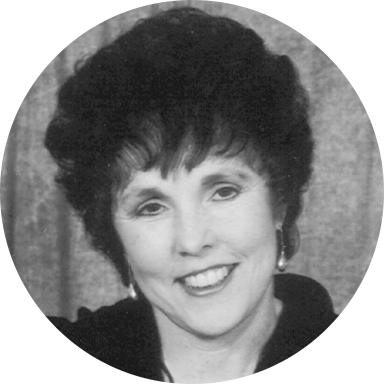
Konnie Saliba directed the Master of Music program in Orff Schulwerk at the University of Memphis, where she earned Professor Emeritus status. Her leadership shaped an entire generation of music educators; she served as past president of the American Orff Schulwerk Association and received their Distinguished Service Award in 1997.
Saliba's consulting work spans decades and continents. She has led workshops across the United States and Canada, and traveled to Germany, Austria, Finland, China, and the Dominican Republic sharing Orff pedagogy. Her classroom experience ranges from elementary through secondary settings, and she contributed as a program author for Pearson Scott Foresman's Silver Burdett Making Music series.
Why we love this
Saliba understands what elementary and middle school audiences actually respond to: pieces that combine singing, playing, and movement into moments that make parents lean forward in their seats. The collection calibrates difficulty thoughtfully, so younger students experience genuine success with body percussion and simple instruments while older ensembles tackle layered rhythms and orchestrations that feel genuinely sophisticated.
What to expect
Joyful and purposeful. There is no filler here; every element (the singing, the chants, the orchestrations, the dancing) works together to create momentum and excitement. Students feel invested because they are actively making music and moving together, not simply executing teacher instructions.
Who it's for
Elementary and middle school music teachers who need repertoire that excels on stage. These pieces work for assemblies, concerts, and showcases where you want to highlight what students actually do in music class: they sing, play instruments, create rhythms with their bodies, and perform with confidence.
How to get the most out of it
- Plan rehearsals around the progression of difficulty within each piece. Start with the speech and body percussion elements before adding pitched instruments, which gives students a rhythmic foundation to build on.
- Assign instrumental parts based on individual readiness rather than grade level. A mature fourth grader can handle the barred instruments in a piece designed for fifth graders, while some sixth graders may benefit from starting with rhythm patterns.
- Record short video clips during rehearsal showing the choreography and ensemble balance. Students remember movement sequences better when they can watch themselves, and it reduces the cognitive load in later rehearsals.
- Designate specific students as movement leaders for dances, especially in lower elementary. Peer modeling works faster than teacher demonstration for catching body percussion cues.
How to use it
Frame your winter or spring concert around a segment featuring three to four selections from this collection. The variety means you can build a program that opens with a lower elementary piece, moves through increasingly sophisticated offerings, and gives your oldest students a chance to shine in ensemble arrangements that sound genuinely professional.
Skills your students will build
- Coordinating speech patterns with rhythmic movement and instrumental playing
- Reading and performing basic to intermediate Orff staff notation
- Maintaining ensemble rhythm while executing choreography
- Improvising rhythm patterns on barred percussion instruments
- Balancing individual instrumental lines within a group texture
- Responding to conductor cues during dance and instrumental sections