

It's Alright: 3-Part Mixed Choral Octavo
Words and Music by Sherry Blevins
Item: 00-PO-0007427
$2.40
Minimum order quantity: 20 copies
Pickup currently not available
Description
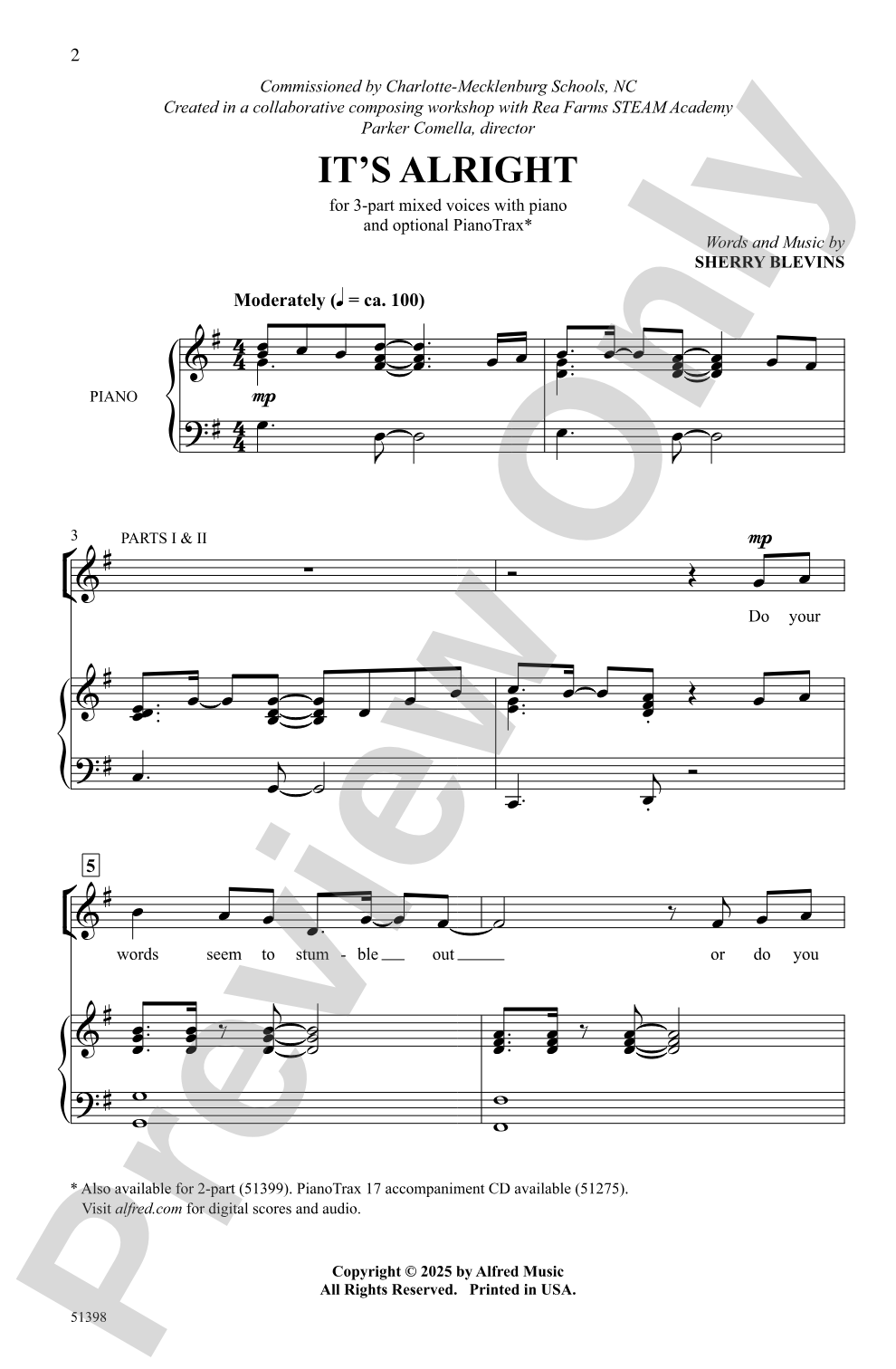
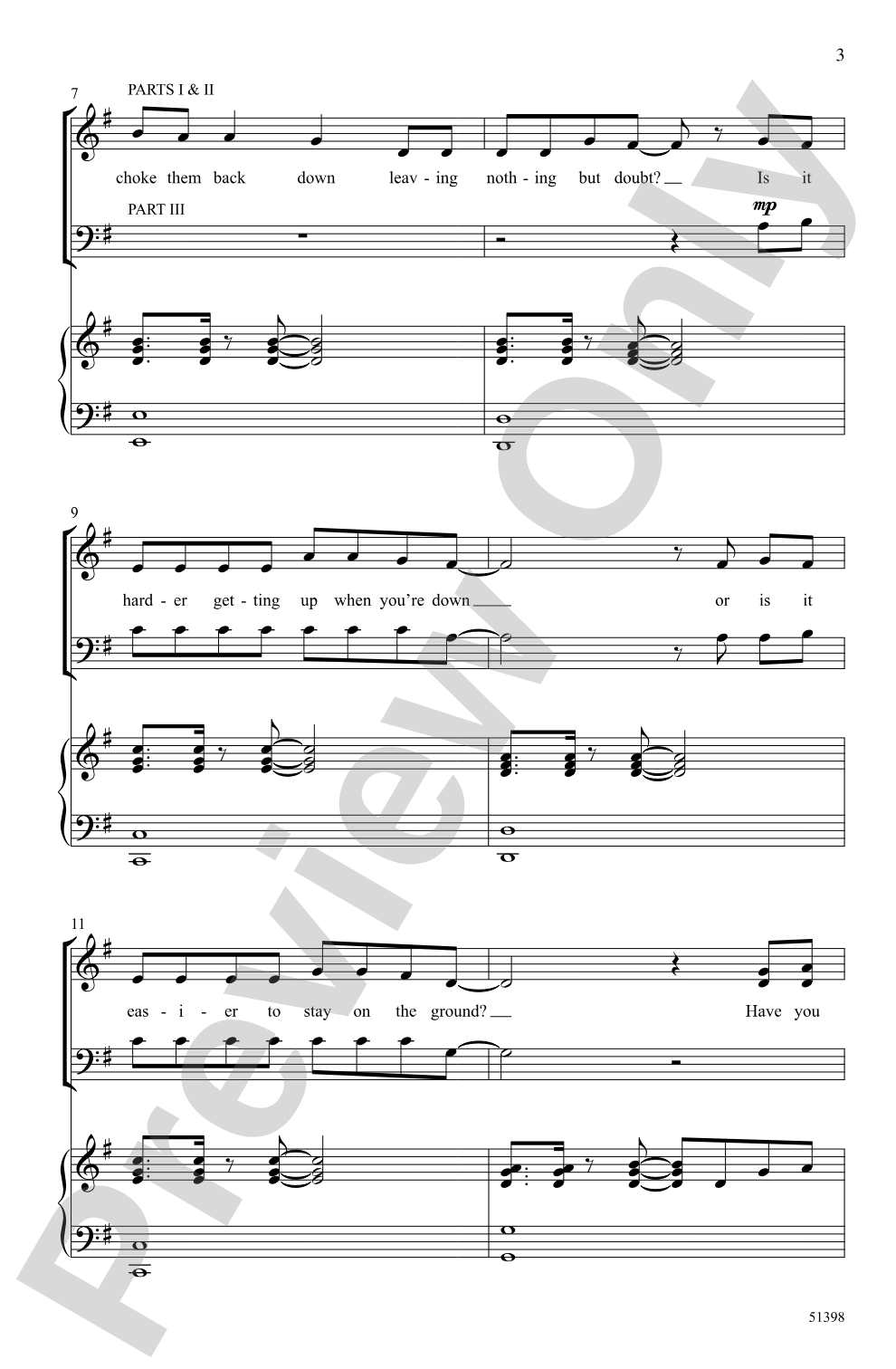
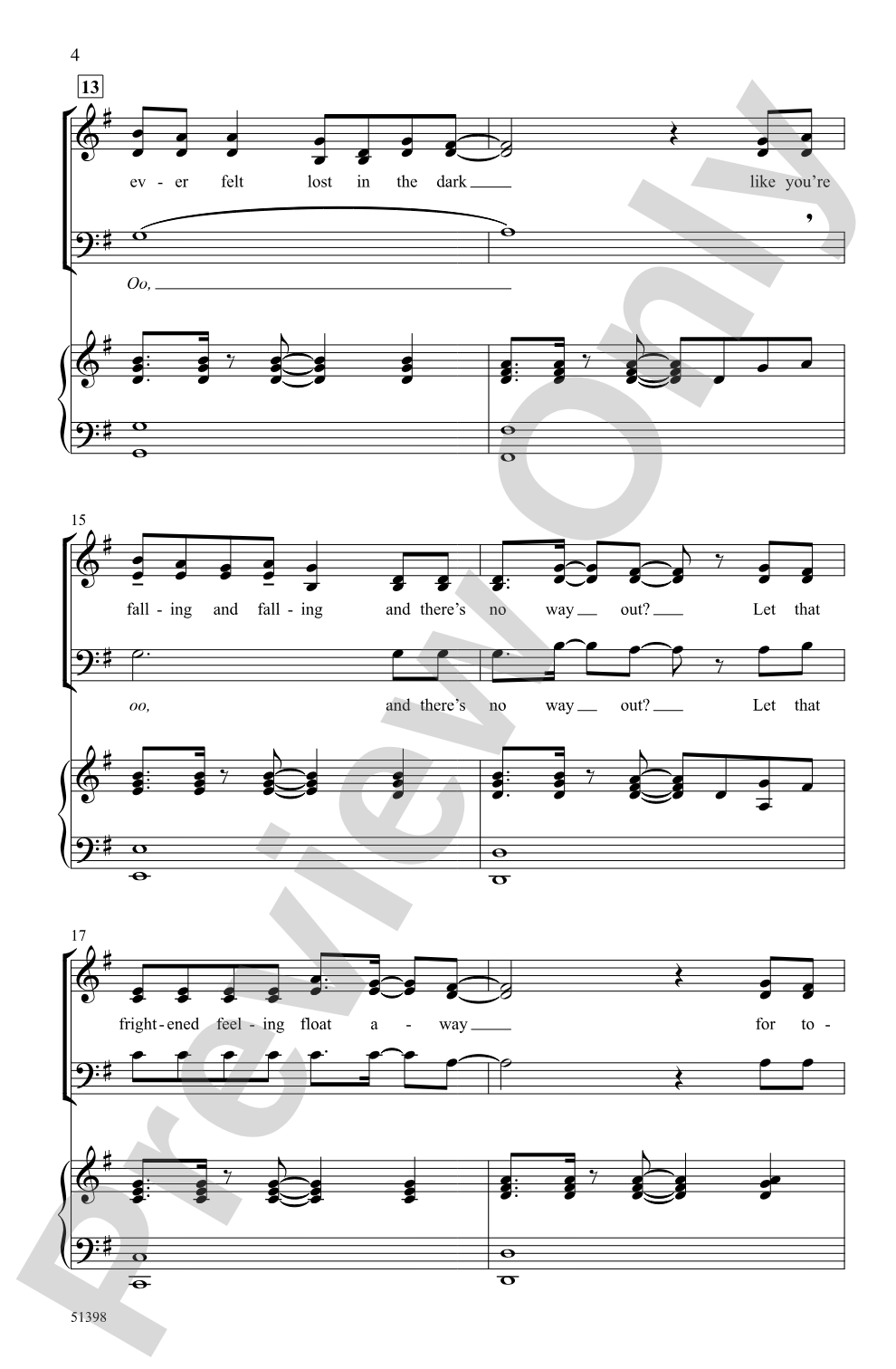
Composer Sherry Blevins offers an uplifting contemporary original that teaches persistence. "Though you might fall down, you still must try." The lightly syncopated melody is easy to learn and brings the meaningful text to life. Feature two optional soloists in the slower middle section before the catchy theme returns with distinct counterlines layered over an optional piano bassline. Add handclaps on two and four to lock in the groove!


It's Alright: 3-Part Mixed Choral Octavo isn't in MakeMusic Cloud just yet...but it could be. Let us know you'd like to see it, and you'll help shape what comes next. In the meantime, start a free trial and dive into thousands of interactive titles your students can play along with today.
Request This Title
Tell us you want it.
Start Your Free Trial
Explore everything that's ready to play right now.
Sample Audio
1
Audio File
--:--
0:00
0:00
Sample Video
Additional Details
Series:
Alfred Choral Designs
Publisher:
Alfred Music
Page Count:
16
SKU:
00-PO-0007427
More about this title
About the Composer: Sherry Blevins

Sherry Blevins has established herself as a prolific composer and music educator whose works span multiple publishers, including Alfred Music, Hinshaw, Fred Bock, Jocelyn Hagen Music, Colla Voce, and BriLee Music. Since 2018, she has released more than 27 compositions and has conducted ensembles internationally, from Opera Lucca's Composer's Institute in Italy to honor choirs across the United States. Her résumé reflects deep engagement with choral communities: she has served as past president of ACDA's Southern Region and as artistic director of the Chattanooga Boys Choir.
Blevins is particularly known for her collaborative approach to composition. In recent years, she has worked directly with school choirs on co-composition projects, resulting in pieces that reflect the voices and perspectives of the students who help create them. In spring 2023 alone, she collaborated with seven schools across Charlotte-Mecklenburg Schools in North Carolina to premiere newly composed works. Her music earns consistent recognition for balancing accessibility with musicality, crafted melodies with meaningful text, and engaging accompaniments that support rather than overshadow the singers.
Why we love this
Blevins gives you a piece that works just as hard as your singers. The syncopation sits naturally in the SAB texture without feeling forced, the middle section provides a genuine moment of contrast with its optional soloists, and the return of the theme lands with satisfying impact because of what came before. The message about resilience never tips into preach mode; it lives in the melody itself.
What to expect
Uplifting without being saccharine. The lightly syncopated melody has the feel of contemporary pop sensibility while the harmonies remain grounded and supportive. There's an infectious groove that makes singers want to sing it; the text about persistence lands because the music carries it forward with genuine momentum.
Who it's for
Middle school and high school choirs, church and community ensembles, and festival or contest programs that value contemporary work with a message. The three-part mixed voicing accommodates typical school populations and mixed voice choirs of all experience levels.
How to get the most out of it
- Lock the handclaps on beats two and four during rehearsal before adding them in performance; this rhythmic anchor helps the ensemble feel the groove without losing focus on their own lines.
- Shape the slower middle section with dynamic restraint in the supporting parts so the soloists can breathe and connect with the text without competition.
- Layer the counterlines gradually during rehearsal, letting singers master their own part first before hearing how it sits against the optional piano bassline.
- Return to the main theme with renewed energy after the middle section; mark a clear moment of reentry so the catchy melody feels like it arrives fresh.
How to use it
Pair this with repertoire that explores resilience, hope, or personal growth themes in a concert focused on contemporary choral writing. It also shines as a festival or contest selection where the combination of accessible writing and meaningful message appeals to both adjudicators and audience members.
Skills your students will build
- Reading syncopated rhythms in a three-part mixed texture
- Balancing solo and ensemble voices in the same piece
- Adding rhythmic layer (handclaps) while maintaining independent vocal line
- Layering counterlines over a harmonic foundation
- Interpreting text with musical intent across form changes