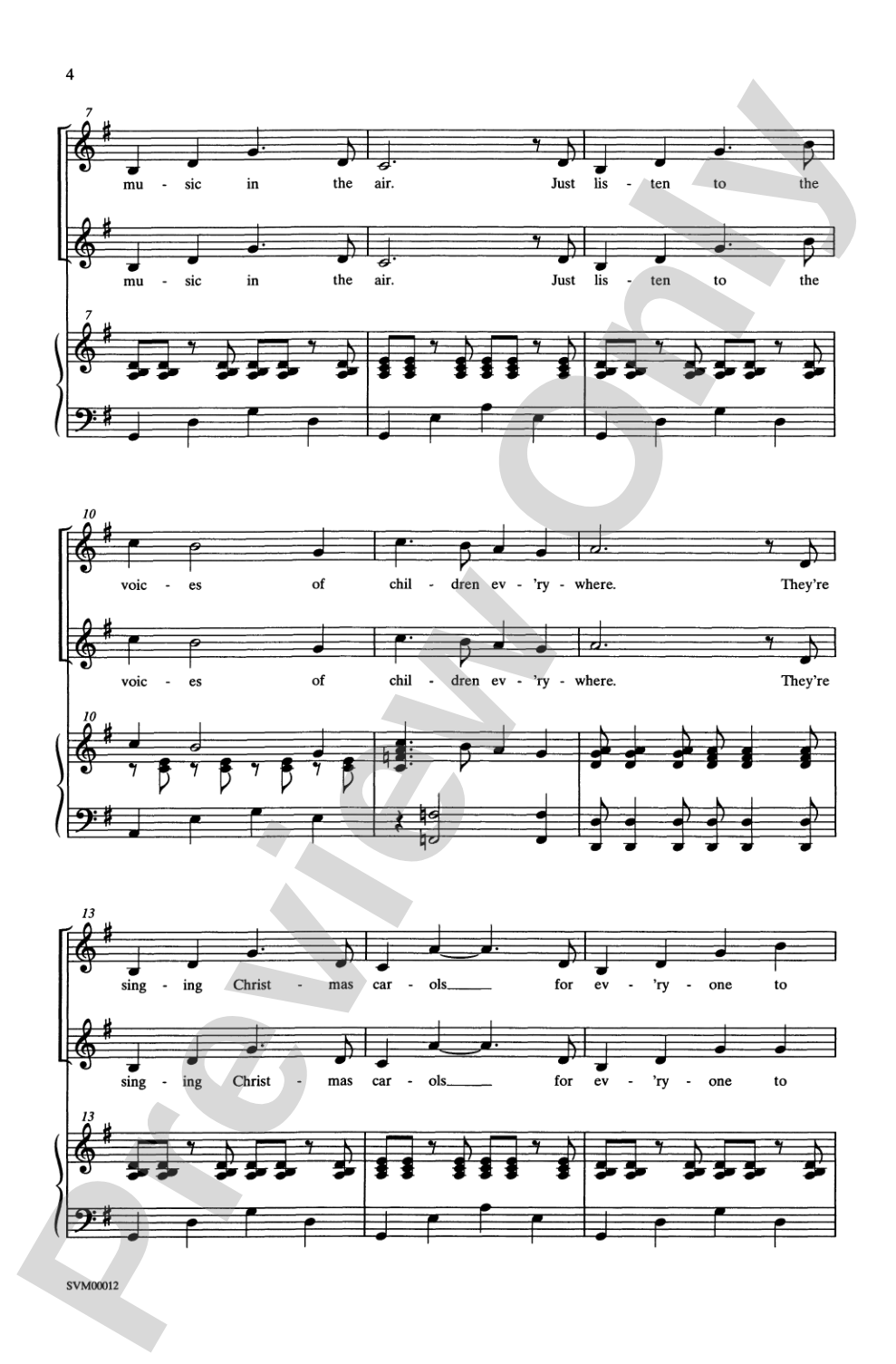
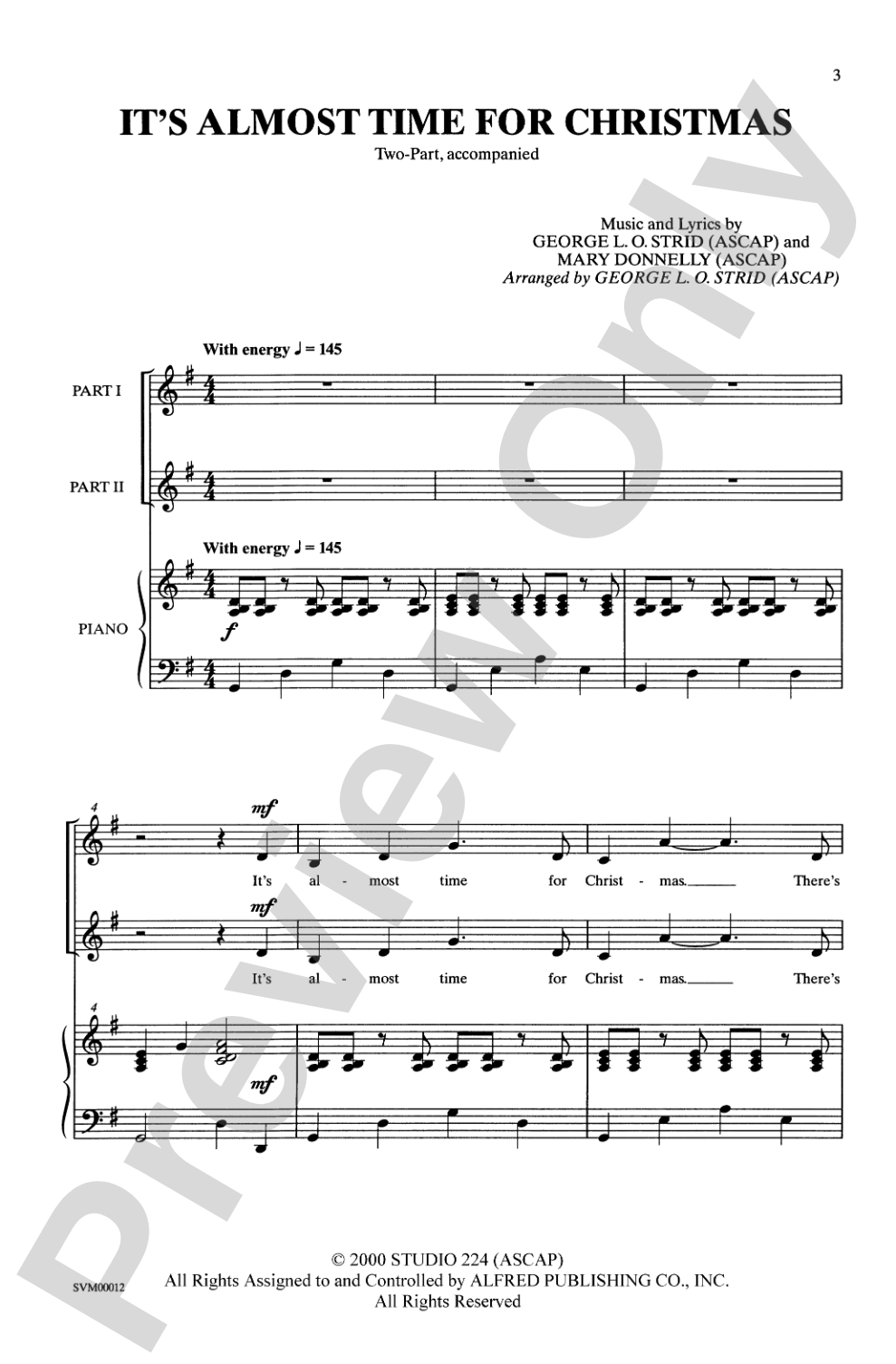
It's Almost Time for Christmas Sheet Music Preview

It's Almost Time for Christmas: 2-Part Choral Octavo

Music and lyrics by George L. O. Strid and Mary Donnelly / arr. George L. O. Strid

Item: 00-PO-0005316

Digital Download
$2.25

Minimum order quantity: 20 copies

Description
From the elementary musical by Mary Donnelly and George Strid, "Moose on the Loose", this song is the definition of the excitement in the anticipation of Christmas. Boys and girls of every age will enjoy this easy-to-sing two-part piece.

It's Almost Time for Christmas: 2-Part Choral Octavo isn't in MakeMusic Cloud just yet...but it could be. Let us know you'd like to see it, and you'll help shape what comes next. In the meantime, start a free trial and dive into thousands of interactive titles your students can play along with today.

Sample Audio
No sample audio found.
Sample Video
Additional Details
Series: Alfred Archive Edition: Studio PR Catalog
Publisher: Alfred Music
Page Count: 12
SKU: 00-PO-0005316

More about this title

About the Composer: Mary Donnelly

Mary Donnelly

Mary Donnelly grew up in Reno, Nevada, and earned a Bachelor of Arts in English and French from the University of Nevada, Reno. During her undergraduate years, she founded and directed two children's choruses, an experience that redirected her toward music education. She pursued formal training in music pedagogy at Lesley College in Cambridge, Massachusetts, where she studied arts integration in the classroom. Donnelly taught general music and choir for thirty years in the Washoe County School District, retiring as an active educator while maintaining her roles in ACDA, NEA, and ASCAP.

In 1985, Donnelly began a creative partnership with George Strid when their principal asked them to compose a musical for Reading Week. That first project spawned a prolific collaboration: together they have created more than two hundred songs and twenty-five stage musicals for young performers. Their work consistently prioritizes accessibility and joy for elementary and middle school singers.

Why we love this

This piece captures the genuine energy of kids waiting for Christmas, and that authenticity comes from a composer who spent three decades in elementary and middle school classrooms. The two-part texture keeps everyone singing meaningfully without creating separate skill tiers, and the straightforward melodic writing lets students focus on the holiday spirit rather than technical hurdles. It's the kind of song that doesn't need rehearsal to win a room.

What to expect

Pure, unfiltered Christmas anticipation lives in this song. The melody bounces with the restlessness of children who cannot wait for December to arrive, and the harmonies wrap around that energy with warmth and fun. You'll hear genuine excitement, not saccharine nostalgia.

Who it's for

Elementary and middle school choirs at all ability levels will connect with this piece. The two-part voicing accommodates mixed-voice ensembles without requiring extensive part independence work. Singers who are still building confidence with music reading benefit from Donnelly's singable, logical melodic lines.

How to get the most out of it

  • Emphasize the rhythmic snap in the melody; this song thrives on rhythmic clarity and forward motion that mirrors the restless excitement of children counting down the days.
  • Balance the two parts so neither overwhelms the other. Donnelly wrote both lines to carry equal weight, and hearing both melodies clearly will highlight the song's craftsmanship.
  • Use dynamics to build anticipation across the piece. Subtle crescendos and strategic softer moments mirror the emotional arc of anticipating something wonderful.

How to use it

Place this early in a holiday concert to establish an upbeat, celebratory mood. Its accessibility makes it ideal for mixed-ability choirs or as a warm-up moment before more complex repertoire. Consider pairing it with a slower, more reverent Christmas selection to show range in your programming.

Skills your students will build

  • Two-part singing with independent melodic lines
  • Rhythmic clarity and forward phrasing
  • Diction and articulation in a straightforward pop style
  • Dynamic control and expressive shaping
  • Ensemble balance between equally weighted vocal parts

You May Also Like