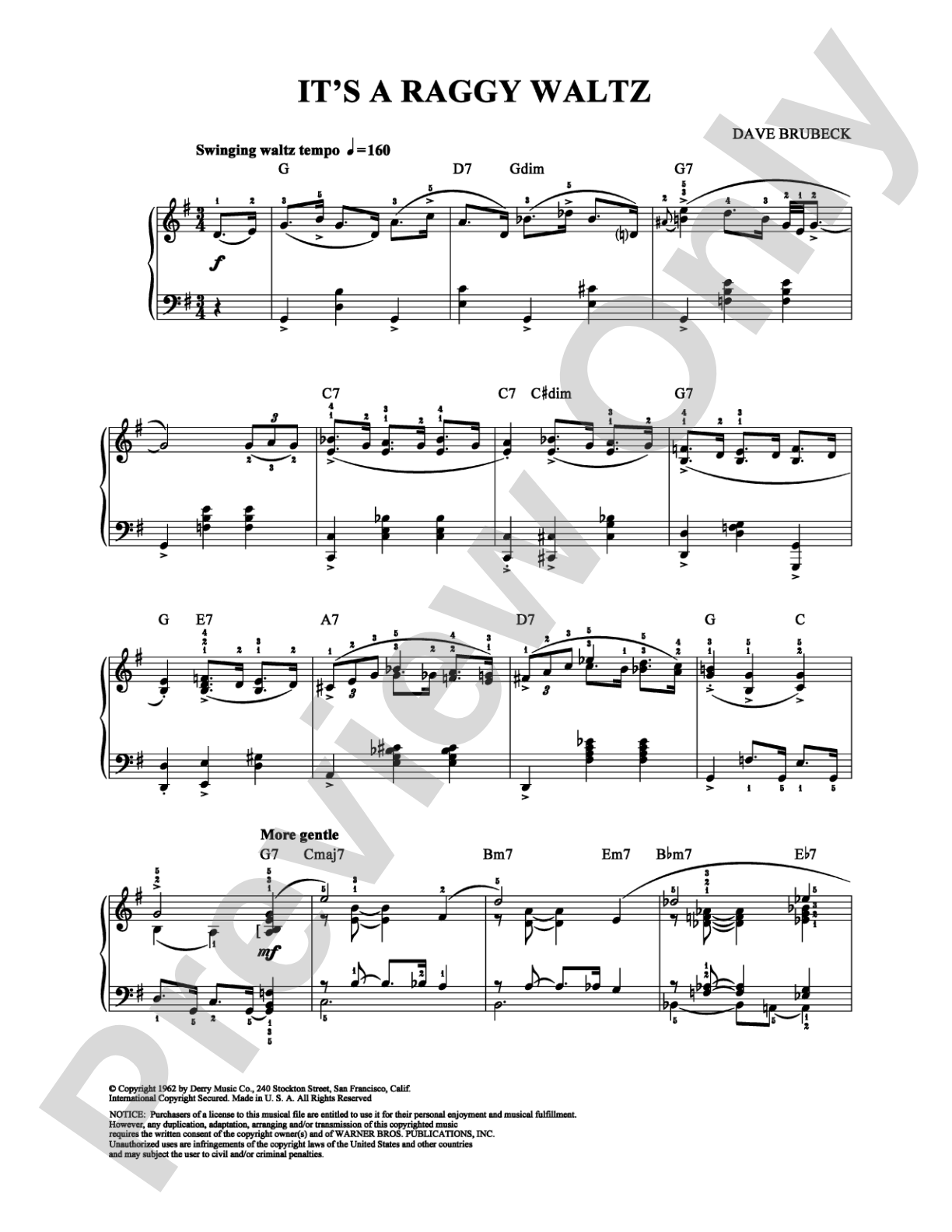
It's A Raggy Waltz: Piano Digital Sheet Music

It's A Raggy Waltz: Piano Digital Sheet Music

Dave Brubeck

Item: 00-PS-0000964

Digital Download
$3.99
Description

It's A Raggy Waltz: Piano Digital Sheet Music isn't in MakeMusic Cloud just yet...but it could be. Let us know you'd like to see it, and you'll help shape what comes next. In the meantime, start a free trial and dive into thousands of interactive titles your students can play along with today.

Sample Audio
No sample audio found.
Sample Video
Additional Details
SKU: 00-PS-0000964

More about this title

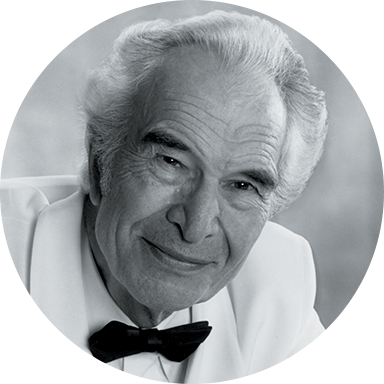
About the Artist: Dave Brubeck

Dave Brubeck

Dave Brubeck was a pianist and composer whose work bridged jazz improvisation and classical form with unusual harmonic sophistication. Beyond his role as a performing artist, he created a substantial catalog of notated compositions spanning choral works, orchestral pieces, chamber music, and solo repertoire. His studies with Darius Milhaud at Mills College after World War II shaped his belief that jazz language and classical structure could coexist meaningfully in serious composition.

Brubeck's cultural impact extended far beyond the recording studio. The 1959 album Time Out became the first jazz record to sell over a million copies, and his composition "Take Five" remains iconic. He was also a pioneering figure in racial integration within American jazz during the 1950s. His sacred music, including the mass To Hope! and various oratorios, has been performed and recorded internationally by ensembles ranging from cathedral choirs to the London Symphony Orchestra. In recognition of his lifelong contributions, he received the Grammy Lifetime Achievement Award, the Presidential Medal of the Arts, and induction into the American Classical Music Hall of Fame.

Why we love this

This piece captures Brubeck's signature approach to rhythm and harmony in miniature form, making it accessible for intermediate pianists without sacrificing musical substance. The waltz framework gives students a clear structural anchor while the jazz harmonies and syncopated melody create genuine interpretive challenges that reward careful listening and flexible voicing.

What to expect

A sophisticated dance that refuses to sit still. The waltz rhythm keeps the piece grounded in tradition, but Brubeck's jazz chords and rhythmic quirks create unexpected turns and harmonic surprises, making it feel both familiar and inventive.

Who it's for

Intermediate to advanced pianists seeking substantial solo repertoire that bridges jazz and classical traditions. This piece works for students exploring jazz harmony and composition, as well as pianists building recital programs with twentieth-century concert music that includes popular idioms.

How to get the most out of it

  • Balance the syncopated melody against the waltz pulse rather than fighting it; let the tension between them be intentional and clear
  • Shape the jazz voicings with attention to voice leading; smooth voice leading in the accompaniment makes the harmonic color more apparent
  • Vary the dynamic contour within phrases to highlight Brubeck's harmonic movement and avoid a metronomic feeling
  • Experiment with slight rhythmic flexibility in the melody to emphasize unexpected accent placements without losing the underlying three-beat foundation

How to use it

Pair this with other twentieth-century concert jazz compositions to demonstrate how classical forms absorbed American vernacular music. It also serves as an excellent bridge piece in recitals that mix classical and jazz repertoire, or as a showpiece for students exploring Brubeck's compositional voice beyond his ensemble recordings.

Skills your students will build

  • Reading and performing syncopated rhythms against a steady meter
  • Interpreting jazz harmonies and voicings within a notated score
  • Maintaining pulse and structural clarity while executing complex rhythmic figures
  • Voice leading through extended jazz chords
  • Balancing melody and accompaniment in pieces where both demand attention

You May Also Like